




Xerox Reduces Costs and Vehicle Emissions Years Ahead of Schedule
Xerox relies on global partnerships to manage costs, right-size its fleet, and reduce its environmental footprint. Through an aggressive CO2 emission-reduction program, the company has exceeded its greenhouse gas reduction goal six years early.

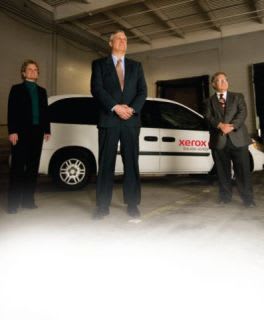
Xerox Corporation is a $16 billion document management technology and services company. While providing a broad portfolio of color and black-and-white document processing systems and related supplies, it also offers document management consulting and outsourcing services.
This corporation has not only held strong in its commitment to customer satisfaction during the past 40 years, but has also remained at the forefront of technology, delivering measurable benefits to the environment.
"Long before it was popular to do so, Xerox ranked sustainability high on its list of priorities and led the industry in innovative ways to reduce waste and conserve energy," said Patricia Calkins, vice president, environment, health, and safety for Xerox. "Our long-term experience has shown us that when we act in ways that benefit the environment, we make sound business decisions that not only benefit Xerox, but also our customers and shareholders."

Xerox is a member of the California Climate Action Registry and the United States Climate Action Partnership (USCAP). It was named to the Dow Jones Sustainability North America Index in recognition of its economic, environmental, and social performance, and it received the National Medal of Technology — the highest technology award in the United States — for its innovations.
The company's sizeable fleet of 10,500 vehicles helps transport salespeople and service technicians around the world. In an effort to minimize transportation costs and the fleet's environmental footprint, Xerox's fleet management has implemented aggressive cost-saving and environmental programs.
[PAGEBREAK]
Xerox Operates Through a Global Perspective
Xerox service technicians drive a majority (54 percent) of the company's 4,900 U.S. fleet vehicles, while sales or executives operate the remaining 46 percent. The service fleet drives mostly passenger vans, such as the Dodge Grand Caravan.
The Canadian fleet consists of 800 vehicles, mostly Dodge Grand Caravans, while the 4,800-vehicle European fleet operates mainly Opel Astras for service vehicles and a wide variety of sedan models from various manufacturers.
Vehicles are leased through GE Capital Solutions Fleet Services, which also manages most of the company's fleet operations, including all maintenance issues and repairs, vehicle purchases, and vehicle remarketing.
"GE has been data-rich in terms of helping us understand our fleet performance," said Tony Rossi, Xerox manager of programs and operational support.
Xerox's partnership with GE began in 1992 as a result of the sale of the Xerox LMV Fleet Leasing subsidiary.
According to Mark Baniewicz, vice president of enterprise services and support, since fleet management is not part of Xerox's core business, it made sense to outsource these tasks and functions to a company that made fleet management its core business.
Xerox's in-house fleet staff of five helps facilitate their critical partnership with GE Fleet.
"My job is to help when GE can't, communicate policies to the field, and work with our in-house executives when necessary," Rossi said.
[PAGEBREAK]
When communicating policies and guidelines, Rossi works with "focal points" in the company's field organizations, which then disseminate information directly to the drivers.
"We also link our drivers up to our Web site where all fleet policy is housed," he said, adding that e-mails are often sent to drivers with policy updates as a way to reinforce policy communication.
Another area that allows fleet management to minimize costs is the leveraging of global resources.
Rossi and the rest of the global fleet team meet by phone once a month, as well as in person several times per year, to further pinpoint areas of potential efficiency. Once the team identifies a significant area requiring change — such as setting new mileage criteria or providing a new group of employees with vehicles — they work together, as well as with senior executives, to examine and implement new policy.
"When we make major changes in our fleet, it is important to get everyone on board," Rossi said.
Rossi and team also meet with senior management twice per year to discuss global greenhouse gas (GHG) concerns.
In addition to working with senior management on major policy changes and future environmental goals, the fleet team goes through an annual review. The review is part of a yearly assessment of how all the varied elements or initiatives that affect GHG reductions are progressing compared to planned projections.
For instance, Xerox looks not only at key metrics such as fuel consumption, but also the progress of each supporting initiative, including what percentage of fuel-efficient vehicles were deployed compared to plans for deploying these initiatives.
[PAGEBREAK]
Xerox Exceeds Greenhouse Gas Goals Six Years Early
A large part of Xerox's financial and "green" success has been its effort to reduce its environmental footprint. The company has already exceeded its 2012 GHG emission reduction target and is increasing the goal by more than 100 percent.
With an 18-percent reduction in GHG emissions since 2002, Xerox topped its 10-percent reduction target and is now boosting the goal to a 25-percent decrease by 2012. The reduction prevented the emission of 87,000 metric tons of carbon dioxide in 2006, the equivalent of taking more than 18,000 cars off the road.
Not only did the conservation efforts help the environment, they also helped Xerox save money. Energy consumption during the period declined by 21 percent, driven in part by a 30-percent reduction in gasoline and diesel fuel consumption.
Xerox's GHG reduction program saved the company $18 million in 2006.
How did Xerox do it?
When the company management originally analyzed its GHG emissions, they found the emissions were nearly all associated with energy use — indirect emissions from purchased electricity and steam, and direct emissions from combustion of fossil fuels such as natural gas and from burning gasoline and diesel fuels in vehicles, including its fleet.
To meet its GHG reduction target, Xerox launched a company-wide energy reduction program called "Energy Challenge 2012." Implemented projects resulted in significant GHG reductions, including a 24-percent reduction in GHG emissions from the use of company vehicles.
Specifically, Rossi has sought ways to cut fuel usage in the company's U.S. fleet since 2002, by such steps as:
Finding the appropriate vehicle for each driver.
Buying fuel-efficient vehicles.
Tracking mileage.
Using GPS systems to send technicians to the closest client.
Increasing use of remote diagnostics.
Integrating more reliable products that require less service.
Educating drivers about maintaining vehicles, including tire pressure and oil change intervals.
"We had a company-wide effort that included fewer miles driven, sound energy management, new manufacturing technologies, and more efficient heating and cooling equipment," Rossi said, adding that these types of efforts are easy to implement and require little up-front investment, but result in major long-term savings.
[PAGEBREAK]
Right-Sizing Vehicles Saves Fuel and Increases Mileage
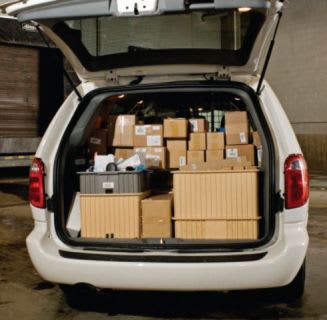
So far, the right-size program has delivered the biggest impact, according to Rossi. At the end of 2005, the fleet team looked at the vehicles each driver used to determine if they were the right size for the need. They discovered that many technicians who didn't need the storage capacity of a passenger van — which got 19 miles per gallon — could move to a sedan getting 25 mpg.
In addition, certain cargo van drivers were switched to passenger vans, resulting in a miles-per-gallon increase of 15-19 gallons. In the first year of this initiative, 5 percent of drivers were moved to smaller vehicles.
Xerox even recently put 150 Toyota Prius vehicles into service in the U.S. to maximize fuel efficiency for technicians who drive primarily in urban settings. Now, techs can achieve up to 45 mpg in the Prius. The company then invested in E-85-compliant vehicles, even though the fleet won't see much benefit right away from the vehicles due to limited infrastructure. Currently, 75 percent of Xerox's U.S. fleet is E-85 capable.
"When ethanol becomes more widely available, we want to have the vehicles in place to take advantage of it," Rossi said.
Once drivers were in suitable vehicles, Rossi examined mileage by auditing technician mileage reports, which led to greater driver awareness of where they were driving and the mileage numbers they turned in.
Rossi recently implemented a global positioning system (GPS) that will pair call locations with the nearest technicians, a step Rossi calls "smarter call management."
"If we know where our people are, we can make smarter decisions," Rossi explained. "That will have a huge impact on our gas and mileage. If we can reduce business travel miles from 5 to 7 percent, that's huge."
Xerox plans to migrate to the new, automatic system by the end of 2008 or early 2009. The new system will replace the existing legacy system for customer service calls and technician assignments.
[PAGEBREAK]
Xerox Sets New GHG Reduction Goal
With its original target now met, the new Xerox goal will drive performance for the next stage of its GHG reduction program and spur additional GHG innovation. The company aims to reduce emissions by 25 percent by 2012 from the 2002 baseline year.
Xerox believes its existing energy-saving initiatives offer opportunity for further GHG reduction, making it possible to reach its new 2012 goal.
One initiative involved technicians driving less. The 15,000 employees responsible for technical support of Xerox products at customers' workplaces are driving less because of increased reliability of digital systems, such as multifunction products, as well as remotely diagnosing technical issues.
In the United States alone, technical service engineers drove 34 million fewer miles in 2006 than in 2002, resulting in a reduction of 26,000 metric tons of GHG. It would take more than 666,000 tree seedlings growing for 10 years to store the carbon from these GHG emissions.
Looking toward the future, Rossi hopes to see a technological breakthrough in U.S. models.
"We need a cost-effective hybrid where we can get another four or five miles per gallon," he said.
More Green Fleet
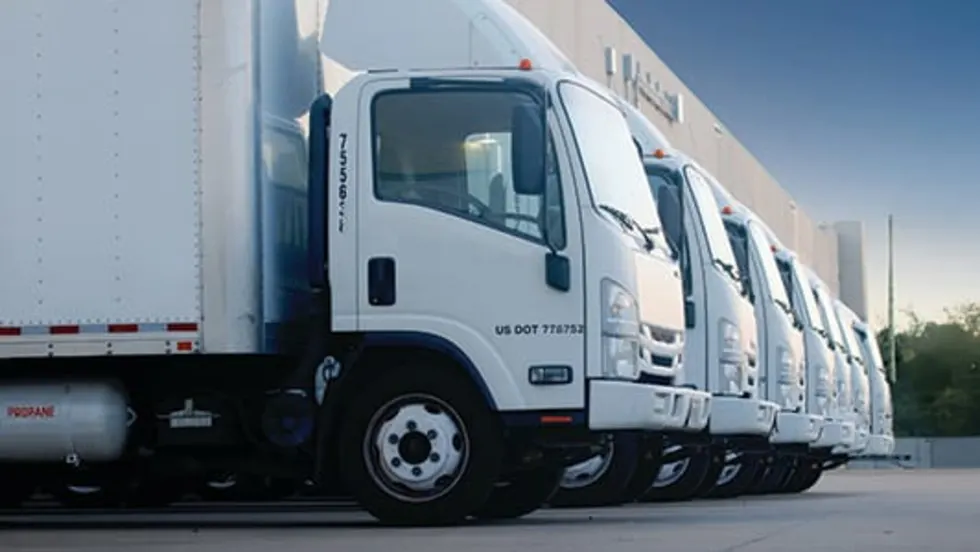
New Propane Autogas Program Offers Fleet Compensation
Qualified commercial fleets can receive $7,500 per eligible propane autogas vehicle and up to $10,000 for new refueling site prep. Learn how the program works and see whether your fleet qualifies.
Read More →
EV Charging Use Is Outpacing Infrastructure Growth
ChargePoint’s 2026 Charging Forward Report points to rising charger use, higher-powered charging, commercial vehicle electrification, and energy-management technology. Here’s what fleets should know.
Read More →
Merchants Fleet Reports 290M EV Miles as Fleets Navigate Changing Electrification Market
From millions in operating savings to hundreds of millions of EV miles, Merchants Fleet’s latest report reveals what’s working and what’s changing in fleet electrification.
Read More →

The EV Breakdown Nobody's Talking About: Why Most Electric Vehicle Roadside Calls Aren't Mechanical Failures
Here's why EV breakdowns are widely misunderstood.
Read More →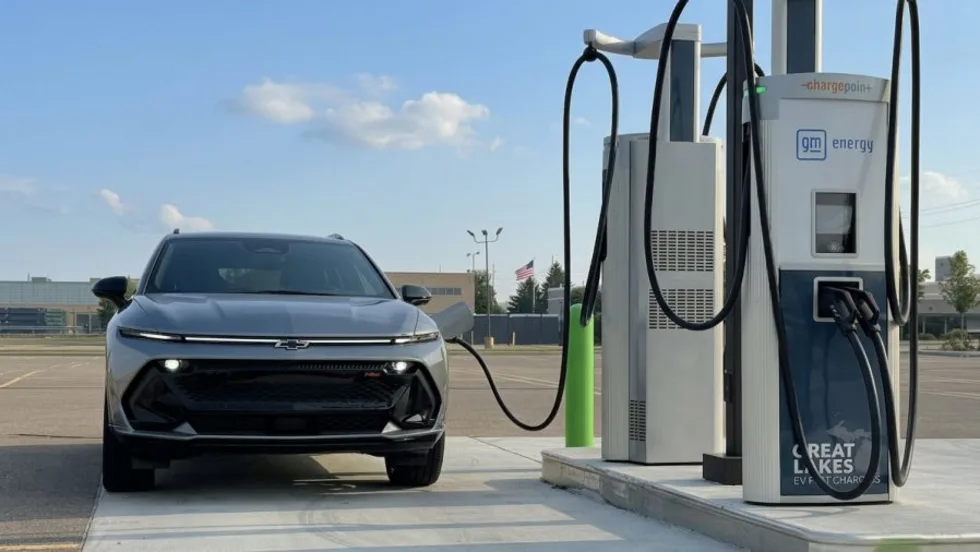
ChargePoint Now Available in Energy Pass
ChargePoint and additional planned charging network integrations were added to GM's Energy Pass.
Read More →

First Look: Slate Auto's Electric Fleet Pickup
Could an affordable, modular EV pickup make electrification more practical for fleets?
Read More →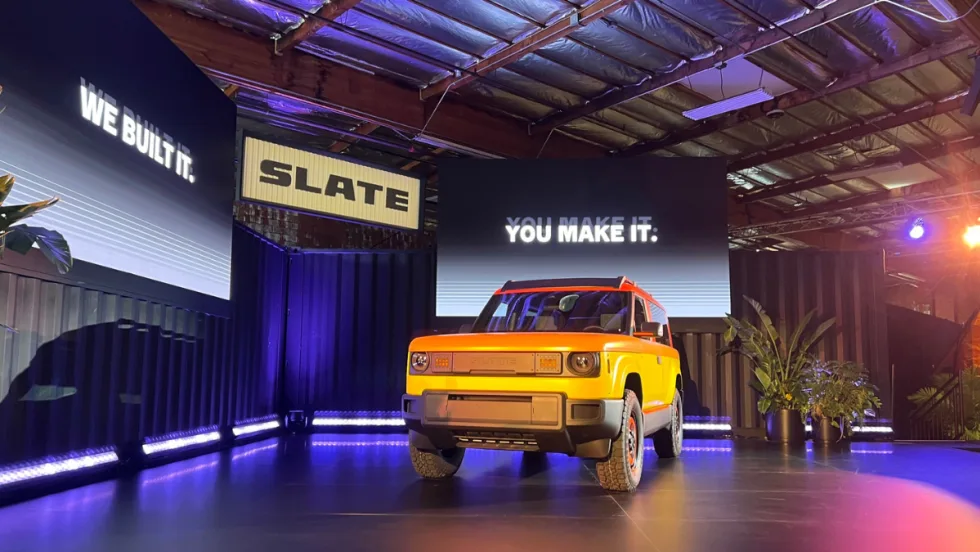
Slate Debuts Colorful, Unique EV Models
A recent media and client event, studded with electric vehicles dressed up on platforms, planted a new position for the manufacturer in the wider EV market. Fleets will find cost-saving advantages.
Read More →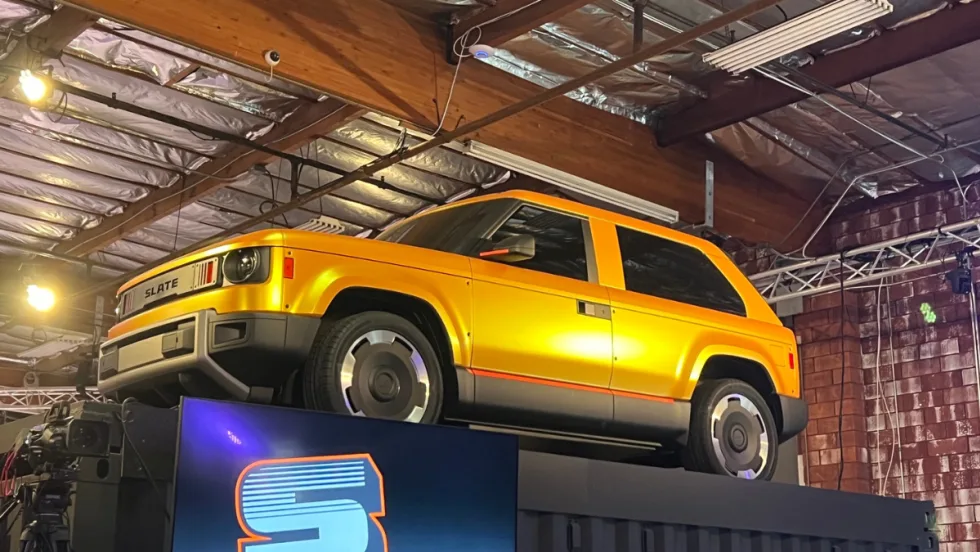
Slate Electric SUV, Pickup Switchable Model Aims For Light-Duty Fleets
Everything about this EV is counterintuitive and understated, making it stand out from the crowd.
Read More →
Inspiration Mobility Acquires Key Electrada Assets
Inspiration Mobility Group has acquired select assets of Electrada, adding the fleet electrification provider's team, technology, and charging infrastructure development capabilities to its energy management business.
Read More →