




When Fleet Safety Becomes a Way of Life
At the 2025 AFLA Conference, safety leaders said lasting change happens when fleet managers move beyond policies and turn safety into everyday culture. How do you make that shift stick?

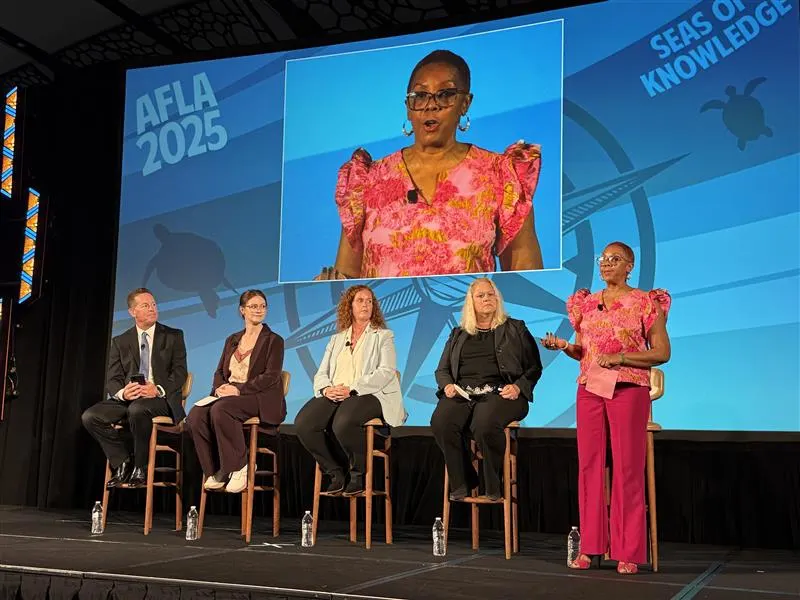
Jessica Whittenberg of American Air Filter emphasized that leadership buy-in is essential: “When the message comes from the top, drivers take it seriously.”
Photo: Chris Brown
When it comes to fleet safety, policies and procedures are only the beginning. What truly saves lives is what happens next — the daily communication, coaching, and accountability that turn policy into culture.
That was the consensus from the “Safe Harbor: Navigating Fleet and Driver Safety” session at the 2025 AFLA Conference in Marco Island, Florida. Moderated by Corey Woinarowicz of FleetWorthy Solutions, the panel featured Jessica Whittenberg of American Air Filter (AAF), Judie Nuskey of Advanced Driver Training Services, Meghan Murray of Teva Pharmaceuticals, and Mikhaila Baldwin of CoolSys.
Their message was clear: fleet safety must be part of a company’s DNA.
“Safety can’t be a priority, because priorities change,” said Woinarowicz. “It has to be woven into the fabric of your culture. Nobody gets safer by doing nothing. Safety is an action sport.”
Rewriting Policy — and the Culture That Surrounds It
For most organizations, safety begins with the fleet policy. But for this panel, policy was only the foundation for something much larger.
Wittenberg, AAF’s first dedicated fleet manager in the company’s 100-year history, said her first mission upon recently joining the company was to rebuild the policy from scratch.
“It was written by HR and our environmental and safety team,” she said. “But it focused mostly on plant and DOT drivers. We’re rewriting it to include the sales force — everyone behind the wheel.”
AAF’s new handbook will include inspection checklists, driver acknowledgments, and a letter from the CEO emphasizing that safety is a companywide value. “Having leadership buy-in is everything,” she said. “When the message comes from the top, drivers take it seriously.”
Teva’s Murray echoed that sentiment, calling the safety policy “a living document.”
“We have monthly meetings with HR to tweak and align our policy,” she said, though she admitted it’s hard to get sales reps to read them.
To fix that, Teva makes policies accessible online and integrates them into its onboarding process. “Communication is key,” Murray said. “Even if drivers don’t read every line, we make sure the message gets through.”
At CoolSys, Baldwin said the company’s safety policy evolves with its technology. “A policy has to reflect what’s happening in the real world,” she said. “It’s a living document that ties policy to practice.”
Technology as a Safety Enabler
Every panelist agreed that telematics and in-cab event recorders (video telematics) have become essential to a modern safety culture.
“If you don’t already have telematics, that’s where you start,” Baldwin said. “Then add event recorders. We’ve seen a dramatic drop in at-fault accidents — and zero fatalities in two years.”
The technology doesn’t just prevent crashes — it can also protect drivers. “We had a crash where the data showed our truck driver did nothing wrong,” said Nuskey. “That evidence exonerated the company.”
But, she added, data only matters if you use it. “Take the data, use the data, act on the data,” she said. “That’s how you become truly proactive.”
Panelists acknowledged driver concerns over “Big Brother” monitoring. “We don’t care if you’re at Applebee’s at two o’clock on a Tuesday,” Murray said. “We want the important data — harsh braking, hard acceleration, not wearing your seatbelt.”
“We tell our drivers, we’re not watching where you go — we’re watching out for you,” added Wittenberg. “It’s about safety, not surveillance.”
Technology is only as effective as the communication around it, Baldwin noted. “The vehicle you give your driver is the most dangerous tool they’ll ever get,” she said. “It’s our job to make sure they know how to use it safely.”
Rewarding Safety, Not Just Policing It
The panelists agreed that positive reinforcement is more effective than punishment.
“No one wants to be told they’re doing a horrible job, but everyone wants to be told they’re doing a great one,” said Wittenberg.
Teva has discussed implementing a “Teva Star Points” system that rewards safe driving with gift cards and recognition. “It’s not just about money,” Murray said. “It’s about recognition — showing drivers that we care and want them to come home safe.”
Baldwin added that CoolSys uses event recorder footage to make safety personal. “We take real-world examples and show why safety matters, for themselves, their families, and their communities.”
Nuskey encouraged fleets to use telematics data to coach, not penalize. “If drivers fail training, maybe it’s not the driver, maybe it’s the training,” she said.
Fleet professionals from the audience shared creative recognition ideas, including sticker programs, safety badges, and even a “rubber duck” award for clean driving records. These are small gestures that make big cultural impacts.
Preventing the Preventable
The panelists and audience alike focused on preventing crashes before they happen by combining predictive tools, driver engagement, and consistent feedback.
Murray said Teva’s crash rates have dropped even as the fleet has grown, perhaps thanks to newer vehicle safety tech like automatic emergency braking. “We don’t always know what (technology) is saving us, because near-misses don’t get reported,” she said.
Baldwin credited her fleet’s success to combining event recorders with predictive analytics. “We use AI to flag high-risk behavior before it becomes a crash,” she said.
Nuskey added that crash reconstruction during safety meetings makes the lessons real and relatable. “You can’t just show slides,” she said. “You have to show what happened and how to prevent it next time.”
A powerful example came from the audience: Joe Paul of the Church of Jesus Christ of Latter-day Saints, who oversees a fleet of 10,000 vehicles driven by young missionaries.
“When performance is measured and reported, the rate of improvement accelerates,” Paul said. His organization saw a fivefold reduction in accident costs after introducing in-cab cameras and coaching systems.
Advice for New Fleet Managers
Asked what they’d tell someone new to fleet safety, the panelists offered practical wisdom.
“Day one, you need buy-in from the top,” said Wittenberg. “And from everyone else, too,” Baldwin added. “Know your stakeholders — HR, legal, EHS, vendors. Build those relationships early.”
“You can’t coach what you don’t know,” said Murray. “Understand your policy, then engage your drivers to identify gaps.”
Woinarowicz urged newcomers to tap into the industry’s collaborative spirit. “Join associations, talk to Hall of Famers, tap into the wealth of knowledge in this room,” he said. He also shared a simple tip: “A $60 phone holder can prevent distracted driving crashes — a small investment compared to an accident.”
The End Goal: Get Every Driver Home Safe
Despite all the talk about data and devices, the heart of the discussion came back to one idea: people.
“The goal every day should be to get that driver home to their family,” Woinarowicz said in closing. “If that doesn’t happen, nothing else — EVs, sustainability, data — matters.”
Fleets that succeed are those that turn information into action, and action into culture.
More Safety
What’s Next for Fleet? Safety, AI & Industry Recognition | AF News Recap
Could your company's culture be encouraging distracted driving? This week, we're exploring how workplace expectations affect driver safety, what AI, EVs, and autonomous vehicles could mean for the future of fleet management, and how fleet professionals can strengthen their award nominations.
Read More →
Does Your Fleet's Culture Encourage Distracted Driving?
What happens when the people responsible for enforcing safety rules are the ones setting the wrong example? The answer may reveal why some of the biggest risks to fleet drivers have little to do with what's written in the employee handbook.
Read More →
Fleet Manager’s Ultimate Playbook: Navigating the New Standard in OEM Connectivity
Rising operating costs, driver safety concerns, and unplanned downtime are putting unprecedented pressure on modern fleets. Discover how fleet managers use embedded OEM connectivity and real-time vehicle data to cut TCO, prevent downtime, and protect drivers without aftermarket telematics hardware.
Read More →
From Driver Well-Being to EV Charging | AF News Recap
Mental health belongs in the fleet safety conversation. This week, we’re looking at five ways fleets can support employee well-being before a crisis, plus Holman’s expansion in Mexico, new one-day Fleet Forward passes, and why EV charging demand is outpacing infrastructure growth.
Read More →
Nexar-Nauto Merger Aims to Give Fleets Better Safety Intelligence Through Larger Driving Dataset
Stefan Heck tells Automotive Fleet that combining more than 10 billion miles of driving history with Nexar's AI models will give fleets deeper insights into driver risk and roadway conditions than either company could provide independently.
Read More →
Don't Wait for a Crisis: 5 Ways to Build Mental Health Into Your Fleet Safety Program
For Suicide Prevention Month, fleet and safety leaders have an opportunity to put mental health where it belongs: at the center of workplace safety.
Read More →
How Camera Data Can Strengthen a Fleet’s Insurance Renewal
Insights from a commercial insurance carrier and a broker show how fleets can turn video telematic data, driver coaching, and improved claims results into a stronger case at insurance renewal.
Read More →
The Safest Fleets Aren’t the Ones with the Most Technology
You’ve made the telematics investment. Here’s how to capture the other half of its value and build the safest fleet on the road.
Read More →
Hidden in Plain Sight: Fleet Compliance Risks
Fleet compliance isn't just about having policies — it's about consistently enforcing them. This practical guide reveals six hidden compliance risks common in public sector and shared fleet operations and outlines proven strategies to improve visibility, accountability, and audit readiness
Read More →
NETS Sets 2026 Fleet Safety Benchmark Conference for Indianapolis
The Sept. 15–17 program will feature fleet benchmarking data, case studies, emerging technologies, and implementation strategies while running alongside the NSC Safety Congress & Expo.
Read More →