




Wheelz Up Has Logistics Down
Looking to be the "UPS of auto parts deliveries," minority-owned Wheelz Up has streamlined auto parts delivery with efficient logistics and a diversified fleet of Ford Transit and Nissan NV vans.

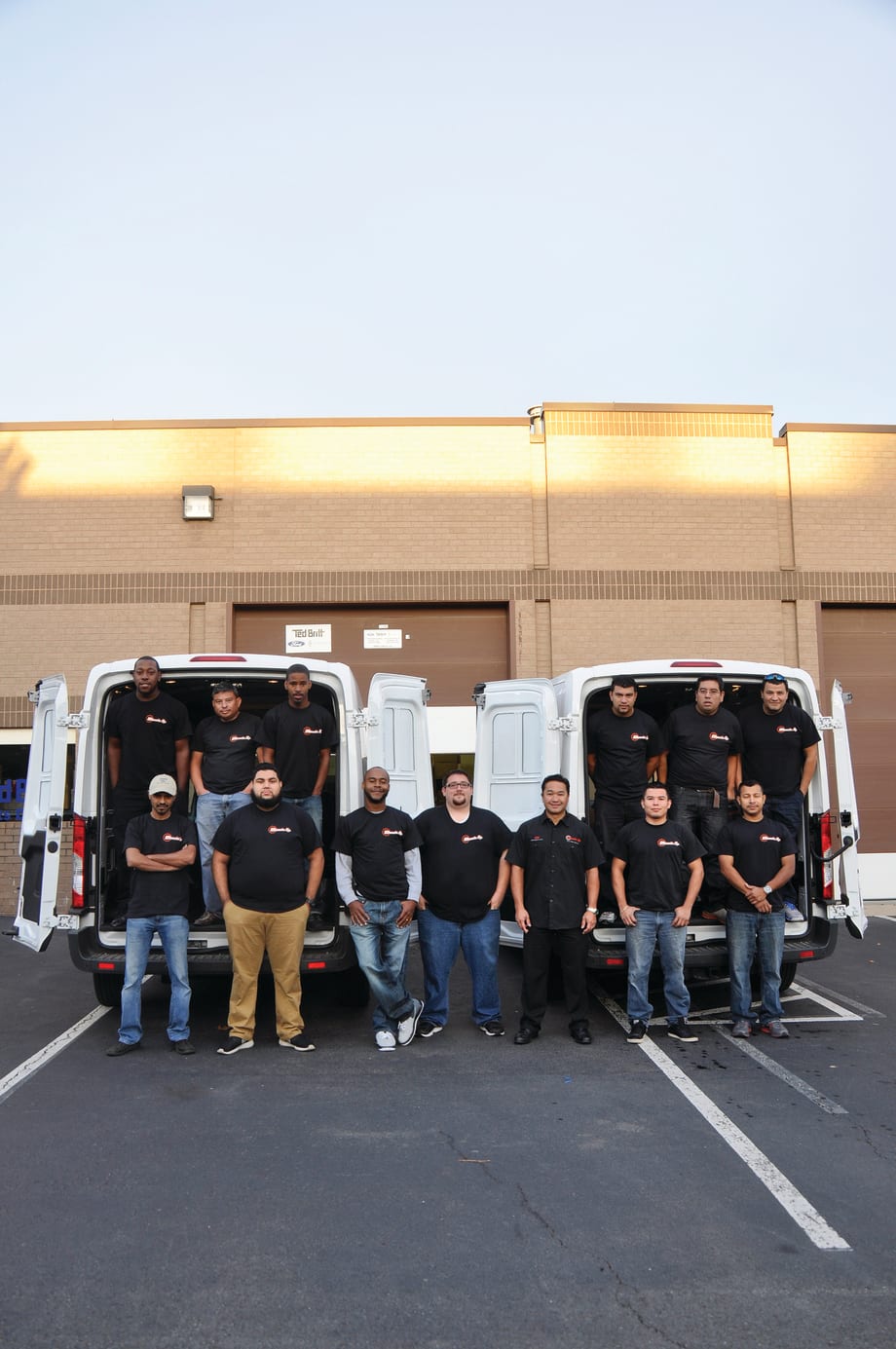
Wheelz Up owner Jeb Lopez (black pants) and his drivers pose in back of two company vans.
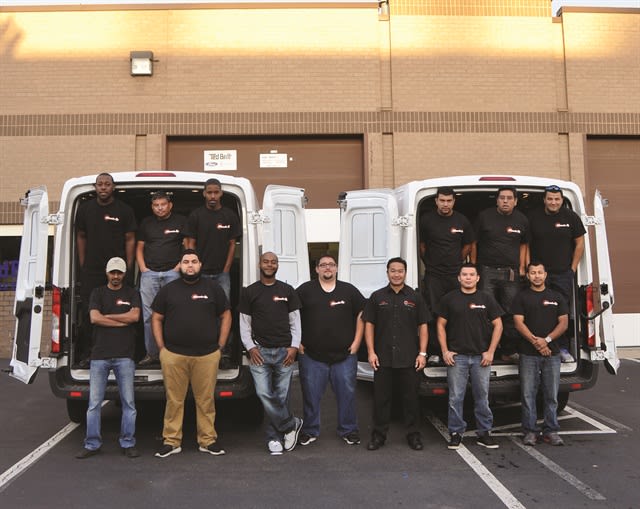
Wheelz Up owner Jeb Lopez (black pants) and his drivers pose in back of two company vans.
When Jeb Lopez got a two-week contract to deliver auto parts to supply his uncle’s dealership, he noticed that the other delivery services didn’t represent the professional image of the dealership — and a new business was born.
“I noticed that the independent contractors delivering parts were unprofessional and were not true ambassadors of car dealerships that had strong automotive brands,” said Lopez, mentioning those drivers’ sloppy dress and tardy deliveries. “We wanted to model ourselves as the UPS for automotive parts delivery for dealerships. We are an extension of the dealership in terms of the employees.”
Providing express courier delivery service to auto dealerships in the D.C. metro area, Wheelz Up achieves this goal through project management, efficient logistics and proper driver screening and training.
Starting in 2010 with one Ford Econoline van, Lopez’s minority-owned business has grown to a fleet of 45 cargo vans. “As a Pilipino-American business owner, I applied for the SwaM (small, women-owned and minority-owned business) certification in Virginia,” says Lopez. “I wanted to get the certification because the company’s goal is to also obtain government delivery contracts.”
Lopez switched from the Ford Econoline to Nissan NVs in 2012. “They had a larger load capacity and were easy to maintain; we liked the ladder frame. Plus, they have held up very well in small fender-benders and protected our drivers in one major accident.”
When the Ford Transit cargo vans were available this past summer, Lopez immediately added seven Transit 250s. “We wanted to diversify our fleet,” says Lopez.
With an average 8% growth rate per year, the company continues to add more vans to its fleet through commercial accounts at Ford and Nissan. “The first year, we grew from one to eight vans and then doubled the next year,” says Lopez.
Instead of pickups, using the more spacious cargo vans minimizes deliveries, but the vans still put on an average of 800 to 1,200 miles per week. In service Monday through Saturday, the vans cover the areas of Virginia, Maryland and D.C. — even as far as Delaware and New Jersey on occasions. According to Lopez, 80% of the vans clock in at 30,000 miles per year.
Driver Monitoring
In an innovative logistics tactic, the cargo vans are parked overnight at the dealership client locations — drivers consistently deliver to the same dealers. Because of the dispersed fleet, Lopez sends two fleet managers to conduct site visits at the dealership. “They make sure that the clients are happy with the service. They inspect the vans and the drivers, and they also help with dispatching out from that site.
Wheelz Up has also implemented a GPS device in each van, which tracks the drivers in real-time as well as helps in routing and mapping and maintenance monitoring.
“Every 90 days, we catch up with each driver and go over their performance — what they are doing well and what they need to improve on,” says Lopez.
Gear Branding
Featuring white and silver vans, each vehicle is wrapped with the company branding. According to Lopez, white and silver were the top choices since they are easier to keep clean.
Inspired by the “Top Gear” TV show, Lopez developed Wheelz Up’s logo with an image of a gear wheel. “Wheelz Up is a play on words. ‘Wheels Up’ was used in the military to refer to the time an operation begins. Every time we are in operation, we go. And ‘wheels’ refers to the car parts of the business.”
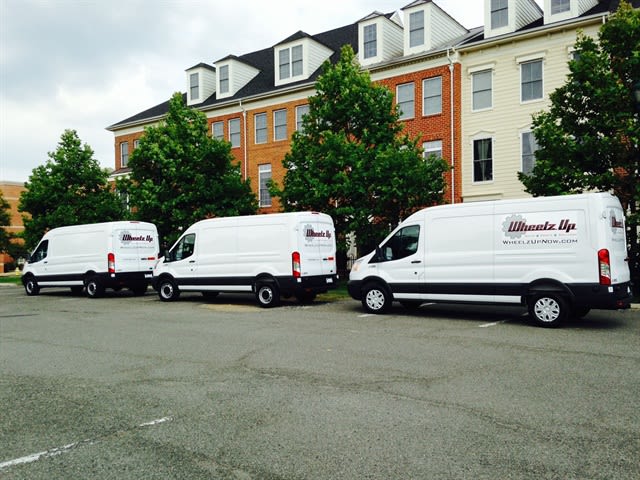
Wheelz Up has a fleet of only cargo vans.
Originally posted on Work Truck Online
More Vehicle Research
EV Realty Names Henrik Holland President as Charging Platform Expands
The former Prologis Mobility and Shell executive will help expand EV Realty’s truck charging business and move its power-first infrastructure model into autonomous vehicle depots and other fleet sectors.
Read More →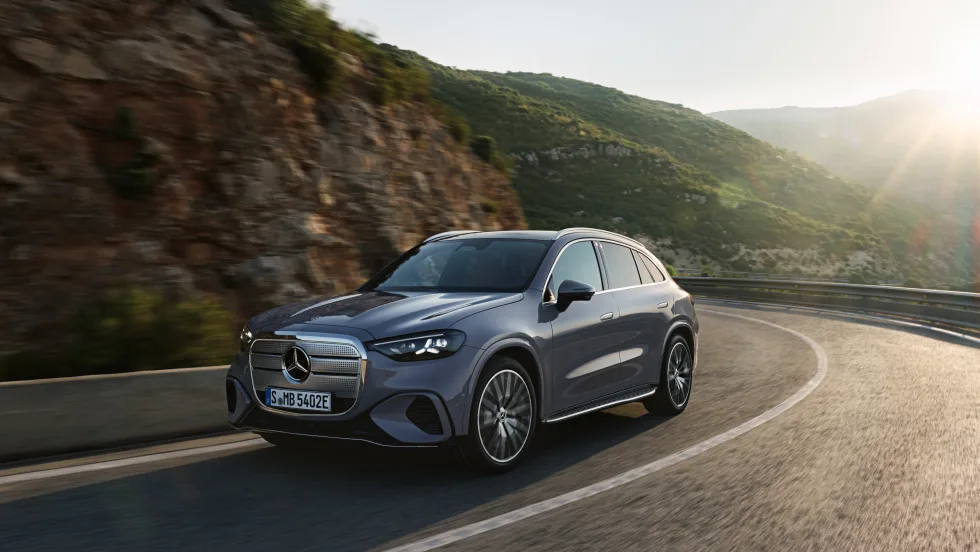
Mercedes-Benz Introduces Electric GLC With Up to 350 Miles of Range
The GLC 400 4MATIC Electric features an 800-volt architecture, 330-kW DC fast charging and a 94-kWh battery, along with Mercedes-Benz's new MB.OS operating system.
Read More →
Fleet Has a Talent Pipeline Problem, not a Talent Problem
Where will the next generation of fleet leaders come from, and what does the industry need to do differently to find them?
Read More →
Fleet Hacks: What Are You Still Doing Manually?
From daily recaps to repeatable workflows, fleet professionals share how AI can cut through busywork while keeping human judgment at the center.
Read More →
How One Fleet Manager Put a New Spin on Safety Training
Joe Lewis turned a pre-trip inspection lesson into an AI-assisted song, then four safety albums. The experiment also revealed why human oversight matters when AI enters driver training.
Read More →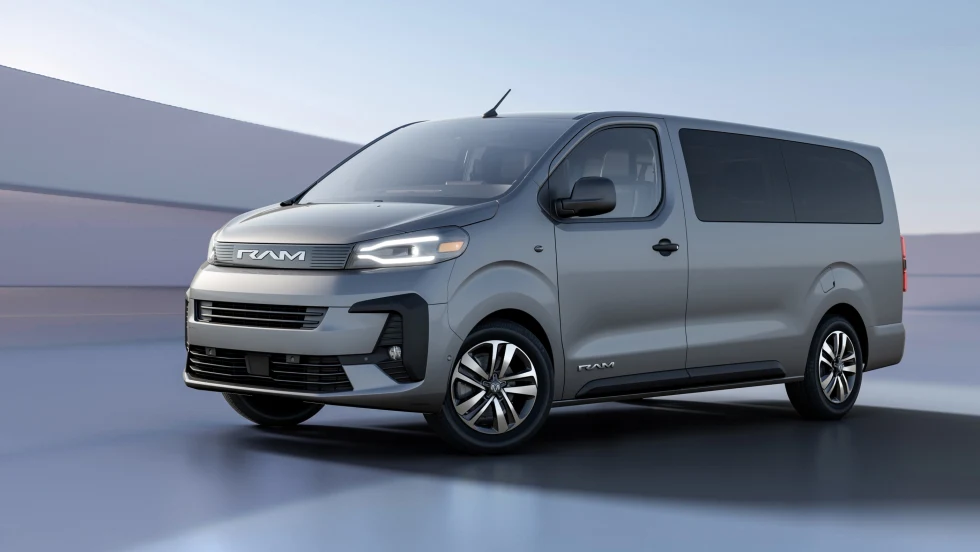
2027 Ram ProMaster City Starts Under $40K
Ram is returning to the smaller commercial van market with a new ProMaster City aimed at delivery, service, trade, and passenger applications. Starting at $39,995 with destination, the 2027 van offers up to 2,000 pounds of towing capacity, more than 2,000 pounds of payload, and multiple cargo and passenger configurations.
Read More →
New Tariff Threats & a Leadership Change at Wheels | AF News Recap
A new tariff threat is creating more uncertainty for fleet ordering, Wheels has named a new president, and we’re asking whether certification is really worth the investment.
Read More →
Certification: What’s in It for the Fleet Manager?
From smarter fleet decisions to stronger career credibility, certification can give fleet managers knowledge they may never gain inside a single operation.
Read More →
Wheels Names Matthew Cole President
Cole brings more than 30 years of automotive and technology experience to the fleet management company, including leadership roles at Aptiv, Visteon and Johnson Controls.
Read More →
AI is changing what fleet managers can build & 849,000 vehicles recalled | AF News Recap
Fleet managers are learning how to build their own AI-powered tools, Stellantis is recalling nearly 849,000 vehicles, and this year’s Fleet Manager of the Year finalists have been revealed. Additionally, we’re examining how to identify repairs that warrant a second look. Here’s what you need to know this week.
Read More →