





Want More? The Promise of OEM Telematics
Using Telematics to Manage Truck Fleets
Fleet managers describe how the ability to track vehicle location, gas consumption, and preventive maintenance has benefited their fleets.
September 1, 2007

Deciding to implement a telematics system is only the first step — finding the right one requires some research.
Photo: Work Truck
7 min to read
Nobody has to explain the benefits of truck fleet telematics to Joe Christenson. Not long after the president of Plumbing Plus and Remodel Works Bath & Kitchen in Poway, Calif., installed San Diego, Calif.-based Networkcar’s Networkfleet system in his fleet of 30 service vans and pickups, he knew he’d made the right decision.
“You know where your vehicles are all the time,” he says. “With the plumbing service, we can look up and see who’s the closest vehicle to the next call that we have. We’re not wasting time sending somebody who’s 10 or 15 miles further away to the job site simply because they’re up next.” Like other telematics providers, by utilizing the Global Positioning System (GPS), Networkfleet is able to track its clients’ vehicles in real-time and produce a detailed digital report.
“We use a flat-rate billing system,” Christenson says. “So a client may say, ‘Well, you know, you charged me $500 and he was only here for two hours.’ So we can go back and look and say, ‘I’m sorry, sir, but he was there for four hours, he got there at such-and-such a time and he left at such-and-such a time.’ We’ve got the log to prove it. We also use it to make sure our own people aren’t overcharging.”
Maintenance Applications for Fleet Telematics
Knowing where vehicles are, when they got there, and how long they stayed is invaluable information for fleet managers, but keeping those vehicles in service and on the road comes first. For Christenson, that responsibility is shared in part by Networkfleet’s remote diagnostics system.
“We also use it for automotive maintenance,” he says. “It gives us warnings when the catalytic converter or the timing is out, oil changes, those types of things, and it also keeps track of our gas mileage…if there’s something wrong with the catalytic converter or the exhaust system, and it’s not clean, it will give you notice. Once you get a notice that it’s failed, you can’t start it again until you get a smog check. In California, every two years, we have to get it checked. It takes $50 or $60 to get it done, not to mention the lost time. When you start adding these things up, anybody who’s supplying vehicles, and who doesn’t have it, that’s a big mistake. It’s almost like running a business without a computer.”
Josh Zimmet, executive administrator for BLS Trucking Inc. in Dayton, Ohio, would agree. For his fleet of more than 200 tractor-trailers, box trucks, flatbeds, and pickups, Networkfleet acts as the first line of defense against breakdowns. “It’s really helped us out on maintenance,” he says. “I know a couple of times we’ve noticed problems with our trucks and we’ve been able to pull the reports on it. We’ve been able to tell the shop exactly what the problem is, going in. Once it triggers the black box, we get an alert on it. We can call them and find out if the problem’s as serious as we may think, and whether or not we need to shut the truck down right away and get it to the shop.”
George South is district manager for Markham, Ontario, Canada’s Miller Waste Systems, a division of The Miller Group. Implementing Toronto-based telematics provider AirIQ’s ServiceIQ system is changing his approach to scheduled maintenance.
“Up until this point in time, our fleet, regardless of the unit number or how much it was used each month, was serviced once every 20 working days. So we’re over-servicing the fleet, but now we’re moving towards hours of service and on-road service, and in the future we’ll move to fuel consumption.”
Fuel Savings Benefits from Fleet Telematics
For Dave Seavey, tracking fuel consumption was the goal that drove his decision to add telematics to his fleet’s toolbox. As the fleet manager for the City of Olympia, Wash., is helping to lead that city’s high-profile campaign to reduce emissions. The fleet is being streamlined and rebuilt, and Seavey is using telematics to chart its progress. He undertook a pilot program in which nine vehicles from different public service departments were fitted with AccuTag, a vehicle reporting system developed by Fort Worth, Texas-based Williams-Pyro.
“We’re collecting data on vehicle idle time, heavy braking, and excessive acceleration. We monitor different size pickups, a solid waste vehicle, and a police car.” Even Seavey was surprised by the results. “We installed a monitoring device on a patrol car. The system indicated that during a stretch of 40 hours of that car’s operation, 19.7 hours were recorded on the AccuTag system as idle time!” Convincing the police department that changes had to be made was as easy as sharing the report. “For the first time, we’re able to show the amount of idle time on a bar graph. The data has a powerful effect when it’s displayed this way.”
Promoting Accountability Through Telematics
For service-based businesses, work trucks represent an invaluable company asset. Protecting that asset against employee abuse is a concern for fleet managers. BLS Trucking’s Zimmet was surprised to find that installing Networkfleet had inadvertently derailed a supplemental source of income for one of his drivers.
“We found somebody who was running an event every year with our truck, and was getting paid for it,” he says. “And this year, when it came time for the event, he wasn’t able to do it, and they called our corporate office asking why our truck wasn’t there!”
Such extreme cases may be rare, but a telematics system can be just as helpful in tracking day-to-day usage. Christenson found that, despite some initial resistance, his employees came to realize the benefits of data gathering.
“There was an issue when we first put [the system] in, and it was a question of trust,” Christenson says. “Our guys are out in the field most of the time. They do the timecards back at the office. On the remodeling side, people were coming in once a week to do their timecards. If an entry was off by more than 10 minutes, we’d make a correction and then send their timecard back to them at the end of the week.
“I had a great employee, just a really terrific employee, and he got so mad, he threatened to quit! And I asked him, ‘Well, how are you doing your timecard?’ He said, ‘I do it every Friday. But I know what time I get there.’ I said, ‘Well, for the next two weeks, make sure you do it every day.’ And before the end of the two weeks, he came back in and apologized! It wasn’t an issue that he thought he was taking advantage of us. He thought he was being true and honest, it was just the way he was doing his timecard.”
For South, the ability to reduce or eliminate human error helped sell him on AirIQ’s system.
“It was important that it have absolutely no human input, so we couldn’t screw it up,” he says. “The thing had to work all by itself, automatically, every day. When we have a problem, then we’re able to just log in, call up that unit number, and find out what’s going on. That was a real bonus for us.”
Telematics Solution Comparison Shopping
Deciding to implement a telematics system is only the first step — finding the right one requires some research. Each manufacturer offers a unique range of services and reporting capabilities.
“We considered eight or nine different service providers, listed out all of the criteria that we were after — our wish list, so to speak,” South says. “The primary reason we went with AirIQ was because of their cellular coverage network.”
“Cutting fuel costs was our main concern and focus for looking into GPS,” says Zimmet. “Being able to get diagnostic readings was the deciding factor to go with NetworkCar GPS, but it’s been able to do some other things too, such as speed and mileage reports.”
In addition to offering all the data-gathering services he needed to help run the City of Olympia’s fleet, Seavey found that AccuTag fit his day-to-day workflow as well.
“Any time a vehicle drives by my office on its way to our fuel island, the wireless vehicle monitoring system downloads stored onboard computer data to my laptop. It downloads the data stored in the vehicle’s computer since its last download,” he says. “The data has proven to be useful in educating our drivers and beginning to change driving habits. That was our goal.”
In the end, Christenson’s experience shows all the effort was worthwhile. “Data collection systems help you to make decisions,” he says. “The people who aren’t doing that? They’re going to be left behind.”
Originally posted on Work Truck Online
Subscribe to Our Newsletter
More Fuel
Fuel Prices Surge in September | September Fuel Update
September brought major fuel price swings, including diesel crossing $6 a gallon. Here’s how gas and diesel prices changed throughout the month, and where they stood heading into October.
Read More →
Turning Fleet Payment Data into Executive Insights
Ramel Lindsay of U.S. Bank Voyager discusses how fleets can transform payment and transaction data into actionable intelligence to reduce costs, improve oversight, and support executive decision-making.
Read More →
Why the IRS Raised Its Mileage Rate in the Middle of 2026
Fuel-price volatility drove the rare increase to 76 cents per mile, the fifth midyear adjustment since 2000.
Read More →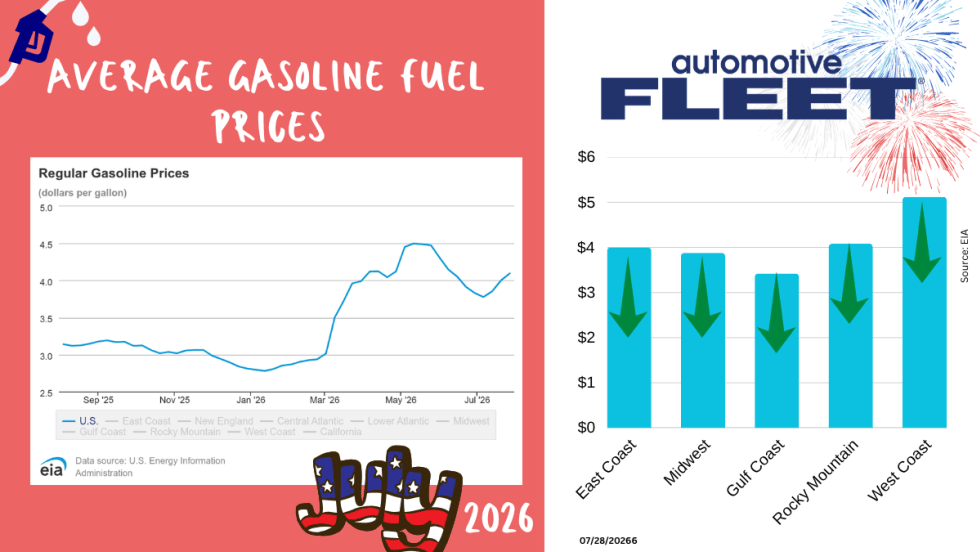
July Fuel Update: Prices Keep Rising in Light of More Conflict
Gas prices continue to rise as more and more conflicts do, too.
Read More →
Bob Adamsky on Fuel Volatility: "Don't Panic, Have a Plan."
When it comes to up and down fuel prices, Adamsky has a message for fleets: “Don’t panic.”
Read More →
How Fleets Can Gain Control of Non-Fuel Spend
Fuel often gets the spotlight, but non-fuel expenses can have a major impact on fleet costs. Ramel Lindsay of U.S. Bank Voyager discusses how fleets can gain better visibility and control over these often-overlooked expenditures.
Read More →
Fuel is Just the Start: How Middle East Tensions are Driving Up Fleet Maintenance Costs
The Middle East conflict is doing more than pushing up fuel prices. It’s also raising the cost of key maintenance products your fleet depends on, from motor oil to tires to windshield wipers. Here’s what you need to know about this budget-busting situation.
Read More →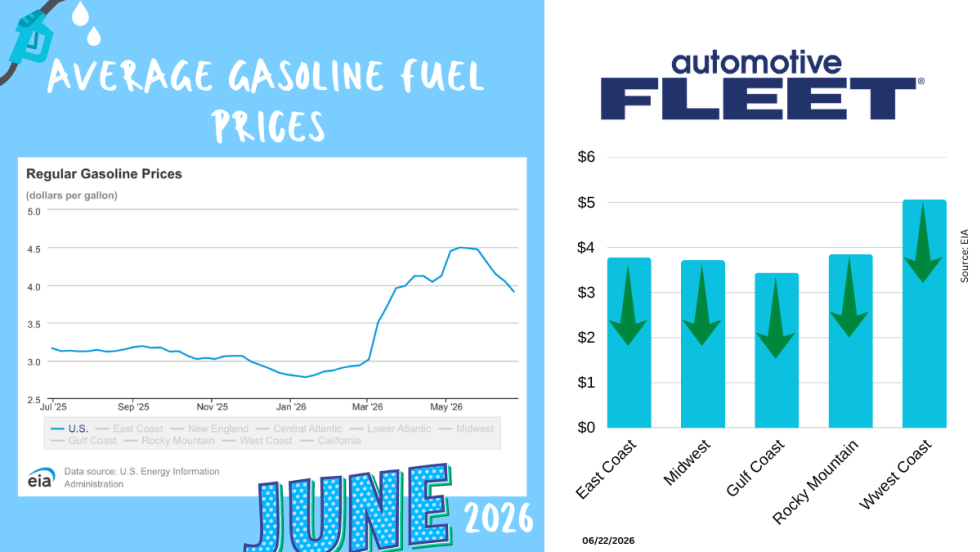
June Fuel Update: Prices Fall Below $4
Drivers are finally getting some relief at the pump. The national average gas price has dropped below $4 a gallon for the first time in months, with prices falling in 47 states as oil markets react to developments in U.S.-Iran negotiations.
Read More →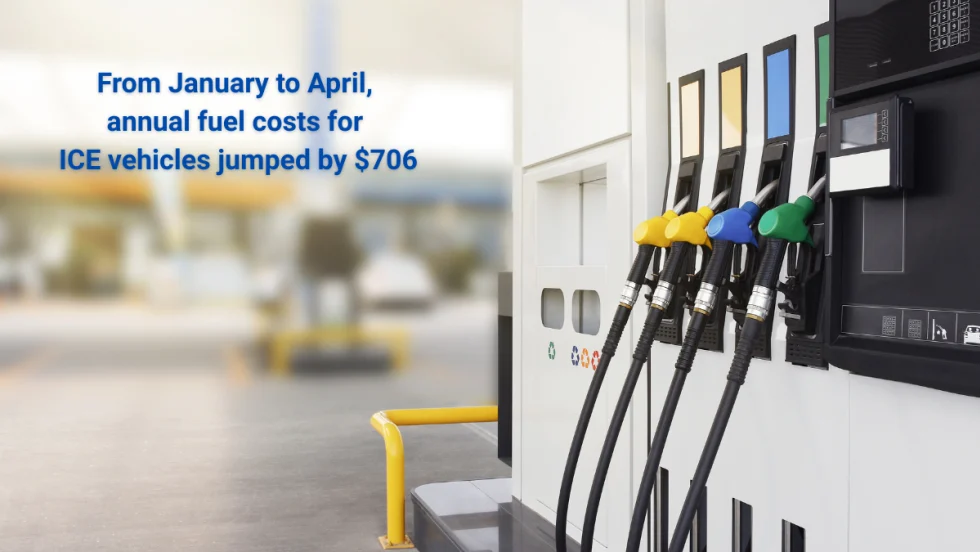
Study: How 2026's Gas Price Hikes Affect Different Vehicle Types
New data from iSeeCars reveals how rising fuel costs have affected different vehicle segments as gasoline prices climbed nearly 46% over the past four months.
Read More →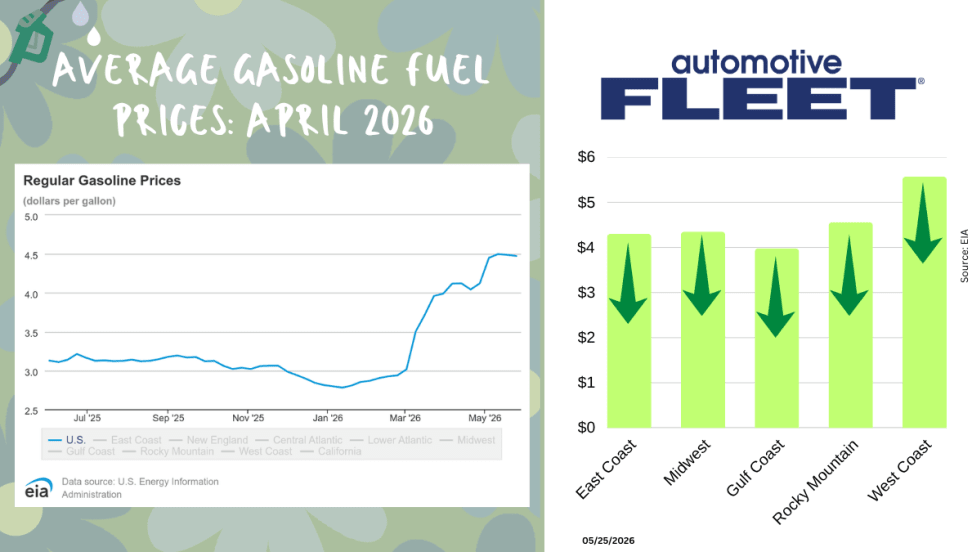
May Fuel Update: All Regions Experience Declines
Gas prices are finally easing in much of the country, but experts warn global tensions could quickly reverse the trend as the national average remains well above last month’s levels.
Read More →