




Using Safety Technology to Combat Distracted Driving
Five technology-based products attack distracted driving in different ways.
Once it senses movement of 15 mph, Zoomsafer locks the keypad and screen of smart phones, disallowing access to texting and e-mails.
For the sake of productivity, Americans are engaging in disturbing behavior in the driver seat.
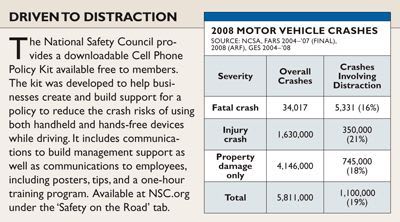
A Virginia Tech 100-car study for NHTSA found that 80 percent of crashes are related to driver inattention. NHTSA also found that more than 5,000 people died in 2008 in crashes involving a distracted or inattentive driver, and more than half a million were injured. As a result, most states have enacted laws or are pushing legislation to ban handheld cell phone use and texting.
Despite these stats and new laws, realistically, once a vehicle leaves the lot, what's a fleet manager to do to ensure that his driver isn't writing an urgent email, sipping a hot coffee, and steering with his knee?
Many companies offer products that combat distracted or inattentive driving, working to modify driver behavior through various means. Ranging from cell-phone keypad restrictions and sensory alerts for irregular driving to voice mentoring and Web-based driver training, these technologies can help decrease dangerous incidents, limit company liability and even lower insurance costs.
Previously the domain of large fleets with high-priced assets on mission-critical time schedules, these technological solutions are coming within reach of smaller fleets in terms of price point. After all, any driver is a "high-priced asset," no matter what size fleet.
Software Locks Cell Phone While Driving
What it Does: When a car is in motion, Zoomsafer's software program locks the cell phone to prevent hand operation while enabling cell phone calls via voice commands.
How it Works: The Zoomsafer software, available for Blackberry and Windows Mobile smartphones offers a way for companies to enforce the safe and legal use of cell phones while driving.
"I was headed to work one morning and I got a text message on my BlackBerry. I looked down at it and looked up, and I hit a 9-year-old boy on his bike," says Matt Howard, founder and CEO of Reston, Va.-based Zoomsafer (www.zoomsafer.com). The boy was okay, but this incident led Howard to consider his cell phone use habits, and prompted him to start Zoomsafer.
Using a cell phone's GPS technology, the Zoomsafer software automatically starts up once it senses movement of 15 mph, and locks the keypad and screen so that drivers cannot text or e-mail until they are out of the vehicle and command the software to stop.
Drivers can still take calls, however, via Bluetooth, earbud, or speakerphone, using an onboard voice dialer with preprogrammed convenience keys and an inbound call manager. Outbound calls can be made via voice command. The software reads aloud names or phone numbers of inbound calls, or automatically puts them through if they are on a priority contact list.
E-mails and text alerts are suppressed, and a customizable message will let the sender know that the message has been received, but cannot be answered immediately.
An additional Voicemate feature is planned that will allow users to create voice-powered e-mails and texts, as well as announce the receipt of priority e-mails and texts, further enabling drivers to legally increase productivity while on the road. Availability with other phone types is also planned.
[PAGEBREAK]
Users who are passengers in a moving vehicle or a bus can enact an optional snooze mode that allows them full access to the phone's features. Drivers who insist on multi-tasking while driving can willfully trick the system by identifying themselves as a passenger. However, if an accident were to occur, the company could protect itself from a plaintiff action by showing a record that the driver had turned this function on. "Liability is cleanly extracted from the corporation, and risk is appropriately managed," says Howard.
The Results: Howard cites numerous lawsuits for accidents caused by employee mobile phone use, and says that Zoomsafer can limit a company's liability in such accidents. Contact Zoomsafer for its Distracted Driving ROI calculator, which computes costs associated with distracted driving crashes and potential savings by fleet size using Zoomsafer.
The Cost: Fleet managers can customize software features online and the program can be downloaded via a Web link. The Zoomsafer software costs less than $10 per month, per device.
System Warns Drivers during Dangerous Maneuvers
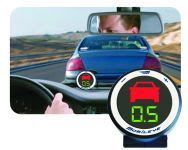
What it Does: Mobileye (www.mobileye.com) uses computer sensors to warn a driver of potential crashes.
How it Works: "We've come up with a system that gives notification when you put yourself in a dangerous situation," says Mobileye's CEO Skip Kinford.
The three core technologies of Mobileye's C2-170 Advanced Warning System are Lane Departure Warning, Headway Monitoring and Forward Collision Warning.
Lane Departure Warning emits three chimes to notify the driver of an unintentional lane departure, while the corresponding lane marker on the system's screen flashes. Kinford adds that the system adapts to driving habits and will allow some leeway for situations such as curvy roads.
Headway Monitoring measures the distance in seconds between
the vehicle and the vehicle directly in front of it.
The Forward Collision Warning feature calculates the closing rate to the vehicle in front based on the vehicle's braking capabilities. If it senses imminent contact, it emits an abrasive audible and visible warning.
Fleet features include customizable alerts for managers, such as if a driver has a series of lane departures in a short period of time, signifying fatigue. The dispatcher can be notified instantly, who can call or voice message the driver to check in on him or her.
The Results: The technology's 24/7 driver assist can lead to a significant improvement in driver behavior, and alerts sent back to fleet managers or dispatchers will encourage drivers to practice safer driving techniques. According to Kinford, a Daimler Benz study found that 90 percent of rear-end accidents can be prevented by receiving 1.5 seconds of advance warning. The Mobileye system gives 2.4 seconds of warning.
The Cost: The technology, already an OEM product for BMW, General Motors and Volvo, is also available as an aftermarket product. Product cost is usually less than $1,000 per vehicle, depending on the complexity of the installation.
Audible Driver Mentoring Can Lower Insurance Rates
What it Does: Inthinc's Tiwi technology offers fleets a system that audibly "mentors" drivers while driving to help them reduce dangerous driving behavior.
How it Works: Tiwi's in-cab system verbally alerts drivers when they exhibit dangerous driving behavior such as hard turns, accelerations and braking, speeding and safety belt violations. The system uses a GPS receiver and cellular network coverage to track vehicles and notify fleet managers in real time when an incident occurs. The "Speed-by-Street" technology compares actual vehicle speed to a database of speed limits, or limits set by the company. Also available are Smartzones, which allow managers to set arrival and departure alerts or speed limits in geofenced areas.
[PAGEBREAK]
An online fleet monitoring and reporting portal is available, as well as trend analyses on both driver and vehicle performance. An RFID reader allows for separate data for drivers sharing a vehicle.
During implementation and the early stages of using the Tiwi technology, the system collects data about the driver's behavior before turning on the mentoring system.
The Results: "In virtually every case, the minute we turn on the mentoring, driving behavior changes, and it changes dramatically," says Todd Follmer, CEO of the West Valley City, Utah-based company (www.inthinc.com).
Company records show a 73 percent improvement in safety belt usage, 86 percent reduction in speeding violations, and 89 percent reduction in aggressive driving after 90 days of use.
Better driving behavior leads to an increase in fuel economy, and some insurance companies will give a 10 percent discount for installation, Follmer adds.
The Cost: Installation is as simple as plugging the system into the diagnostic board on the vehicle. Inthinc maintains and updates the software automatically. Rates depend on the type of plan chosen. A three-year subscription, which comes with the hardware, costs $299.99.
High-Tech "How's My Driving" Program Targets and Trains Unsafe Drivers
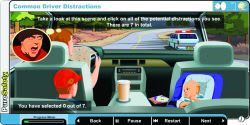
What it Does: The Smart Risk system from Driver's Alert uses an updated version of a "How's my driving?" call-in program to identify and coach high-risk drivers.
How it Works: While in-car technology can be helpful in ensuring safe driving, outside sources and preventative training can be used as well. Driver's Alert (www.driversalert.com) started in 1989 with the familiar 'How is my driving?' bumper stickers, but since then has evolved into handling driver observation reports, training and data management.
The Driver's Alert Smart Risk system identifies high-risk drivers through its on-the-road call-ins and offers this information to the fleet manager, who can then make decisions to remedy driver behavior. Call center safety specialists follow a script to determine if the driver is distracted by asking questions of the caller regarding behavior, such as texting, talking on the phone, eating, or not wearing a safety belt.
To remedy dangerous driving, drivers are able to listen to an actual recording of the motorist's call. Driver's Alert immediately sends out an applicable online driver safety training course.
The 23-minute distracted driver training video can be accessed online. The video discusses the prevalence of distracted driving and the three major types of other distractions, then suggests ways to avoid these distractions and strategies to remain focused on driving.
The Results: Paul Milazzo, chief operating officer of Driver's Alert says that through years of data collection Driver's Alert is able to predict which drivers will have accidents. For example, in some clients' companies with certain vehicles, drivers with four or five negative calls have had an accident.
Driver's Alert guarantees a 25 percent reduction in at-fault crashes, although Milazzo says some companies see results of up to 67 percent.
The Cost: The service costs $2 per vehicle per month on average, with access to training modules included. Training modules are available at any time, for new hires or to reinforce continual safe driving.
[PAGEBREAK]
Interactive Web Training Gives Realistic Driving Lessons
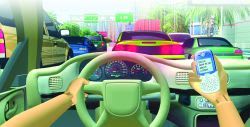
What it Does: DriverCare Web-Based Training from CEI offers a half-hour interactive online driver safety lesson called "Avoiding Distracted Driving," one of nearly 30 different lessons available to fleets of any size.
How it Works: Fleet administrators can go to www. drivercare.com/training to buy the lesson any time, for any number of drivers. The site comes with a "Learning Manager" function that enables administrators to assign lessons to specific drivers, track their progress, keep permanent records and run reports.
Drivers can take the lessons anywhere and anytime on a computer with Internet access and speakers or a headset. Drivers can take the entire lesson in one sitting, or log off at any point and finish the lesson later.
"Our lessons use computer-game technology to create realistic simulations of on-the-road situations where driver behavior can make the difference between having an accident and getting where you want to go in one piece," says CEI spokesman Mark Boada.
Like its counterparts, "Avoiding Distracted Driving" consists of animated graphic displays accompanied by a narrated, on-screen script, a series of interactive exercises and a final, 10-question exam drivers must pass with a perfect score before they can download a certificate of achievement. The lesson describes the statistics, science and sources of distracted driving - from eating and putting on makeup to cell phones and text messaging - the risks of each kind, and tests how well drivers have absorbed the information.
Administrators who want to target high-risk drivers can also subscribe to CEI's DriverCare mvrComplete, an online motor vehicle record authorization and retrieval service. The service retrieves up to three years of driver violation history.
The Results: "Avoiding Distracted Driving" was introduced to the market late last fall, "so it's too early to tell yet what effect it's had on reducing the incidence of distracted driving or accidents caused by it," Boada says. But, he adds, the lessons are the same as the ones used in CEI's DriverCare Risk Manager, a comprehensive big-fleet driver safety and risk management system. Users of that system - which includes
automatic lesson assignments tailored to recent driver safety infractions - have seen their fleet accident rates reduced by 15 to 30 percent a year, Boada says.
The Cost: "Avoiding Distracted Driving" is available in two different versions, one for sedans and light-duty trucks at $14.95 per lesson, and heavy-duty trucks at $18.95 lessons. Discounted rates are available for purchases of 200 or more lessons.
Originally posted on Work Truck Online
More Articles

Chad Edmondson Named 2026 Fleet Safety Award Winner
The VSC Fire & Security fleet director oversees more than 1,100 assets nationwide. His approach to improving driver safety emphasizes collaboration, employee engagement, and building trust with the people behind the wheel.
Read More →
Joseph Lukacs Wins 2026 Global Fleet Manager of the Year
The Sherwin-Williams fleet leader adds another industry honor to his career after being named the 2025 Edward J. Bobit Professional Fleet Manager of the Year.
Read More →
IIHS Crash Avoidance Tests Reveal Safety Gaps in Cargo Vans and Work Trucks
New crash-avoidance ratings from the Insurance Institute for Highway Safety reveal inconsistent performance among commercial vehicles, with several popular cargo vans and heavy-duty pickups struggling to avoid collisions with other vehicles and pedestrians.
Read More →



When Should a Fleet Repair Vehicle Damage Before Remarketing?
Not every dent, scratch, or mechanical issue is worth fixing before selling a fleet vehicle. Learn how to weigh repair costs, resale value, market demand, and downtime to determine when reconditioning pays off and when selling as-is makes more sense.
Read More →
Here's When You Should Make an Exception to Fleet Policy
Fleet policies are designed to create consistency, but not every driver or situation fits neatly within standard rules.
Read More →
AI-Native or AI-Acquired: What Should Fleet Managers Look for in an AI Platform?
Six questions can help fleet managers look beyond AI marketing claims to evaluate integration, data access, and real-world operational performance.
Read More →
Element Expands Waymo Partnership to Support Toronto Robotaxi Fleet
As Waymo prepares to enter the Canadian market, Element Fleet Management will oversee the fleet operations supporting its planned Toronto launch. The partnership highlights the maintenance, charging, and infrastructure requirements behind operating autonomous vehicles at scale.
Read More →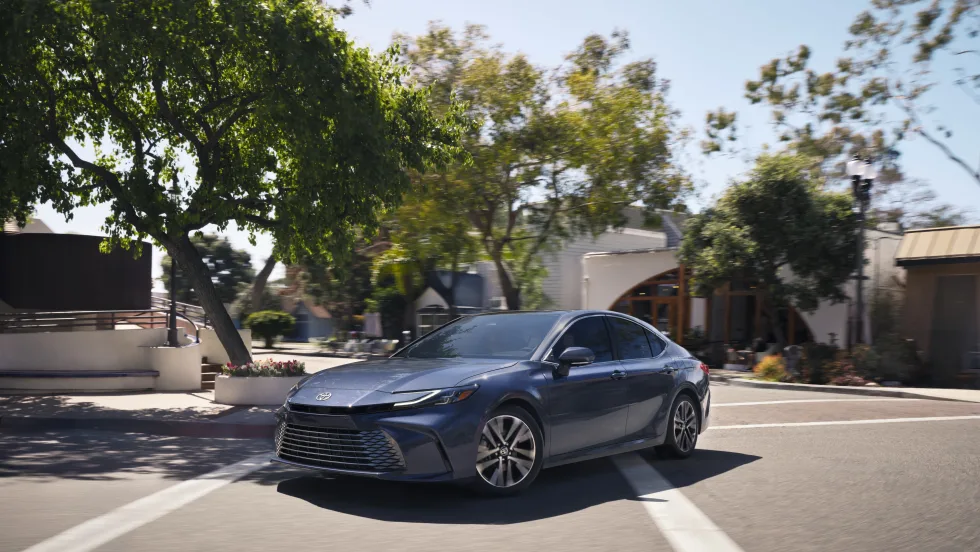
2027 Toyota Camry Offers Hybrid Powertrain Across Five Grades
The 2027 Toyota Camry is a carryover with new pricing.
Read More →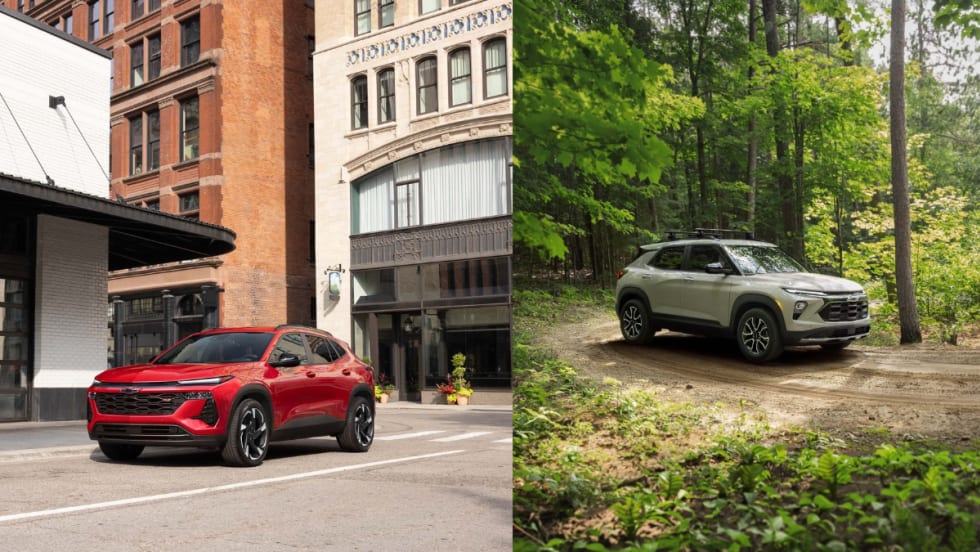
Chevrolet Updates 2027 Trax and Trailblazer with More Standard Safety Features
Chevrolet is updating two of its smallest SUVs with added driver-assistance technology, redesigned interiors, and revised trim options. The changes could add more safety equipment as standard for commercial fleets, while a new Trailblazer configuration adds another all-wheel-drive option.
Read More →
What’s Next for Fleet? Safety, AI & Industry Recognition | AF News Recap
Could your company's culture be encouraging distracted driving? This week, we're exploring how workplace expectations affect driver safety, what AI, EVs, and autonomous vehicles could mean for the future of fleet management, and how fleet professionals can strengthen their award nominations.
Read More →