





Related: Egypt Fleet Market Struggles with High Inflation & Interest Rates
Tunisia Fleet Market Recovering from Socio-Economic Upheavals
The top-selling OEM in Tunisia is Isuzu Motors with its D-Max truck, which is also the No. 1 selling vehicle. Isuzu has been assembling the D-Max in Tunisia since 2002. Citroen is the next best-selling commercial vehicle, followed by Peugeot.
October 1, 2018
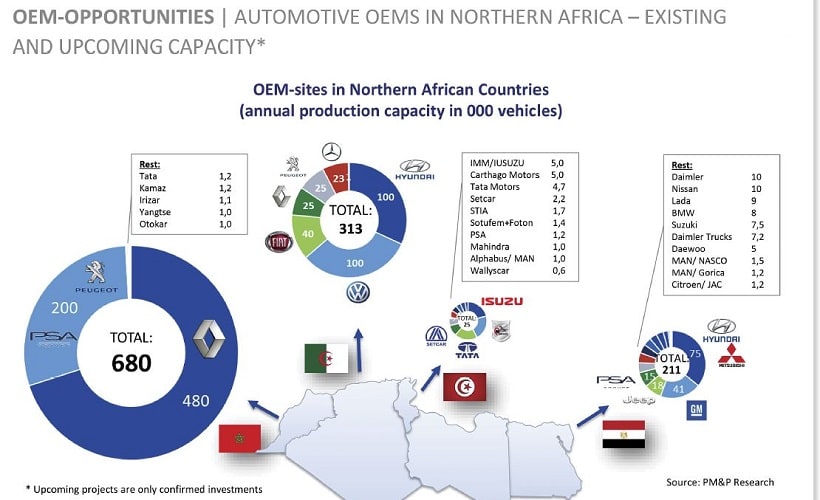
For a country of only 11.6 million people, Tunisia has a number of different brands selling in the country. For instance, you can see on the streets of Tunis traditional European brands, such as Renault, Peugeot, Citroen, Volkswagen, Skoda (a VW brand), and Dacia (a Renault brand). The other dominant players in Tunisia are the Japanese brands, such as Isuzu, which is the No. 1 selling vehicle, Toyota, and Nissan models. But, you can also see a growing number of Korean brands, such as Kia, Hyundai, and Ssangyong; along with a smaller number of Chinese brands such as Chery, King Long, and BAIC.
Data courtesy of PM&P Research.
11 min to read
Tunisia is still recovering from three major economic and political upheavals that occurred over the past decade – the global financial crisis of 2008, the Tunisian Revolution of 2011 that triggered the Arab Spring regional unrest, and a series of successful terrorist attacks against tourists in 2015 that collapsed the country’s tourism industry.
All three of these socio-economic disruptions were interconnected to one another. The 2008 global financial crisis helped precipitate the 2011 Arab Spring revolution with the downturn in the Tunisian economy exacerbating the country’s socio-economic inequalities. Known as the Tunisian Revolution, it was the flashpoint of the Arab Spring, which triggered a series of socio-political uprisings across 16 Arab countries in the Middle East and North Africa. It resulted in rulers being ousted in Tunisia, Egypt, Libya, and Yemen; civil uprisings in Bahrain and Syria and major protests in Iraq and Jordan.
The Tunisia Revolution ultimately led to the ousting of its longtime President Zine El Abidine Ben Ali in January 2011. Labor unions were an integral part of the protests, which, in turn, paralyzed the Tunisian economy. The subsequent political turmoil scared off tourists, which had a major impact on the car-rental industry in Tunisia, while fueling inflation as the dinar, the country’s currency, lost 50% of its value, which brought new-vehicle sales to a slight decline.
The total number of passenger cars and trucks in operation in Tunisia is approximately 2 million units, which makes Tunisia is the fifth largest vehicle market in Africa.
In 2017, nearly 66,016 vehicles were sold in Tunisia, but the number of vehicles sold in the market is actually much higher, due to imports by private individuals.
The light commercial segment is pulling up the overall Tunisian new-vehicle market. In 2017, approximately 20,137 commercial vehicles were sold to customers, with Isuzu being the top seller in this market.
However, the commercial fleet market in Tunisia is small and it is limited to several economic sectors, such as textiles and apparel, food products, petroleum products, chemicals, and phosphates/fertilizers. Tunisia is one of the world’s largest exporters of phosphate rock, which is used to manufacture fertilizer. Phosphate mining is a huge industry in Tunisia accounting for an average 4% of Tunisia’s GDP and represents a key market for fleet sales. However, phosphate production in Tunisia in 2010 was 8 million tons but declined 50% by 2018 because of repeated worker strikes and a fall in demand from foreign buyers.
Next to the government, the largest fleet segment is the car-rental industry. In 2015, there were a series of terrorist attacks directed against the country’s tourism sector which have resulted in a dramatic drop in tourism, negatively impacting the country’s car-rental industry. This was the second time in seven years that the car-rental industry was negatively impacted. The first downturn occurred in 2011 during the Tunisian Revolution when concerns about safety caused tourists to temporarily stop traveling to Tunisia. These two events led to a drop in Tunisian tourism, which declined from 10% of the country’s GDP in 2011 to 8% in 2017. However, tourism appears to be making a comeback in Tunisia with revenues increasing 40% in the first half of 2018 as European vacationers begin to return.
Lastly, the devaluation of the country’s currency, the dinar, in relation to the euro and the dollar has led to price hikes throughout the Tunisian economy. The price of all imported materials increased sharply with the devaluation of the dinar, especially the prices of new vehicles.
New-Vehicle Market
Automotive sales and feeding industry is one of Tunisia’s major economic sectors. No passenger cars are manufactured locally, but Tunisia does have a commercial car assembly industry.
Automotive OEMs doing export business into Tunisia are hindered by high import taxes. “The custom duties fees in Tunisia is among the highest in the world. High taxes help to explain why cars are so expensive in Tunisia,” said Wisam ElBana, general manager - North Africa for General Motors. ElBana works at the regional marketing office for GM’s overseas operations representing the Chevrolet brand in Morocco, Tunisia, Algeria, and Libya. “Because the value of the dinar dropped, cars have become expensive, so new-vehicle purchases are down. Also, car imports dropped by 17% in the first half of 2018, due in part to the impact of various increases in consumer tax, customs taxes, and other fees imposed under the finance law,” added ElBana.
Most of the North African countries, except Egypt and Libya, were French colonies, which makes countries, such as Tunisia, culturally linked to France, with a traditional preference for French cars. But buying preferences are starting to change in Tunisia with the importation of Japanese and Korean brands into the market. Historically, Renault and Peugeot are the dominant OEMs in the Tunisian market.
The Tunisian automobile market is heavily dominated by European brands. Both GM and Ford are present, though market share for U.S. manufactured cars remains under 10%. Meanwhile, Asian auto manufacturers have started to establish a significant foothold in Tunisia.
For a country of only 11.6 million people, Tunisia has a number of different brands selling in the country. For instance, you can see on the streets of Tunis traditional European brands, such as Renault, Peugeot, Citroen, Fiat, Volkswagen, Skoda (a VW brand), and Dacia (a Renault brand). The other dominant players in Tunisia are the Japanese brands, such as Isuzu, which is the No. 1 selling vehicle, Toyota, and Nissan models. But, you can also see a growing number of Korean brands, such as Kia, Hyundai, and Ssangyong; along with a smaller number of Chinese brands such as Chery, King Long, Great Wall and BAIC.
Tunisia vehicle sales in the first-half of 2018 declined 16.9% due to new duties introduced in January 2018. This was the market’s worst performance this decade.
Light commercial vehicle (LCV) sales pushed Isuzu to the top of the market, ahead of Citroen and Renault. In 2017, Isuzu was the best-selling OEM in the Tunisian market. In terms of OEMs, Isuzu dominates the LCV market, followed by Citroen, Peugeot, and Dacia. When broken out by best-selling individual models – both retail and fleet – the Isuzu D-Max was the best-selling vehicle in 2017, with the Kia Rio passenger car in second place.
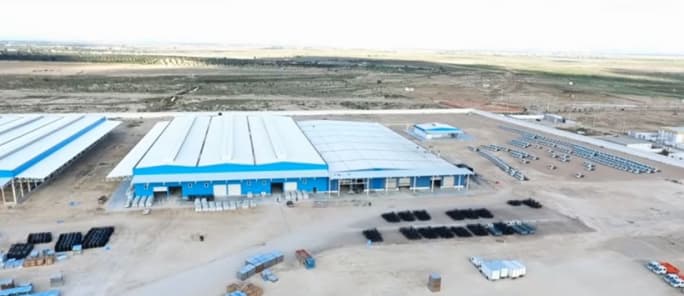
Isuzu dominates the light commercial vehicle (LCV) market in Tunisia. One reason for Isuzu’s success is that it has been locally assembling and selling its D-Max pickup truck in Tunisia since 2002.
Photo via screenshot from Afrique Auto YouTube Channel
One reason for Isuzu success is that it has been locally assembling and selling its D-Max pickup truck in Tunisia since 2002. In the past, as recently as 2015, Citroen topped the light commercials ranking above Isuzu.
Utilizes a Strict Quota System
Tunisia utilizes a strict quota system that caps the number of vehicles allowed into the country annually. The quota thresholds take into consideration Tunisia’s trade deficit, market demand for new vehicles, and investment arrangements among foreign car makers and domestic parts manufacturers. All vehicles older than five years, including heavy trucks, are prohibited entry. Tunisian customs applies a graduated tax on all vehicle imports that rises with vehicle age up to the five-year limit.
“The Tunisian auto market is a very constant market that is based on quota system. Every dealer has a specific quota based on its performance history,” said ElBana. “In March every year, at the beginning of a new financial year, the minister of Trade and Commerce, based on the requests that come from auto dealers, distributes a quota in the form of volume, number of vehicles, and amount of money for each dealer. There is no competition in Tunisia as it is like a divided birthday cake. Everyone knows exactly what they will get.”
Local assembly, however, allows automakers to bypass the vehicle import quota helping companies such as Isuzu. Also, a confirmed news about Geely (Chinese OEM, owns Volvo) is establishing the first passenger cars CKD assembly plant. The Geely plant will assemble CAR-C model starting 2019.
Fuel Price Trends
The price of fuel includes both tax and subsidy components. As a result, the pump price for diesel (2.36 USD/US Gallon) and gasoline (2.68 USD/US Gallon) reflects global oil prices and is comparable to fuel costs in the United States. Tunisian drivers pay more than their counterparts in neighboring Libya and Algeria, but substantially less than European drivers. Two grades of diesel and unleaded fuel are available. Many Tunisian drivers believe the lower-priced, domestically-refined diesel fuel may contaminate injection system engines and necessitate more frequent part replacement and servicing, and that the quality of such fuel contributes to the strong Tunisian market for spare parts and accessories.
Multitude of Taxes & Regulations
In Tunisia, there is a consumption tax and a value-added tax. “The consumption tax, which varies from 20% to 110%-plus, plus 19% VAT, plus other taxes. You have a lot of taxes in Tunisia,” said ElBana of General Motors. “There is a consumption tax based on the engine size, which is split into strata or categories for different engine displacements and fuel.”
Automobiles with large capacity engines carry a higher consumption tax, with rates up to 277% for gasoline engines and 360% for diesel-fueled engines. The government reduces these rates to 84% and 110%, respectively, if imported via authorized distributors. The reduced tax scale is intended to allow the price of automobiles sold through authorized dealerships to be competitive with vehicles purchased privately overseas and shipped back to Tunisia.
Tunisia accepts the European Euro 2 emission standards. “There is a set of regulations in compliance with Economic Commission for Europe (ECE). Tunisia has a list of standards and regulations for all the components of the vehicle. This is why we hardly certify most of the U.S. products in the Tunisian market, which is aligned with the European vehicle standard.” added ElBana.
General Motors has one dealer in Tunis the country’s capital city. “In Tunisia, GM does not import North American cars, because they are not certified with ECE regulations. In addition to large gasoline engine sizes” said ElBana. “Beside the Trax, Sonic, and Equinox, GM is trying to introduce another five models in Tunisia, but which has not yet finalized,” added ElBana.
Inflationary Pressures
Inflation in Tunisia increased in 2018, driven by the dinar depreciation, the VAT rate increase to 19%, and the increase in prices of certain products, such as fuels and tobacco. The inflation rate, reached 7.8% in June 2018 and, according to some published reports, could rise to 9% by the end of the year. In comparison, the inflation rate was 4.25% in May 2017.
The dinar has continued to decline, compelling Tunisia to raise the price of various goods and impose new tax measures. The government announced on June 22, 2018, that for the third time in six months it will raise gasoline and fuel prices by approximately 4%.
Peugeot Returns to Tunisia
PSA, the French auto manufacturer that sells the Citreon, Peugeot, and Opel brands, has unveiled plans to assemble its latest Peugeot pickup truck (based on Dongfeng Pickup) in Tunisia. This project marks Peugeot’s return to the country following a 25-year absence.
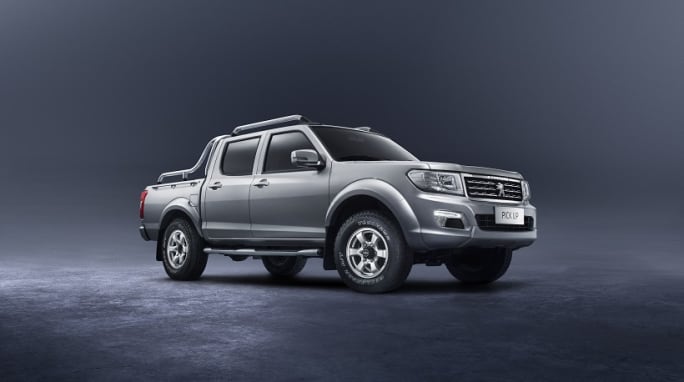
PSA, the French auto manufacturer that sells the Citreon, Peugeot, and Opel brands, has unveiled plans to assemble its all-new Peugeot Pickup in Tunisia at two assembly plants. This project marks Peugeot’s return to the country following a 25-year absence.
Photo courtesy of Peugeot.
The €10.2 million investment includes two new assembly facilities, which will be built in Mghira and Sfax, will be operational by year-end 2018. The firm is targeting production of 4,000 units per year from 2019 onward; 1,200 of the vehicles will be sold locally, and the remaining units will be exported to the Maghreb and sub-Saharan markets. (The Maghreb refers to region of North Africa bordering the Mediterranean Sea, comprised of Morocco, Algeria, Tunisia, and Libya.)
Peugeot is working on obtaining a certificate of origin to facilitate the export of its Tunisian assembled trucks. The certificate exempts manufacturers from export taxes, provided they can show that 40% of value was created locally.
Opel Now Exporting to Tunisia
Opel is exporting cars to Tunisia from its European plants. In Tunisia, after separation from GM, Opel is working with the importer STAFIM, the longstanding partner of sister brand Peugeot. STAFIM, which has been selling Opel vehicles in Tunisia since April 2018. The Opel brand is sold in four showrooms: two in Tunis along with one in Sousse and one in Sfax.
PSA bought Opel from General Motors for 2.2 billion euros (US$2.73 billion). PSA has given Opel until 2020 to return to profit as part of a recovery plan aimed at shifting the brand’s model lineup onto PSA’s production platforms. A key part of the plan is to significantly increase Opel’s sales outside of Europe. Opel wants to double export sales by 2020 with the ultimate goal of generating 10% of its sales volume outside of Europe by the mid-2020s, up from less than 2%.
Accident Rates in Tunisia
A 2015 report from the World Health Organization identifies Tunisia as having the second worst traffic death rate per capita in North Africa behind war-torn Libya.
Tunisia logged 24.4 deaths per 100,000 inhabitants, according to data from previous years, less than Libya’s 73.4. In comparison, there are 2.9 traffic deaths per 100,000 inhabitants in the United Kingdom.
Poorly maintained roads, reckless driving, poor vehicle maintenance, ageing cars, a corrupt traffic authority, and “fake license holders” with minimal driving skills are cited as reasons for Tunisia’s dismal road safety statistics.
Traffic violations are widespread and blatant in the capital. Motorists ignore red lights, double-park, and dangerously drive down tram tracks or drive against oncoming traffic.
As road traffic deaths have risen in Tunisia, it has sparked calls for tougher measures to crack down on widespread traffic offences. There are fines – 40 to 120 dinars for not wearing a seat belt or for talking on a cell phone while driving, but critics say this is not tough enough.
Capitalizing on its Location
The overwhelming majority of products produced in Tunisia are exported, mainly to the European Union and other non-EU European countries. Tunisia’s proximity to Europe, in particular Italy and France, makes it an appealing low-cost export platform. Approximately, 80% of all exports from Tunisia bound to its No. 1 economic partner, the European Union (EU).
Tunisia is attempting to leverage its geographic location by emphasizing its strategic advantage from a logistics perspective, marketing itself as a natural, regional export hub on the North African coast.
“European OEMs have an advantage in Tunisia,” said ElBana of General Motors. “The advantage that the European OEMs have in Tunisia is they have shortest lead time and cheapest logistics. You can ship from Europe to Tunisia and the same day you get the car. For GM, it takes minimum 45 or 60 days, and it’s a long order-to-delivery time with higher costs.”
The Tunisian government is seeking to implement policies to capitalize on its geographic advantage with the hope of replicating what happened in Dubai, which transformed itself into a key commercial hub in the Gulf region, and Singapore, which likewise turned its size and strategic location to its advantage.
Subscribe to Our Newsletter
More Global Fleet
GeoFencing Adds to Your Truck Security Arsenal
Geofencing is a familiar fleet tool today, but its early adoption marked a major shift in vehicle tracking, route monitoring, and the debate over employee privacy.
Read More →
Holman Takes Full Ownership of ARIZA in Mexico
Holman is bringing its Mexican fleet management operation fully under its own brand after more than 30 years as a joint venture. The change gives multinational fleet customers a single Holman operation across the U.S., Canada, and Mexico.
Read More →
5 Tire Maintenance Tips to Help Prevent Work Truck Downtime
Regular tire checks can do more than extend tread life. These five maintenance practices can help work truck fleets catch problems early, reduce costs, and prevent downtime.
Read More →

Proven Ways to Reduce Work Truck Downtime
The age-old problem of downtime will always be a reality, but with new strategies at hand, fleets have more ways to keep trucks on the road longer.
Read More →


Cameras, Safety and Insurance: From Reactive Claims to Real-Time Prevention (Part 2 of 2)
Part Two: Commercial auto remains one of the most challenging and costly lines of coverage for fleet operators and insurers alike. Continue learning more about how to effectively address these issues from Onur Aksan, Enterprise Business Development Executive, Geotab
Read More →
Cameras, Safety and Insurance: From Reactive Claims to Real-time Prevention
Commercial auto remains one of the most challenging and costly lines of coverage for fleet operators and insurers alike. Learn more about how to effectively address these issues from Onur Aksan, Enterprise Business Development Executive, Geotab.
Read More →
Fleet Costs Are Rising: Here’s How Leaders Are Responding
Fleet leaders are under pressure to reduce costs, adapt to economic uncertainty, and make smarter decisions. See how peers across North America are responding with real data, proven strategies, and forward-looking insights. Download the 2026 Market Pulse Report to benchmark your strategy and uncover where you can gain an edge.
Read More →
Enterprise Fleet Management Surpasses 900,000 Vehicles in U.S. & Canada
Enterprise Mobility connects with mobility solutions around the globe
Read More →