




Trucks & Public Service Fleets Key to NAFA Growth
The challenge facing the fleet industry is regulatory legislation, says Patsy Brownson, NAFA's new president. One hallmark of her presidency will be offering more educational programs to help combat this threat.
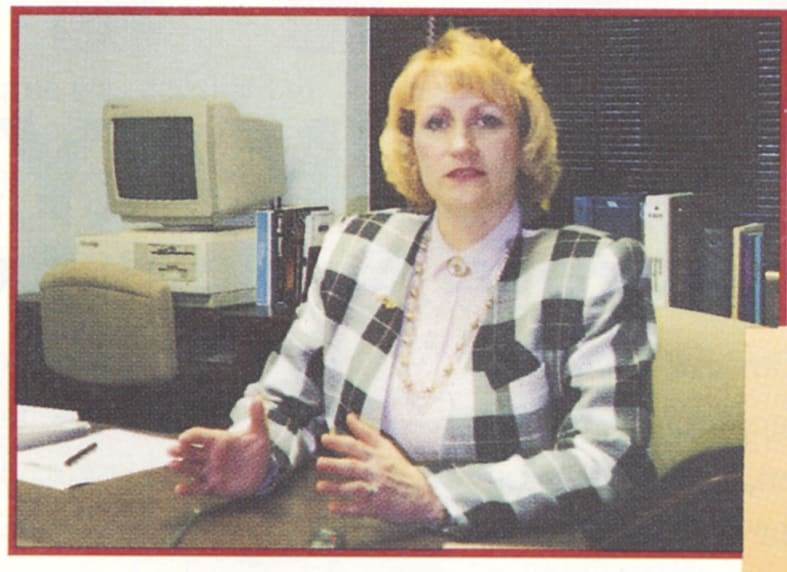
Patsy Brownson, fleet administrator for Cox Enterprises in Atlanta, has been elected president of NAFA. Brownson becomes the organization's 22nd president and its second female president. AF recently interviewed her at Cox headquarters.
Patsy Brownson, fleet administrator for Cox Enterprises in Atlanta, GA, has been elected president of the National Association of Fleet Administrators. Brownson becomes the organization's 22nd president and its second woman president.
To find out what Brownson's plans are as NAFA's new president, Automotive Fleet recently interviewed her at Cox Enterprises' headquarters in Atlanta.
AF: What are your goals as NAFA's new president?
Brownson: NAFA has a strategic plan in place. The governing board will examine the strategic plan and develop 1993 action plans. NAFA's recently released membership-needs-assessment survey will
Patsy Brownson, fleet administrator for Cox Enterprises in Atlanta, has been elected president of NAFA. Brownson becomes the organization's 22nd president and its second female president. AF recently interviewed her at Cox headquarters.
be a tremendous help in establishing the action plans for 1993.
After reviewing the survey results, it was interesting to note that NAFA's current strategic plan identified the same basic needs as expressed by our members. It is my goal to continue the strategic planning process and use it as a guide to satisfy the needs of our membership.
AF: What are your plans in terms of NAFA's legislative efforts?
Brownson: On the national level, we're very proud of our successful efforts to bring fleet manager concerns to the attention of lawmakers and rulemakers across the United States. Our program to educate officials on the real-world needs of fleet managers has enabled many members to share their views electively.
Now, we will focus on developing contacts which are just as effective in Canada. NAFA has retained Ron Lefebvre of Corporation House to serve as our Canadian legislative counsel. Members and affiliates are already receiving information update and new opportunities to educate Canadian government leaders. Also, members will be turning attention to state level laws and rules. The Clean Air Act Amendments require many states to develop plans for improving air quality; many states consider vehicle emissions to be a key area of concern. Working together with the NAFA Alternative Fuels Task Force, we will help members effectively express their views to state-level officials on these important issues.
AF: Is NAFA planning on increasing the number of fleet education seminars it will offer?
Brownson: I'm sure we will expand the number we will offer in the future. These will not only include more educational seminars, but also management seminars and masters' forums - especially now that the Clean Air Act and the Energy Policy Act are going into effect.
Through the Alternative Fuels Task Force, we will learn the most recent developments and perhaps be able to gear our education efforts in that direction. Specialized fleets such as light-truck, utility-type, public service, and government, who normally have their own maintenance and fueling facilities are going to need direction in developing economical and workable plans to comply with these regulations - especially government fleets that are the first fleets having to comply.
We intend to gear up our educational efforts in this area through masters' forums - usually one day roundtable workshops. We will also work through our law enforcement, light-truck, and public service committees to determine similar needs. These committees and the vice presidents they report to will work very closely so we can develop a guide to follow. We intend to offer this guide to members though the NAFA Resource Center.
AF: What are the challenges facing fleet managers?
Brownson: I think the major challenge is upcoming legislation. With Clinton/Gore in power, I see even more fleet regulations being introduced, especially considering Gore's strong environmental stance. I feel NAFA's task is to ensure that all fleet managers have the opportunity to effectively educate Congress, the EPA, and other agencies on the importance of fleets and all the efforts we're already making to clean the air.
The term "capable of being centrally fueled" is yet to be defined. I've heard one definition as being: if you pass a gas station on your way to work, you are capable of being centrally fueled. One of NAFA's concerns is that the EPA has not yet written the guidelines for the Clean Air Act. NAFA members need to work very closely with EPA officials in developing these regulations.
MAFA currently has an Alternative Fuels Task Force. It consists of fleet managers from each of the non-attainment areas. They have developed standardized goals and answers to address various questions dealing with alternative fuels. These goals and answers allow members to go to their state legislatures or attend regulatory hearings and testify on behalf of NAFA members and their own fleet.
AF: What are the other key challenges affecting fleets?
Brownson: The other key challenge is the financial situation. A lot of companies are consolidating and often the first thing cut back is fleet. A company can either keep their vehicles longer or it can develop different criteria for running the fleet. Some companies have hired outside management companies to replace their fleet manager. These outside fleet management programs may have a place with a small fleet where there is no need for full-time expertise. The small fleet manager is normally someone who wears several hat and does not spend the full amount of their time on the fleet.
My definition of a fleet management company is that it should be a fleet administration company. They help administer the paperwork. They don't make decisions. Rather, they provide the fleet manager with alternatives. There will always be a need for the fleet manager. I don't believe hiring a management company means a company has to eliminate its fleet manager or fleet department.
AF: What growth opportunities do you see for NAFA?
Brownson: NAFA's major growth will be in the light-truck and public service/government areas. Our other growth area will be in becoming an information source. By offering fleet managers access to the resource center, it will increase our membership. Teaching theory is important, but what fleet managers are looking for is practical, hands-on experience. For instance, how do I save my company money? We want to let fleet managers know that NAFA has the information they are looking for to operate their fleets.
You will see NAFA develop more meaningful surveys for our members. For example, we are working on a benchmarking study for the public service sector, which should be completed sometime in 1993. NAFA will conduct more quick turnaround, short surveys. We are planning to send out survey to our affiliates similar to the recent membership needs assessment survey.
If NAFA concentrates on informing fleet managers in the light-truck, public service, and government sector what we can offer them, I believe we will attract many of them as members. I believe these sectors will represent the majority of NAFA's growth in the coming years.
More Operations

Fleet Meets: Eric Kilgore
This edition of the Fleet Meets series features one of the industry's best leaders driving multi-market and national operations.
Read More →
Why Reactive Fleet Management Is Becoming Too Expensive to Sustain
Research highlights a growing need for proactive management strategies to address rising costs in fleet operations effectively.
Read More →
What Your Fleet KPIs Aren’t Telling You
Tracking fleet metrics is only useful when the data leads to better decisions. This guide helps fleet leaders assess cost, utilization, and downtime more accurately, identify performance gaps, and prioritize the actions that can improve operational results.
Read More →


Hidden in Plain Sight: Fleet Compliance Risks
Fleet compliance isn't just about having policies — it's about consistently enforcing them. This practical guide reveals six hidden compliance risks common in public sector and shared fleet operations and outlines proven strategies to improve visibility, accountability, and audit readiness
Read More →
Turning Fleet Payment Data into Executive Insights
Does data alone drive results in operations?
Read More →
Automotive Fleet Opens 2026 Personal Use Survey for Commercial Fleet Managers
Commercial and corporate fleet managers are invited to share how their organizations handle company vehicle personal-use policies, charges, and driver eligibility.
Read More →
Gary Van Orden Retires After Nearly Four Decades in Commercial Fleet
From answering customer calls at Ford Motor Company to leading fleet sales across multiple OEMs and a fleet management company, Gary Van Orden's career reflects nearly four decades of leadership in commercial fleet.
Read More →
How Stellantis Plans to Get Ahead of Fleet Downtime
Vehicle acquisition may grab the headlines, but fleet uptime increasingly determines operating success. Darren Bradshaw of Mopar North America gives the details.
Read More →
Hyundai Releases 2027 Commercial Program Incentives
The 2027 Model Year "Fleet Street Incentives" are available to commercial and government fleets.
Read More →
It's All Downhill from Here! Fleet Industry Raises $22,000 for Skilled Trades Scholarships
Work Truck’s Lauren Fletcher and Automotive Fleet’s Chris Brown turned a friendly racing rivalry into $22,000 for automotive technology and skilled trades scholarships.
Read More →