





Related: Propane Autogas Gains Momentum
Truck Fleet Prefers Bi-Fuel Propane System
After running both bi-fuel and dedicated-propane systems, this pool renovation company hopes to switch all of its fleet trucks to bi-fuel. The gasoline option comes in handy during long work trips.
July 16, 2015
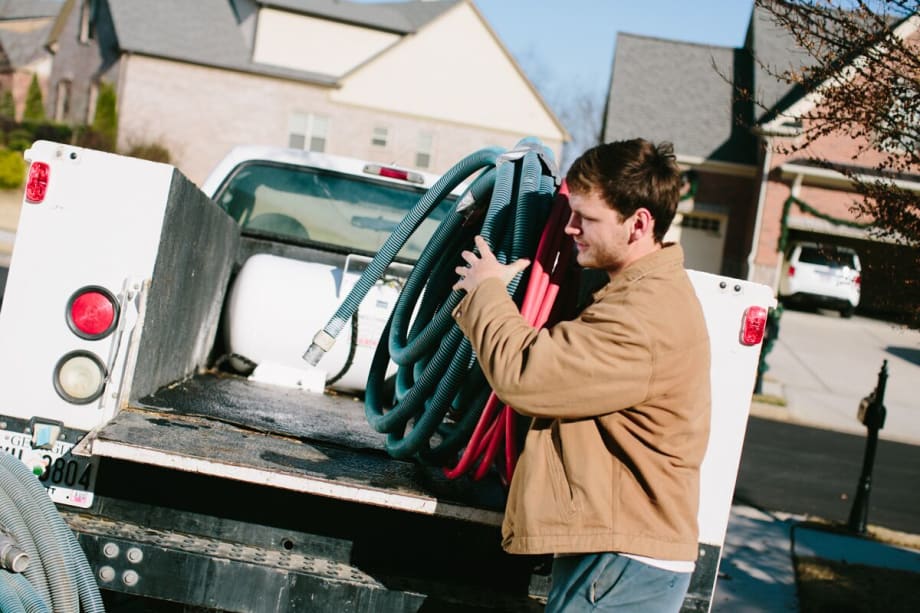
Justin Tullis, an employee of Olympic Pool Plastering, loads equipment onto one of the fleet's propane trucks.
3 min to read
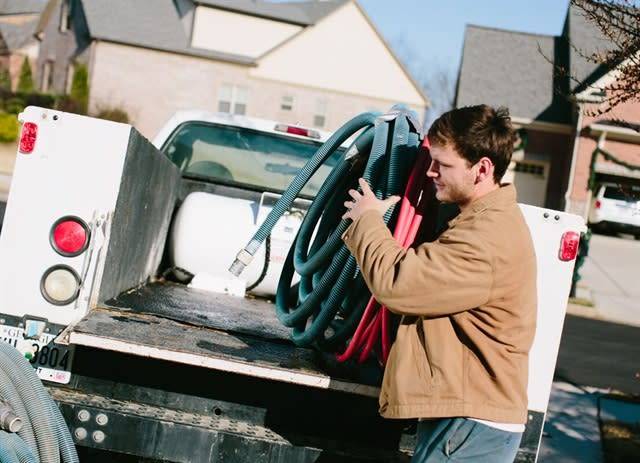
Justin Tullis, an employee of Olympic Pool Plastering, loads equipment onto one of the fleet's propane trucks.
As gas and diesel prices climbed to $4 per gallon, Shawn Still started looking at alternative fuel options for his truck fleet. “We have a lot of heavy trucks and were getting massacred on fuel costs,” said Still, CEO and president of Olympic Pool Plastering, a pool renovation and plastering company located near Atlanta.
After researching alternative fuels, Still found Force 911, a local certified installer for aftermarket bi-fuel propane autogas systems. Force 911 installs Prins bi-fuel engines from Alliance AutoGas.
“Force 911 showed us the fuel savings with a bi-fuel engine for a small truck like an F-150,” said Still. “We then started converting some of our F-150 and F-250 trucks.”
Currently, Olympic Pool Plastering’s fleet has switched 14 of its 35 trucks to propane. The other trucks were not eligible for conversion — they were too old or they had diesel engines.
“Overall, switching to propane has been a fantastic move for us,” said Still, even though conventional fuel prices have moderated. “I don’t regret doing it.”
Benefits
In terms of fuel savings, Still is paying $1.08 per gallon after applying a federal tax credit on propane fuel. And that price is locked in for a year.
Because propane is a cleaner burning fuel, the engines tend to last longer. Still says his trucks are running like new at 100,000 miles. “We are saving money on fuel, but the bigger benefit is the wear and tear on the engines,” said Still.
A consideration when fleeting up, Still selects a truck model type that Force 911 can convert to a bi-fuel system.
Pros, Cons
Up until three months ago, Force 911’s bi-fuel conversions were limited to smaller trucks. To convert the company’s larger trucks (F-450s, F-550s) to propane, Still purchased new Ford trucks and then converted them to a dedicated propane system using another supplier.
For Still, the bi-fuel option is a better choice for his fleet’s out-of-town work projects. With the crew trucks putting on 30,000 miles per year, many job sites are several hundred miles away. This can prove a problem when trying to find propane refueling stations along the route.
“Our drivers want to be able to do the job and come home the same day,” said Still. “We try to map out possible propane refueling stations on the routes, but sometimes these stations might not have enough propane to fill our trucks. At a small hardware store, we can wipe out all its available propane that it usually uses for refueling grills.”
For local trips, Olympic Pool Plastering’s trucks can refuel at its on-site propane refueling station.
Because of Olympic Pool Plastering’s close proximity to Force 911, the bi-fuel conversions have been more convenient for the fleet. According to Still, his trucks can be dropped off at a Force 911 location and the installation will be completed within a few days. Converting the dedicated-propane systems took longer because the conversions take place in Detroit.
“I wish that we had waited for bi-fuel engines for the bigger trucks, but we didn’t know when that was supposed to come,” said Still. “But now that it’s here, we are thinking of reverting some of our dedicated-propane trucks to bi-fuel engines.”
Still has even gone to his original supplier to see how much it would cost to take the dedicated-propane systems off.

Shawn Still, CEO and president of Olympic Pool Plastering.
Originally posted on Work Truck Online
Subscribe to Our Newsletter
More Global Fleet
Holman Takes Full Ownership of ARIZA in Mexico
Holman is bringing its Mexican fleet management operation fully under its own brand after more than 30 years as a joint venture. The change gives multinational fleet customers a single Holman operation across the U.S., Canada, and Mexico.
Read More →
Proven Ways to Reduce Work Truck Downtime
The age-old problem of downtime will always be a reality, but with new strategies at hand, fleets have more ways to keep trucks on the road longer.
Read More →
Sponsored•July 23, 2026
The Top 300 Commercial Fleets
The Top 300 Commercial Fleets: See the List
Read More →


Cameras, Safety and Insurance: From Reactive Claims to Real-Time Prevention (Part 2 of 2)
Part Two: Commercial auto remains one of the most challenging and costly lines of coverage for fleet operators and insurers alike. Continue learning more about how to effectively address these issues from Onur Aksan, Enterprise Business Development Executive, Geotab
Read More →
Cameras, Safety and Insurance: From Reactive Claims to Real-time Prevention
Commercial auto remains one of the most challenging and costly lines of coverage for fleet operators and insurers alike. Learn more about how to effectively address these issues from Onur Aksan, Enterprise Business Development Executive, Geotab.
Read More →
Sponsored•May 6, 2026
Fleet Costs Are Rising: Here’s How Leaders Are Responding
Fleet leaders are under pressure to reduce costs, adapt to economic uncertainty, and make smarter decisions. See how peers across North America are responding with real data, proven strategies, and forward-looking insights. Download the 2026 Market Pulse Report to benchmark your strategy and uncover where you can gain an edge.
Read More →
Enterprise Fleet Management Surpasses 900,000 Vehicles in U.S. & Canada
Enterprise Mobility connects with mobility solutions around the globe
Read More →
Sponsored•October 14, 2025
Automotive Fleet's Guide to Fleet Electrification
Unlock the secrets to a successful transition to electric fleets with Automotive Fleet's comprehensive Fleet Electrification Guide!
Read More →
Sumitomo Rubber Industries to Acquire Viaduct
Viaduct will join Sumitomo as an independent subsidiary. Partnership strengthens global reach and accelerates AI-driven innovation for fleets and manufacturing.
Read More →