




Toyota Debuts All-New 2009 Corolla
Featuring 12.3 cubic feet of cargo space, a plethora of standard features, and an environmentally friendly design, the 2009 Toyota Corolla is all-new from the inside out.

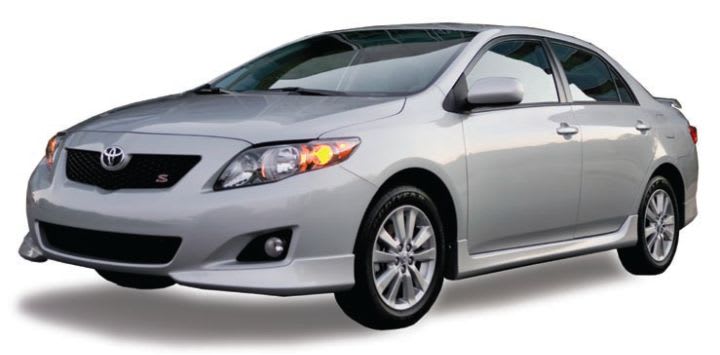
2009 Toyota Corolla
The all-new 2009 Toyota Corolla is now in its 10th generation. Launched originally in 1966, Corolla first arrived in the U.S. in 1968.
For nearly four decades, more than 30 million Corollas have been sold worldwide, making it one of the best-selling cars of all time.
Available in five grades — standard, LE, XLE, S, and XRS — the Corolla fits the needs of many automotive fleets.
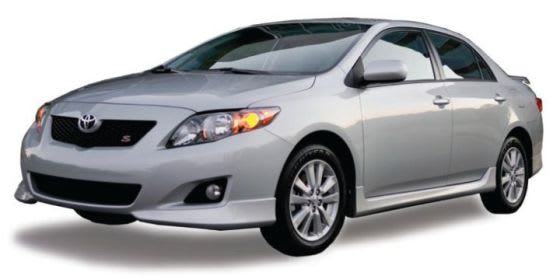
Developed by Toyota Design in collaboration with styling studios in Turin, Italy, the 2009 Corolla features a wide, low profile for a lower, sportier shape. The angle of the window glass was increased, and the vehicle’s aerodynamics improved.
Design goals for the 2009 Corolla included creation of additional interior space, increased rigidity for reduced vibration and noise, and enhanced passenger safety.
The hood of the Corolla utilizes an interlayer anti-chip coating to reduce the effects of stone chips impacting the Corolla’s exterior paint.
Driver comfort was kept in mind as engineers repositioned the steering column and improved tilt and telescope capability to ensure all drivers find a comfortable driving position. The instrument panel was lowered as much as possible to ensure forward visibility as well.
Multiple easy-to-use storage areas are available and easy to access, with a total 12.3 cubic feet of available cargo space.
The all-new Corolla is equipped with several standard performance and safety features, including a heavy-duty rear window defogger, A/C, driver and passenger front airbags, front seat-mounted side airbags, side curtain airbags, intermittent windshield wipers, daytime running lights, two 12-volt power outlets, and 60/40 split folding rear seats.
Also standard are an anti-lock brake system, electronic brake-force distribution, brake assist, and tire pressure monitoring system. Vehicle stability control (VSC) and traction control (TRAC) are standard on the XRS grade. A new VSC off switch allows the driver to deactivate VSC and TRAC for complete control of vehicle performance.
A newly developed front suspension works to eliminate noise, vibration, and harshness (NVH) performance while achieving handling stability and ride comfort. Torsion-beam rear-suspension was also newly developed for the 2009 Corolla.
A first for Toyota, the 2009 Corolla comes equipped with a 2ZR-FE 1.8L DOHC 16-valve dual independent VVT-I, four-cylinder engine. Output at 132 hp, and torque at 128 lb.-ft., are both improved over previous models, and EPA-estimated mpg is 27 city, 35 highway. The vehicle also meets federal Tier 2 Bin 5 emissions standards.
The 2009 Corolla includes environmentally-friendly features in engine production such as hexavalent chromium-free plating, lead-free material for bearing and steel, element exchange-type oil, and long-lasting iridium spark plugs.
More Operations

A buyer's guide to fleet management software in 2027
Buying fleet management software in 2027 means looking beyond features and price. As fleet operations, technology and expectations evolve, this guide explores what today’s fleet professionals should consider when choosing a system that can deliver value now and adapt to what comes next.
Read More →
What Will Shape the Next Era of Fleet Management?
EVs, AI, and autonomous vehicles are reshaping fleet management. Discover what’s ahead—and how fleet leaders can prepare for the next era.
Read More →
How Fleets Can Recruit and Train Veterans for Technician Roles
Here's how the technician shortage has affected uptime for fleets, and what to do about it.
Read More →

Avis Budget Group Deploys Neology Toll Management Technology Across Major Brands
Neology’s neoFleet platform will manage toll transactions and toll-authority operations for vehicles across Avis, Budget, Payless, Budget Truck and Zipcar.
Read More →
Fleet Personal-Use Charges Edge Higher in 2026
Nearly eight in 10 surveyed fleets allow personal use of company vehicles, while just over half of respondents report charging employees for the privilege.
Read More →
The Future of Fleet + What’s Changing Right Now | AF News Recap
Could developments overseas offer a preview of what’s coming for U.S. fleets? This week, we’re looking at the future of AI, autonomy, and electrification, plus Ford Pro’s new certified pre-owned program, smarter vehicle offboarding, and a new way for fleets to manage toll expenses.
Read More →
How to Handle Vehicle Offboarding
What do fleet managers need to do when a driver leaves?
Read More →
Fleet Manager’s Ultimate Playbook: Navigating the New Standard in OEM Connectivity
Rising operating costs, driver safety concerns, and unplanned downtime are putting unprecedented pressure on modern fleets. Discover how fleet managers use embedded OEM connectivity and real-time vehicle data to cut TCO, prevent downtime, and protect drivers without aftermarket telematics hardware.
Read More →
U.S. Bank Adds Verra Mobility Toll Management to Voyager Fleet Platform
The integration allows U.S. Bank Voyager fleet customers to manage toll payments and violations alongside fuel, EV charging and maintenance expenses.
Read More →
ADAS Prevents Crashes. But Repairs Cost More | AF News Recap
ADAS-equipped vehicles may crash less often, but they can cost more when they do. This week, we’re breaking down what that tradeoff means for fleets, plus Subaru’s first Forester Wilderness Hybrid, Nissan’s new e-POWER Rogue, and why Calstart has become Catalyst Mobility.
Read More →