





Related: 2015 Toyota Camry Mid-Size Sedan
Toyota Camry XSE Offers Performance and Practicality
The 2015 Camry XSE combines sportier suspension with high-tech safety features in a familiarity sturdy mid-size sedan package.
March 2, 2015
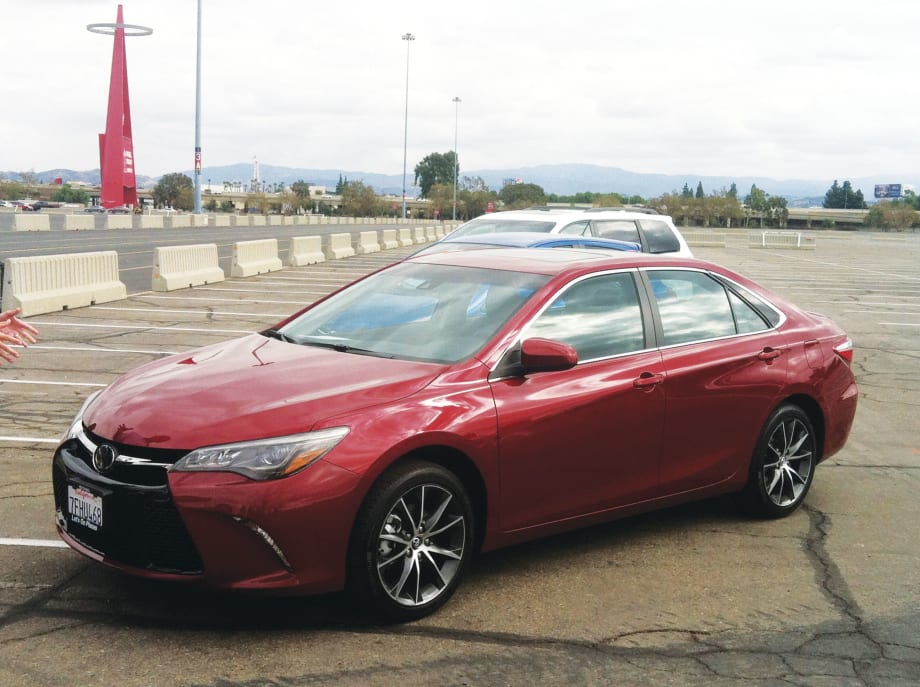
The Camry XSE offers the body style and perfomance feel shifting of the SE, but also boasts a wider wheel package and more sharply tuned suspension and steering. Photo by Adam Pringle.
2 min to read
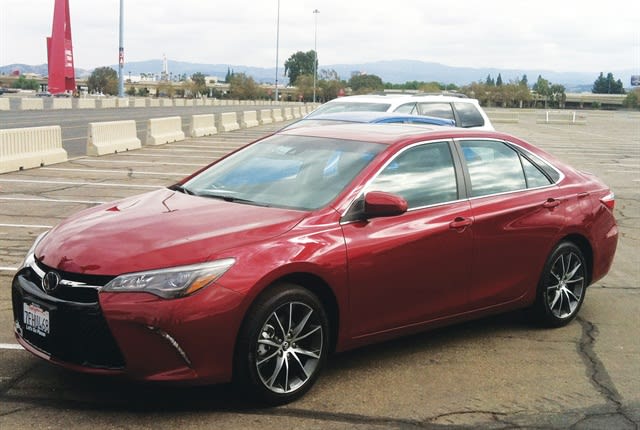
The Camry XSE offers the body style and perfomance feel shifting of the SE, but also boasts a wider wheel package and more sharply tuned suspension and steering. Photo by Adam Pringle.
With the recent release of its Camry XSE in conjunction with the Camry’s redesign for MY-2015, Toyota said it is looking to inject some higher-end sportiness into its flagship mid-size sedan line.
The Camry XSE is identical to the sport-minded Camry SE in some ways — both have the same body styling, sport seats, and transmission paddle shifters, along with performance-feel features such as faster shift times and downshift blipping control when the transmission is in shift mode. However, the XSE also boasts a wider wheel package (18-inch wheels, compared to the SE’s 17-inch wheels) and more sharply tuned suspension and steering.
On top of that, the XSE offers a wider variety of options than those found in the SE, including a new technology package that features automatic high beams, lane-departure and blind-spot warning systems, rear cross-traffic alert, and a pre-collision system that can automatically engage the brakes in case of driver inaction.
Examining the XSE Up-Close
Members of the automotive media had the chance to cruise in the Camry XSE at a Toyota event in Anaheim, Calif., this past November.
The Camry XSE is offered with two engines: a 2.5L four-cylinder that delivers 178 hp and 170 lb.-ft. of torque, and a 3.5L V-6 that packs a punch of 268 hp and 248 lb.-ft. of torque.
Whether equipped with the four-cylinder or V-6, the Camry XSE offers tight handling along with firm gripping of asphalt courtesy of its 225/45R18 all-season tires.
And, the XSE’s performance does not come at the price of fuel economy: the four-cylinder engine has been U.S. Environmental Protection Agency (EPA) rated at 25 mpg city/35 mpg highway, while the V-6 gets 21 mpg city/31 mpg highway.
The interior of the Camry XSE features a 4.2-inch LCD screen that, along with displaying various vehicle functions, allows drivers to look at the pressure in each tire through a direct tire pressure monitoring system. This feature is standard on all 2015 Camry models except the LE gasoline model.
The high-tech safety features in the XSE are accompanied by touches of simple practicality and functionality, such as the 15.4 cubic feet of trunk space.
Fleet Camry sales for 2014 numbered 61,727, and the best-selling fleet models are the four-cylinder LE and SE, Toyota told Automotive Fleet. The XSE four-cylinder has an MSRP of $26,150, while the XSE V-6 has a $31,370 MSRP.
Overall, the Camry XSE is practical enough to please fleet managers while stylish and sporty enough to excite fleet drivers.
Subscribe to Our Newsletter
More Operations

Company Vehicle or Reimbursement? How Fleets Are Rethinking Assignments
As fleet costs and insurance pressures rise, fleet managers are taking a closer look at which employees need company-provided vehicles and when a reimbursement program may make more sense.

Fleetio, ASE Launch Scholarship Program for Automotive Technicians
The second annual program will award 15 scholarships totaling $35,000 to support ASE certification, testing fees, and equipment costs.

Reading the Global Signals: What AI and the Energy Transition Mean for Fleets Now
In this opening keynote of the 2026 Fleet Forward Conference, John Rossant, founder of CoMotion, How can fleet managers navigate a never-ending, changing industry landscape?

90% Use Telematics. Are Fleets Getting Safer? | AF News Recap
This week, we're breaking down which industries have the highest rates, how Jamie McKay manages 2,400 vehicles, what's happening with the 2027 fleet awards, and why software-defined vehicles could introduce new costs.

What's Best Handled by an FMC, and What's Better Done Directly?
Fleet managers continue to rely on FMCs for essential services but are taking a closer look at where working directly with suppliers can improve efficiency and responsiveness.

Fleet Meets: Erin Gilchrist
Meet Erin Gilchrist, the inaugural Mike Antich Spirit of Fleet Award winner, as she shares insights on leadership, mentorship, the power of industry connections, and why people remain at the heart of fleet's future.

How 2026 Fleet Visionary Jamie McKay Manages 2,400 Vehicles Across 37 States
How do you keep 2,400 vehicles running across 37 states? Fleet Visionary Award winner Jamie McKay shares how collaboration, flexibility, and a few simple strategies help her tackle fleet management challenges at Aptive Pest Control.

Managing Fleet Costs in an Era of Permanent Volatility
Fleet operating costs have risen more than 20% since 2020, raising a key question: When does extending a vehicle's service life stop making financial sense?

The Next Evolution of Fleet Management: Autonomous Operations
This opening keynote session at the Fleet Forward Conference highlights the future of autonomous driving for fleets.

How to Reduce the Total Cost of Risk From Catalytic Converter Theft
A stolen catalytic converter can cost fleets far more in downtime and lost productivity than in repairs. A total-cost-of-risk approach can help fleet managers quantify their exposure and prioritize theft prevention.