





Want More? How to Leverage the Data Firehose for Better Maintenance
Top Overlooked Maintenance Tips for Work Truck Fleets
Whether your fleet consists of light-duty pickup trucks, medium-duty workhorses, or a mix of everything in between, ensuring trucks are properly maintained keeps costs low and drivers safe.
February 1, 2022
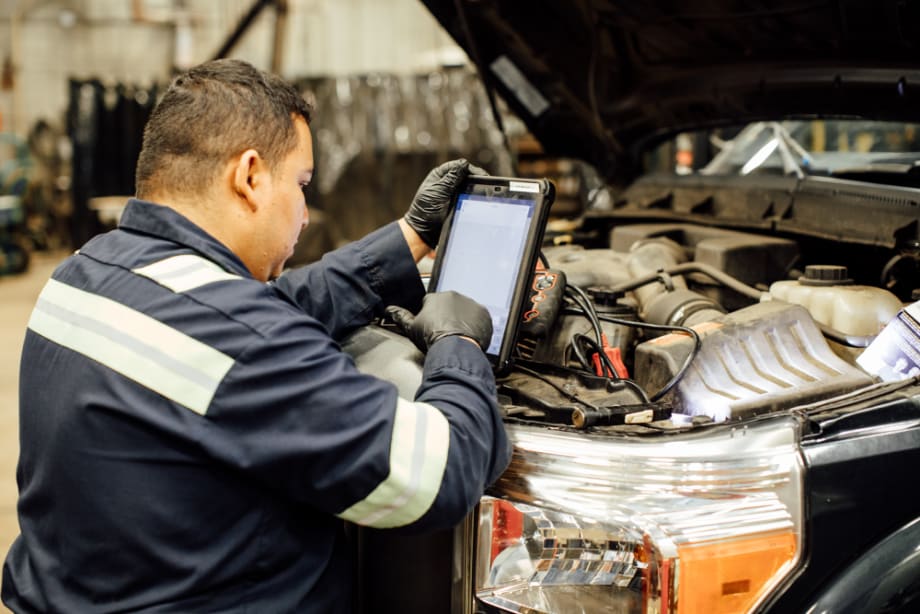
Technology has come a long way in helping fleet maintenance technicians identify problem, track common issues and move from reactive, to preventive, to even predictive maintenance.
Photo: Fleetio
6 min to read
Every fleet manager understands the value of proper truck maintenance. But challenges may differ depending on the type of trucks your fleet operates.
Medium-duty trucks have different needs than their light-duty counterparts. Here are some of the top maintenance issues fleets should be aware of for their work truck fleets.
Top Light-Duty Truck Maintenance Issues
Angelo Cinquegrana, AVP field operations for Amerit Fleet Solutions, started things out by noting, “When it comes to light-duty trucks, the top three most overlooked maintenance-related items fleet managers should pay more attention to are coolant hoses, battery testing, and brake pad thickness where pads are not visible.”
Mitchell Matsuo, director of fleet operations at Wrench, agreed, noting brake pad and rotor thickness are essential to monitor.
“Vehicles carrying heavier loads of weight consume more braking energy to come to a stop. We see brake pads/rotors at their end of life much quicker than a consumer vehicle. We often hear from customers that the gradual wear of brake pads and rotors is something they stop noticing,” he said.
Why does this matter?
“When the brakes finally go out or the braking power becomes a problem, it is sometimes too late," Matsuo said. "We frequently see brake pads and rotors that wore down to the point the brake caliper began to get worn away. Replacing a brake caliper is a much more expensive job than a brake pad and rotor replacement.”

Light-duty trucks and vans have many similiarities with their medium-duty counterparts — oils changes need to be accomplished, tires checked and rotated — but they also have a number of different factors to worry about that technicians should be aware of.
Photo: Wrench
Another area to keep an eye on is suspension and steering components.
“In the case of vans and trucks, fleet vehicles carry a lot of weight inside the vehicle on a more frequent basis than we typically see with consumer-owned trucks and vans. This heavier load inside these vehicles takes a toll on the suspension and steering components supporting the vehicle,” said Matsuo. “We see these components become worn out or destroyed at a much higher speed and frequency compared to the equivalent vehicle owned by a consumer. I think many people assume these services are due on the same frequency as a consumer vehicle, but because of how the vehicles are used, suspension and steering services are needed more frequently.”
Oil changes are also something that can often be neglected.
“Oil is the lifeblood of a vehicle’s engine, and fleet vehicles are typically used to carry heavier weight loads. The heavier weight load puts further strain on most components of the vehicle, including the engine. Failure to stay on top of routine oil changes can lead to much more severe internal engine damage. Engine repairs are very expensive, and sometimes an entire replacement is needed if the damage is severe,” Matsuo said.
One overlooked item on a refrigerated light-duty truck would be the refrigeration unit.
“Aligning the truck preventive maintenance schedule to coincide with the chassis PM helps maintain both systems. Particular attention should be paid to the fluids, belts, and the electrical system,” said Scott Koch, district service manager for Thermo King.
Fleet vehicles are also often left idling quite extensively.
“Vehicle idle time is an important factor to consider when assessing the frequency of oil changes. We have customers in the private security industry, first responders, and other companies where vehicles are idling nearly 24 hours a day. This wear of the engine oil is not captured on the odometer, but idling does cause a lot of degradation. In these circumstances, time is a more important factor to oil change adherence than mileage,” Matsuo added.
When looking at the light-duty truck segment, we’d be remiss if we didn’t touch on the growth of electric vehicles (EVs) and the challenges related to them.
“Fleets looking to implement EVs as a large portion of their fleet need to be ready for the unexpected,” said Ashlee Biggs, head of product marketing at Fleetio. “The infrastructure costs can also be overlooked when implementing an EV fleet. Charging stations are expensive, and if it’s necessary to have ‘quick charge’ stations, they draw a large amount of power, and logistics can become a problem. While this is not a direct maintenance-related item, it is an important consideration.”
Ensure there is a detailed plan already in place and acknowledge that maintenance will take some trial and error since there are many unknowns about the life cycle of EVs.
“The industry is still trying to pin down EV maintenance and systems reliability, and there is uncertainty around the supply chain for part replacements and whether manufactures are ready for long-term maintenance support,” Biggs added.
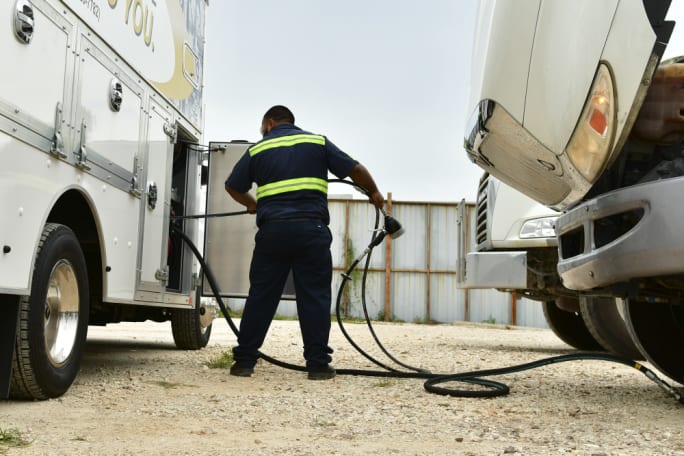
There are a lot of components involved in ensuring proper truck maintenance is performed, and every missed step can cost time and money down the road.
Photo: Amerit Fleet Solutions
Top Medium-Duty Truck Maintenance Issues
One overlooked maintenance-related item for medium-duty trucks pertains to diesel-powered vehicles: diesel exhaust fluid. “Fluid levels need to be monitored by the driver and managed by a repair facility; otherwise, vehicles can be deactivated by the after-treatment systems,” said Biggs of Fleetio.
Biggs noted two other overlooked maintenance-related items: radar and collision avoidance assemblies and dashboard warning lights.
“For radar and collision avoidance assemblies, the sensors are very sensitive, and if they get out of alignment or fail, adaptive cruise control won’t work correctly and it’s expensive to remedy," ,” Biggs added. "A solution that pulls DTC codes into an online platform can get a potential issue on management’s radar before it becomes serious. For dashboard warning lights, it’s more about making sure drivers or operators are reporting warning lights as soon as they appear on a vehicle dashboard."
Additional overlooked maintenance-related items fleet managers should pay attention to with medium-duty trucks are “battery testing, irregular tire wear, air filters, coolant hoses, and belts,” said Cinquegrana of Amerit Fleet Solutions.
Refrigeration unit utilization is typically high during the summer season and may not be available to perform the annual preventive maintenance.
“Scheduling preventive maintenance is vital to ensure proper operation of the unit before and after a busy season. In addition, it’s critical to complete an annual planned maintenance (PM) inspection. A thorough PM inspection will identify potential issues that could cause an unexpected breakdown,” said Freddy Muñoz, strategic account manager for Thermo King.
Muñoz added properly aligning the chassis PM with the refrigeration unit will reduce downtime and ensure both systems are regularly looked at and maintained.
“Additionally, if possible, scheduling PMs to revolve around higher and lower ambient conditions will prepare your units to perform as designed,” Muñoz added. “At this time, you should also verify the condition of critical components such as belts, batteries, and air, oil, and fuel filters.”
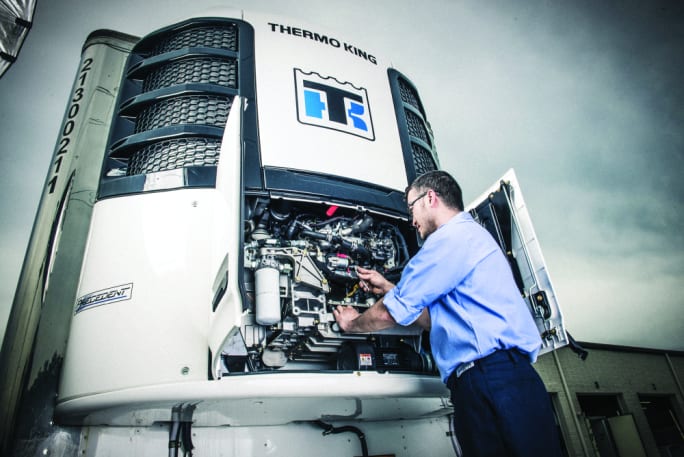
Neglecting any component during routine or preventive maintenance procedures will result in an increased potential for breakdowns and unnecessary downtime. Take a few minutes now to prevent lost hours later.
Photo: Thermo King
Other maintenance tasks Munoz of Thermo King noted include:
Inspect defrost drain hoses and flapper valves for dirt and debris.
Check the unit for loose, frayed, or chaffing wiring.
Examine doors and hardware.
Look over software updates to ensure the unit is running on the latest software version.
Complete a visual inspection of the unit for signs of leaks, i.e., refrigerant, oil, and coolant.
Perform a “quick refrigerant level check.”
Originally posted on Work Truck Online
Subscribe to Our Newsletter
More Maintenance

Sponsored•October 1, 2026
Fleet Manager’s Ultimate Playbook: Navigating the New Standard in OEM Connectivity
Rising operating costs, driver safety concerns, and unplanned downtime are putting unprecedented pressure on modern fleets. Discover how fleet managers use embedded OEM connectivity and real-time vehicle data to cut TCO, prevent downtime, and protect drivers without aftermarket telematics hardware.
Read More →
How Can Fleet Managers Tell Which Repairs Require Closer Review?
Fleetio’s Brianna Perry demonstrates how Service Advisor evaluates maintenance requests, identifies pricing anomalies, and provides the context fleet managers need to focus their attention on potential problems.
Read More →
Why Roadside Assistance Belongs in a Fleet Risk Strategy
Roadside assistance is more than a tow. See how the right partner can protect drivers, uncover fleet trends, and strengthen your risk strategy.
Read More →
Sponsored•August 7, 2026
Hidden in Plain Sight: Fleet Compliance Risks
Fleet compliance isn't just about having policies — it's about consistently enforcing them. This practical guide reveals six hidden compliance risks common in public sector and shared fleet operations and outlines proven strategies to improve visibility, accountability, and audit readiness
Read More →
How Maintenance Costs Compare Across 27 Fleet Vehicles
Vincentric’s three-year, 60,000-mile projections reveal wide differences for both scheduled and unscheduled maintenance among selected vehicle categories. Projected maintenance visits also play a factor.
Read More →
The EV Breakdown Nobody's Talking About: Why Most Electric Vehicle Roadside Calls Aren't Mechanical Failures
Here's why EV breakdowns are widely misunderstood.
Read More →
How Stellantis Plans to Get Ahead of Fleet Downtime
Keeping fleet vehicles on the road has become as important as buying them. Darren Bradshaw of Mopar North America explains how connected vehicle data, AI, and proactive service strategies are helping Stellantis reduce downtime and move closer to predictive maintenance.
Read More →
Merchants Fleet Expands Maintenance Network with Pep Boys
Merchants Fleet has expanded its relationship with Pep Boys, increasing the service provider's role within its national maintenance network. The move is intended to enhance maintenance coordination and support commercial fleets through Pep Boys' nationwide footprint.
Read More →
The Two Biggest Summer Downtime Threats for Fleets
A conversation with a maintenance expert reveals the two most common summer maintenance pains and how to prevent them.
Read More →
From Marine Corps Motor Pool to Managing 460 Fleet Vehicles
Cesar Ayala of O’Connell Landscape Maintenance shares how he transitioned from the Marine Corps to managing a 460-vehicle fleet—and the real-world challenges of maintenance, compliance, and driver management in California.
Read More →