




Top 10 Emerging Trends in Fleet Remarketing
Data is becoming critically important in decision-making throughout the remarketing process, especially in a 24/7 cycle. Also, resale values are projected to increase as vehicles contain more content than in the past.

The importance of vehicle remarketing is best demonstrated by the fact that it is now “on everyone’s radar screen.”
This is an era when remarketing has come center stage. Automotive analyst Maryann Keller, speaking at the 2004 annual conference of the Automotive Fleet & Leasing Association (AFLA) said, “Remarketing strategies are now as important to the economics of vehicle fleets as is the price paid for a new car.”
Remarketing is no longer the step-child it was when remarketing was designated “used-vehicle disposal.”
With this as a backdrop, here are the Top 10 emerging trends in vehicle remarketing.
Trend 1:
A 24/7 Wholesale Remarketing Cycle Where Vehicles are Continuously Available for Sale
The remarketing process for an out-of-service fleet vehicle starts with the effort to sell it to the driver or other company employee and then progresses to other remarketing channels.
“It is essential then that each vehicle automatically cascades to other stages in the remarketing cycle from driver/employee to a limited set of dealers, then to a wider audience of dealers, then to online sales, then to a live auction, until it is sold,” said Tom Webb, chief economist for Manheim, a nationwide auction chain headquartered in Atlanta. “Quite simply, exposure matters, both in terms of net return and compressing and eliminating time in the whole process.”
Trend 2:
Used Vehicles of Tomorrow Will be More Highly Contented Than the Used Vehicles of Today
For the past five years, new-vehicle sales have exceeded 17 million units per year, said Tom Kontos, vice president of industry relations and analytical services for ADESA, a nationwide auction chain headquartered in Carmel, Ind. “Ultimately, these vehicles will be returning to the wholesale market, but they will be more highly contented than the vehicles of the past,” said Kontos. “Many consumers used retail incentive monies to upgrade the trim level of the vehicles they purchased, which will eventually result in used-vehicle price inflation when they are sold in the used-vehicle market. Today’s new car is tomorrow’s used car and, as a result, I expect used-vehicle prices will rise since these vehicles are more highly contented than in the past,” added Kontos.
Trend 3:
Technology: Enhancing Client Access/Process Management and Optimizing Operational Efficiency
The remarketing industry is in a state of dramatic change, and this change is best illustrated by new technology used to remarket fleet vehicles.
“More and more information is exchanged over the Internet, and a big change over the next five years will be the sale of more and more vehicles online,” said Warren Byrd, chief operating officer for ServNet, a nationwide association of wholesale automobile auctions. “Certainly, the information exchange will continue to increase, and we may see funds start to be exchanged online as well.”
Hal Logan, senior vice president, strategic planning for Manheim, likewise sees technology as having a major impact on the future of the wholesale auction industry. “Technology is perhaps the most ‘visible’ remarketing trend,” said Logan. “It seems to evolve at almost warp speed.”
Among the new technological trends cited by Logan are:
Creating new ways for dealers to buy cars: Simulcast, Dealer Exchange, Cinema sales, and “postcard” sales.
Creating new selling opportunities for commercial consignors.
Refining existing technologies: remarketers taking advantage of Simulcast’s “absentee seller” mechanism to remotely represent their vehicles.
Manheim Market Report, which provides a daily update of used-vehicle prices. “This provides the ability to determine a vehicle’s worth, regardless of make or model or where it is being sold,” said Logan.
The Manheim DRIVE Center (Development, Research, Innovation, Vision, Excellence) is a “remarketing laboratory” to test a host of new technologies to evaluate their applications to the remarketing process - from an image capture station which captures almost microscopic detail on a vehicle inside and out to Radio Frequency Identification (RFID) for vehicle location to biometrics for dealer identification and auction access. The 145,000-square-foot DRIVE Center is located on a 30-acre site south of the Atlanta airport.
Trend 4:
High Gasoline Prices Will
Impact the Resale Values of
Some Vehicle Segments
In 2004, used-vehicle prices were firm for most model classes, but full-size SUV prices declined, partially as a result of a growing perception of consumers and dealers that higher gasoline prices are here to stay, according to Kontos.
“Conversely, prices for compact models have increased for the same reason,” said Kontos. “I call this a polarization caused by high gasoline prices, which is negatively impacting full-size SUV resale values, but positively impacting resale values for compact sedans.”
{+PAGEBREAK+}
Trend 5:
The Critical Importance of Data in Decision-Making Throughout the Remarketing Process
Both Webb and Kontos believe that remarketing will become more dependent on data in the decision-making process.
“Starting with a lifecycle approach to costs that factors resale value into the vehicle selection and purchase decision, remarketing has become - and will remain - much more rigorously analytical,” said Webb.
Kontos stresses the importance of analytical data in the future of fleet remarketing. “Analytical information is becoming as vital to remarketing as the services we provide through our auctions and ancillary businesses,” said Kontos.
A key reason for this is that depreciation represents approximately 59 percent of total lifecycle costs of a commercial fleet vehicle.
“Decisions such as when (time of year) and where (which remarketing channels such as upstream, online, or traditional auction provide the best return) to remarket each vehicle on a one-by-one basis become essential,” said Webb. “What are the ‘net’ paybacks of selective reconditioning in an environment in which the precipitous decline in off-retail lease vehicles makes high-mileage commercial fleet units more appealing? The higher quality and durability of these vehicles when new now more than offsets 70,000-80,000 miles on the odometer when making recon decisions.”
Webb adds: “Accountability enters here as well - grading/ranking each remarketing outlet and channel’s retention performance against a standard measure and sharing these performance results with all remarketing outlets to increase their accountability and improve performance. For example, which outlets can best profile and attract to the sale those dealers who are the bona fide prime prospects for specific types of vehicles. This is very akin to the ‘turn-and-earn’ formula that the OEMs use with their dealers on allocating new vehicles.”
Trend 6:
Wholesale Auction Growth Will Parallel the Growth in Number of Vehicles in Operation in the U.S.
The number of vehicles in operation in the U.S. has grown steadily - from 175 million units in 1990 to an estimated 229 million units in operation in 2004, according to Kontos. This increasing vehicle population will cause a growth in the volume of used-vehicle sales and, over the next five years, Kontos forecasts a 2-percent growth in auction sales volume as these vehicles are eventually sold in the wholesale market.
{+PAGEBREAK+}
Trend 7:
Continuous and In-Depth Training of Auction Employees at All Levels to Best Serve Fleet Customers
“The one constant in the increasingly volatile and global economy is change,” said Dean Eisner, president/CEO for Manheim. “It is imperative to invest in employee skill sets to meet evolving customer needs. As one example, Manheim more than a year ago instituted the industry’s first four-level Inspector Certification Program. Professional, consistent, and accurately completed electronic condition reports are the basis for fleets to make informed decisions on each of the vehicles that they must sell.”
Changes in technology, market conditions, and the economic fortunes of individual companies require a well-trained workforce at all levels, added Eisner.
“Done comprehensively, this encompasses both ‘hard’ skills, such as technical/operational and ‘soft’ skills, such as interpersonal relations, communications, leadership, listening, people management, etc. Properly done, it also provides the largest single source of competitive advantage for remarketing entities enlightened enough to embrace it. High levels of employee satisfaction and reduced levels of employee turnover, which in turn feed on and contribute to enhanced customer satisfaction, make this approach a win-win situation for all,” said Eisner.
Trend 8:
Off-Lease Volumes Decline; However, Lease Penetration is Projected to Rise Again
“One market shift that has already begun to occur is a downward trend in the percentage of new vehicles leased versus sold,” said Byrd. “This means that there will be fewer off-lease vehicles in the auction lanes, which likely will lead to more dealer-consigned cars being sold at auction. The cars that formerly were off-lease turn-ins will become dealer trade-ins,” added Byrd.
Although 2004 saw a dramatic drop in off-lease volumes returning for remarketing, Kontos believes that off-lease volumes will begin to recover in 2008.
The volume of repossessed vehicles sold at auction is forecast to remain steady. Repo volume at auction has exceeded 1 million units per year since 1998 to present. “The number of repos for the 2004 calendar year is estimated to be more than 1.25 million,” said Kontos.
Trend 9:
Partnership Evolves to the
Next Level of Collaboration
One area of change is the evolution of new levels of collaboration between auctions and consignors.
“Whereas a partner is one associated with another, especially in an auction, to collaborate is to work jointly with others or together,” said Nick Peluso, senior vice president, sales for Manheim. “What might seem to be a small semantic difference in definition is in fact reflective of an even deeper commitment to or investment in best serving the customer.”
According to Peluso, in the remarketing arena that means recognizing and internalizing that each customer is unique (that one size does not fit all), has individual needs, and may well define “value” differently than a remarketing entity or outlet might. “Ultimately, delivering customer-defined value is what counts,” said Peluso.
Trend 10:
Wholesale Used-Vehicle Consignment Volume to Grow by 1 Million Over the Next Five Years
The total volume of used vehicles to be sold at U.S auctions is projected to grow to 11 million units by 2009, according to Kontos. This is an increase of 1 million units compared to 2004, which saw approximately 10 million units sold at auction.
“A growing percentage of the new volume of vehicles sold at auction will come from dealers,” said Kontos. “Also, during this five-year period, there will be a declining percentage of volume from fleet/lease companies, which includes retail lessors and financial institutions.”
Byrd agrees. He likewise foresees continued consolidation in the banking industry. “I foresee this consolidation continuing to result in fewer, but larger, banks remarketing vehicles,” he said. “Also, I anticipate that, in time, the banks will return to financing vehicle purchases in a bigger way as in the past,” said Byrd.
More Operations
What Fleet Managers Really Want From Vendors
From customer service frustrations and technology breakdowns to RFQs, change management, and the growing impact of turnover across the industry, this conversation pulls back the curtain on the real operational challenges fleet managers are navigating every day.
Read More →
Fleet Safety Masterclass: Industry Leaders on Storytelling, Strategy & Innovation
In this special masterclass episode, industry leaders break down what it really takes to build safer fleets in today’s increasingly distracted and data-driven world.
Read More →
Integrating Legacy Fleet Systems and Historical Data
In this episode, we bring together fleet and technology leaders to unpack the realities of data integration, system migrations, and the evolving role of AI in fleet management.
Read More →


From Resistance to Results: Change Management Strategies for Fleets
From new technologies and safety programs to evolving regulations, fleets are under constant pressure to adapt. But as Dr. Betz explains, success isn’t about the system you implement—it’s about whether your people actually use it.
Read More →
Where We're Headed: A Practical Look at AI in Fleet
Discover how AI is actually being deployed in fleets, not just marketed, including practical use cases and emerging risks.
Read More →
How Coca-Cola United Protects Its Fleet from Growing Legal Risk
Growing legal exposure can put fleets at risk. Here's one company's approach.
Read More →
Fleet Managers Think They Understand Their Costs. The Data Says Otherwise.
Most fleet managers say they have a strong handle on their costs, but new research from Bobit Business Media tells a different story. A 2026 survey of 190 fleet professionals reveals a widespread "confidence gap" where fragmented systems, disconnected data, and delayed reporting are leaving major blind spots hidden beneath the surface. Find out what the data actually shows.
Read More →
Cameras, Safety and Insurance: From Reactive Claims to Real-Time Prevention (Part 2 of 2)
Part Two: Commercial auto remains one of the most challenging and costly lines of coverage for fleet operators and insurers alike. Continue learning more about how to effectively address these issues from Onur Aksan, Enterprise Business Development Executive, Geotab
Read More →
New Trucks, AI & Summer Downtime | AF News Recap
From new truck updates to AI-powered driver coaching and summer maintenance tips, this week's fleet headlines are all about keeping things moving.
Read More →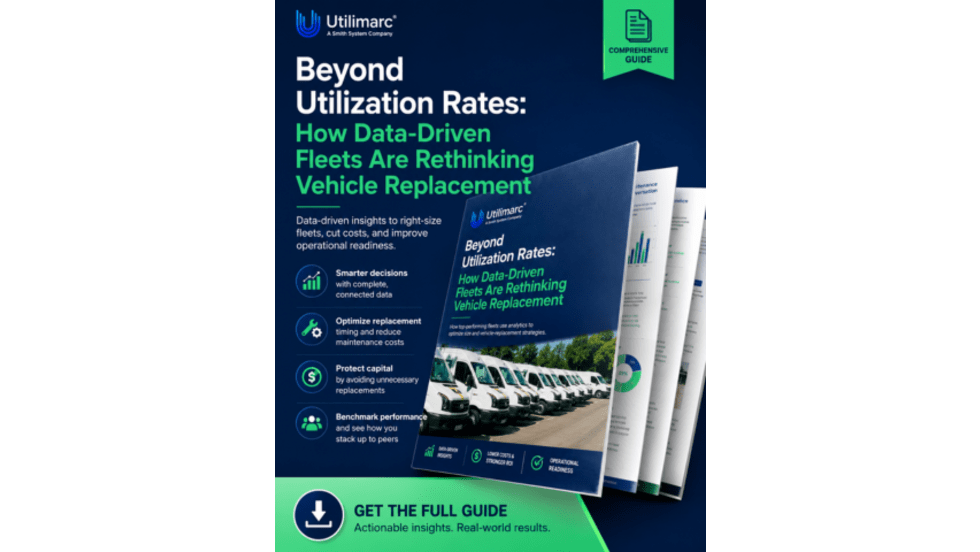
Beyond Utilization Rates: Smarter Fleet Replacement Decisions
Vehicle replacement decisions affect every aspect of fleet performance, from operating costs to asset availability. This guide explores how fleet leaders use integrated data, benchmarking, and lifecycle analytics to determine the right fleet size and optimize replacement timing with greater confidence.
Read More →