





Related: 13 Tips to Select the Right Engine & Transmission Combo
Tips for Spec'ing Engines and Transmissions
With new advancements in technology impacting price, fuel economy, and maintenance intervals, properly spec’ing engines and transmissions for your work trucks is more important than ever.
February 7, 2017
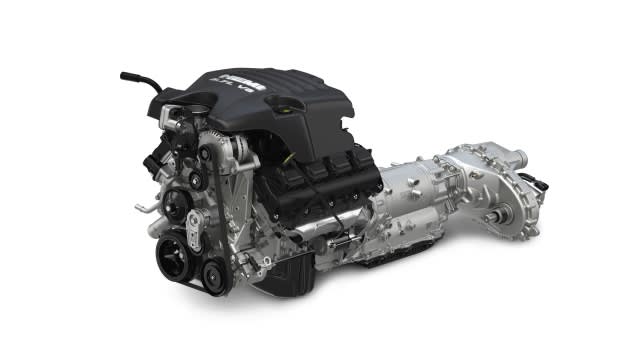
The Ram 1500 can be spec’ed with a 5.7L HEMI V-8 engine and TorqueFlite 8-speed automatic transmission. (Photo: Ram Truck)
10 min to read
As a fleet, trucks are tools and you want the best tool possible for the job at hand. And, having the right engine and transmission for your light- and medium-duty trucks can save on overall truck lifecycle costs and help ensure you have the right tool for the job.
Know Your Requirements
Understanding how your fleet operates and its overall duty cycle is one important key to successful engine specifications. Probably one of the most significant influencers in engine spec’ing for light- and medium-duty truck applications is being aware of how your vehicles will be used.
“First, determine the proper engine for the route or job. Looking at the route or job the truck will be driving and putting the right engine or GVW truck in the truck for those routes can ensure a lower cost of ownership,” according to Brian Tabel, executive director of marketing at Isuzu Commercial Truck of America (ICTA).
Once you know the how your vehicles will be utilized, it’s possible to move on with engine spec’ing.
“Determine the required horsepower and torque needed to get the job done. The engine choice and overall gear train translates into gradeability, startability, and useful work capacity,” said Kevin Koester, Ford medium-duty truck and Super Duty fleet marketing manager.
When working with fleet managers, General Motors advises them to look very closely at a propulsion system’s ability to get the job done efficiently and effectively.
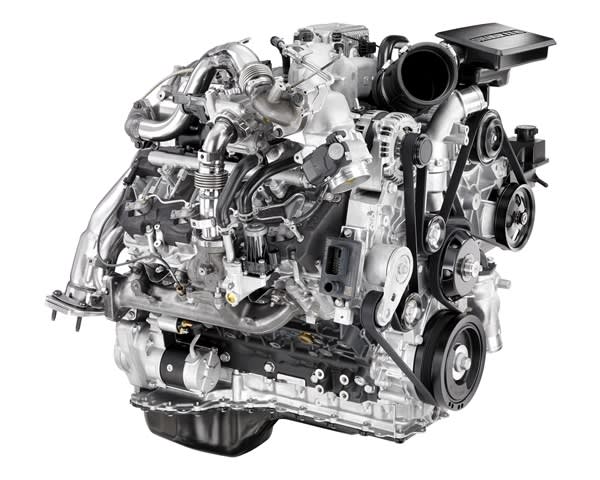
An option for Chevrolet and GMC is the Duramax 6.6L turbodiesel. (Photo: General Motors)
“For example, turbocharged engines tend to have lower displacement and depend on their turbos to deliver higher levels of performance. They can be fuel efficient in government tests, but when used in more intense daily driving they can burn more fuel. In fleet applications, a larger displacement engine may deliver better overall real-world fuel economy than a smaller, turbocharged engine,” said Dan Tigges, commercial product & sales support manager at General Motors. “By looking at your fleet’s telematics and vehicle lifecycle and performance, you can select the engine needed to make your fleet run at maximum efficiency.”
Research Available Engines
Not only do a fleet’s needs change over time, but so do available options. Simply utilizing your prior engine specifications for your work trucks may be the easiest option, but may result in a final product that doesn’t exactly fit a fleet’s needs. Some of the most important reasons a fleet manager should continue to research available options are constant changes and advancements.
“I implore fleet managers to look at all of the options in the marketplace and don’t just go back to the vehicle spec’ed the last time. Truck capabilities, efficiencies, and maintenance intervals have improved because there are new players in the market that may not have been in the marketplace the last time you spec’ed a vehicle. Look at all the players, educate yourself, and make the best decision for your fleet,” said Dave Sowers, head of Ram Commercial Marketing.
Also important, be sure not to overspec.
“The one thing we see is that fleet managers tend to build in too much margin of error or too much capability. We’ve seen some correction of this over the past two years. In the past we would see fleets spec’ing a diesel engine with the most output, therefore the truck with the most capability when that was not the truck they were using in all circumstances. So, they would end up with high acquisition costs and a higher cost of operation throughout the life of the vehicle,” Sowers continued.
Next, fleet managers should be sure to research available options and clearly understand the impact of engine spec changes on vehicle performance.
“There are a lot of mistakes that can be made when spec’ing and selecting an engine. Some fleet managers might overvalue engine performance claims, while others might not be looking closely enough at what they’ll need the engine to do. Fleet managers should also take an engine’s proven reliability and durability into consideration. An engine may look good on paper but not provide the desired characteristics in real-world applications,” said Tigges of GM.
Understand the Differences
When researching available engine options, one big question that will pop up is whether to select a gasoline or diesel option. The decision is going to be based on a fleet manager’s research and knowledge of vehicle duty cycles.
“If a truck is driven fewer than 20,000 miles annually and the work required is on-road delivery, a gasoline engine can reduce overall purchase and long-term maintenance costs. Additionally, fuel costs would likely be lower for an overall net save,” said Koester of Ford. “On the other hand, if the fleet is required to pull heavy loads including a trailer, or the truck will be driven more than 20,000 miles annually, a diesel engine may be a better choice since the diesel provides higher GCW.”
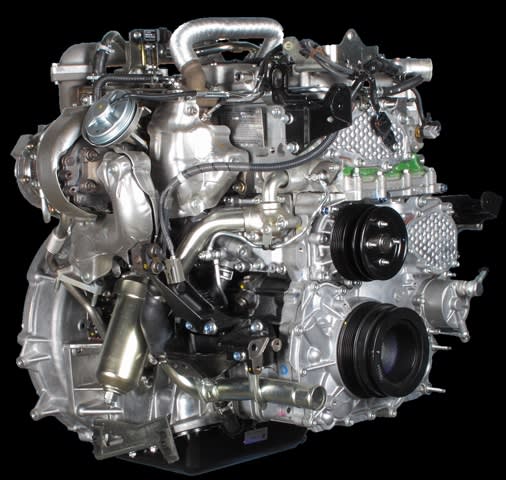
Isuzu offers its 4JJ1 flagship engine in its lineup. (Photo: ICTA)
Tabel of ICTA agreed, with a slightly higher annual mileage parameter for medium-duty units.
“A good rule of thumb to use is if the truck runs 25,000 miles or less per year, gasoline will be a better choice,” Tabel said.
The effect on power between the two options was also noted by Tigges of GM. “Diesels provide more low rpm torque, which can be important in stop-and-go driving and when moving heavy loads, as well as provide better fuel economy and potentially better long-term durability and resale value. But, capability and economy come with a higher up-front cost. Fleets that replace their vehicles more quickly, drive mostly highway routes, and do not move heavy loads all the time may be better served by a gasoline truck,” he said.
According to Sowers of Ram Truck, there are two questions embedded in the gasoline/diesel engine debate: What is the use of the vehicle (how much weight will it carry, what upfit will be on it, how much will it tow) and second, what is the duty cycle when the truck is out in the field?
“Is this a truck a destination-type truck that goes no more than 20 miles from the service hub, returns there every night, and performs on-site type work? Or, is it a delivery vehicle that travels thousands of miles in a short period of time?” Sowers asked. “Those factors will go into the powertrain decision.”
It’s important to consider long-term costs, not simply up-front costs.
“While gasoline engines can be a low-cost alternative to diesel engines, make sure to take into account total lifecycle costs. Diesel engines have been proven to last longer, and may be a better value depending on how long a fleet plans to keep their vehicles,” said Kurt Swihart, marketing director for Kenworth.
Think of the Future
When spec’ing engines for your fleet operation, it is recommended to consider not just the current needs of the operation, but future plans, as well.
“For example, if a customer wants the lowest price on a new dump truck, the dealer’s first thought may be to recommend a gasoline engine. But, if in talking further with the customer, it turns out the fleet will be adding additional business services in the next 18 months that will require the truck to pull a 10,000-pound trailer with back hoe while the truck is fully loaded, the dealer is going to recommend a diesel engine, instead,” said Koester of Ford. “For fleet managers, our recommendation is always to consider where the business is today, and where it may be headed in the near term.”
In addition to future vehicle needs, future resale value is an important factor when spec’ing trucks.
“Take into account which engine will be more desirable in the second-hand market,” said Swihart of Kenworth. “Many fleet managers do not take into account the truck’s second life when spec’ing an engine. Make sure the truck is equipped with an engine that has enough power to be useable in a variety of applications. This may cost more up front, but makes the truck more valuable when reselling.”
Remember, a fleet truck is a tool and proper engine spec’ing ensures you have the best tool for the job.
“In the end, it’s a business decision that fleet managers must make to stretch budget dollars, provide useful trucks to the operation, and keep those units covered by warranty as long as possible while the unit is in service,” said Koester of Ford.
Research Your Transmissions
As with engines, it is highly recommended that fleet managers research all of the available options in relation to transmissions.
“In many cases, engine choice drives which transmission a manufacturer supplies. Truck manufacturers do a good job matching engines and transmissions to provide propulsion combinations that provide optimal performance. A transmission with a reputation for dependability is always a good choice because it enables excellent fuel economy and capability to vehicles by channeling torque to the axles more efficiently,” said Tigges of GM.
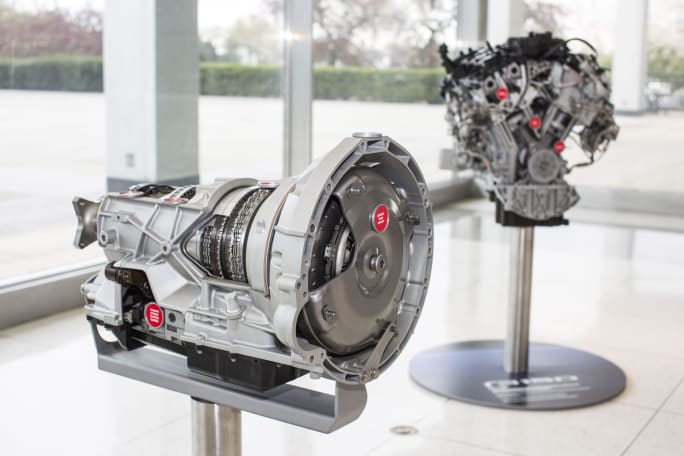
The 2017 Ford F-150 features an all-new 3.5L EcoBoost engine and 10-speed automatic transmission. (Photo: Ford Motor Co.)
Maintenance intervals can also impact downtime. “One overlooked factor is the maintenance interval for the powertrain. Maintenance intervals impact cost of operation as well as vehicle downtime. The more often maintenance is required, the more times you have to take it off the road during the vehicle’s lifecycle,” Sowers said. “Do your due diligence. Understand the capabilities of the vehicles in your fleet. Understand the driving experience and expertise of your drivers. Understand the duty cycles, and do your research to ensure the transmission that you are spec’ing matches all of those considerations for your fleet.”
Automatic or Manual?
One of the biggest challenges in spec’ing a transmission is whether to select an automatic or manual. And this is where your research begins.
“Not all automakers offer both manual and automatic transmission options, so be sure to find out what offerings are available based on your needs,” said Tigges of GM.
Just as with engines, duty cycle and how and where the truck will be operated are important factors in determining the correct transmission for your needs.
“Automatic transmissions tend to be more expensive, but are much easier to operate. They also allow inexperienced drivers to operate a vehicle more efficiently. Manual transmissions have a lower price but add another dimension to driving the truck. Overall, manual transmissions are generally more suited for applications that require a large amount of control. Automatics are better suited for urban environments that require constant gear changes,” said Swihart of Kenworth.
The decision between a manual and automatic decision may not be as simple as price or availability. A fleet’s driver pool will be a main determining factor.
“The main reasons fleet managers want a manual transmission is for the ability to control which gear ratio is selected at any given time. Also, based on their duty cycle some have a historic belief that a manual transmission will live longer in the field, which has a lot to do with the drivers. A fleet who mainly has experienced drivers is going to want the manual transmission. A lot of fleets are dealing with hiring newer, less experienced drivers and therefore the automatic transmission is a better option for them,” noted Sowers of Ram Truck.
Consider PTO Needs
Don’t forget about power take-off (PTO). Considering current needs as well as future resale are important.
“Not making an informed decision up front on whether or not to spec the truck with a PTO is a big mistake. If the unit is produced without the PTO provision and it needs to be added later, the cost is much higher than if it is added at the plant. When in doubt, add the PTO. If it is not used, it will still help the unit retain a better trade-in value. And, if you have it, you’ll be glad if you end up needing it down the road,” said Koester of Ford.
Swihart of Kenworth also noted the importance of always spec’ing a transmission with PTO provisions.
“If the transmission does not have PTO provisions, it will be unusable in most vocations. This may be a way to save a very small amount of money when purchasing the truck, but it will make selling the truck much more difficult,” said Swihart of Kenworth.
Bottom Line in Transmission Spec’ing
Research is key. Evaluating your options and knowing your fleet requirements helps.
“Each fleet should carefully evaluate their transmission needs before buying a manual transmission. Automatic transmissions are becoming more and more popular as they have progressed to a point where their cost, performance, reliability and durability are equal to and often superior to manual transmissions,” said Tigges of GM.
Topics:EnginesDriversDiesel EnginesTruck EnginesGasoline EnginesTransmissionsGasoline vs. DieselVehicle ResearchOperations
Originally posted on Work Truck Online
Subscribe to Our Newsletter
More Operations

What Will Shape the Next Era of Fleet Management?
EVs, AI, and autonomous vehicles are reshaping fleet management. Discover what’s ahead—and how fleet leaders can prepare for the next era.
Read More →
How Fleets Can Recruit and Train Veterans for Technician Roles
Here's how the technician shortage has affected uptime for fleets, and what to do about it.
Read More →
Avis Budget Group Deploys Neology Toll Management Technology Across Major Brands
Neology’s neoFleet platform will manage toll transactions and toll-authority operations for vehicles across Avis, Budget, Payless, Budget Truck and Zipcar.
Read More →

Fleet Personal-Use Charges Edge Higher in 2026
Nearly eight in 10 surveyed fleets allow personal use of company vehicles, while just over half of respondents report charging employees for the privilege.
Read More →
The Future of Fleet + What’s Changing Right Now | AF News Recap
Could developments overseas offer a preview of what’s coming for U.S. fleets? This week, we’re looking at the future of AI, autonomy, and electrification, plus Ford Pro’s new certified pre-owned program, smarter vehicle offboarding, and a new way for fleets to manage toll expenses.
Read More →
How to Handle Vehicle Offboarding
What do fleet managers need to do when a driver leaves?
Read More →
Sponsored•October 1, 2026
Fleet Manager’s Ultimate Playbook: Navigating the New Standard in OEM Connectivity
Rising operating costs, driver safety concerns, and unplanned downtime are putting unprecedented pressure on modern fleets. Discover how fleet managers use embedded OEM connectivity and real-time vehicle data to cut TCO, prevent downtime, and protect drivers without aftermarket telematics hardware.
Read More →
U.S. Bank Adds Verra Mobility Toll Management to Voyager Fleet Platform
The integration allows U.S. Bank Voyager fleet customers to manage toll payments and violations alongside fuel, EV charging and maintenance expenses.
Read More →
ADAS Prevents Crashes. But Repairs Cost More | AF News Recap
ADAS-equipped vehicles may crash less often, but they can cost more when they do. This week, we’re breaking down what that tradeoff means for fleets, plus Subaru’s first Forester Wilderness Hybrid, Nissan’s new e-POWER Rogue, and why Calstart has become Catalyst Mobility.
Read More →
Moventum Fleet Management Names Mark Iorillo Head of Sales
Iorillo brings nearly 20 years of fleet management and sales experience to the role, including previous positions at Element Fleet Management, CEI, Donlen and Ryder.
Read More →