




Thinking of Going Electric?
Before adding electric vehicles, fleet managers must ensure they’re prepared for what to expect.
Whether the purpose is “going green” or reducing fleet fuel expense, fleet managers today have more choices than ever before when it comes to alternative-fuel vehicles. From E-85 to compressed natural gas (CNG) to liquefied petroleum gas (aka propane autogas) to plug-in hybrids, fleets can reduce their carbon footprints and cut back on fuel expense by using a number of options. One of those options is all-electric, which yields zero emissions, reduced noise, and “fuel” that costs a small fraction of the cost of gasoline or diesel.
Although electric vehicles (EVs) have slowly but steadily become more affordable and more accepted in both fleet and consumer markets, there is a great deal of information fleet managers need to consider to make the launch successful. Here is a list of some of the most important factors to research.
Remember, it’s a Real Car
Electric transportation isn’t new. Electric vehicles have been around for more than 175 years; the first prototypes date as far back as 1828, and various versions of vehicles powered by electric motors have been produced worldwide. However, many of them, were merely simple platforms with wheels powered by battery-driven motors, not what we’d describe today as a “car.”
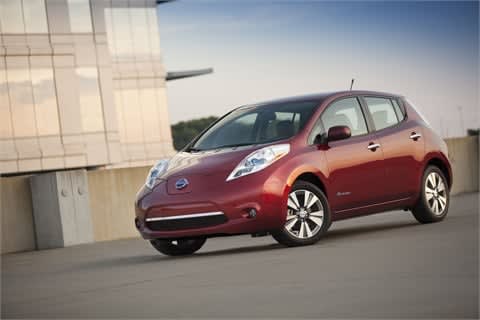
The all-electric 2014 Nissan LEAF’s range on a full charge has increased from 73 to 84 miles over 2012, while its fuel economy has increased from a combined 99 MPGe to 114 MPGe this year.
The first true EV was introduced in the U.S. in the late 19th century, but gasoline power dominated until the early 1990s. The catalysts for a more serious development of EVs that consumers would buy were the dual “oil shocks” of the 1970s, when the nation began to truly recognize that, at the time, we were dependent upon sources of oil that weren’t necessarily supplied by our allies.
Based on those early prototypes, and the use of electric power for small applications such as golf carts and maintenance vehicles, EVs were considered by many to be glorified golf carts.
But, EVs today are indeed cars; they weigh more than a ton, can cruise at highway speeds, and can reasonably seat four adults. One of the first jobs the fleet manager has when considering EVs is to ensure that everyone — including him or herself — understands that what is being added isn’t just a fancy golf cart, but an automobile.
Finding Applications
Finding an application for an EV in a fleet isn’t as difficult as it may first seem. The primary limitations of the typical EV are size/space and range. They are most often compact cars (with some mid-sized sedans), and wherever they are used must allow for the smaller size.
Certainly, a pharmaceutical fleet, for example, which provides cars to reps that carry marketing materials and samples, and drive 20,000 to 30,000 miles per year isn’t going to replace the fleet with EVs. While there may be specific applications (i.e., urban territories) where mileage is very limited, for the most part, EVs aren’t, at present, replacements for existing selections.
But, there are ways that nearly every fleet can use them, including:
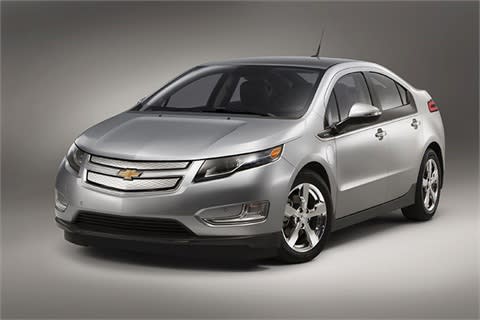
The e-REV 2014 Volt offers a fuel economy of 98 MPGe and 35 city/40 highway on gasoline power. The range-extending engine gives the Volt up to 380 miles of total driving range.
Site vehicles: Whether for a multi-building corporate campus, a plant, or any other large site, EVs are excellent solutions to the need for vehicles whose primary mission takes place on-site. Mail delivery, security patrol, shuttles, even general pool use are some of them. The fact that these vehicles can be taken offsite and driven anywhere makes them a better solution than a low-speed-type EV.
University/government: Some of the widest users of EVs are universities and government. Both tend to have large sites, and the applications are similar.
Car share: For many people who live in urban areas, a car is more of a problem than an asset. Parking is expensive, and public transportation can generally get them where they need to go. Car share companies provide vehicles by the hour or mile, and are an excellent solution to the occasional need city dwellers have. More often than ever, universities also have car share locations on campus, which helps relieve parking congestion and provide students with transportation only when needed.
For just about any fleet, commercial or public sector, there are good applications for EVs. Smart fleet managers know to find them before moving forward.
Researching Incentives
To jumpstart the alternative-fuel market, the federal government, along with several states, provide various incentives to purchasers. Buyers of EVs can get a federal tax credit of up to $7,500 per vehicle, while state incentives can also be in the thousands of dollars. Before ordering, fleet managers are smart to discuss these incentives and how the company might qualify for an incentive.
Since these incentives are often tax credits, their value is dollar for dollar to the company’s bottom line, and will directly reduce the cost of the vehicle. It is particularly important to consult with the company’s fleet lessor to negotiate the capitalized cost down in an amount which reflects the credit. Again, it is important to research what is available, discuss with tax personnel, and, if the fleet is leased, what the lessor is willing to do to reflect the incentives in the cap cost.
Creating an Infrastructure
Clearly, the most important aspect of the inclusion of EVs in fleet is how and where the vehicles can be charged.
There are three types of chargers for EVs:
Level I — a standard 110v household source. Most electric vehicles come with a Level I charger, which is plugged directly into any ordinary home or business outlet.
Level II — charging at 220v, similar to that of a dryer outlet in the home. A Level II charger is purchased separately, and installed in the home or business location. Level II chargers cost from $1,000 to 1,500. Installation will depend on the circumstances; the installer will first conduct a site inspection to determine what needs to be done. A dedicated 220v outlet is strongly recommended for Level II charging.
Level III — also known as “fast charging,” it is 440v DC charging, and is for commercial use only. Level III chargers can cost as much as $40,000, and most homes or commercial buildings don’t have 440v capability.
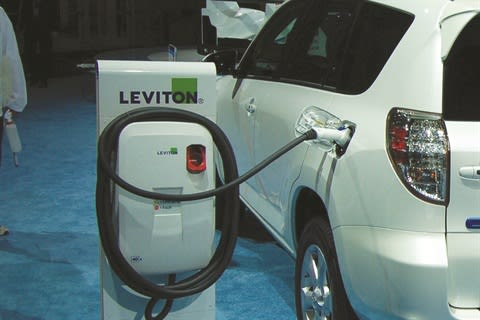
Charging times from a dead battery to full charge vary between the different levels: 22 to 24 hours (Level I); 6 ½ to 7 hours (Level II); and 16-20 minutes (Level III, 80-percent charged).
Placing EVs in a fleet will require at least Level II charging capability, either onsite or, possibly, at the driver’s home. Since most applications for EVs are for site vehicles, Level II chargers are best installed onsite. Since the cost is relatively small, one charger for each vehicle should be used.
There are also charging options available for public use. Many airports, for example, have parking dedicated to EVs and plug-in hybrids, with Level II chargers. Some states and localities have even installed quick chargers, available to the public, as well. There are websites that provide charger locations, and even charger services, which, for an enrollment fee, provide access to their sites.
Calculating Charging Times
Fleet managers also need to know how long each of the charging options will take. Charging times are commonly expressed as charging from a dead battery to full charge:
Level I – 22 to 24 hours.
Level II – 6 ½ to 7 hours.
Level III – 16-20 minutes to 80 percent charge.
Fleet drivers are no more likely to run a battery to complete depletion than they are to run a fuel tank dry, so the above charging times are somewhat misleading.
Charging an EV battery is not unlike refilling a propane tank for a barbeque grill. Initially, charging occurs at a very high rate; then, as the battery is charged, the charge slows to a trickle until the battery is fully charged. This is true for all three charging options. Depending on how far the vehicle will be driven (and how low the existing battery charge has fallen), only a few hours on a Level I charger, and less on a Level II charger, may be necessary in many instances. Level III DC charging amperage is so high that it will shut down at about 80 percent full charge.
Battery charging is entirely safe for the driver. Once the charger is plugged in, it will “communicate” with the vehicle, and current only flows when the vehicle indicates it’s ready to accept it. Over time, fleet managers and their drivers will learn how long charging will take by continued use of the vehicle.
Experiencing EVs
As previously noted, EVs are real cars, and can be driven as such. They have excellent acceleration, since, rather than having to go through gears to reach speed, the cars produce nearly 100-percent torque as soon as the accelerator is pressed. Handling, braking, and all other aspects of driving EVs are no different than those of internal combustion engine (ICE) cars.
EVs are less started than “turned on,” similar to any other electric device. This might take some getting used to for a driver, since there isn’t the usual engine cranking sound followed by the roar of the engine. Most EVs will have a green light or chime to indicate the motor is on.
Another factor drivers will have to become comfortable with is the fact that EVs perform better in traffic than they do on the open road. Drivers are used to burning fuel while stopped in traffic; EVs don’t — range is better in city or stop-and-go driving than it is on the highway. It is almost instinctive to be concerned about sitting in traffic with a gas tank near empty, but if an EV battery is low, traffic and stop-and-go driving can actually add charge to the battery.
Overcoming Range Anxiety
Probably the biggest concern drivers and fleet managers have about using EVs is range. For the most part, EVs will have about 100 miles (give or take) on a full charge, depending upon circumstances. The two circumstances, which have the greatest impact on range, are:
Using the heater in cold weather. Heat can reduce range by as much as 30 percent.
Using the air conditioner. In hot weather, running the AC can reduce EV range by about 10 percent.
Some other conditions, such as road grade, can also reduce range, just as they can in an internal combustion engine vehicle. The harder the motor must work to overcome, for example, traveling up a steep grade, the more battery power it will drain. As noted previously, running high speeds on freeways also uses more battery than local, stop-and-go driving. This is due to regenerative braking, where braking actually re-charges the battery pack. Some EVs have a drive mode which maximizes regenerative braking while driving.
That said, EV manufacturers provide owners/drivers with ways to mitigate the effects of heat and cold (and thus the use of heaters and A/C). Some provide a smart phone app, others a key fob, which can pre-heat or pre-cool the car, while it is being charged (and, thus, drawing power from the power grid rather than the battery pack). Starting out with a car that is already warm (in cold weather) or cooled (in hot weather) will allow the driver to use these accessories at a lower level than otherwise.
As for other accessories, such as radios and windshield wipers, most EVs come equipped with a regular 12-volt car battery to run them, and, thus, range is unaffected.
To EV or Not to EV?
Electric cars (and small trucks) can accomplish a number of positive things for a fleet manager. They can show the public, shareholders, and management that the fleet manager is committed to reducing carbon emissions and fuel costs. They can provide a net low-cost solution for a number of applications in the fleet, from site vehicles to pool vehicles to car share use. EVs are quiet, efficient, and, when used to their maximum effect, can be an outstanding solution for a fleet.
More Green Fleet
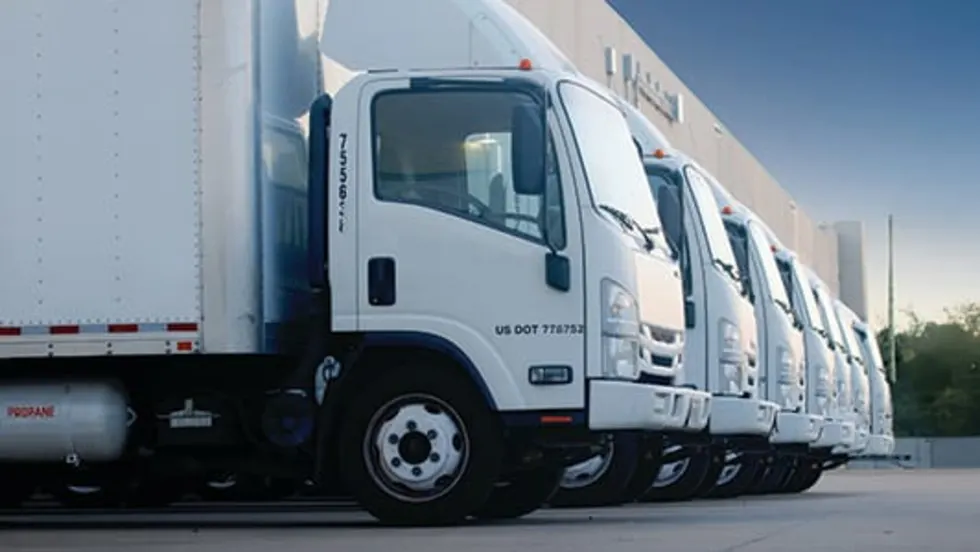
New Propane Autogas Program Offers Fleet Compensation
Qualified commercial fleets can receive $7,500 per eligible propane autogas vehicle and up to $10,000 for new refueling site prep. Learn how the program works and see whether your fleet qualifies.
Read More →
EV Charging Use Is Outpacing Infrastructure Growth
ChargePoint’s 2026 Charging Forward Report points to rising charger use, higher-powered charging, commercial vehicle electrification, and energy-management technology. Here’s what fleets should know.
Read More →
Merchants Fleet Reports 290M EV Miles as Fleets Navigate Changing Electrification Market
From millions in operating savings to hundreds of millions of EV miles, Merchants Fleet’s latest report reveals what’s working and what’s changing in fleet electrification.
Read More →
The EV Breakdown Nobody's Talking About: Why Most Electric Vehicle Roadside Calls Aren't Mechanical Failures
Here's why EV breakdowns are widely misunderstood.
Read More →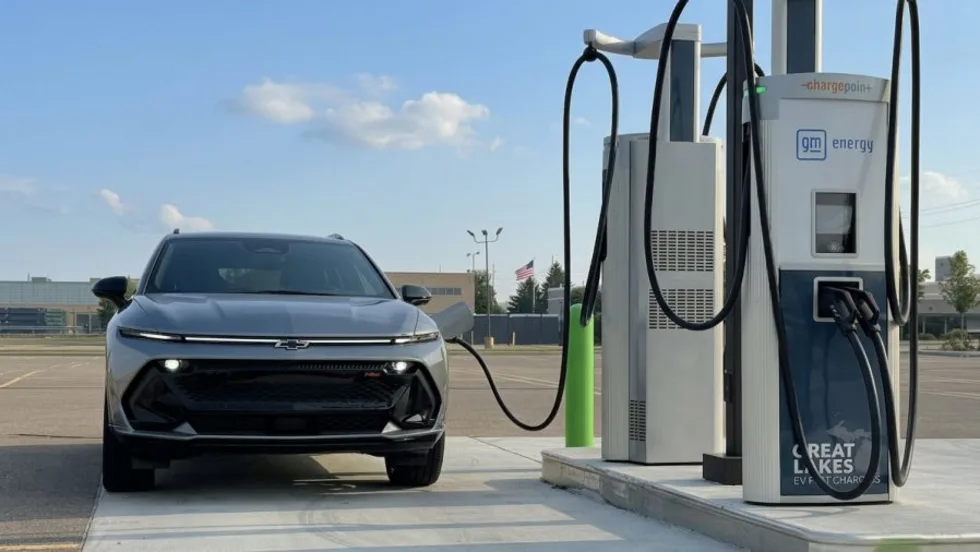
ChargePoint Now Available in Energy Pass
ChargePoint and additional planned charging network integrations were added to GM's Energy Pass.
Read More →

First Look: Slate Auto's Electric Fleet Pickup
Could an affordable, modular EV pickup make electrification more practical for fleets?
Read More →
Slate Debuts Colorful, Unique EV Models
A recent media and client event, studded with electric vehicles dressed up on platforms, planted a new position for the manufacturer in the wider EV market. Fleets will find cost-saving advantages.
Read More →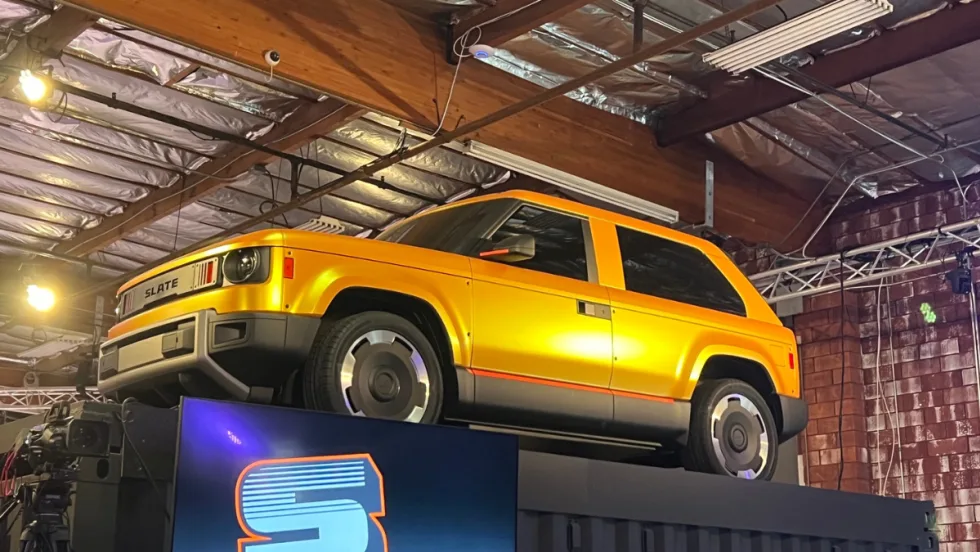
Slate Electric SUV, Pickup Switchable Model Aims For Light-Duty Fleets
Everything about this EV is counterintuitive and understated, making it stand out from the crowd.
Read More →
Inspiration Mobility Acquires Key Electrada Assets
Inspiration Mobility Group has acquired select assets of Electrada, adding the fleet electrification provider's team, technology, and charging infrastructure development capabilities to its energy management business.
Read More →