




Related: Brenda Davis Named 2015 AF Professional Fleet Manager of the Year
The Changing World of Fleet
While sometimes challenging, there is no denying that the world of fleet management is changing. To be seen as the “best of the best” today requires dedication to the profession and a strong desire to raise the bar.
by Dan Frank
October 9, 2015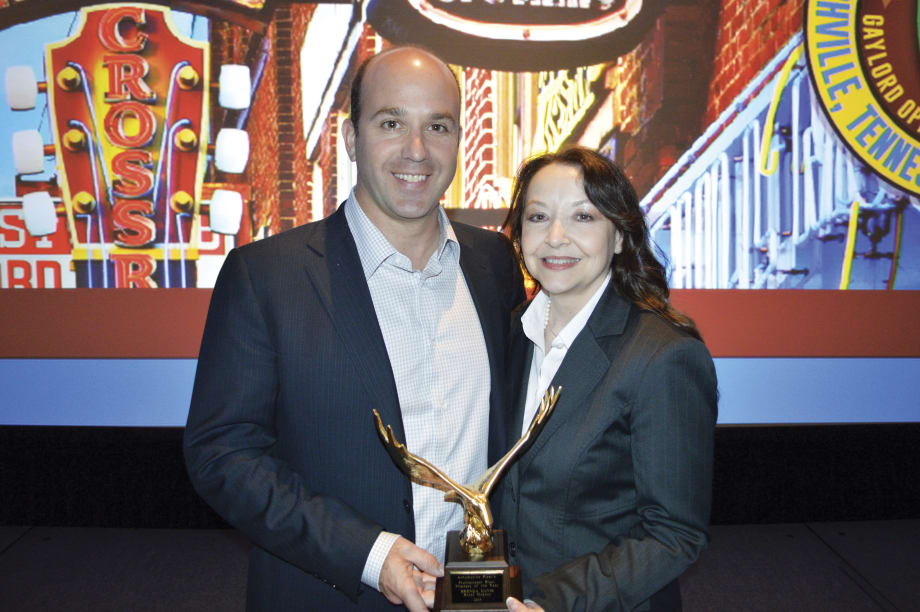
Dan Frank, president of Wheels Inc., and Brenda Davis, fleet commodity manager for Baker Hughes and 2015 Professional Fleet Manager of the Year, celebrate this year’s recognition.
3 min to read
Dan Frank, president of Wheels Inc., and Brenda Davis, fleet commodity manager for Baker Hughes and 2015 Professional Fleet Manager of the Year, celebrate this year’s recognition.
We once again have a terrific field of candidates for Automotive Fleet’s Professional Fleet Manager of the Year award. While this has always been a very prestigious award, it seems like, with each passing year, the level of effort, dedication, and skill required to truly establish oneself as an outstanding fleet manager continues to increase.
The Challenges of Tech
Indeed, the standard “job description” for a typical fleet manager today involves a much more complex set of responsibilities than it traditionally did. Fleet managers are often tasked not only with overseeing the day-to-day fleet operations, but also with managing procurement initiatives, conducting manufacturer negotiations, evaluating the supply chain, overseeing safety and risk mitigation, keeping track of regulatory changes, and understanding a marketplace that continues to evolve at an extremely rapid pace.
To make matters even more interesting, many vehicles today have 40 or more microprocessors and more than 100 million lines of code, in addition to a plethora of sensors, cameras, and communications devices.
This type of technology provides a host of useful new features that are boosting vehicle safety, efficiency, and usability in ways that seemed impossible only a few years ago.
On the other hand, it brings a number of new challenges that can be difficult for fleet managers to address, including hacking, system quality and upgrades, driver distraction, and hardware compatibility. Many drivers took an educational course before these features existed and don’t know how to properly use newer technology such as adaptive cruise control, not to mention those of us who still pump our ABS brakes.
But, that’s just the tip of the iceberg. Volatile oil prices have made it difficult to project fuel costs. A greater focus on quality and safety by the manufacturers and National Highway Traffic Safety Administration (NHTSA) has led to a record number of recalls. And, an improved retail market for new vehicles has meant vehicle production and delivery schedules that, at times, are more protracted for fleets.
Evolution of Fleet Management
As we look forward, we will continue to face more challenges and opportunities to enhance the safety and productivity of our drivers. Fleet managers will be faced with accounting changes, rising fuel economy standards, new-vehicle technologies, and evolving transportation models from ride-sharing to autonomous vehicles.
Suffice to say, this year’s Professional Fleet Manager of the Year nominees are raising the bar in terms of performance, versatility, and resourcefulness. They’ve managed to turn today’s challenges into opportunities to drive efficiency, safety, and cost savings for their fleets.
We commend them on all the success they’ve already achieved and look forward to the leadership roles they’ll take in the industry going forward.
Dan Frank is the president of Wheels Inc., and leads virtually all of Wheels’ business units. He is also president of Wheels Leasing Canada, Ltd., and chairman of Ixe Fleet, Wheels’ joint venture in Mexico.
Subscribe to Our Newsletter
More Operations
Company Vehicle or Reimbursement? How Fleets Are Rethinking Assignments
As fleet costs and insurance pressures rise, fleet managers are taking a closer look at which employees need company-provided vehicles and when a reimbursement program may make more sense.

Fleetio, ASE Launch Scholarship Program for Automotive Technicians
The second annual program will award 15 scholarships totaling $35,000 to support ASE certification, testing fees, and equipment costs.

Reading the Global Signals: What AI and the Energy Transition Mean for Fleets Now
In this opening keynote of the 2026 Fleet Forward Conference, John Rossant, founder of CoMotion, How can fleet managers navigate a never-ending, changing industry landscape?

90% Use Telematics. Are Fleets Getting Safer? | AF News Recap
This week, we're breaking down which industries have the highest rates, how Jamie McKay manages 2,400 vehicles, what's happening with the 2027 fleet awards, and why software-defined vehicles could introduce new costs.

What's Best Handled by an FMC, and What's Better Done Directly?
Fleet managers continue to rely on FMCs for essential services but are taking a closer look at where working directly with suppliers can improve efficiency and responsiveness.

Fleet Meets: Erin Gilchrist
Meet Erin Gilchrist, the inaugural Mike Antich Spirit of Fleet Award winner, as she shares insights on leadership, mentorship, the power of industry connections, and why people remain at the heart of fleet's future.

How 2026 Fleet Visionary Jamie McKay Manages 2,400 Vehicles Across 37 States
How do you keep 2,400 vehicles running across 37 states? Fleet Visionary Award winner Jamie McKay shares how collaboration, flexibility, and a few simple strategies help her tackle fleet management challenges at Aptive Pest Control.

Managing Fleet Costs in an Era of Permanent Volatility
Fleet operating costs have risen more than 20% since 2020, raising a key question: When does extending a vehicle's service life stop making financial sense?

The Next Evolution of Fleet Management: Autonomous Operations
This opening keynote session at the Fleet Forward Conference highlights the future of autonomous driving for fleets.

How to Reduce the Total Cost of Risk From Catalytic Converter Theft
A stolen catalytic converter can cost fleets far more in downtime and lost productivity than in repairs. A total-cost-of-risk approach can help fleet managers quantify their exposure and prioritize theft prevention.