




Telematics Case Study: Timely Transport of Patients
With an innovative and thoughtful approach to medical transport, ProTransport-1 provides vehicles that place the patient's needs above all else while still focusing on time and cost efficiency.
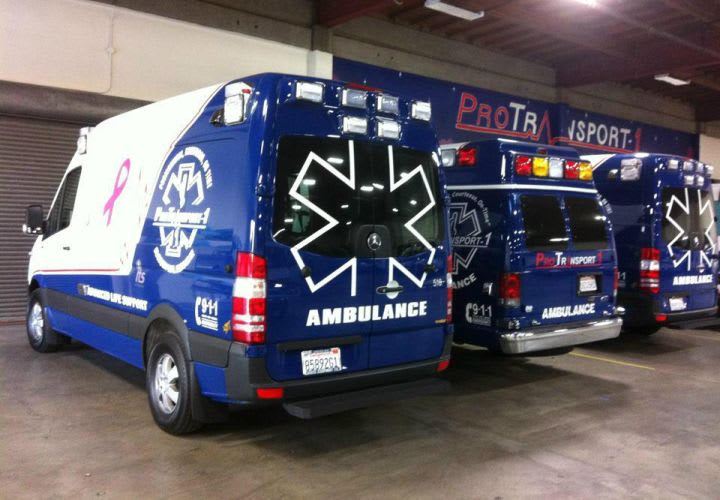
Photo via ProTransport-1.
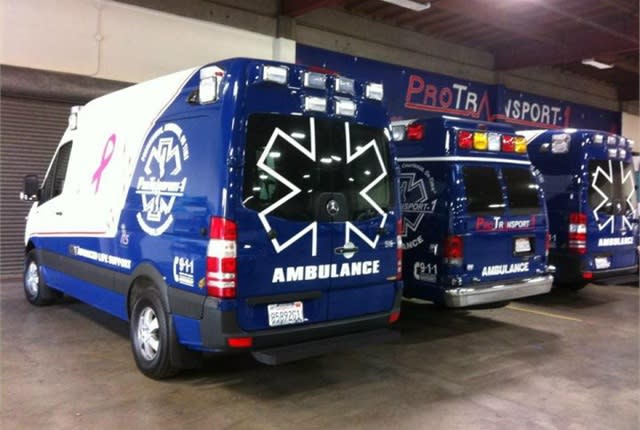
Photo via ProTransport-1.
Founded in 2000 by former San Francisco Bay Area paramedics Elena Whorton and Mike Sechrist, ProTransport-1 is one of the largest privately owned ambulance companies in California and is one of the state's top emergency transport providers.
The Fleet: ProTransport-1 operates a fleet of more than 120 vehicles, including ambulances, wheelchair vans, gurney vans, and an ambulatory services town car.
The Challenge: With an innovative and thoughtful approach to medical transport, ProTransport-1 provides vehicles that place the patient's needs above all else while still focusing on time and cost efficiency.
So when it seemed that unnecessary paperwork and inefficient systems were interfering with a smooth operational process, ProTransport-1 looked for a solution that would eliminate the clutter. The need for more data connectivity, less of a paper-centric process, and a better way to track vehicle performance data led ProTransport-1 to a "Connected Ambulance" telematics solution.
The Solution: ProTransport-1 worked with its wireless network and telematics providers to develop and implement an innovative Connected Ambulance solution.
Using a ruggedized, embedded communications gateway for connecting mobile equipment to its fleet units, ProTransport-1 was able to consolidate all network connectivity into a single platform by integrating a cellular radio, GPS receiver, firewall, high-speed processor, and a Wi-Fi access point all in one device.
With the device installed, the vehicle and all its network-enabled devices are automatically connected when the vehicle is started.
When the ambulance is turned on, the device is active, and any network device connected can access the wireless network. Equipped ambulances have almost instant connection to ProTransport-1 facilities, databases and staff in Northern and Central California.
By creating a "mobile office" through the Connected Ambulance solution, ProTransport-1 vehicles connect computers, devices, scanners, and printers, eliminating many of the previous connectivity problems.
This solution also allows ProTransport-1 to perform functions such as track each time the emergency lights are activated to a Code 3, disable the ignition system remotely to prevent theft, and look at vehicle performance data such as fuel consumption. And in critical situations, Connected Ambulance can collect a patient's vital signs and wirelessly transmit them to emergency room doctors while the ambulance is in transit.
The Results: The elimination of a lengthy paper process and poor mobile and data connectivity helped ProTransport-1 continue to provide quality service to its patients. The connected solution helps ProTransport-1 coordinate in-field resources and provides real-time access to critical applications, such as patient information systems and medical diagnostics.
A virtual "mobile office" provides cost-savings and increases an ambulance's efficiency to support ProTransport-1's bottom line, so paramedics and medical staff can focus on what matters most: the patient.
More Telematics
GM Launches OnStar Fleet Intelligence Platform With AI Assistant
The new platform brings vehicle data, order tracking, connected services and fleet analytics into one system, with an AI assistant that can answer fleet questions using natural-language prompts.
Read More →
Inspiration Fleet Introduces Garage 2.0 Fleet Intelligence Platform
Fleet managers increasingly have access to data from vehicles, telematics, fuel, charging, and other systems, but those sources don't always communicate with one another. Inspiration Fleet's Garage 2.0 platform brings that information together while letting fleets keep working with different technology and service providers.
Read More →
Inside Inspiration Fleet’s New Platform for Connecting Fleet Data
Inspiration Fleet CTO Chris Getner explains how the new Garage 2.0 platform is designed to connect disparate fleet data and what that could mean for fleet managers in practice.
Read More →
Fleet Manager’s Ultimate Playbook: Navigating the New Standard in OEM Connectivity
Rising operating costs, driver safety concerns, and unplanned downtime are putting unprecedented pressure on modern fleets. Discover how fleet managers use embedded OEM connectivity and real-time vehicle data to cut TCO, prevent downtime, and protect drivers without aftermarket telematics hardware.
Read More →
Samsara Driver Perks Adds New Benefit for Corporate Fleet Drivers
The rewards program gives eligible professional drivers access to discounts from more than 50 brands while giving fleets another way to support recruitment, retention, and the driver experience.
Read More →
Inside the Church of Jesus Christ of Latter-day Saints’ Two-Track Telematics Strategy
With 20,000 vehicles and two fundamentally different driver populations, the Church faced a fleet management problem that a single telematics program couldn't solve. How it responded offers a replicable framework for any fleet where one size doesn't fit every driver.
Read More →
How Conversational AI Can Make Fleet Tasks Easier for Drivers
While most generative AI tools help fleet managers interpret data at their desks, Connex2X is applying voice interaction to tasks behind the wheel.
Read More →
Why Fleets Are Creating Dedicated Fleet Analyst Positions
Are fleet analyst positions the new norm? Listen here to find out.
Read More →
Teletrac Navman Begins Next Chapter as Standalone Private Company
What's new with Teletrac Navman and its new owner?
Read More →
Why Fleets Are Creating Dedicated Fleet Analyst Positions
Telematics, AI, EVs, and connected technologies are generating more fleet data than traditional teams can effectively manage. Reed Jackson explains why dedicated fleet analytics roles are emerging to turn that information into better operational decisions.
Read More →