





Glossary for Corrosion Prevention Techniques
Electrocoat (e-coat): A coating method that uses electrical current to deposit paint onto a part or assembled product.
Source: www.Electrocoat.org
Powder Coating: Type of coating applied as a free-flowing, dry powder. The primary difference between a conventional liquid paint and a powder coating is powder coating does not require a solvent to keep the binder and filler parts in a liquid suspension form. The coating is typically applied electrostatically, then cured under heat to allow it to flow and form a “skin.” Powder coating generally is used to create a hard finish tougher than conventional paint.
Source: www.finishing.com
Phosphating: A process in which an acid attacks the metal of the work piece and re-deposits a material that is a combination of the metal substrate (and other metals, such as zinc) with phosphate. This process creates a surface tightly adherent to the base metal with more surface area, provides improved corrosion inhibition, and helps the powder coating stick better. Phosphating provides a good coating base so the finished part has increased usable life.
Source: www.PowderCoating.org
Galvanneal Steel: The result of the combined process of galvanizing and annealing the steel. The galvanization occurs through the hot-dipping (hot-dip galvanizing) process and gives a very fine, gray, matte finish. Galvanneal does not flake off the galvanized coating when formed, stamped, and bent. The very fine, rust-proof matte finish acts as a primer and easily adheres to paint.
Spec'ing Truck Bodies to Prevent Corrosion
Truck bodies rust in salt-laden environments, whether in coastal areas or regions that require road salts for de-icing. To lengthen truck body life — and help contain fleet costs — consider five factors in spec’ing bodies.
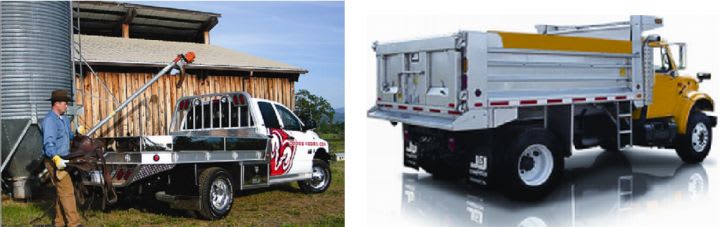
(left) Aluminum truck body; (right) Stainless steel truck body
If you operate trucks in salty air coastal regions or the northern “Snow Belt” areas that require harsh road salts to de-ice highways, you must account for corrosion prevention when spec’ing truck bodies. Otherwise, rust will shorten the useable life of your trucks and drive up overall fleet costs.
How should truck bodies be spec’d to prevent corrosion and maximize return on investment? Here are five factors to consider:
1. Corrosion-Resistant Materials
What materials should be spec’d to resist corrosion? Most commonly promoted for their anti-corrosion properties are aluminum, stainless steel, fiberglass, and composites.
Aluminum. “One of the trends in corrosion prevention we’re seeing right now is more aluminum bodies,” said Bill Sammons, director of national accounts for Reading Fleet Services.
“The reason is because the cost differential between steel and aluminum has really stabilized,” he explained. “The biggest knock on aluminum bodies has always been ‘it costs too much.’ I can save 45 percent of the weight, but it’s going to be 2-3 times the money. That’s a hard trade-off. Now, the price of aluminum has come within 10-20 percent of the steel. So you pay $1,000 more for an aluminum body [versus steel], which is going to give you more corrosion resistance, and it’s going to be lighter so you’ll have a better payload capacity.
What are potential downsides to aluminum to factor in your decision?
“There are not a lot of people out there who know how to work on aluminum,” says Sammons. “That’s been one of the knocks. That’s always going to be an issue when making repairs out there in the field.”
Stainless Steel. “Stainless steel is used prominently in the ‘Snow Belt’ region because it holds up better against magnesium chloride, used to de-ice roads,” says Bob Johnson, fleet relations director with the National Truck Equipment Association (NTEA) and a former fleet manager with more than 30 years experience.
“Even aluminum, unless properly treated, can corrode just as easily as conventional steel bodies when exposed to road salt,” Johnson adds.
While the initial price for stainless steel is usually higher than conventional steel and other truck body materials, if trucks are operated in areas with harsh winters, the ability to resist corrosion from road salt is an important factor to consider when projecting lifecycle body costs.Fiberglass. “Fiberglass bodies are very corrosive-resistant, assuming the steel understructure is properly treated,” says Johnson. “These bodies are lighter than steel and, if manufactured right, also have an attractive appearance in terms of finish.”
What’s the typical trade-off when selecting a fiberglass body over steel? One, the up-front price typically is higher. Additionally, while fiberglass is rust-proof, it’s not as forgiving of day-to-day abuse as steel, which can shorten truck body life, depending on how harsh the conditions in which the truck is operated on a regular basis.Heavy-Duty Composites/Plastics. Composite bodies are typically constructed of light-weight, impact-resistant, rust-proof plastic. Advantages include:
Low heat conductivity to better protect cargo from temperature swings.
Corrosion resistance and ability to handle abuse, contributing to longer life and reduced maintenance and repair costs.
Light weight, translating into greater fuel efficiency and heavier payload capacity.
2. Body Design
What about steel bodies? If you operate trucks in regions at high risk for corrosion, should steel be avoided altogether?
Not necessarily. According to Johnson, some manufacturers build steel bodies that hold up well against corrosion through enhanced engineering and design. Most steel bodies are made of galvanneal steel panels formed with a rust-resistant finish. In addition, the lower price point for steel, compared to most alternative materials, makes steel a viable option — if the design is right.
“One of the things to look for,” Johnson advises, “is that the basic design should avoid creating ‘traps’ for mud, dirt, water, and chemicals. A lot of your utility bodies have guards around fuel-filler hoses in the wheel well. If the guard is not properly designed, it will accumulate dirt, salt, and chemicals that will cause rust. So the design of the body can be just as important to corrosion resistance as the materials themselves.”
3. Manufacturing Process
When considering a steel body, Johnson recommends examining how the panels and other components are fabricated.
“The more you bend and fold and weld on stuff, the more prone it is to corrosion,” he says. “Some body companies will use structural steel components that are hot-rolled and relatively corrosion-resistant, while others will form their structural components by taking sheet steel and bending it — roll-forming it. The roll-forming process in general can create high stress areas in the metal that are more prone to corrosion.”
Also, beware metal left exposed after cutting and welding.
“Prior to manufacturing the body, the steel is pre-coated. So when you cut and weld, you’re exposing areas to corrosion,” Johnson points out. “Quality body manufacturers will do something to restore treatment to those areas — dip the bodies in phosphate, manually apply primer to those areas where the body is ground, and make sure they get an extra coating there.”
According to Johnson, a growing number of manufacturers are starting to use heavy-duty adhesive bonding — a process of gluing the parts together — to eliminate the need for welds and holes altogether.
“This [adhesive] technology has been used in the aviation industry for years, and it’s starting to find its way into other applications. This process completely fills the seam, leaving no space for moisture to seep in. Any time you have a seam, you have a chance for corrosion,” says Johnson.
4. Coating/ Finishing Process
How is the body treated and painted?
“Some body companies will do full dips, e-coats, and high-quality paint jobs. Others will just hose the body off with a pressure washer and shoot the paint on them. So the quality of the finish is very important,” Johnson advises. “When you do a full dip on the body, pre-clean it, and e-coat it, you’re much more likely to get all of the seams, nooks and crannies, and all that is prone to corrosion.”
“E-coat,” the abbreviation for electrocoat, refers to a coating process that uses electrical current to fuse paint directly onto the body. Another approach is powder coating, which uses high voltage spray equipment to coat the body with fine polyester particles that cure to form a hard skin, tougher than conventional paint in resisting corrosion.
Whatever coating is used, Johnson cautions proper body prep is crucial. “If the body is not properly prepped and any dirt or dust gets under the coat, those particles will actually de-laminate the sheet,” says Johnson. “I’ve seen powder coat come off in a sheet because it lost adhesion. I’ve literally seen it blow off a truck going down the road.”
5. Finished Body Modification
"The other thing you have to be careful about is modifying the body after the fact,” Johnson cautions.
“I get a body from a manufacturer that is very well protected against corrosion. Then I send it to the upfitter who starts welding and grinding and drilling holes in the body to add equipment to it,” Johnson explains. “When they drill holes, do they go back and prime them? Many bodies are manufactured with the proper coated materials. But once you weld on them, you can burn the coating off. And when you do clean-up grinding on them, you grind the coating off. So the areas where there are welds on the body are also vulnerable to corrosion.”
Make sure upfitters take corrosion prevention into account when they install new equipment on new finished bodies.
The Bottom Line: No Uniform Spec’ing
When it comes to corrosion-resistant bodies, one spec does not fit all. Examine the entire process — material selection, design, manufacturing process, body finish, and modifications — to ensure you’ve covered all the bases in spec’ing a body that lasts in any climate.
Originally posted on Work Truck Online
More Vehicle Research

2027 Toyota Camry Offers Hybrid Powertrain Across Five Grades
The 2027 Toyota Camry is a carryover with new pricing.
Read More →
Chevrolet Updates 2027 Trax and Trailblazer with More Standard Safety Features
Chevrolet is updating two of its smallest SUVs with added driver-assistance technology, redesigned interiors, and revised trim options. The changes could add more safety equipment as standard for commercial fleets, while a new Trailblazer configuration adds another all-wheel-drive option.
Read More →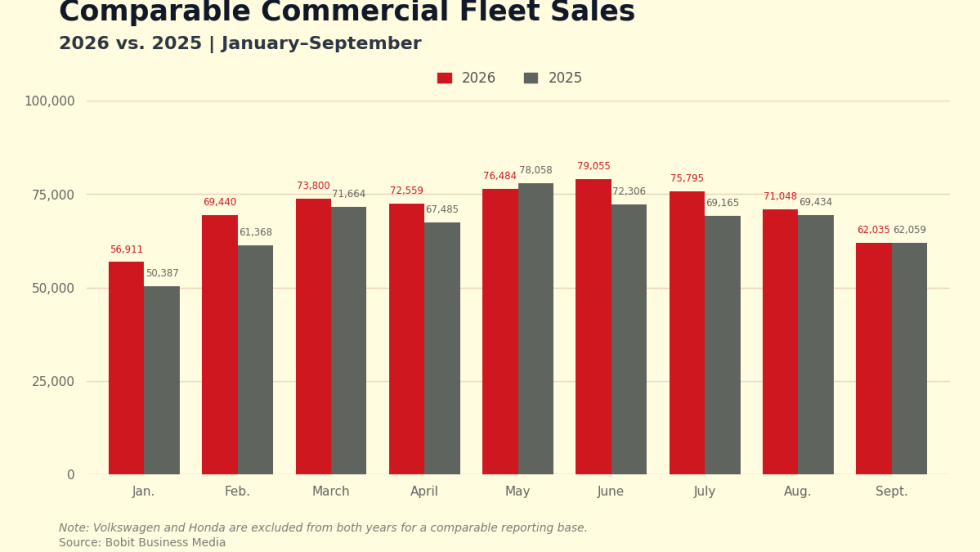
Commercial Fleet Sales Rise 5.8% Through September 2026
September commercial fleet sales were essentially unchanged from a year earlier, slowing year-to-date growth while keeping volume ahead of 2025.
Read More →
Hall of Fame Inductee: John Dmochowsky
The longtime Mondelēz International fleet executive joins the Automotive Fleet Hall of Fame.
Read More →
Hall of Fame Inductee: Lee Miller
After more than four decades at Boehringer Ingelheim, Lee Miller leaves a legacy built on fleet expertise.
Read More →
Hall of Fame Inductee: Mark F. Petersen
From managing fleets of thousands of vehicles to advancing safety and mentoring fellow professionals, Mark F. Petersen made his mark across both the corporate and supplier sides of fleet.
Read More →
When Charger Downtime Becomes a Fleet Availability Problem
As EV deployments move beyond pilot programs, charger reliability can directly affect vehicle readiness, driver productivity and route scheduling.
Read More →
2027 Nissan Rogue Hybrid Adds e-POWER, Standard AWD
The new Rogue Hybrid uses Nissan’s e-POWER system with dual electric motors, offers an estimated 40 mpg and starts at $35,490.
Read More →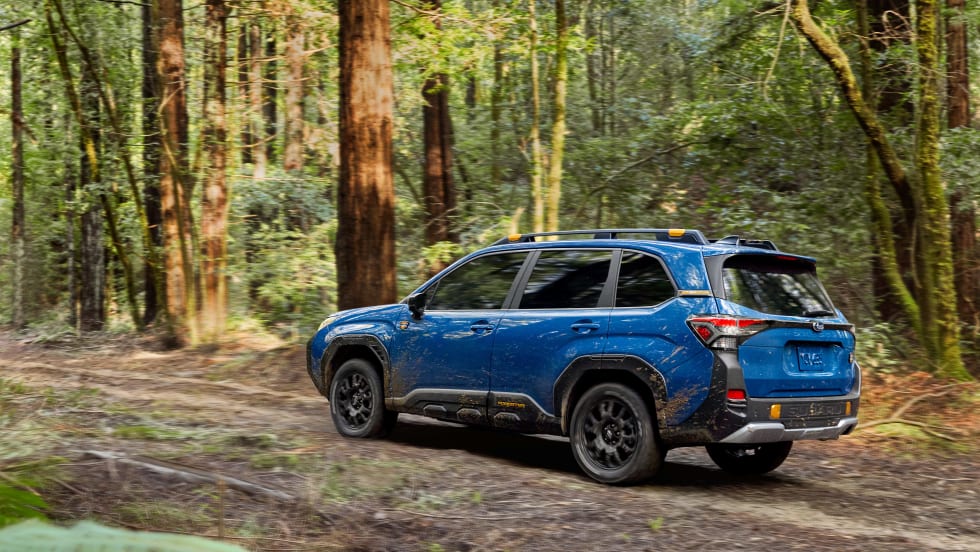
2027 Subaru Forester Adds First Wilderness Hybrid
The 2027 Forester lineup starts at $29,995 and adds a Wilderness Hybrid with 194 combined horsepower and 9.3 inches of ground clearance.
Read More →
EV Realty Names Henrik Holland President as Charging Platform Expands
The former Prologis Mobility and Shell executive will help expand EV Realty’s truck charging business and move its power-first infrastructure model into autonomous vehicle depots and other fleet sectors.
Read More →