




Spec'ing the Extra Mile with Do-It-Yourself Modifications
This sales fleet used some do-it-yourself modifications on the Isuzu Reach to create the optimal operating environment for its drivers.

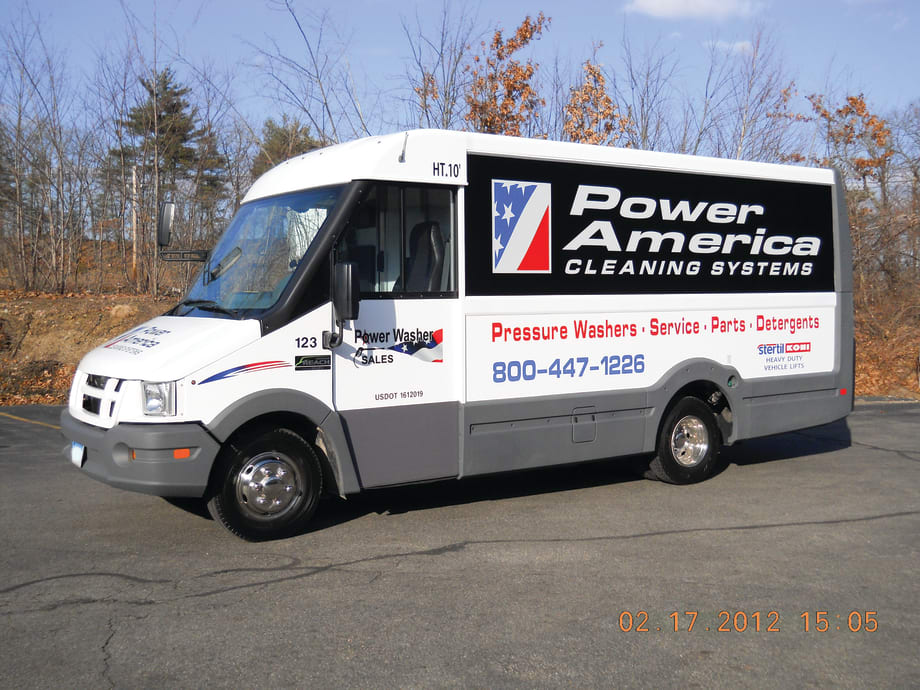
Photos courtesy of Power Washer Sales.
This fleet modified Reach vans with a winch to aid loading, as well as e-track in the box to secure the equipment, and a file cabinet for parts storage and desk space.
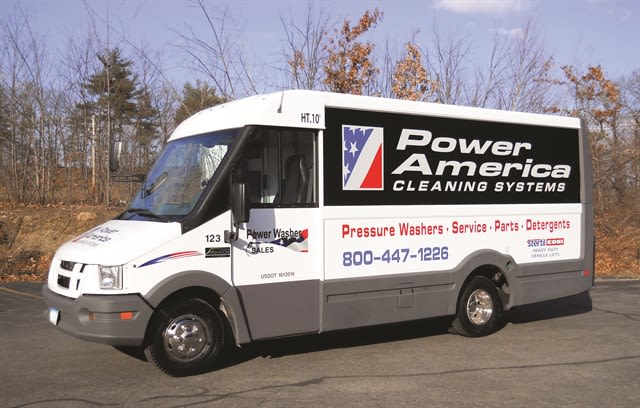
Photos courtesy of Power Washer Sales.
This fleet modified Reach vans with a winch to aid loading, as well as e-track in the box to secure the equipment, and a file cabinet for parts storage and desk space.
Jim Coleman has been buying trucks for 55 years, but when he was ready to replace in spring 2011, he couldn’t seem to find a model that fit his exact specifications to accommodate his portable cleaning equipment.
“The problem with everything I had seen up to that point was the inside dimensions weren’t wide enough for me,” says Coleman, owner of Power Washer Sales of Massachusetts, though he notes that he didn’t want a truck as big as a traditional UPS step van.
Then Coleman saw a blurb in a truck magazine about a new type of walk-in commercial van called the Reach from Isuzu and Utilimaster. As part of his research, Coleman actually flew to the van’s production plant in Indiana and even ended up meeting with the president of Utilimaster and the company’s head engineer.
Back home, Coleman made a floor plan in masking tape based on the truck’s dimensions and rolled the company’s portable cleaning equipment inside the lines to make sure it all fit. “Everything seemed to work, except for the access,” Coleman says, referring to the fact that he anticipated difficulty in loading and unloading the equipment — weighing 200-400 lbs.
For years Coleman used Ford E-350 cube vans and loaded equipment with large rail gates, but those couldn’t be utilized on the new van.
Instead, he bought a metal ramp that folded into the back of the truck, though he found that the ramp alone didn’t quite support the weight of the equipment. In addition, the truck’s tailgate iced up in the winter, causing a dangerous condition during loading.
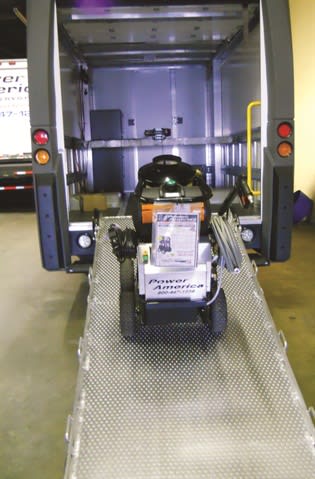
The winch to aid with loading.
Getting Resourceful
The solution was to put a small winch on a crossbar inside the truck that ran off the truck’s electrical system. The winch helps to pull the equipment up the ramp. “It’s as easy as pushing a button and up comes the equipment inside the truck,” Coleman says. “It works out extremely well.”
Inside, Coleman installed e-track to secure the equipment. Behind the partition to the cab he added a small file cabinet to store parts and hoses and use as a writing desk. He added air ride seats in the cab for driver comfort.
Coleman needed to make sure the vehicle signage reflected the company’s image, especially on the back door, where other drivers actually have time to read a message. He used vinyl reflective lettering that stands out and doesn’t peel.
“I’ve instructed my guys, either at the end of the day or beginning, to wash that back door, even out of a rainstorm,” Coleman says. “I want them clean and presentable, so by golly, everyone knows who we are.”
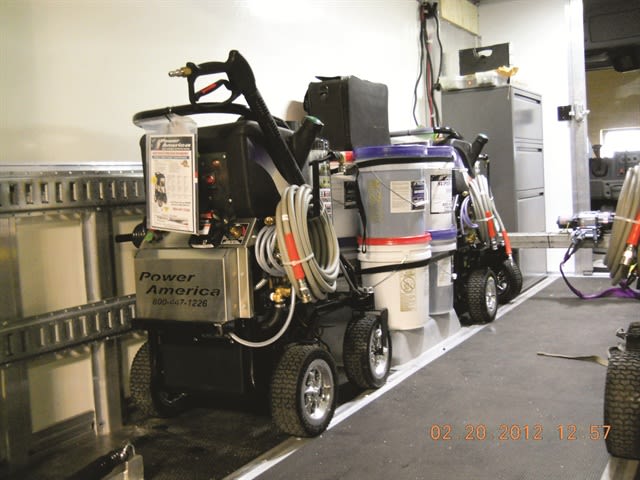
Inside the modified Isuzu Reach vans.
Fleet Factors
Power Washer Sales runs four Reach vans, five Hino 268 models with custom bodies by Morgan and four GMC ¾-ton pickups that pull trailers.
The company puts 25,000-35,000 miles a year on the Hinos, sometimes 400-500 miles a day. Through an agreement with his Hino dealer, Coleman swaps into a new Hino chassis at 70,000-90,000 miles while keeping the body. “[The dealer has] already got that chassis sold to another customer,” Coleman says.
Coleman expects to put 20,000-30,000 miles a year on the Reach vans, which are used for sales calls. “These vehicles are rolling representatives of our company,” he says, “and they tell the story without having to blink.”
Coleman figures he’s spending $20,000 more on the Reach than he would a typical cube van. But over an expected five-year service life, “the difference is pennies a day.” And with better fuel economy, less maintenance and more driver satisfaction, he says the extra money is well worth it.
More features from Business Fleet's January/February magazine issue can be read here.
You can also read more small fleet profiles by go to www.businessfleet.com/profiles.
Originally posted on Work Truck Online
More Vehicle Research
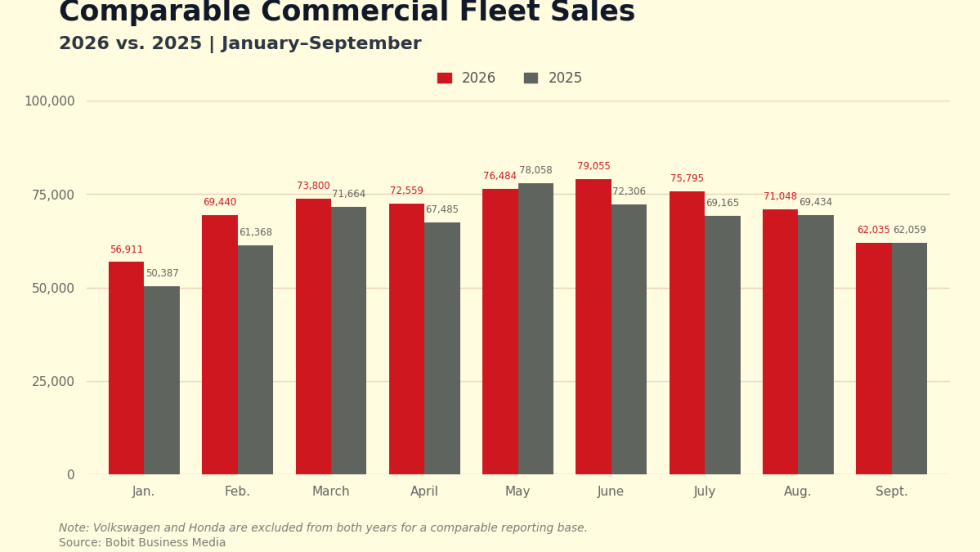
Commercial Fleet Sales Rise 5.8% Through September 2026
September commercial fleet sales were essentially unchanged from a year earlier, slowing year-to-date growth while keeping volume ahead of 2025.
Read More →
Hall of Fame Inductee: John Dmochowsky
The longtime Mondelēz International fleet executive joins the Automotive Fleet Hall of Fame.
Read More →
Hall of Fame Inductee: Lee Miller
After more than four decades at Boehringer Ingelheim, Lee Miller leaves a legacy built on fleet expertise.
Read More →
Hall of Fame Inductee: Mark F. Petersen
From managing fleets of thousands of vehicles to advancing safety and mentoring fellow professionals, Mark F. Petersen made his mark across both the corporate and supplier sides of fleet.
Read More →
When Charger Downtime Becomes a Fleet Availability Problem
As EV deployments move beyond pilot programs, charger reliability can directly affect vehicle readiness, driver productivity and route scheduling.
Read More →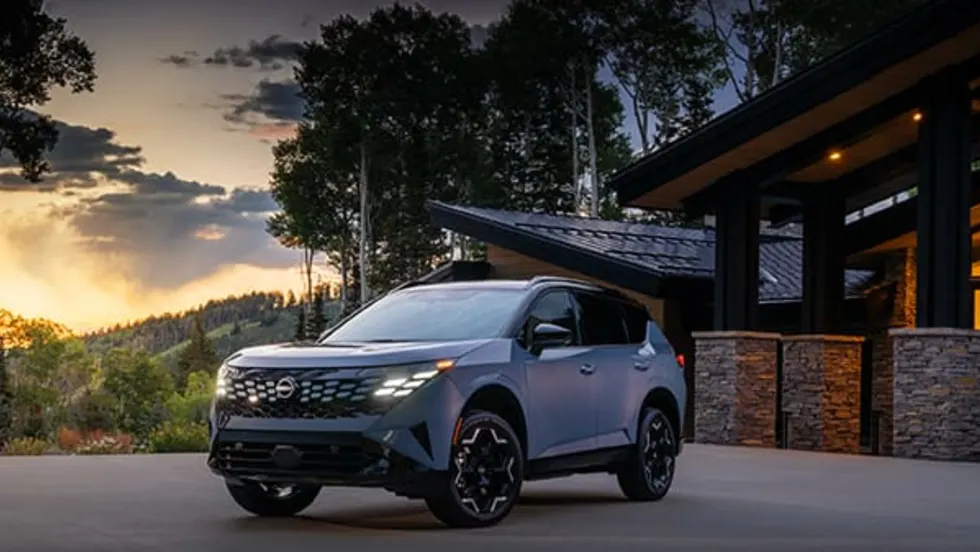
2027 Nissan Rogue Hybrid Adds e-POWER, Standard AWD
The new Rogue Hybrid uses Nissan’s e-POWER system with dual electric motors, offers an estimated 40 mpg and starts at $35,490.
Read More →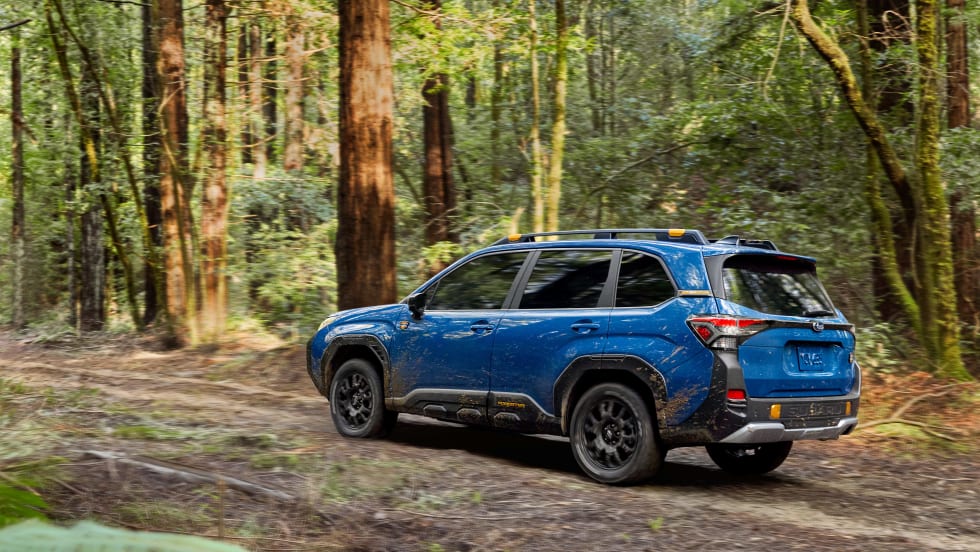
2027 Subaru Forester Adds First Wilderness Hybrid
The 2027 Forester lineup starts at $29,995 and adds a Wilderness Hybrid with 194 combined horsepower and 9.3 inches of ground clearance.
Read More →
EV Realty Names Henrik Holland President as Charging Platform Expands
The former Prologis Mobility and Shell executive will help expand EV Realty’s truck charging business and move its power-first infrastructure model into autonomous vehicle depots and other fleet sectors.
Read More →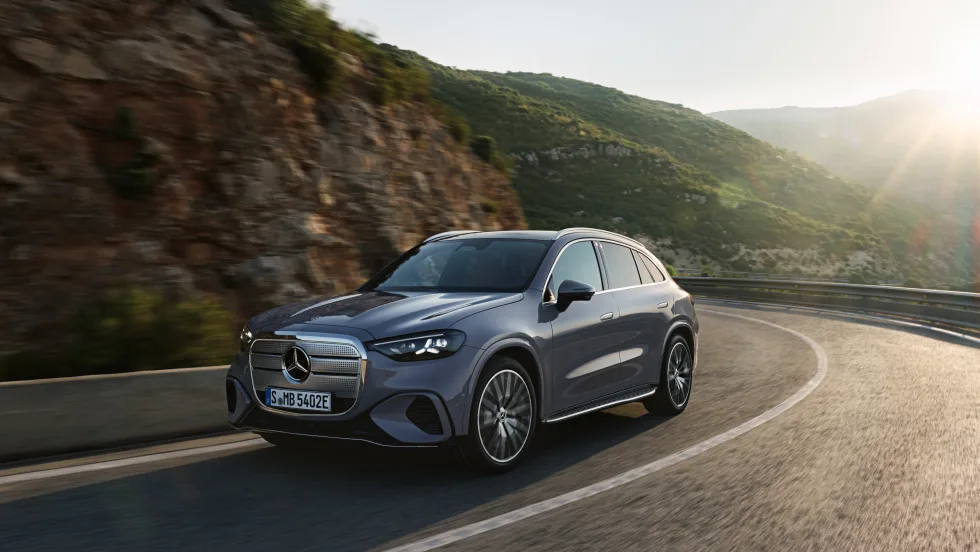
Mercedes-Benz Introduces Electric GLC With Up to 350 Miles of Range
The GLC 400 4MATIC Electric features an 800-volt architecture, 330-kW DC fast charging and a 94-kWh battery, along with Mercedes-Benz's new MB.OS operating system.
Read More →
Fleet Has a Talent Pipeline Problem, not a Talent Problem
Where will the next generation of fleet leaders come from, and what does the industry need to do differently to find them?
Read More →