



At A Glance
Fleets looking to save fuel costs right now can do so by:
Implementing eco-driving techniques.
Reducing idling.
Optimizing routing.
Reducing vehicle weight.
Maintaining proper tire inflation.
Monitoring unauthorized use of fleet assets.
 MENU
MENU SEARCH
Fleet managers have a number of simple tools and techniques they can use to cut fuel use. Many of them can be implemented with little to no cost, and will reap large rewards.
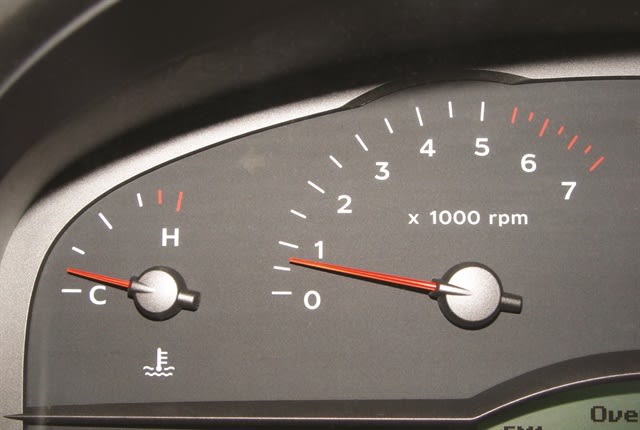
Photo courtesy of iStockPhoto.com.
When it comes to fuel cost, a swing of even a few cents per gallon can make a substantial impact on a fleet’s overall fuel spend — and bottom line. What can fleet managers do to reduce their organization’s overall fuel consumption and reap significant savings?
One strategy is to replace conventional vehicles with alternative-fuel options, such as all-electric, hybrid, propane autogas, or natural gas. But, going “all-in” on green technologies can be an expensive proposition and isn’t always appropriate or practical for certain applications or fleets.
Here are six initiatives that fleet managers can implement right now to maximize fleet-wide fuel efficiency, without a huge up-front investment in new vehicles or technologies:
1. Eco-Driving Techniques
To most fleet managers, the concept that driver habits can significantly impact fuel economy is well documented. It’s the low-hanging fruit for making an immediate impact on fuel consumption.
For example, aggressive driving behaviors — such as speeding, rapid acceleration, and hard braking — can reduce fuel mileage by as much as 33 percent at highway speeds and by 5 percent around town, according to the U.S. Department of Energy’s FuelEconomy.gov.
And, a road test performed by Edmunds.com concluded that moderate driving behaviors achieve up to 37-percent fuel savings compared to aggressive driving tactics and staying within the speed limit generates up to 14-percent reduction in fuel consumption.
How can fleet managers get a handle on their drivers’ behaviors to identify opportunities for improvement?
Telematics systems using GPS tracking can be configured to capture real-time data on aggressive driving incidents and send alerts to fleet managers when a speeding, harsh braking, or hard acceleration event occurs. This way, fleet managers can quickly identify and address high-risk drivers — to help correct those behaviors before they get out of hand.
2. Idle Reduction
According to Argonne National Laboratory (ANL), engine idle wastes anywhere from about a quarter to more than one gallon of fuel per hour, depending on vehicle type and engine size. (To determine fuel consumption rates specific to your vehicles, refer to ANL’s Idle Reduction Savings Calculator, available in both PDF and Excel formats, at www.transportation.anl.gov/pdfs/TA/361.pdf.)
While this may not sound like much, all it takes is a few minutes here and there, whether to warm up the engine or stay cool in the vehicle between jobs, to add up to a few hours each day. Multiply that idle time across dozens, hundreds, or even thousands of vehicles in a fleet, and you get the idea of the size of the opportunity for fuel reduction if you can eliminate excessive idle.
“Ultimately, lowering idle time and the resulting fuel costs is all about changing the behavior of managers and drivers,” said Chris Ransom, director of sales engineering for Verizon Networkfleet. “To achieve this, fleet managers need to first understand how much idle time is occurring, under what circumstances, and by what types of vehicles.”
Ransom said telematics systems can help fleets capture real-time idling data so that they can understand the scope of the problem.
“In working with our fleet customers, we have found that they are always surprised at how much idling they are doing. Even drivers who are being mindful of their idle time are sometimes unaware of how much idling they actually do,” Ransom said. “Once fleet managers have a good understanding of how and when excessive idling is occurring, they can then use this data to establish clear policies, communicate these policies to drivers, and reward them for positive behavior.”
How can fleet managers use that data to effectively enforce their idling policy?
Creating contests and incentives based on driver performance is a good way to create excitement and driver interest.
“Contests are a great way to motivate drivers to improve performance and achieve company goals,” Ransom said. “To lower fuel costs, one company awarded a game console to the driver with the best idling record at the end of the year. By posting the results each week, it became a competition that led to significantly reduced idling throughout the fleet and good camaraderie among the drivers.”
3. Route Optimization
The shortest distance between two points isn’t always the most efficient route from a fuel economy perspective, especially if there is a lot of traffic, road construction, or any other factor that would increase travel time and fuel consumption. How can fleet managers, dispatchers, and drivers select the most efficient routing on a consistent basis?
A prime example is United Parcel Service (UPS), which uses software to design delivery routes that avoid left turns whenever possible. The company found that a significant cause of idle time — and wasted fuel — resulted from drivers making left turns because they had to idle at the traffic lights, waiting to make the turn. The “no-left-turns” policy has saved UPS an estimated 10 million gallons of fuel since 2004, according to the company.
Another way to use route optimization software for fuel reduction is to consolidate routes. This way, fleets can use fewer vehicles (and, thus, less fuel) to serve customers, without sacrificing the quality or timeliness of the service.
Route optimization can also help fleets identify opportunities to reallocate smaller, more fuel-efficient vehicles to certain routes that had been previously served by less efficient vehicles.
4. Weight Reduction
According to FuelEconomy.gov, an extra 100 pounds in a vehicle can reduce fuel economy by about 1 percent. But, when fleet managers cannot physically inspect every car, van, or truck at all times to ensure there’s isn’t any unnecessary cargo in or on the vehicle, what practical steps can they take to ensure proper weight?
The first step is to gather baseline data on what’s appropriate in terms of cargo requirements for a specific job title (such as sales, technician, installer, estimator, etc.), according to Pamela Koehne, strategic consultant for GE Capital Fleet Services.
“Once the position (or job title) has been identified for evaluation, a sampling of representative drivers should complete a baseline data collection template (including products, tools, and/or equipment they carry; how many of each; and their height, width, length, and weight dimensions),” Koehne said. “This data will allow you to understand variation among drivers’ cargo carrying behaviors. Since this group of drivers performs a similar job, they should theoretically be carrying very similar cargo.”
Another tip is to gather together a representative group of drivers for a brief virtual or in-person focus group. ”You can actually view their vehicles loaded with their typical cargo to better understand what cargo is really necessary and the best way to load it into their vehicle,” Koehne said. “Discussion of their ‘day in the life’ allows you to understand the driver’s daily environment, while helping you identify best practices and improvement opportunities. It may lead to transitioning some drivers to a smaller vehicle.”
How can fleet managers monitor results to ensure driver compliance? Through ongoing evaluation of each driver’s fuel economy performance.
“While other behaviors also influence mpg performance (aggressive driving, stop and go traffic), significant mpg variation among drivers within the same position will allow you to monitor and subsequently reward good behaviors and address undesirable behaviors,” Koehne said.
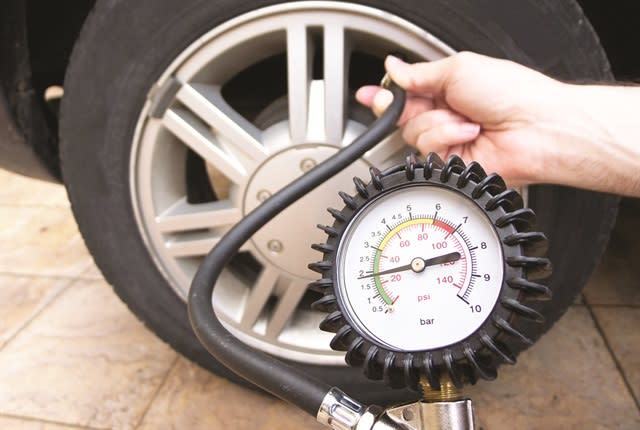
Photo courtesy of iStockPhoto.com.
5. Tire Pressure Maintenance
Under-inflation increases tire wear and reduces fuel economy by up to 3 percent, according to the U.S. Department of Energy.
“Properly inflated tires get better fuel efficiency when compared to improperly inflated tires. And, it’s not enough to just visually check tires — a tire can lose up to half of its inflation and not appear to be flat. It’s best to follow the recommended guidelines,” said Charlie Guthro, vice president of North American Fleet Management for ARI.
Proper tire pressure guidelines for a particular vehicle can be found on the door to the glove compartment or on the driver’s side door pillar.
How often should tire pressure be checked?
Tire manufacturers recommend checking tire inflation once a month and before long trips or when you suspect physical damage.
Here are key steps to keep in mind, according to Guthro:
When you check the inflation pressure, make sure the tires are cool.
Remember to check the spare tire.
Visually inspect the tires for physical damage, imbedded objects (e.g., nails and screws), and loose fasteners.
Who should be responsible for checking and maintaining proper tire pressure?
“Tire management is not just an individual responsibility,” Guthro said. “It is a team effort from the driver who takes the time to do his daily pre-trip inspection and monthly tire inflation inspection, to the procurement group who buys the right tire for the application as well as the maintenance group that inspects the tires as part of a regular preventive maintenance program.”
What systems or processes do savvy fleets put in place to ensure tire pressure is checked in a timely manner across dozens, hundreds, or even thousands of vehicles in a fleet?
“Every fleet should have a tire management program, whether it involves the latest technology such as computer software programs, pressure and inflation systems, and automated pre-trip inspections, or involves the good old fashioned method of using paper, a pencil, a tire gauge, and tread depth tools,” Guthro said.
“Tires are a critical component of a vehicle and an asset that needs to be managed not only for total cost of ownership but also for safety and fuel efficiency. They are also a good example of a ‘low cost-big impact’ measure. By properly maintaining air pressure, you can reap substantial benefits.”
6. Unauthorized Use Reporting
Anytime a take-home fleet vehicle is driven for personal use or a side job, company fuel is wasted. So, how can fleet managers monitor and minimize unauthorized vehicle use?
“A clearly defined fleet policy detailing authorized and unauthorized use of company vehicles is essential,” advised Tom Sloan, manager of telematics products for Donlen. “Include wording in the policy given to drivers about how vehicle use is monitored and the potential disciplinary action that may be taken if misuse by the driver has occurred. This will reinforce the seriousness of unauthorized use of company vehicles.”
Sloan recommends configuring telematics systems to report on vehicle use that falls outside of company policies.
“One example is if a fleet does not permit use on weekends or after certain hours,” he said. “Telematics can track the time and locations that vehicles are in use and send reports and alerts on use outside of the set parameters. And, in the event that a vehicle is supposed to be limited to a territory, you would be alerted on instances when vehicles leave that territory.”
A fuel card, when tied into a telematics system, is another helpful tool to not only track unauthorized use of a vehicle but also identify improper fuel purchases that drive up fleet-wide fuel consumption.
“With fuel cards, you can tell whether the fuel purchase is for more than a vehicle’s tank capacity, an indicator that an asset-assigned fuel card is being used on a different vehicle,” Sloan said. “Or, if your business has defined business hours or does not operate over weekend, you could set up alerts to know when fuel purchases occur outside normal business hours.”
Fuel cards can also be set up with spend limits, aligned with a vehicle’s utilization and fuel capacity, to hold drivers accountable with fuel purchases.
While “Go Green” initiatives tend to garner the biggest headlines, don’t overlook the small steps, the little tweaks here and there, that you can begin applying today to make a substantial impact on cutting your fleet’s overall fuel consumption, while maintaining optimal service levels for customers.

Buying fleet management software in 2027 means looking beyond features and price. As fleet operations, technology and expectations evolve, this guide explores what today’s fleet professionals should consider when choosing a system that can deliver value now and adapt to what comes next.
Read More →
EVs, AI, and autonomous vehicles are reshaping fleet management. Discover what’s ahead—and how fleet leaders can prepare for the next era.
Read More →
Here's how the technician shortage has affected uptime for fleets, and what to do about it.
Read More →
Neology’s neoFleet platform will manage toll transactions and toll-authority operations for vehicles across Avis, Budget, Payless, Budget Truck and Zipcar.
Read More →
Nearly eight in 10 surveyed fleets allow personal use of company vehicles, while just over half of respondents report charging employees for the privilege.
Read More →
Could developments overseas offer a preview of what’s coming for U.S. fleets? This week, we’re looking at the future of AI, autonomy, and electrification, plus Ford Pro’s new certified pre-owned program, smarter vehicle offboarding, and a new way for fleets to manage toll expenses.
Read More →
What do fleet managers need to do when a driver leaves?
Read More →
Rising operating costs, driver safety concerns, and unplanned downtime are putting unprecedented pressure on modern fleets. Discover how fleet managers use embedded OEM connectivity and real-time vehicle data to cut TCO, prevent downtime, and protect drivers without aftermarket telematics hardware.
Read More →
The integration allows U.S. Bank Voyager fleet customers to manage toll payments and violations alongside fuel, EV charging and maintenance expenses.
Read More →
ADAS-equipped vehicles may crash less often, but they can cost more when they do. This week, we’re breaking down what that tradeoff means for fleets, plus Subaru’s first Forester Wilderness Hybrid, Nissan’s new e-POWER Rogue, and why Calstart has become Catalyst Mobility.
Read More →