




Should You Check Mobile Phone Records After a Fleet Vehicle Crash?
Obtaining phone records hinges on whether the phones are company-owned and your state’s subpoena and consent laws. However, there are workarounds and best practices to help.
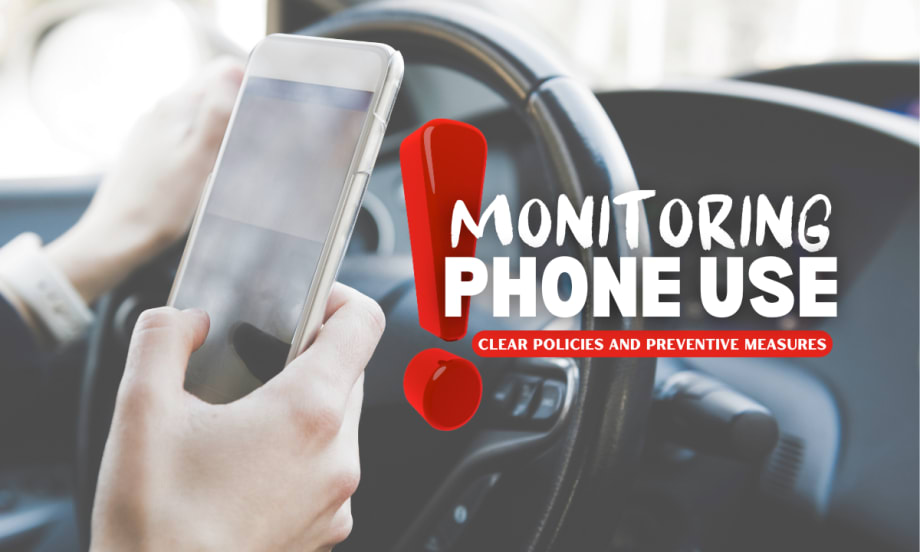
It can be cumbersome in some states to obtain a subpoena to check employee phone records. One easy solution is the use of event video recording devices.
Photo: Automotive Fleet
You need safe, defensive drivers in your fleet of non-CDL vehicles. When your employees focus on preventing accidents, you’ll enjoy lower cost of loss, more efficiency, and reduced insurance premiums. Of course, you can’t always count on your employees to prevent accidents. Sometimes they take huge risks like texting or talking on the phone while driving.
Cell phone use of any kind while driving is one of the most dangerous things a person can do. In fact, texting while driving is six times more likely to cause an accident than drunk driving. If your employees are using their cell phones while behind the wheel, they’re putting themselves and your company at major risk.
The best thing to do is prevent this unsafe behavior in the first place. Invest in safety training to educate your drivers on how to be attentive behind the wheel. Preventing an accident is always better than reacting to one.
That being said, you should be prepared for the worst. Let’s tackle some pressing questions about handling accidents caused by cell phone use.
Are You Allowed to Check Cell Phone Records After an Accident? And Should You?
You need to get to the root cause of any accident. When you understand what causes your accidents, you can prevent them. That’s why it’s crucial for you to know if an employee was using his or her cell phone before a collision occurred.
Unfortunately, obtaining phone records isn’t always simple.
If you issue company-owned phones to your employees, you can absolutely check cell phone records during your post-accident investigation. However, you may not have the same rights regarding your employees’ personal phones.
Depending on your state’s laws, you will likely need a subpoena to check an employee’s personal phone records. Alternatively, you may be able to access their phone records with their written consent. It can be a cumbersome process either way,
and you shouldn’t count on being able to access them.
An easy solution to this problem is to use event video recording devices. These systems:
Record what’s happening in and out of the vehicle
Save this footage only when there is a sudden stop or collision
Allow you to see the root cause of near-misses and collisions
Most of the time, event video recording devices
prove you and your driver’s innocence after an accident. However, they also come in handy for you to see unsafe behaviors like cell phone use that cause accidents.
Don’t bury your head in the sand when there’s an accident. Regardless of how you do it, you should try to determine if cell phone use played a role in any collision.
Can I Terminate an Employee Based on Cell Phone Use?
This is a resounding yes. Not only that, but you likely should.
When people behave in an unsafe way, it’s for one of two reasons:
Ignorance (they just didn’t know any better)
They made a bad decision (they recognized the risk and did it anyway)
Most accidents happen because of the first reason: ignorance. People make honest mistakes because they don't realize they are doing anything wrong. When an employee has an accident due to ignorance, it’s easy to fix this. You can use defensive driver training to educate your employees on safe behaviors so they know better.
However, if someone is willing to accept the risk of texting or talking on the phone while driving, there’s little you can do to change that. They have a high-risk tolerance and it is unwise to put them behind the wheel for your company.
It’s only a matter of time before it costs you big time.
Cell phone use while driving should be grounds for immediate termination at your company.
Am I Covered Under Insurance if My Employee Was on His or Her Phone Before a Collision?
Yes, but it will cost you.
When your employees cause accidents, your premiums will likely rise. Your insurance company sees you as a bigger risk so they charge you more for coverage.
That’s why educating your employees on safe practices is important. Preventing the accident in the first place can reduce your insurance premiums and save you tons of money from cost of loss.
Should I Have a Cell Phone Policy That My Employees Must Sign?
Absolutely.
If you are going
to take action against your employees for cell phone use behind the wheel (and you should), you need to make that clear from the onset.
Upon hire, you should clearly express the safety rules your employees must follow. Write these down. Give them to your employees to read, review, discuss with you, and commit to.
Have them sign the document and keep it in their employee file. Better yet, give them a copy to keep on hand. Ask them to review it periodically so they remember the commitment they made.
Having a cell phone policy can help your company in a lawsuit if the worst were to happen. More importantly, though, it can help prevent these accidents in the first place. When you put an employee behind the wheel for you, lives are in their hands. You need them to commit to this responsibility.
Prevention is Better Than Reaction
If an employee is involved in a collision, it’s important to determine why the accident happened. Obtaining cell phone records can be an important part of this process, but it shouldn’t be your focus.
You want to prevent accidents, not just react to them.
Accidents are caused by people’s unsafe behaviors. When your employees behave unsafely, they are more likely to cause an accident. When they behave safely, they are likely to prevent an accident.
Fewer accidents mean reduced cost of loss, a more efficient company, and happier and healthier employees.
Train your employees on essential safe driving behaviors and your company will prosper.
Editor's Note: This article was originally published in July 2021 and was updated on October 2, 2024, for continued relevancy on distracted driving and obtaining phone records of fleet drivers.
Originally posted on Work Truck Online
More Safety
IIHS Crash Avoidance Tests Reveal Safety Gaps in Cargo Vans and Work Trucks
New crash-avoidance ratings from the Insurance Institute for Highway Safety reveal inconsistent performance among commercial vehicles, with several popular cargo vans and heavy-duty pickups struggling to avoid collisions with other vehicles and pedestrians.
Read More →
What’s Next for Fleet? Safety, AI & Industry Recognition | AF News Recap
Could your company's culture be encouraging distracted driving? This week, we're exploring how workplace expectations affect driver safety, what AI, EVs, and autonomous vehicles could mean for the future of fleet management, and how fleet professionals can strengthen their award nominations.
Read More →
Does Your Fleet's Culture Encourage Distracted Driving?
What happens when the people responsible for enforcing safety rules are the ones setting the wrong example? The answer may reveal why some of the biggest risks to fleet drivers have little to do with what's written in the employee handbook.
Read More →
Fleet Manager’s Ultimate Playbook: Navigating the New Standard in OEM Connectivity
Rising operating costs, driver safety concerns, and unplanned downtime are putting unprecedented pressure on modern fleets. Discover how fleet managers use embedded OEM connectivity and real-time vehicle data to cut TCO, prevent downtime, and protect drivers without aftermarket telematics hardware.
Read More →
From Driver Well-Being to EV Charging | AF News Recap
Mental health belongs in the fleet safety conversation. This week, we’re looking at five ways fleets can support employee well-being before a crisis, plus Holman’s expansion in Mexico, new one-day Fleet Forward passes, and why EV charging demand is outpacing infrastructure growth.
Read More →
Nexar-Nauto Merger Aims to Give Fleets Better Safety Intelligence Through Larger Driving Dataset
Stefan Heck tells Automotive Fleet that combining more than 10 billion miles of driving history with Nexar's AI models will give fleets deeper insights into driver risk and roadway conditions than either company could provide independently.
Read More →
Don't Wait for a Crisis: 5 Ways to Build Mental Health Into Your Fleet Safety Program
For Suicide Prevention Month, fleet and safety leaders have an opportunity to put mental health where it belongs: at the center of workplace safety.
Read More →
How Camera Data Can Strengthen a Fleet’s Insurance Renewal
Insights from a commercial insurance carrier and a broker show how fleets can turn video telematic data, driver coaching, and improved claims results into a stronger case at insurance renewal.
Read More →
The Safest Fleets Aren’t the Ones with the Most Technology
You’ve made the telematics investment. Here’s how to capture the other half of its value and build the safest fleet on the road.
Read More →
Hidden in Plain Sight: Fleet Compliance Risks
Fleet compliance isn't just about having policies — it's about consistently enforcing them. This practical guide reveals six hidden compliance risks common in public sector and shared fleet operations and outlines proven strategies to improve visibility, accountability, and audit readiness
Read More →