




Secura to Expand Fleet's Alt-Fuel Profile
In addition to replacing its remaining conventionally powered vehicles with hybrids, Secura Insurance plans to delve into the world of ethanol.
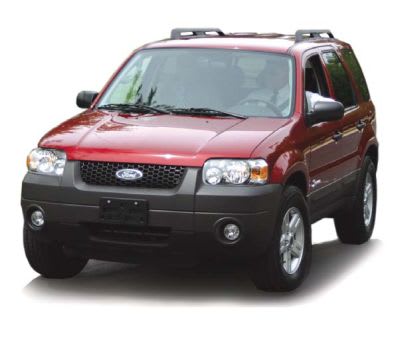
Secura Insurance plans to transition its fleet vehicle composition to 90-percent Ford Escape Hybrids and a smattering of E-85 vehicles.”
By next summer, Secura Insurance, based in Appleton, Wis., plans to convert its entire fleet to hybrid and E-85 (ethanol)-capable vehicles. Of the company’s 75 vehicles, 40 are currently Ford Escape Hybrids. Starting with just a few, Secura committed to hybrids 16 months ago because of environmental reasons and the gasoline price spike that has plagued the U.S. in recent years.
“It takes about two-and-a-half years to completely turn over our fleet, and we are more than one year into this,” said Scott Huiras, senior VP of claims for Secura. “About half of our fleet is now hybrid, and by this time next year, almost all will be hybrid.”
Corporate Culture Chooses Green
Secura has a history of environmental consciousness. The company’s president was named Wisconsin’s Environmentalist of the Year and the company actively attempts to reduce its heating and cooling expenses. “It’s the right thing to do and corporations can make a real impact by implementing hybrids into their fleet because they are low-emissions vehicles,” said Huiras.
Management chose the Escape Hybrid because it was the only small SUV option available. Secura’s claims and sales personnel required vehicles that provided room to carry equipment.
Though the hybrids cost more up-front, Secura receives a government rebate for vehicle purchases and has experienced improved fuel efficiency and reduced gasoline expenses. Drivers achieve 8 mpg more than their previous vehicles and average vehicle lifecycle is 60,000 miles. “But the wildcard is resale value, which may be affected by the price of gasoline,” said Huiras.
Huiras maintains that drivers are happy with the hybrids and that there is no difference in terms of acceleration compared to the models’ gasoline counterparts.
Does E-85 Have Potential?
Secura is currently investigating the possibility of adding E-85 vehicles to its fleet since ethanol stations are starting to grow in numbers in the upper Midwest. Wisconsin, for example, has 75 stations, according to Huiras. “Unfortunately, while OEMs have a number of E-85-compatible models, when it comes to SUVs and pickup trucks, they are the more expensive models.”
However, in expanding the company’s alt-fuel profile, Hurias is hopeful of E-85’s potential. “Ethanol supports the farm economy, so it would be a nice fit for us.”
Secura also plans to offer more choices to fleet drivers. “We need larger vehicles and would be interested in a hybrid van,” said Huiras.
A few field personnel prefer sedans, though, so Secura will provide those drivers the E-85-compatible Chevrolet Impala. Huiras said the company will make E-85-compatible compact SUVs available to its associates when domestic manufacturers begin to offer them.
Hope for the Future
Going hybrid is good for the corporate brand if it’s consistent throughout the fleet, according to Huiras. It differentiates a corporation from others, and Huiras is optimistic that more commercial fleets will follow suit.
“So, when the transition is complete, I’d guesstimate we’ll have 90-percent Escapes and a smattering of E-85 vehicles,” said Huiras.
More Fuel

Fuel Prices Surge in September | September Fuel Update
September brought major fuel price swings, including diesel crossing $6 a gallon. Here’s how gas and diesel prices changed throughout the month, and where they stood heading into October.
Read More →
Turning Fleet Payment Data into Executive Insights
Ramel Lindsay of U.S. Bank Voyager discusses how fleets can transform payment and transaction data into actionable intelligence to reduce costs, improve oversight, and support executive decision-making.
Read More →
Why the IRS Raised Its Mileage Rate in the Middle of 2026
Fuel-price volatility drove the rare increase to 76 cents per mile, the fifth midyear adjustment since 2000.
Read More →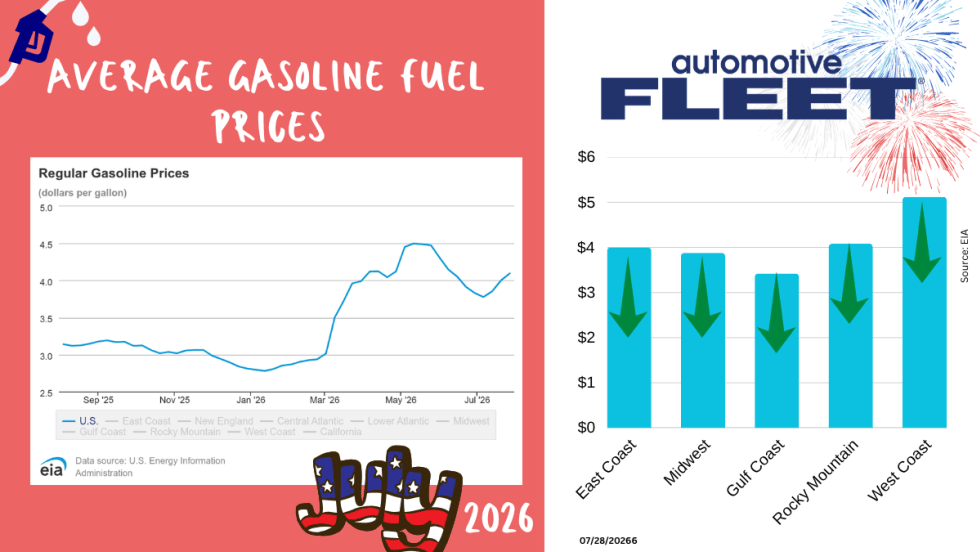
July Fuel Update: Prices Keep Rising in Light of More Conflict
Gas prices continue to rise as more and more conflicts do, too.
Read More →
Bob Adamsky on Fuel Volatility: "Don't Panic, Have a Plan."
When it comes to up and down fuel prices, Adamsky has a message for fleets: “Don’t panic.”
Read More →
How Fleets Can Gain Control of Non-Fuel Spend
Fuel often gets the spotlight, but non-fuel expenses can have a major impact on fleet costs. Ramel Lindsay of U.S. Bank Voyager discusses how fleets can gain better visibility and control over these often-overlooked expenditures.
Read More →
Fuel is Just the Start: How Middle East Tensions are Driving Up Fleet Maintenance Costs
The Middle East conflict is doing more than pushing up fuel prices. It’s also raising the cost of key maintenance products your fleet depends on, from motor oil to tires to windshield wipers. Here’s what you need to know about this budget-busting situation.
Read More →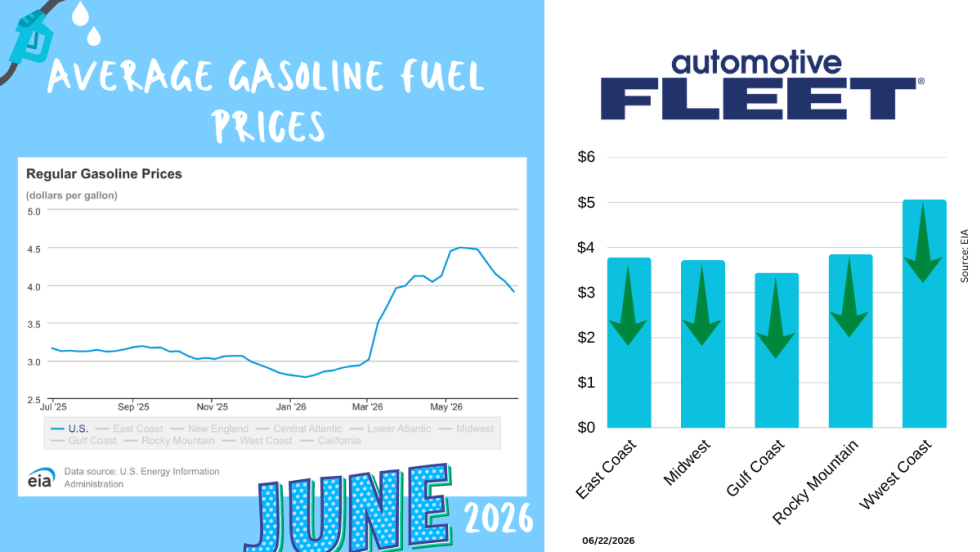
June Fuel Update: Prices Fall Below $4
Drivers are finally getting some relief at the pump. The national average gas price has dropped below $4 a gallon for the first time in months, with prices falling in 47 states as oil markets react to developments in U.S.-Iran negotiations.
Read More →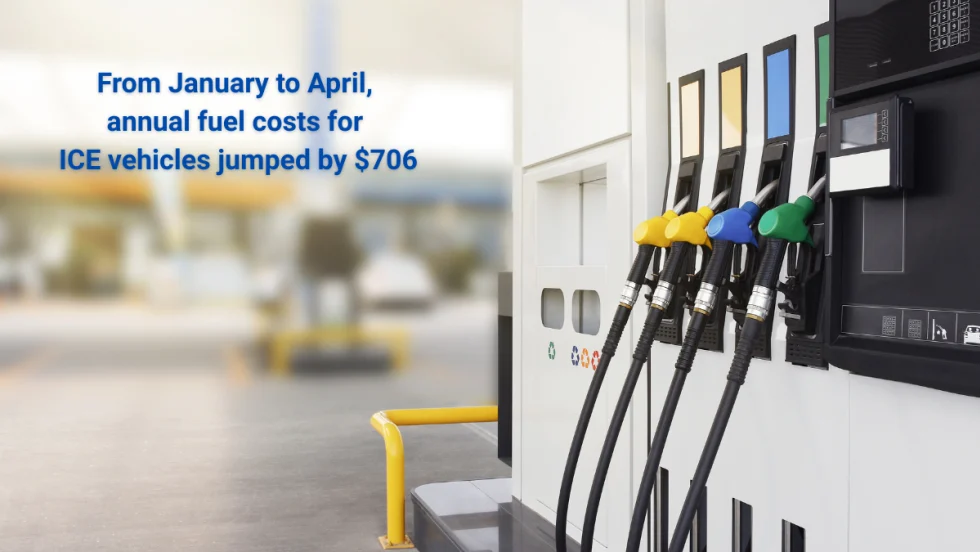
Study: How 2026's Gas Price Hikes Affect Different Vehicle Types
New data from iSeeCars reveals how rising fuel costs have affected different vehicle segments as gasoline prices climbed nearly 46% over the past four months.
Read More →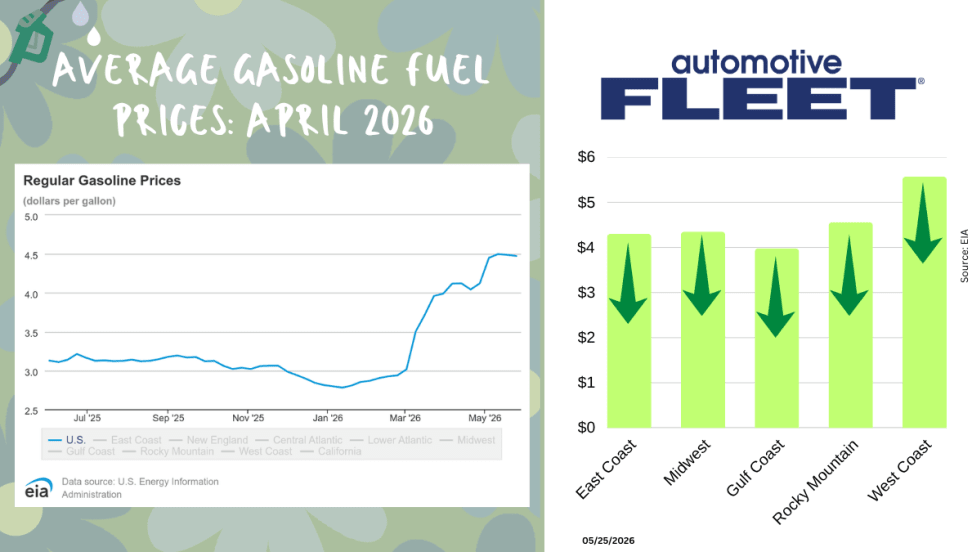
May Fuel Update: All Regions Experience Declines
Gas prices are finally easing in much of the country, but experts warn global tensions could quickly reverse the trend as the national average remains well above last month’s levels.
Read More →