





Want More? How to Leverage Data as a Fleet Safety Tool
Safety Program Protects Employees and Bottom
AmeriFleet’s unique business model incorporates driver safety performance into overall job evaluation. The company also ties bonus dollars to safety. New-hire training is a vital part of the model’s success.
October 1, 2007

To protect AmeriFleet’s employees, the company has implemented programs that develop and retain safe, professional drivers.
Photo: Work Truck
5 min to read
By taking a proactive approach to improving fleet driver safety, organizations can reduce vehicle crashes and protect both their employees and the bottom line. As budgets continue to tighten, enhancing safety becomes even more critical.
One Alpharetta, Georgia-based company operates a unique business model that includes a comprehensive driver safety program. AmeriFleet Transportation provides professional driveaway and truck carrier transportation services to the corporate fleet and leasing industry.
To protect AmeriFleet’s employees, the company has implemented programs that develop and retain safe, professional drivers. These internal safety standards are also critical to protecting the company’s clients. Even though AmeriFleet provides drivers to move client vehicles, clients still are liable when a third party is moving their vehicles.
Matthew Betz, vice president – national account sales for AmeriFleet, has been in the fleet business for 25 years.
“One of our founding principles is to provide transportation in the safest way possible in order to reduce the risk of negligent entrustment and vicarious liability for the fleets we serve,” Betz said.
AmeriFleet drivers, called service delivery professionals (SDPs), must safely drive any type of vehicle a customer operates. Due to vast differences in vehicles the company transports, AmeriFleet pays particular attention to avoiding driver distractions and helping drivers focus on the task at hand.
AmeriFleet Begins Safety Training at the New-Hire Stage
The company prides itself in open and effective communication. “Safety is one of the most important things we communicate,” Betz said. “Probably the most effective communication we have occurs when a new employee starts.”
AmeriFleet conducts extensive background checks and MVRs on each new employee candidate. A large part of SDP initial training revolves around safety and defensive driving. Each SDP must complete an interactive defensive driving module prior to operating any vehicle.
The company also provides ongoing and post-accident training. Each AmeriFleet office is equipped with safety posters and copies of general and safety communications.
“We also publish a monthly employee newsletter, AmeriFleet Compass, that addresses safety issues and congratulates SDPs who have had exemplary records or have gone out of their way to keep others safe,” Betz said.
Due to its unique business model and the nature of the employee/employer relationship AmeriFleet has with its SDPs, the company found it most effective to build its safety recognition program into its Service Delivery Professional of the Year Award.
Adherence to company safety policies, as well as lack of moving violations and “at-fault” crashes, are measured along with customer service results to name a Service Delivery Professional of the Year. In addition, the same criteria are used to calculate year-end bonuses, which can be considerable, according to Betz.
“We have found that including safety in our employees’ goals adds weight and emphasizes the importance of our program,” he said. “In addition, SDPs participate in a yearly safety bonus program.” There are several aspects of the program; however, each SDP must have zero preventable accidents on file for the 12-month period to qualify for a yearly bonus.
AmeriFleet Drivers Recognize Importance of the Safety Program
AmeriFleet’s SDPs truly appreciate the company’s position and focus on safe driving, according to Betz. Not only does this attention to safety assist in reducing accidents, but it also gives the employee additional training, knowledge, and the assurance that AmeriFleet cares about their own personal well-being.
“AmeriFleet has an excellent record for non repeaters,” Betz said. “Very few of our drivers have had multiple accidents throughout their careers.”
Betz has seen excellent results, especially from new SDPs who complete the program.
“They have responded well, and our accident record has improved,” he said. “This results in a better work environment and certainly cost savings for AmeriFleet.”
ProSafe Solution Helps Fleets Achieve Internal Safety Standards
AmeriFleet’s expanding solutions for the trucking industry includes AmeriFleet ProSafe, a team of professionals with more than 20 years of DOT regulatory experience. The program offers an array of solutions to enable successful DOT compliance, helping clients develop and retain professional drivers and achieve internal safety standards. AmeriFleet ProSafe solutions include:
Consulting Services, including customer needs-analysis surveys and identification of process improvements.
Mock Audit Services, such as motor carrier review using the DOT Compliance Field Review Manual and integration with compliance and risk management services — to proactively avoid safety violations and fines.
North American Transportation Management Institute (NATMI) Training Courses. Topics covered include motor fleet safety basics, supervisor recognition for controlled substances, HAZMAT, and controlling Workers’ Compensation costs.
Driver and New-Hire Success & Retention Services, such as processing and evaluating driver applications, analyzing MVRs, and maintaining driver qualification files.
Other AmeriFleet ProSafe services include risk management assessment, detailed reporting, and driver accident support. The company is implementing a new accident management program to track specific trends and focus on areas of opportunities for the upcoming fiscal year.
Involvement in Safety Organization Increases Awareness
Betz sits on the board of the Network of Employers for Traffic Safety (NETS), working with some of the most progressive traffic safety professionals in the country. Betz has learned a great deal about other fleets and their safety efforts.
“AmeriFleet has always actively pursued continuous improvement in all areas, but specifically traffic safety and the protection of our employees and our clients’ assets,” he said. “That interest in safety led us to NETS.”
The organization recently produced “NETS Steps to Protect Your Most Important Resource — Your People,” a seminar outlining the important aspects of a fleet safety incentive program, including:
Incorporating driving performance into the overall evaluation of job performance.
Using recognition, monetary rewards, special privileges, or incentives to motivate the achievement of a predetermined goal.
Engaging employees through safety education.
“Fleet managers reviewing their current program or creating a new program can review that presentation, obtain the NETS Safety Primer, which is a complete “how-to” manual for developing a fleet safety program, or buy the new 10 Steps Implementation CD Kit, which includes actual policies that can be adapted for specific fleet use,” Betz said.
Subscribe to Our Newsletter
More Safety

Sponsored•October 1, 2026
Fleet Manager’s Ultimate Playbook: Navigating the New Standard in OEM Connectivity
Rising operating costs, driver safety concerns, and unplanned downtime are putting unprecedented pressure on modern fleets. Discover how fleet managers use embedded OEM connectivity and real-time vehicle data to cut TCO, prevent downtime, and protect drivers without aftermarket telematics hardware.
Read More →
From Driver Well-Being to EV Charging | AF News Recap
Mental health belongs in the fleet safety conversation. This week, we’re looking at five ways fleets can support employee well-being before a crisis, plus Holman’s expansion in Mexico, new one-day Fleet Forward passes, and why EV charging demand is outpacing infrastructure growth.
Read More →
Nexar-Nauto Merger Aims to Give Fleets Better Safety Intelligence Through Larger Driving Dataset
Stefan Heck tells Automotive Fleet that combining more than 10 billion miles of driving history with Nexar's AI models will give fleets deeper insights into driver risk and roadway conditions than either company could provide independently.
Read More →
Don't Wait for a Crisis: 5 Ways to Build Mental Health Into Your Fleet Safety Program
For Suicide Prevention Month, fleet and safety leaders have an opportunity to put mental health where it belongs: at the center of workplace safety.
Read More →
How Camera Data Can Strengthen a Fleet’s Insurance Renewal
Insights from a commercial insurance carrier and a broker show how fleets can turn video telematic data, driver coaching, and improved claims results into a stronger case at insurance renewal.
Read More →
The Safest Fleets Aren’t the Ones with the Most Technology
You’ve made the telematics investment. Here’s how to capture the other half of its value and build the safest fleet on the road.
Read More →
Sponsored•August 7, 2026
Hidden in Plain Sight: Fleet Compliance Risks
Fleet compliance isn't just about having policies — it's about consistently enforcing them. This practical guide reveals six hidden compliance risks common in public sector and shared fleet operations and outlines proven strategies to improve visibility, accountability, and audit readiness
Read More →
NETS Sets 2026 Fleet Safety Benchmark Conference for Indianapolis
The Sept. 15–17 program will feature fleet benchmarking data, case studies, emerging technologies, and implementation strategies while running alongside the NSC Safety Congress & Expo.
Read More →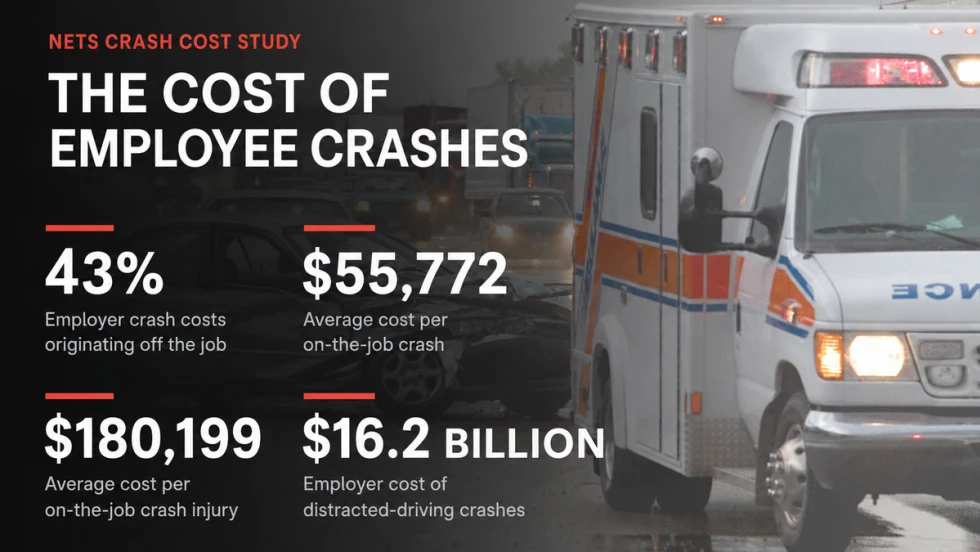
Off-the-Job Crashes Account for 43% of Employers’ $61.7 Billion Crash Burden
NETS quantifies costs dispersed across fleet, risk, HR, and other departments while providing new per-crash benchmarks for employers.
Read More →
Ram Recalls More Than 1.27 Million 1500 Pickups for Seat Belt Anchor Issue
The recall affects certain 2019-2026 Ram 1500 pickups that may have improperly attached second-row seat belt buckle anchors.
Read More →