




Safe Rental Car Act Passes as Part of Highway Bill
The recall bill will become law on June 1, 2016. The law exempts companies with rental or loaner fleets of fewer than 35 vehicles.


At a press conference in February 2015, U.S. Transportation Secretary Anthony Foxx and Mark Rosekind, National Highway Traffic Safety administrator, joined elected officials, board members of the American Car Rental Association and consumer safety advocates to call on Congress to pass the Safe Rental Car Act.

At a press conference in February 2015, U.S. Transportation Secretary Anthony Foxx and Mark Rosekind, National Highway Traffic Safety administrator, joined elected officials, board members of the American Car Rental Association and consumer safety advocates to call on Congress to pass the Safe Rental Car Act.
The Raechel and Jacqueline Houck Safe Rental Car Act was included in the Fixing America’s Surface Transportation (FAST) Act — commonly referred to as the Transportation Bill — that President Obama signed into law on Dec. 4.
The Safe Rental Car Act makes it a violation of federal law, enforceable by the National Highway Traffic Safety Administration (NHTSA), for car rental companies with fleets of 35 or more rental vehicles to rent, loan or sell cars under open recall.
The current bill was introduced in May 2015 by a bipartisan group of House and Senate legislators, earning support of Republican and Democratic legislators on both sides of Capitol Hill during debate over the federal highway program reauthorization.
The law culminates a three-year effort on the part of the American Car Rental Association (ACRA), safety groups and legislators to pass recall legislation.
“Customer safety is a critical part of our overall commitment to our customers and the general public,” said Joe Knight, president of ACRA and executive vice president of Fox Rent-A-Car Inc. “And because rental vehicles travel freely across state lines in interstate commerce, ACRA has always strongly supported one federal rental vehicle safety recall standard rather than a patchwork of potentially conflicting state laws.”
Provisions
The bill defines a rental vehicle as a motor vehicle that has a gross vehicle weight rating of 10,000 pounds or less; rented without a driver for an initial term of less than four months; and is part of a motor vehicle fleet of 35 or more motor vehicles that are used for rental purposes by a rental company.
Once the manufacturer provides a rental company notification about a covered rental vehicle in the company’s possession, a rental company needs to comply with the limitations on sale, lease or rental as soon as practicable — but not later than 24 hours after the earliest receipt of the notice.
If a rental company receives a recall notice covering more than 5,000 vehicles in its fleet, the rental company needs to comply with the limitations on sale, lease or rental as soon as practicable — but not later than 48 hours after the earliest receipt of the notice.
Williams Amendment
The version of the recall bill approved by the House of Representatives in November included an amendment that would have exempted auto dealers who rent or loan vehicles to customers.
The Williams Amendment, proposed by Rep. Roger Williams (R-Texas), would have clarified that only car rental companies whose primary business is renting vehicles are subject to the bill’s restrictions of grounding vehicles under recall.
The National Independent Automobile Dealers Association (NIADA) and the National Automobile Dealers Association (NADA) supported the amendment. ACRA opposed the amendment, along with Republican and Democratic legislators in the Senate, and it was dropped from the final bill.
Concerns Remain
While ACRA supported the legislation, some independent car rental companies were opposed to it and have concerns regarding compliance under the new law.
“I could own cars that get recalls that cannot and will not be resolved for a year or more,” says Tom Prunty of Alaska Car and Van Rentals, whose fleet is utilized more than 90% in the summer. “My assets are tied up and depreciating and probably paying interest on money used to buy them. Anyone who has a majority of cars in one of these recall lists could be in big trouble.”
Matt Pendergast, a Rent-A-Wreck franchise owner in San Francisco, voluntarily grounded Ford Mustang convertibles under the Takata recall from his fleet during the 2015 summer high season, though the new airbag inflators had not been available for months. “The recall has been stressful and difficult for us,” Pendergast told Auto Rental News. “As a small business, we don’t have the purchasing power to go out and replace the convertibles.”
“If the automakers don’t have the part and it’s going to affect a large portion of your fleet, you are stuck,” Pendergast said. “You have to take reservations assuming that the vehicles you own will be available for customers. But what happens if there is a law that suddenly says that they aren’t available to rent anymore?”
Originally posted on Auto Rental News
More Global Fleet
GeoFencing Adds to Your Truck Security Arsenal
Geofencing is a familiar fleet tool today, but its early adoption marked a major shift in vehicle tracking, route monitoring, and the debate over employee privacy.
Read More →
Holman Takes Full Ownership of ARIZA in Mexico
Holman is bringing its Mexican fleet management operation fully under its own brand after more than 30 years as a joint venture. The change gives multinational fleet customers a single Holman operation across the U.S., Canada, and Mexico.
Read More →
5 Tire Maintenance Tips to Help Prevent Work Truck Downtime
Regular tire checks can do more than extend tread life. These five maintenance practices can help work truck fleets catch problems early, reduce costs, and prevent downtime.
Read More →

Proven Ways to Reduce Work Truck Downtime
The age-old problem of downtime will always be a reality, but with new strategies at hand, fleets have more ways to keep trucks on the road longer.
Read More →


Cameras, Safety and Insurance: From Reactive Claims to Real-Time Prevention (Part 2 of 2)
Part Two: Commercial auto remains one of the most challenging and costly lines of coverage for fleet operators and insurers alike. Continue learning more about how to effectively address these issues from Onur Aksan, Enterprise Business Development Executive, Geotab
Read More →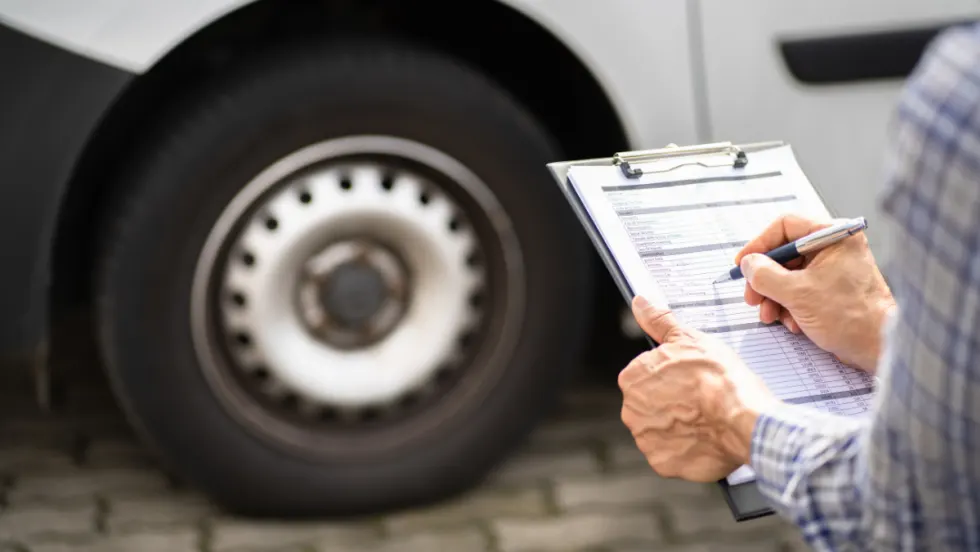
Cameras, Safety and Insurance: From Reactive Claims to Real-time Prevention
Commercial auto remains one of the most challenging and costly lines of coverage for fleet operators and insurers alike. Learn more about how to effectively address these issues from Onur Aksan, Enterprise Business Development Executive, Geotab.
Read More →
Fleet Costs Are Rising: Here’s How Leaders Are Responding
Fleet leaders are under pressure to reduce costs, adapt to economic uncertainty, and make smarter decisions. See how peers across North America are responding with real data, proven strategies, and forward-looking insights. Download the 2026 Market Pulse Report to benchmark your strategy and uncover where you can gain an edge.
Read More →
Enterprise Fleet Management Surpasses 900,000 Vehicles in U.S. & Canada
Enterprise Mobility connects with mobility solutions around the globe
Read More →