




ROUSH Now Retrofitting Ford Medium-Duty Trucks
ROUSH CleanTech has been certified to convert customers’ existing Ford medium-duty vehicles with the 6.8L V-10 engine to run on propane autogas in all 50 states.

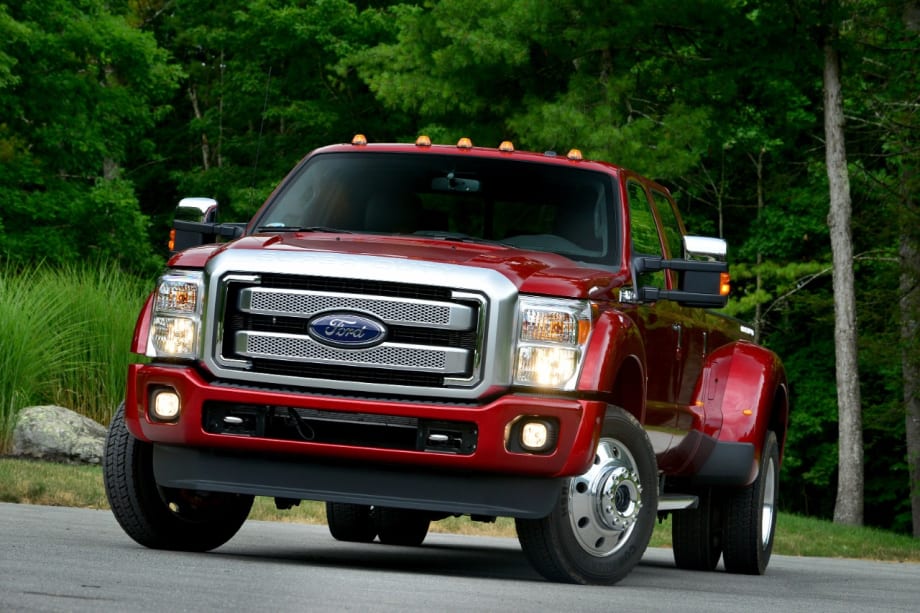
ROUSH CleanTech can retrofit propane-autogas medium-duty vehicles, including the Ford F-450 (pictured).
Medium-duty vehicle fleets seeking to switch to propane autogas now have another option available: Following certification from the California Air Resources Board (CARB) in January, ROUSH CleanTech has been certified to convert 2012-2015 model-year Ford medium-duty vehicles equipped with the 6.8L V-10 engine to run on propane autogas to operate in all 50 states.
This retrofitting option will allow emissions-minded fleets with recent model-year Ford medium-duty vehicles to switch to propane autogas in a more cost-effective way, since they won’t have to purchase a new propane-autogas-equipped truck to replace their existing vehicle with a lot of life left, according to Todd Mouw, vice president of sales and marketing at ROUSH CleanTech.
“The fact that these medium-duty vehicles have a heavier GVWR naturally decreases the mpg, so that means, over the chassis’ lifecycle, there is significantly more fuel burned. Our ability to retrofit these used trucks with our liquid propane technology will allow them to significantly reduce fuel and maintenance costs over the remaining life of these units,” Mouw said.
Since its establishment in 2010, ROUSH CleanTech has offered propane-autogas-powered Ford trucks and vans in a variety of packages, including full-size vehicles, cutaways, and chassis cabs.
Benefitting from Propane
There are a number of financial benefits to using a propane-autogas system compared to traditional gasoline or diesel, according to Mouw:
Fuel cost savings: Propane autogas costs less than gasoline or diesel, and fleets can save from 15 to 20 cents per mile by using propane autogas, Mouw said.
Maintenance cost savings: Propane-autogas vehicles do not require after-treatment systems, eliminating the need for diesel exhaust fluid, and Ford’s 6.8L V-10 engine is designed to last over 250,000 miles when properly maintained, according to Mouw.
Vehicle-lifetime cost savings: “It’s tough to provide an exact number, but, if a fleet keeps the propane-autogas vehicle for 200,000 miles and saves 15 cents per mile, the savings would equate to $30,000 in gross savings over the life of the vehicle. That is at today’s fuel prices, with diesel being under $3 per gallon. All of the experts predict it will head back to at least $3.75 per gallon over the next few years, which would equate to even greater savings,” Mouw said.
Additional incentives: A number of states offer financial incentives for alternative-fuel vehicle usage, such as tax credits and lower vehicle registration fees.Retrofitting in Action
Retrofitting in Action
ROUSH CleanTech — a Ford Qualified Vehicle Modifier (QVM)-certified alternative-fuel vehicle manufacturer — can install its propane-autogas kit in customers’ vehicles either at ROUSH’s facility in Livonia, Mich., or at a Ford-approved QVM installation facility. Or, ROUSH technicians can be sent out to the customer’s location to install the system onsite.
“We design, develop, manufacture, and produce the final kit, and that kit consists of all of the propane-autogas components, including fuel rails, injectors, fuel lines, the tank, and the calibration so that it runs efficiently on propane autogas,” Mouw said.
ROUSH CleanTech also offers customers the option of installing an onsite propane-autogas fueling station.
And, ROUSH CleanTech technicians train the customer’s technicians on providing service and maintenance for a propane-autogas-powered vehicle, as well as train the customer’s drivers on how to properly drive and fuel the vehicle.
“We’ve got Web-based training that walks the technicians and the service managers through propane-autogas basics, propane-autogas safety, how to diagnose a problem, how our fuel system integrates into the vehicle, and who to call to get a service part,” Mouw said. “Once the vehicles are on the ground, we actually send our technicians in to train the customer’s technicians or their service partner.”
UPDATED: August 21, 2015, correcting 6.8L V-10 engine.
Originally posted on Work Truck Online
More Green Fleet

Merchants Fleet Reports 290M EV Miles as Fleets Navigate Changing Electrification Market
From millions in operating savings to hundreds of millions of EV miles, Merchants Fleet’s latest report reveals what’s working and what’s changing in fleet electrification.
Read More →
The EV Breakdown Nobody's Talking About: Why Most Electric Vehicle Roadside Calls Aren't Mechanical Failures
Here's why EV breakdowns are widely misunderstood.
Read More →
ChargePoint Now Available in Energy Pass
ChargePoint and additional planned charging network integrations were added to GM's Energy Pass.
Read More →

First Look: Slate Auto's Electric Fleet Pickup
Could an affordable, modular EV pickup make electrification more practical for fleets?
Read More →
Slate Debuts Colorful, Unique EV Models
A recent media and client event, studded with electric vehicles dressed up on platforms, planted a new position for the manufacturer in the wider EV market. Fleets will find cost-saving advantages.
Read More →
Slate Electric SUV, Pickup Switchable Model Aims For Light-Duty Fleets
Everything about this EV is counterintuitive and understated, making it stand out from the crowd.
Read More →
Inspiration Mobility Acquires Key Electrada Assets
Inspiration Mobility Group has acquired select assets of Electrada, adding the fleet electrification provider's team, technology, and charging infrastructure development capabilities to its energy management business.
Read More →
Turning Connected Vehicle Data Into Decisions That Matter
Fleet leaders have more data than ever, but turning that data into clear, actionable decisions remains a challenge. This white paper shows how leading organizations are using connected vehicle data to improve safety, reduce costs, and optimize fleet performance. Learn how to turn insight into action across your fleet.
Read More →
Are You Tracking Your Fleet's True Total Cost of Ownership?
Bobit Business Media surveyed 190 fleet professionals and found that while most fleets are tracking costs, fragmented systems and data gaps are keeping true TCO visibility out of reach. With rising pressure to control spend in an increasingly volatile environment, the gap between what fleets think they know and what the data actually shows is wider than you might expect. See how your peers are managing costs today and where the industry still has room to improve.
Read More →