


About the Author
Wei Fan is senior vice president, head of passenger vehicle and analytical services for RVI Group, a provider of residual value insurance, financial solutions and analytical services.
 MENU
MENU SEARCH
The transition to EVs is not a matter of if, but a matter of when, and the industry must pay attention to the impacts of the potentially imminent and rapid transition from ICE vehicles to EVs.
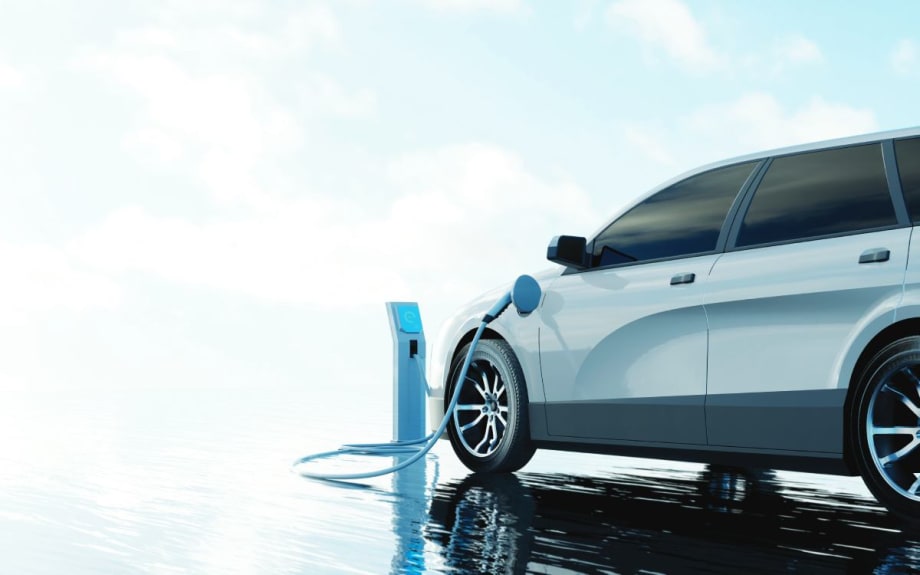
On any given day, there is about $200 billion in residual values associated with the 8-10 million leased vehicles on the books of all lessors in the U.S. A 10% downturn in residual values results in a $20 billion residual value loss.
Photo: Getty Images
The transition from internal combustion engine vehicles to electric vehicles started back in 2017, a banner year for EVs. That year, new electric vehicle (EV) sales surpassed one million units globally. Many countries announced their timetables to end the internal combustion engine (ICE) age in the automotive industry, and manufacturers announced plans to introduce many EV models. Despite the excitement generated at auto shows and by the media, there were still significant technological hurdles to overcome. For example, the cost of batteries was too high, creating a significant differential in the total cost of ownership for an EV when compared to an ICE vehicle. Public charging stations were hard to locate, and charging took far too long when compared to several minutes to fill up with gas.
These differences created great uncertainty as to whether EVs could ever replace ICE vehicles. Despite the government and industry pledges to support EVs over the long term, the EV initiative was doomed to fail unless the industry could achieve large reductions in battery costs and overcome technical hurdles.
Fast forward five years, and 2022 is shaping up to be another banner year for EVs. Battery costs are coming down faster than most projections. Many EV startups are now firmly established (e.g., Tesla and NIO) in terms of both vehicle sales and market cap. EV sales are expected to exceed 3 million units in China alone in 2022. The transition to EVs is not a matter of if, only a matter of when. The industry is now seriously concerned about the impacts of the potentially imminent and rapid transition from ICE vehicles to EVs.
One of the impacts of the transition from ICE vehicles to EVs is on the residual value of lease portfolio. In the past few years, EV residual values have been improving along with their driving range. On the other hand, the residual values of ICE vehicles have not yet been impacted by the competition from EVs. This will likely change over the next few years as further improvement in EVs make them superior products compared to ICE vehicles in terms of both driving experience and total cost of ownership. In other words, EVs could become the preferred vehicle to drive. When this happens, the market share of EVs will increase rapidly and ICE vehicles—now inferior substitutes—will likely have lower residual values.
We have observed the impact on residual values when the auto market shifted from sedans to SUVs. As we can see in the figure to the right, after the 2008 recession, SUVs (including crossovers) became extremely popular with market share increasing consistently from 26% in 2008 to 52% in 2020. During the same period, we saw the residual values of these two vehicle types diverge and the gap in values between sedans and SUVs grow as large as 20%. Lessors with portfolios heavily concentrated in sedans suffered large residual value losses.
When consumers switch from ICE vehicles to EVs in large scale, the negative impact can be more dramatic than the decrease in values that sedans experienced in the past 10 years. The residual value slide for sedans shown in the chart is a gradual downturn compared to the cliff that ICE vehicles may fall over if the transition to EVs turns out to be a swift process. This ICE cliff will be the result of a combination of consumer preference shift, EV cost reduction, and changes in refueling networks. While the charging stations will become ubiquitous, the number of gasoline stations will start to decrease as sales of new ICE vehicles decrease. No one can predict when and how quickly this will happen, but few people still question that this transition will happen.
On any given day, there is about $200 billion in residual values associated with the 8-10 million leased vehicles on the books of all lessors in the U.S. A 10% downturn in residual values results in a $20 billion residual value loss. The financial impact of this residual value downturn is enormous. Insurance companies helped the auto industry manage residual value risk in the past. In China, where electric vehicles are further developed, insurance companies are working with manufacturers to design creative auto finance products using residual value insurance. In the U.S., insurance companies can also help the auto industry manage its residual value risk as they did during the early days of auto leasing business.
This article originally appeared in Auto Dealer magazine, a sister publication of Automotive Fleet.

The new president and CEO explains how Mike Albert Fleet Solutions plans to invest in technology, data, and people without losing the personal service fleet customers value.
Read More →
Kuhn has a theory of what sets the company apart from larger FMCs: depth of partnership over breadth of volume.
Read More →
The name Moventum reflects the company’s position at the intersection of movement and momentum, with the guiding principle "Keep Work Moving."
Read More →
This Pittsburgh-based FMC built a technology-first culture, sustained double-digit organic growth, and expanded its Midwest footprint through a recent acquisition. How did it happen?
Read More →
Fleet supply has improved, but not everywhere. Merchants Fleet’s Charles Matthew explains where constraints still exist, what risks are emerging, and why fleets shouldn’t wait to place orders.
Read More →
The Merchants Fleet CEO contends that fleets that drive the business win the inches. In 2026, every one of them counts.
Read More →
As costs rise and scrutiny increases, fleets are refining criteria that govern eligibility for company-owned vehicles.
Read More →
The co-branded program with Stellantis’ mobility division scales up leasing and financing options nationwide with more cities to come online in 2026.
Read More →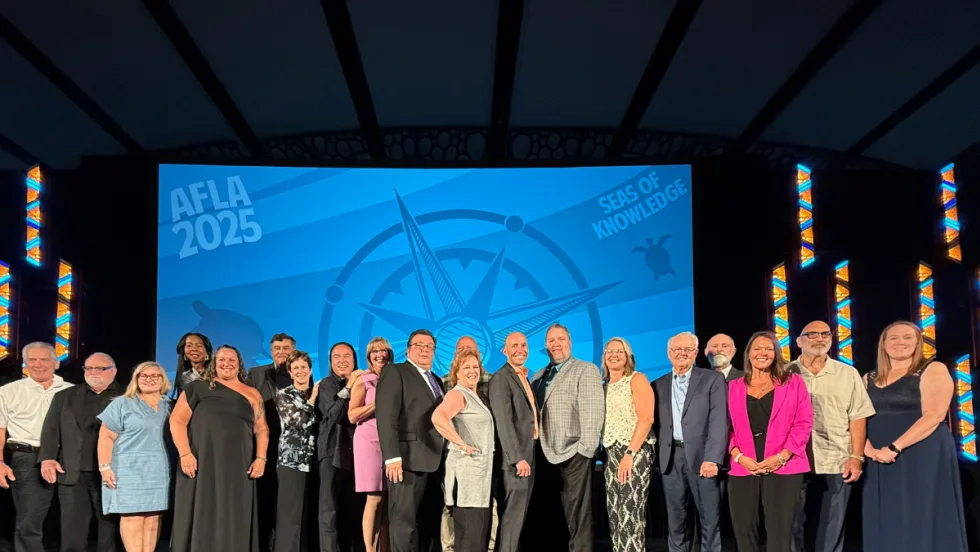
Drawing over 640 attendees, the 2025 AFLA Annual Conference was held Sept. 14-17 at the JW Marriott Marco Island Beach Resort in Florida.
Read More →
The arrangement enables franchise dealers to offer flexible lease-to-own programs with no credit checks, no down payments, and no long-term commitments.
Read More →