




Report From the Editor
It is hard to be philosophical about an increase in depreciation of fleet cars this year, even though we may consider the demise of the Excise Tax a long-term blessing.
It is hard to be philosophical about an increase in depreciation of fleet cars this year, even though we may consider the demise of the Excise Tax a long-term blessing. During my impressionable years I was frequently warned with that familiar old cliché: "Beware of Greeks bearing gifts." That's why I'm uneasy in the knowledge that the federal highway program is lagging farther and farther behind because of a lack of funds, and a new utopian plan of beautification is to be financed with the retained 1% tax on new car sales. What puzzles me is where the money is supposed to come from to cover the additional deficit which this proposal of Mr. Johnson's will surely create. Since the states must pay a portion of the highway expansion program, and since the revenue in all programs-at all levels-seems to be less than the projected need, we can expect an increase in taxes to replace any tax which has been eliminated. The ultimate victim is, of course, the motorist. The catalytic agent through which the syphoning process takes place on our income, is gasoline. Some states have been diverting gas tax money to uses other than highway improvement and maintenance. Now it seems that Washington has embarked on a course of similar discrimination against the people who use the highways the most-men who earn their living in cars. This highway use-tax, the tax that provides better roads for safer driving, is being eroded by schemes which have little bearing on the safety of our highways, the quality of highways, and the construction of new highways. While beautiful roadside parks are lovely sylvan glens where the tired traveler can pause for a brief respite to refresh himself, they don't contribute to providing what the tax is needed for-safe, top-quality roads.
There's another angle to this which bothers me more than the source and form of the taxes which will soon come to pay for this program. It is shocking to know that the President of the United States is using coercion to force the states to go along with this program. He has threatened the states who do not back his beautification brain-child by recommending that Federal-aid highway funds be withheld. The insidious thing is that this program has been presented, like so much of our welfare legislation recently, in words that are cleverly designed to make anyone who would oppose such "beneficial" programs feel like a traitor to his country. It would be great to eliminate that labyrinth of billboards and junk yards through which our high-ways wind. I've always felt that an auto graveyard is man's most ingenious device for lousing u the landscape. But just what is meant by beautification? Is the Federal Government planning to buy all the junk yards and auto graveyards and convert them into roadside parks? If this is true, just think of all of the programming and planning that will go into this project. Otherwise a lot of do-gooders and theorist would be out of their cushy Federal jobs. This will also means that desolate, junk-yardless areas like those long stretches across Nebraska, Kansas, Texas, Wyoming, Nevada and Utah, to name a few, would have less parks than Pittsburgh or Brooklyn. Anyone can see how unfair it would be to culturally deprive a segment of the population from gloxinias and nasturtium gardens and other horticultural delights to flash across the eyes at turnpike speeds. The only obvious solution is to buy vacant property to make the program fair to all. After all, money is no object. So now Eagle Flat, Texas; Pratt, Kansas; and Current Creek, Nevada, will have their share of comfort stations, drinking fountains, gardens and black-top out of the highway funds. What patronage possibilities for purchasing outhouses, rustic fencing, bar-B-Q pits, grass seed, and pavement. Just think of the new employment possibilities. There will have to be a technician in a supervisory capacity to keep track of the paper supply; then farther down the scale, two men to cut grass and prune the snapdragons; still farther down we will need a foreman and a helper to pick up the litter after the public gets through using their beauty spot; a truck driver to haul the trash away. We will need more police protection for the intrepid campers and the over-amorous teen-agers from the "wild-ones" on motorcycles and other psychopaths who headquarter in such places. We'll have to buy lawn mowers, trucks, refuse bins (which are never used), and signs-lots and lots of signs-so as to guide the errant kidney to the right entrance, and to prohibit almost everything with regulations created by a bureaucracy which reflects bureaucratic thinking, or lack thereof, on large, opaque signs that blot out the beauty which has been provided for out welfare at the cost of decent roads. Instead of better, safer highways for out taxes, what do we get? Bird sanctuaries, tulip beds and heliotropes.
The time is long past when we, as Americans should question programs like this no matter who dreams them up. It is long past the time when we should seriously ask ourselves; "What is happening to America?" Why not write your ideas to your congressman? The pro-welfare people-the people living off of YOUR income-do it every day.
More Operations
How to Manage Conflict for Your Fleet Operations
Conflict management is becoming a core leadership skill. Here are five strategies fleet leaders should know.
Read More →
Turning Connected Vehicle Data Into Decisions That Matter
Fleet leaders have more data than ever, but turning that data into clear, actionable decisions remains a challenge. This white paper shows how leading organizations are using connected vehicle data to improve safety, reduce costs, and optimize fleet performance. Learn how to turn insight into action across your fleet.
Read More →
Cameras, Safety and Insurance: From Reactive Claims to Real-time Prevention
Commercial auto remains one of the most challenging and costly lines of coverage for fleet operators and insurers alike. Learn more about how to effectively address these issues from Onur Aksan, Enterprise Business Development Executive, Geotab.
Read More →

Are You Tracking Your Fleet's True Total Cost of Ownership?
Bobit Business Media surveyed 190 fleet professionals and found that while most fleets are tracking costs, fragmented systems and data gaps are keeping true TCO visibility out of reach. With rising pressure to control spend in an increasingly volatile environment, the gap between what fleets think they know and what the data actually shows is wider than you might expect. See how your peers are managing costs today and where the industry still has room to improve.
Read More →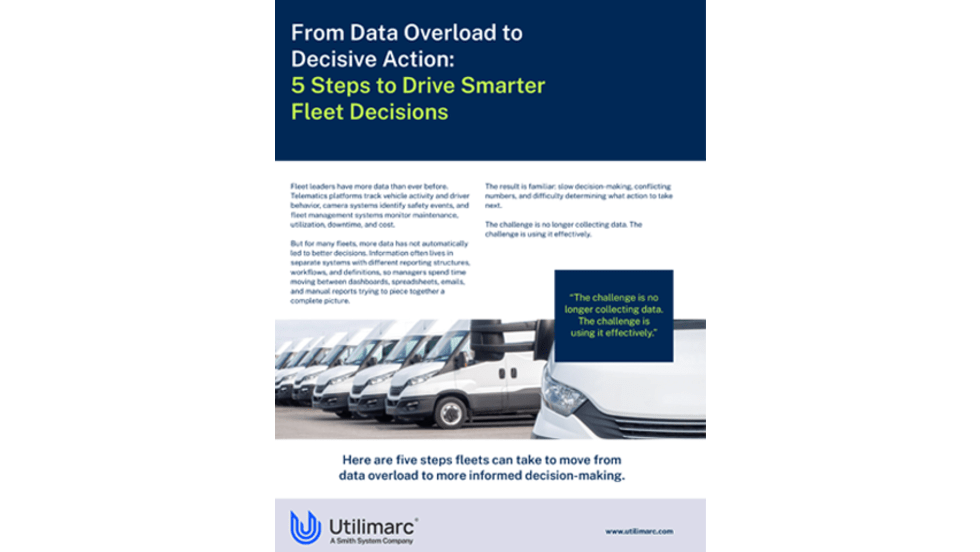
Turn Fleet Data Into Smarter Decisions
Fleet leaders have access to more operational data than ever, but disconnected systems and unclear metrics often slow decision-making instead of improving it. This whitepaper outlines five practical steps fleets can take to transform fragmented data into actionable insights that improve planning, safety, utilization, and long-term performance.
Read More →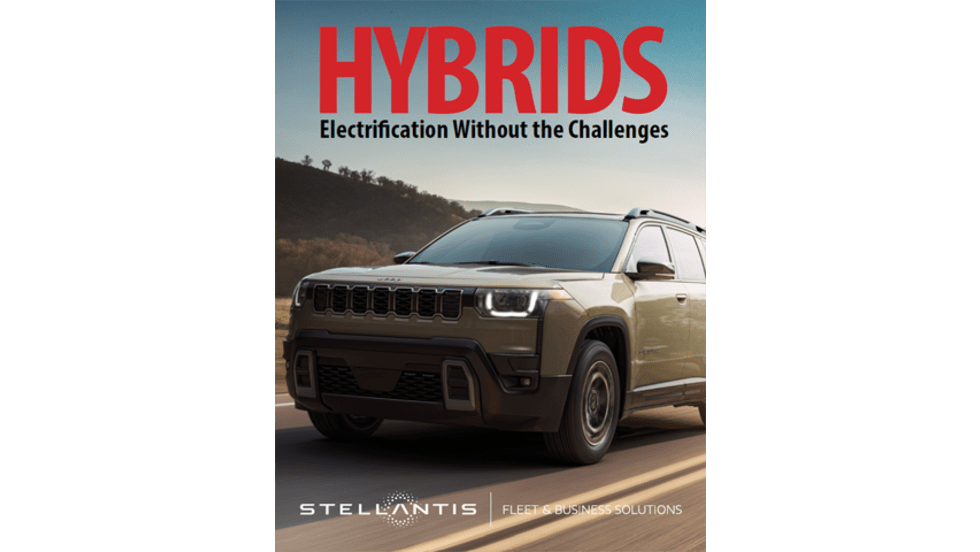
Hybrids: Electrification Without the Challenges
For fleet managers, fuel is one of the biggest line items in the budget — and it's one hybrids can shrink without changing how your people work. Download the eBook to see the numbers, understand the technology, and get a step-by-step guide to making the switch.
Read More →
How NOV Uses Telematics to Improve Fleet Safety Across 160 Locations
James Victory of NOV discusses how the company manages fleet safety, maintenance, and telematics across more than 150 locations supporting oilfield operations throughout the U.S.
Read More →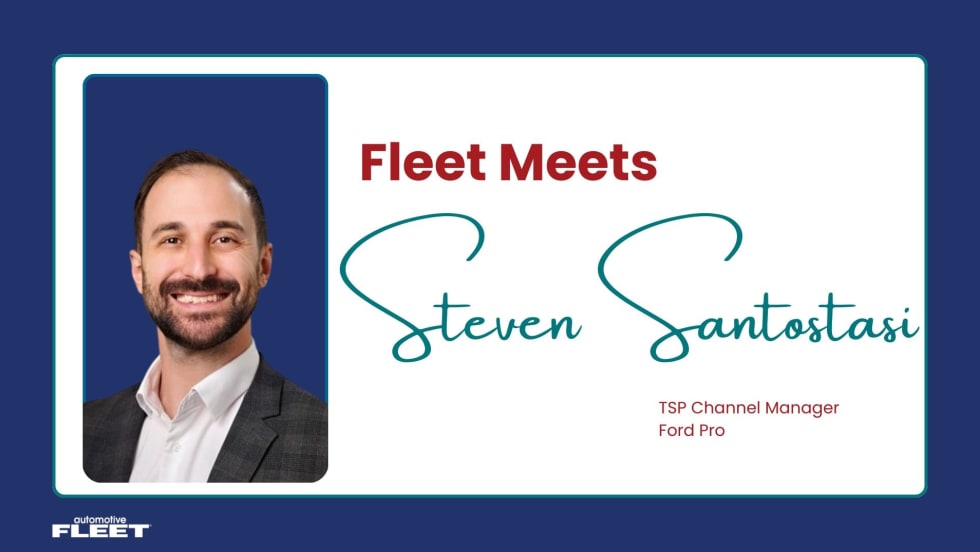
Fleet Meets: Steven Santostasi
This edition of the Fleet Meets series features Steven Santostasi, the current TSP channel manager for Ford Pro.
Read More →
Why Fleet Managers Are Replacing Departmental Vehicles with Shared Motor Pools
Departmentally assigned vehicles often create hidden costs through underutilization, poor visibility, and increased administrative burden. This white paper explores how shared motor pool strategies help fleets reduce costs, improve accountability, and optimize vehicle utilization.
Read More →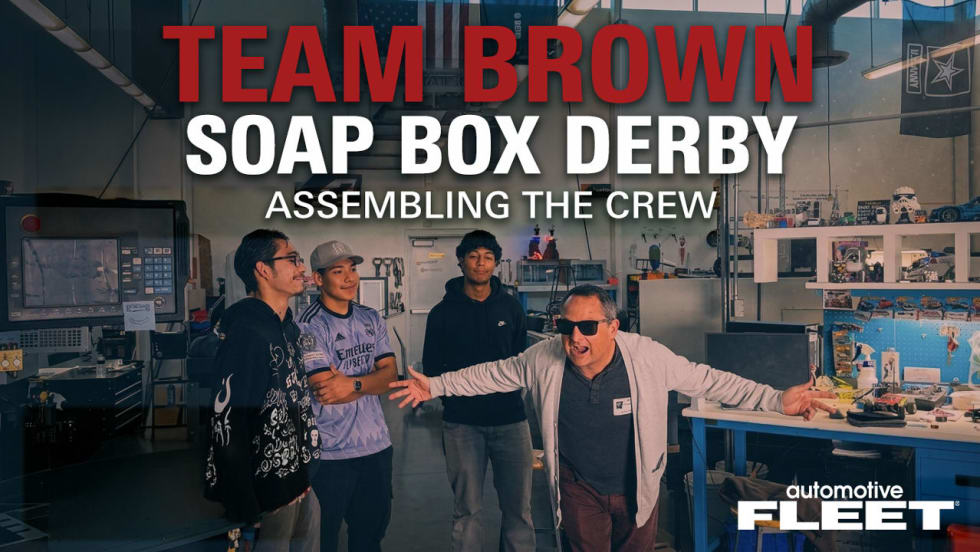
Soap Box Derby Challenge: Assembling the Crew
Meet Gabriel, Matthew, and Angel — the team helping bring this soap box derby build to life.
Read More →