




Remarketing Company Assists Colorado Flood Victims
Flexco Fleet Services was ready to roll when FEMA came calling for a fleet of vehicles to assist in its rescue and assessment efforts.
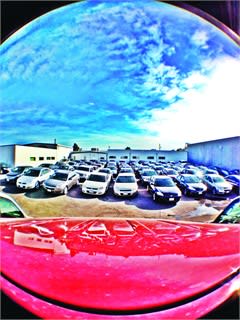
During the week of Sept. 9, 2013, severe storms began moving into Colorado that would reach what many news outlets described as Biblical proportions. Disaster emergencies were declared by 14 of the state’s 64 counties. So, it was no surprise when
Flexco Fleet Services President Chad Shoemaker received a call at his Commerce City, Colo., office from the U.S. General Services Administration to stop prepping cars for resale and start getting them ready to assist Federal Emergency Management Agency (FEMA) representatives in evacuating victims and assessing the damage from the flooding.
“The request for units came in waves but was updated almost daily over six days,” said Shoemaker, who oversees the company’s remarketing efforts. “Our first request for 10 units was an easy order to fill; even during the floods, we loaded the vehicles into our normal workflow. The following day we received a request for an additional 30 to 40 units, and then a couple days later they had a proposal for another 100-plus units.”
That’s when Shoemaker and his employees had to shift into overdrive. The team at Flexco began preparing the units exclusively through the shop, due to the sense of urgency.
“Our employees were already working very hard to push the remaining inventory out for sale before the government’s fiscal year ended, so it was really a shift in focus,” he recalled. “Although it required even more work for them, they were up for the challenge to get the needed units prepped.”
Innovating to Meet Demand
To quickly accommodate the amount of units, Shoemaker extended work hours and days as well as restructured the shop’s workflow, turning it into an assembly line. Every vehicle, which included 4x4 and AWD units with enough ground clearance so they could access as many places as possible, had to be detailed inside and out, all fluids checked and changed as needed, all service or trouble lights diagnosed, and safety issues resolved or repaired.
“During the 10 days we prepared the units, we replaced nearly 20 windshields and 128 tires, as well as several gallons of fluids,” recalled Shoemaker. “We sent units to factory service departments for repairs and ordered parts to be installed at our shop.”
After the initial flooding hit, a request came in for large trucks and vans with the capacity to move people and supplies. The largest request — a call for more than 100 units — was mainly for sedans, which were used to get FEMA representatives in the field to assess the damage brought on by the flooding.
It was a labor of love for the staff at Flexco, helping their neighbors in need, putting in the extra hours and effort without complaints.
”It worked out that we had the resources and ability to assist with helping our fellow Coloradans,” said Josh Leisure, Flexco’s office manager.
With his team unified by both their efforts and their exhaustion, Shoemaker knew that the mission was both personal and professional. In the end, the staff’s hard work and determination helped FEMA reach those in need and respond to the devastation experienced by their neighboring communities.
“It was hectic and we knew our employees were already working very hard, but seeing all of the devastation around the Front Range, we knew they just had to get it done and get it done quickly. We’re proud of how the team performed under the circumstances,” Shoemaker said.
More Operations

How Fleets Can Recruit and Train Veterans for Technician Roles
Here's how the technician shortage has affected uptime for fleets, and what to do about it.
Read More →
Avis Budget Group Deploys Neology Toll Management Technology Across Major Brands
Neology’s neoFleet platform will manage toll transactions and toll-authority operations for vehicles across Avis, Budget, Payless, Budget Truck and Zipcar.
Read More →
Fleet Personal-Use Charges Edge Higher in 2026
Nearly eight in 10 surveyed fleets allow personal use of company vehicles, while just over half of respondents report charging employees for the privilege.
Read More →
The Future of Fleet + What’s Changing Right Now | AF News Recap
Could developments overseas offer a preview of what’s coming for U.S. fleets? This week, we’re looking at the future of AI, autonomy, and electrification, plus Ford Pro’s new certified pre-owned program, smarter vehicle offboarding, and a new way for fleets to manage toll expenses.
Read More →
How to Handle Vehicle Offboarding
What do fleet managers need to do when a driver leaves?
Read More →
Fleet Manager’s Ultimate Playbook: Navigating the New Standard in OEM Connectivity
Rising operating costs, driver safety concerns, and unplanned downtime are putting unprecedented pressure on modern fleets. Discover how fleet managers use embedded OEM connectivity and real-time vehicle data to cut TCO, prevent downtime, and protect drivers without aftermarket telematics hardware.
Read More →
U.S. Bank Adds Verra Mobility Toll Management to Voyager Fleet Platform
The integration allows U.S. Bank Voyager fleet customers to manage toll payments and violations alongside fuel, EV charging and maintenance expenses.
Read More →
ADAS Prevents Crashes. But Repairs Cost More | AF News Recap
ADAS-equipped vehicles may crash less often, but they can cost more when they do. This week, we’re breaking down what that tradeoff means for fleets, plus Subaru’s first Forester Wilderness Hybrid, Nissan’s new e-POWER Rogue, and why Calstart has become Catalyst Mobility.
Read More →
Moventum Fleet Management Names Mark Iorillo Head of Sales
Iorillo brings nearly 20 years of fleet management and sales experience to the role, including previous positions at Element Fleet Management, CEI, Donlen and Ryder.
Read More →
Fleet Has a Talent Pipeline Problem. What Comes Next? | AF News Recap
Where will fleet’s next generation of leaders come from? This week, we’re looking at the industry’s talent pipeline, what certification can add to a fleet career, how to build an award-worthy track record, and the return of Automotive Fleet’s Personal Use Survey.
Read More →