




Reimagining the Role of the Car Rental Distribution Channel
What if the car rental customer interacts primarily with the distribution channel, and the car rental company becomes more of a service provider?


Despite digital solutions available, the car rental business just does not make it simple for the customer during the rental.
Photo courtesy of Gateway Car Rental.
A customer rents a vehicle to get from one location to another, quickly and comfortably. The more seamless the rental service is, the more satisfied the customer who will return to the business time and time again.
Nevertheless, there are obstacles in the customer journey that are unnecessary.
The process of searching for and booking the vehicle on a distributor’s website goes without difficulty for the customer, as there is a wide choice of vehicles available and the content is presented in a clear and unified way. In addition, the customer can contact support at this stage in the process by phone, email or online chat. After making the booking customer has reached to the step in the rental process where they get the confirmation for the rental in a form of a voucher.
According to the common practice today, the sale of the voucher also means handover of the client to the next company in the service chain, the supplier. However, we cannot really tell whether the change of the service provider is understandable to the customer.
Arriving at the destination, the customer often experiences something entirely different compared to the booking process. There may be a long, slow-moving queue at the rental desk. In addition to waiting in the queue, customers may have to fill in the same data from when they booked the vehicle.
The branding of the product may change at the counter compared to the booking process, and the style of service could be completely different. For travellers new to that country, they may find the information needed for renting the vehicle in a foreign language.
Frequently, additional products are sold at the rental desk that put customers into a stressful situation where they need to make decisions under both time and monetary pressure.
On the flip side, there is little flexibility for contracting added services outside of the rental desk. For example, the customer cannot pay for an additional driver at the moment of booking or purchase additional services on a mobile device at a moment of their choosing.
During the rental period, the customer may need immediate help and advice for questions about using the vehicle, or worse — to report being involved in a road traffic accident. In these situations the customer may remember the distributor’s website, the supplier’s web page, and the rental desk phone number, but how does he or she know which one to turn to?
This situation causes confusion and dissatisfaction to customers as they are expected to know their way around industry-specific profiles on service providers.
Despite digital solutions available, the car rental business just does not make it simple for the customer during the rental.
A New Model
With these thoughts in mind, the industry should be moving towards a solution where a car rental company becomes the service provider to the distribution channel, who then takes full responsibility in the eyes of the customer.
This solution would be similar to going to the same general practitioner for decades — doctors know their clients and patients know them. This kind of relationship keeps things simple and effective. The same should also be granted to the client while renting a car.
The client wants to be served by a familiar provider from the beginning to the end of the experience and not to be handed over to the next company without his knowledge (and consent). Merging the service in such a way enables distributors to make renting a car a one-stop-shop.
Some rental companies have invested in their own apps. Such initiatives have and could increase reservations and customer satisfaction, a positive development. However, they don’t necessarily have the reach of a global distribution site that can serve a much wider audience in dozens of countries.
The magnitude of globally operating distribution channels enables these channels to keep their costs lower than any single supplier ever could. Most importantly, their ability to standardize rental information across markets helps to maintain the quality of service.
As well, they can bundle other travel options in more seamless ways than the car rental company could such as highly targeted and personalized offers on hotel rooms, sight-seeing tours, and other discounts and promotions available at the booking location.
This is not done for the sole purpose of upselling additional services but for creating an entirely new travel experience and providing a wider range of mobility options to come.
What Can Be Done?
It’s understood that the traditional car rental service chain cannot be changed overnight. How, then, can the customer experience be improved? Here are two steps to reach a solution:
First, the distribution channels should take full responsibility for customer service throughout the service cycle.
Second, with the introduction of connected car technology, distribution channels can start to provide car rental services based on a personalized mobile app. Using these apps will significantly improve customer experience.
Current technology concerns such as enabling third-party car access, customer identification, and credit card related data protection are the key issues to address to make these solutions work.
The pursuit of becoming a one-stop-shop serves a purpose to avoid unpleasant surprises, misunderstandings, and negative emotions. To improve the customer experience and satisfaction, the industry needs to move towards desk-free and personalized solutions.
These solutions can be provided by the customer's first contact — the distribution channel. All parties in the service chain will win.
Martin Kallasmaa works as the “Smooth Operator” at Car Rental Gateway, a platform for car rental distribution services.
Originally posted on Auto Rental News
More Global Fleet
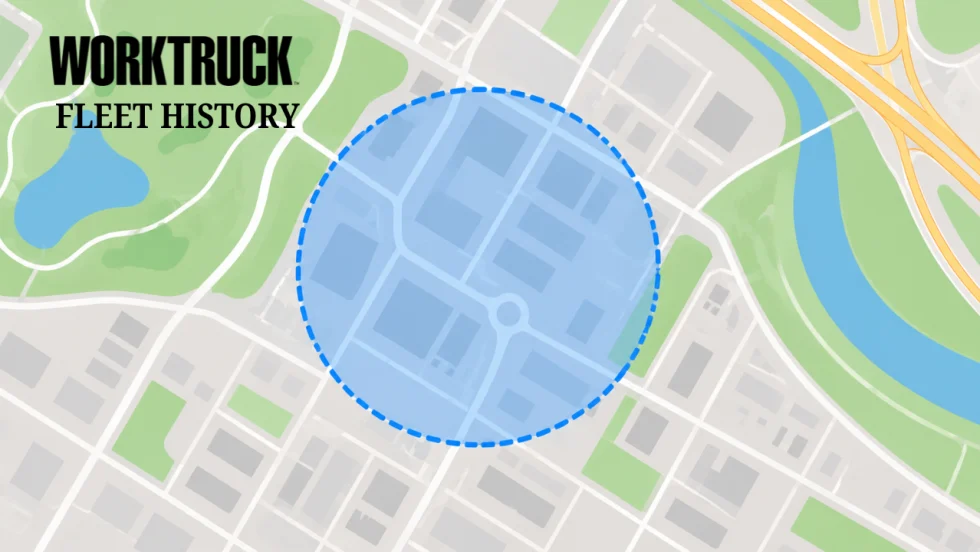
GeoFencing Adds to Your Truck Security Arsenal
Geofencing is a familiar fleet tool today, but its early adoption marked a major shift in vehicle tracking, route monitoring, and the debate over employee privacy.
Read More →
Holman Takes Full Ownership of ARIZA in Mexico
Holman is bringing its Mexican fleet management operation fully under its own brand after more than 30 years as a joint venture. The change gives multinational fleet customers a single Holman operation across the U.S., Canada, and Mexico.
Read More →
5 Tire Maintenance Tips to Help Prevent Work Truck Downtime
Regular tire checks can do more than extend tread life. These five maintenance practices can help work truck fleets catch problems early, reduce costs, and prevent downtime.
Read More →

Proven Ways to Reduce Work Truck Downtime
The age-old problem of downtime will always be a reality, but with new strategies at hand, fleets have more ways to keep trucks on the road longer.
Read More →


Cameras, Safety and Insurance: From Reactive Claims to Real-Time Prevention (Part 2 of 2)
Part Two: Commercial auto remains one of the most challenging and costly lines of coverage for fleet operators and insurers alike. Continue learning more about how to effectively address these issues from Onur Aksan, Enterprise Business Development Executive, Geotab
Read More →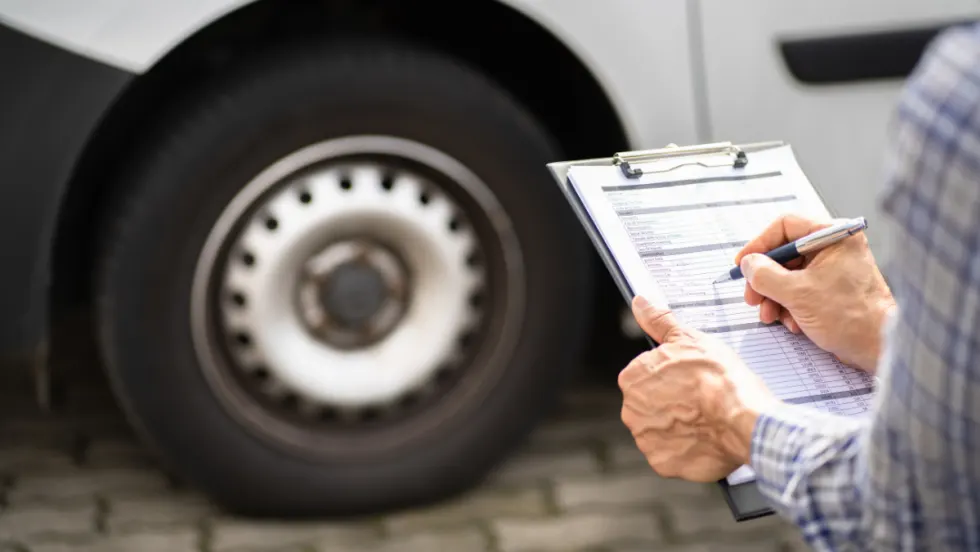
Cameras, Safety and Insurance: From Reactive Claims to Real-time Prevention
Commercial auto remains one of the most challenging and costly lines of coverage for fleet operators and insurers alike. Learn more about how to effectively address these issues from Onur Aksan, Enterprise Business Development Executive, Geotab.
Read More →
Fleet Costs Are Rising: Here’s How Leaders Are Responding
Fleet leaders are under pressure to reduce costs, adapt to economic uncertainty, and make smarter decisions. See how peers across North America are responding with real data, proven strategies, and forward-looking insights. Download the 2026 Market Pulse Report to benchmark your strategy and uncover where you can gain an edge.
Read More →
Enterprise Fleet Management Surpasses 900,000 Vehicles in U.S. & Canada
Enterprise Mobility connects with mobility solutions around the globe
Read More →