




Reimagine Fleet Vehicles for Less
One fleet translated its new corporate image onto its fleet vehicles at a fraction of the cost of a traditional vehicle wrap.
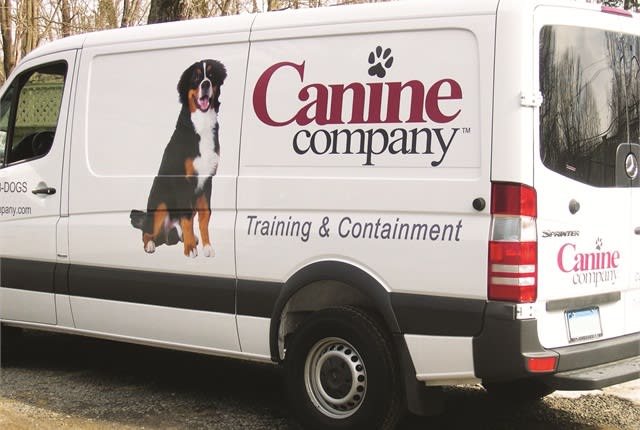
Canine Company went with vinal decals instead of a full vinyl wrap on its fleet vehicles.
Embarking on a campaign to rebrand a company image can help create a new look and feel for lackluster fleet vehicles, one of a company’s most visible marketing platforms.
Best known as the Northeast distributor of the Invisible Fence Brand pet containment product, Canine Company offers a wide range of pet products and dog obedience training programs.
“There was brand confusion about who we were — Invisible Fence Brand or Canine Company?” said Gregg Watson, creative director, explaining the rationale behind the rebranding program. “We needed to create one master brand.”
While Watson designed the new logos in house, an outside consulting company helped bring the branding into all of its operations. Canine Company turned to Signazon, an online digital printing and custom design company, to produce its vehicle graphics. While Signazon produces full vehicle wraps, the company also creates vinyl decals, which “gives [companies] the ability to still have that ‘pop’ and ‘punch’ in their vehicle branding as well as saving about 80 percent on overall cost,” said Joel Johnson, vice president of marketing for Signazon.
Watson said the company never considered a full wrap. “Our look and feel was cleaner and simpler,” he said, noting the previous designs were very “cookie cutter.”
Before Signazon, the company ordered decals through the manufacturer of Invisible Fence Brand and contracted locally to apply them.
Most of the interaction with Signazon happened online. “Signazon is a very technically driven company; the customer can upload files and the system is able to automatically prep that work and have it ready for print,” Johnson said.
Canine Company’s Watson then worked with Signazon to determine the layout on the vehicle and did a couple of tests before ordering decals for the fleet.
The decals were cut to fit moldings and even gas caps. They run from solid panels across windows using perforated window film that allows visibility from the inside. Nonetheless, “It was a challenge to create decals for a vehicle with all the moldings and different specs,” Watson explained.
The company is replacing the previous branding with the new decals on the company’s 45 Mercedes-Benz Sprinter vans and 34 Toyota Prius sedans.
Creating a Cross-Trained Fleet
Canine Company reps provide at-home consultations, installations, services, and dog training to customers. The Sprinter vans are geared toward the initial product installations, said John Kaminski, senior manager of field operations.
Field reps are cross-trained to do at least three things, Kaminski said. The reps in the Sprinters install and service the Invisible Fence Brand systems and train the dogs, while the reps in the sedans perform consultations, Invisible Fence Brand training, obedience training, and light service work.
About seven years ago, the company began migrating from 3/4-ton pickups to the more economical Sprinters. At that time, the company was also in the midst of switching from Honda Civics to the Prius.
“In 2004 and 2005, we purchased approximately 190,000 gallons of fuel; last year we purchased 83,000 gallons,” Kaminski said.
Although the fleet is managed through the company’s service control development, the reps take their vehicles home at night. The company uses a telematics system from NexTraq to keep tabs on the fleet.
Kaminski said the vans run to about 165,000 miles and each vehicle averages about 20,000 to 25,000 miles per year. When it’s time to sell, Kaminski usually puts up a “for sale” sign in front of the headquarters, though recently he has been selling through a wholesaler.
In terms of the rebranding initiative, the next step is to integrate images of different breeds into the decals. “We are using our actual clients’ dogs of different breeds,” said Jesse Rosenschein, marketing communications manager. “We are showcasing the dogs that our product keeps safe every day.”
More Operations

Here's When You Should Make an Exception to Fleet Policy
Fleet policies are designed to create consistency, but not every driver or situation fits neatly within standard rules.
Read More →
AI-Native or AI-Acquired: What Should Fleet Managers Look for in an AI Platform?
Six questions can help fleet managers look beyond AI marketing claims to evaluate integration, data access, and real-world operational performance.
Read More →
A buyer's guide to fleet management software in 2027
Buying fleet management software in 2027 means looking beyond features and price. As fleet operations, technology and expectations evolve, this guide explores what today’s fleet professionals should consider when choosing a system that can deliver value now and adapt to what comes next.
Read More →

What Will Shape the Next Era of Fleet Management?
EVs, AI, and autonomous vehicles are reshaping fleet management. Discover what’s ahead—and how fleet leaders can prepare for the next era.
Read More →
How Fleets Can Recruit and Train Veterans for Technician Roles
Here's how the technician shortage has affected uptime for fleets, and what to do about it.
Read More →
Avis Budget Group Deploys Neology Toll Management Technology Across Major Brands
Neology’s neoFleet platform will manage toll transactions and toll-authority operations for vehicles across Avis, Budget, Payless, Budget Truck and Zipcar.
Read More →
Fleet Personal-Use Charges Edge Higher in 2026
Nearly eight in 10 surveyed fleets allow personal use of company vehicles, while just over half of respondents report charging employees for the privilege.
Read More →
The Future of Fleet + What’s Changing Right Now | AF News Recap
Could developments overseas offer a preview of what’s coming for U.S. fleets? This week, we’re looking at the future of AI, autonomy, and electrification, plus Ford Pro’s new certified pre-owned program, smarter vehicle offboarding, and a new way for fleets to manage toll expenses.
Read More →
How to Handle Vehicle Offboarding
What do fleet managers need to do when a driver leaves?
Read More →
Fleet Manager’s Ultimate Playbook: Navigating the New Standard in OEM Connectivity
Rising operating costs, driver safety concerns, and unplanned downtime are putting unprecedented pressure on modern fleets. Discover how fleet managers use embedded OEM connectivity and real-time vehicle data to cut TCO, prevent downtime, and protect drivers without aftermarket telematics hardware.
Read More →