




RailCrew Commits to Multifaceted Safety Program
The RailCrew Xpress transports railroad crews to and from jobsites The company’s safety program maintains the well-being of employees and clients.

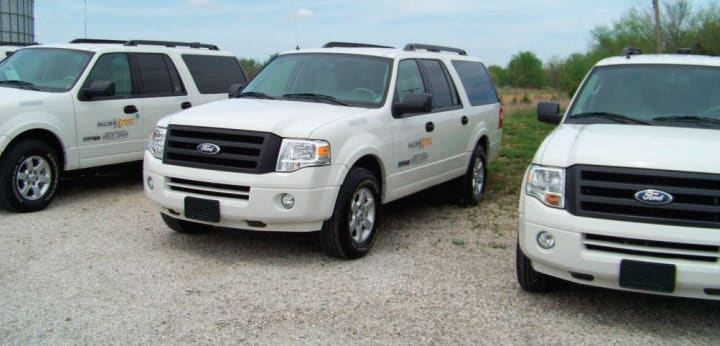
RailCrew Xpress holds a unique niche in the transportation industry. Serving railroads such as Union Pacific and Burlington Northern Santa Fe, the company transports rail crews between their end destinations and the home rail depots, helping crews meet safety standards regarding allowable working hours. With railroads as its primary clients, RailCrew Xpress (RCX) meets high standards of safety, and with nearly 700 Ford and Chevy passenger vans on the road, processes must be clear and consistent, and must permeate all levels of the business.
Where many companies are responsible only for the safety of their own employees, RCX's business is to ensure the safety of conductors and engineers as well. This responsibility essentially doubles RCX's liability - and heightens the need for an effective safety program.
"Railroad workers fall under the Federal Employer's Liability Act," said Kelley Merrick, RCX claims director. "A great deal of the traditional Workers' Compensation liability of the railroad is transferred contractually to the crew hauler."
While RCX is not a DOT-regulated carrier, the company follows most DOT driver qualification procedures. To this end, RCX employs a two-pronged approach to safety initiatives: prevention and accident response.
Prevention Actions Include In-Vehicle Cameras & Training
Before drivers set out on the road, RCX screens their criminal records and driving histories to confirm none of their drivers have prior incidents that could indicate future issues. RCX repeats driver's license checks annually, using a point-scale to rate each offense. If a driver reaches a certain number of points, RCX issues a letter stating prior offenses could jeopardize the driver's eligibility to drive fleet vehicles.
In addition to license checks, RCX reviews drivers' actual on-the-job performance. Several fleet vehicles are equipped with cameras. Employees are asked to review "recordable events" and report them to their managers. Managers review the videos and directly address the performance issue or safety violation.
Another measure taken to prevent accidents is safety training at all levels of the organization. Regional and location managers attend Field Leadership Training, an intensive course that covers a wide range of topics to help managers ensure a safe environment that protects employees and customers. Drivers attend the Professional Driver Orientation and Training Program, a comprehensive program that trains drivers to be aware of safety issues. To qualify, drivers must also pass a ride-along.
[PAGEBREAK]Accident Response: Accountability at All Levels
Even though RCX focuses heavily on accident prevention, not every crash can be avoided. In the event of an accident, RCX requires accountability at all levels:
Drivers are mandated to immediately report accidents to Corporate Claims Management (CCM), a 24/7 claim management vendor.
CCM sends an accident report instantly delivered to the leadership team's BlackBerries, no matter the time of day.
Regional and location managers generate weekly accident reports by location.
The vice president of operations holds weekly safety conference calls with regional managers to review accidents and discuss how they could have been prevented.
Managers then coach staff at the involved location about prevention techniques and safety for each accident or injury.
Drivers are further encouraged to follow safety guidelines through a bonus program that rewards employees for remaining accident and injury free.
"Drivers and managers work together when change is needed," Merrick said. "The entire team is responsible for implementing changes and creating a safety culture. There is accountability at each level, from drivers to the president. Open communication is encouraged, and safety is a priority for each employee. We are creating a safety culture in which we encourage our employees to speak up about safety issues and help provide solutions."
In addition to mitigating accidents to prevent future incidents, RCX also looks after the well-being of railroad employees following an accident. "Our corporate office takes responsibility by sending cards to crew members involved in accidents," Merrick said. "We apologize for the disruption in their day and follow up with a gift basket delivered to their home." Merrick helps crew members through the claims process and settles claims personally, if possible.
Merrick also works with the railroads to provide a return-to-work program at RCX expense. "The program enables the injured crew member to return to work and has the same advantages our own employee injury return-to-work program has; it enables the employee to be productive and continue to draw a paycheck without a reduction in salary," she said.
Review and Revise: Safety Program's Third Component
If the RCX safety program has a third component, it's reviewing and revising its safety policies to keep the company's program relevant and as comprehensive as possible.
"We are constantly reviewing accident information and updating our coaching and training," Merrick said. "Currently, our drivers are evaluating our safety efforts through a safety perception survey. This survey will identify the drivers' perception of our strengths and weaknesses regarding our safety programs. This survey allows drivers to participate in the safety process, which promotes a proactive safety culture. We want the drivers to own the safety process."
In its year and a half of operation, RCX's safety program has worked. Accident numbers are down, and the company's aggressive training programs have significantly decreased the severity of liability losses. Ultimately, RCX's safety program positively serves the company, employees, and customers.
"Our employees have a safe environment in which to work; they also are provided with a learning environment. They are coached for better performance and given the opportunity to move up the ranks. Savings are reinvested into the company," Merrick said. "Our customers are provided safe transportation with less risk of downtime for employee injuries. A safe transportation company translates into a prosperous and enduring business."
More Safety

Fleet Manager’s Ultimate Playbook: Navigating the New Standard in OEM Connectivity
Rising operating costs, driver safety concerns, and unplanned downtime are putting unprecedented pressure on modern fleets. Discover how fleet managers use embedded OEM connectivity and real-time vehicle data to cut TCO, prevent downtime, and protect drivers without aftermarket telematics hardware.
Read More →
From Driver Well-Being to EV Charging | AF News Recap
Mental health belongs in the fleet safety conversation. This week, we’re looking at five ways fleets can support employee well-being before a crisis, plus Holman’s expansion in Mexico, new one-day Fleet Forward passes, and why EV charging demand is outpacing infrastructure growth.
Read More →
Nexar-Nauto Merger Aims to Give Fleets Better Safety Intelligence Through Larger Driving Dataset
Stefan Heck tells Automotive Fleet that combining more than 10 billion miles of driving history with Nexar's AI models will give fleets deeper insights into driver risk and roadway conditions than either company could provide independently.
Read More →
Don't Wait for a Crisis: 5 Ways to Build Mental Health Into Your Fleet Safety Program
For Suicide Prevention Month, fleet and safety leaders have an opportunity to put mental health where it belongs: at the center of workplace safety.
Read More →
How Camera Data Can Strengthen a Fleet’s Insurance Renewal
Insights from a commercial insurance carrier and a broker show how fleets can turn video telematic data, driver coaching, and improved claims results into a stronger case at insurance renewal.
Read More →
The Safest Fleets Aren’t the Ones with the Most Technology
You’ve made the telematics investment. Here’s how to capture the other half of its value and build the safest fleet on the road.
Read More →
Hidden in Plain Sight: Fleet Compliance Risks
Fleet compliance isn't just about having policies — it's about consistently enforcing them. This practical guide reveals six hidden compliance risks common in public sector and shared fleet operations and outlines proven strategies to improve visibility, accountability, and audit readiness
Read More →
NETS Sets 2026 Fleet Safety Benchmark Conference for Indianapolis
The Sept. 15–17 program will feature fleet benchmarking data, case studies, emerging technologies, and implementation strategies while running alongside the NSC Safety Congress & Expo.
Read More →
Off-the-Job Crashes Account for 43% of Employers’ $61.7 Billion Crash Burden
NETS quantifies costs dispersed across fleet, risk, HR, and other departments while providing new per-crash benchmarks for employers.
Read More →
Ram Recalls More Than 1.27 Million 1500 Pickups for Seat Belt Anchor Issue
The recall affects certain 2019-2026 Ram 1500 pickups that may have improperly attached second-row seat belt buckle anchors.
Read More →