




Quality and Economy Highlight 1981 Priorities
Efficiency and workmanship have been thrown under sharp focus for 1981.
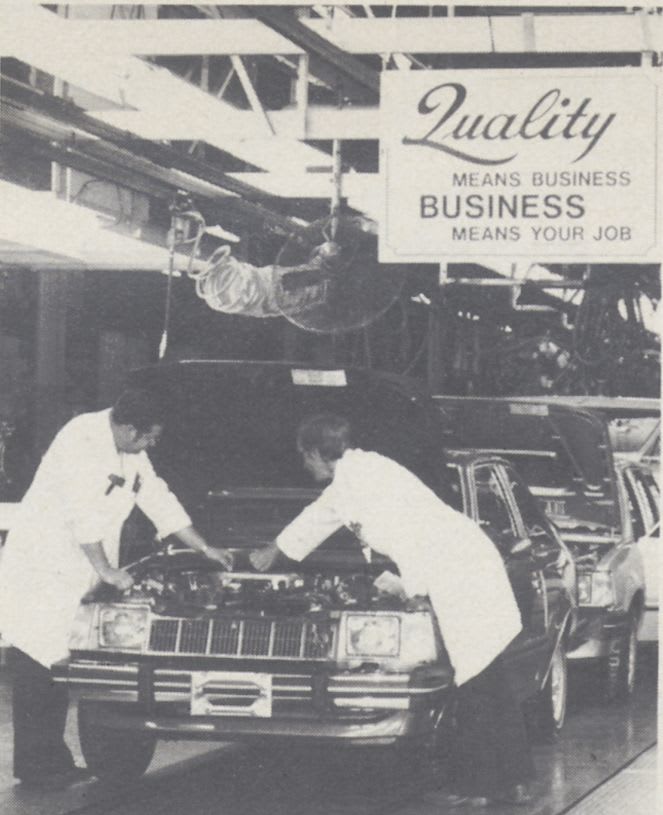
Nearly 120 inspectors, such as the two shown above with a new Lynx, have been added to the workforce at Lincon'Mercury's Wayne (MI) plan alone to assure that top-quality "word cars" roll off the line.
The 1981 model year may well be documented in future years as the turning-point "selection and decision" period for the major manufacturers. For with the introduction of Ford's "world cars," all the major American manufacturers will be able to offer the consumer a fuel-efficient, front-wheel drive product, and the selection that the consumer makes will affect the future corporate decisions in boardrooms across the country.
Nearly 120 inspectors, such as the two shown above with a new Lynx, have been added to the workforce at Lincon'Mercury's Wayne (MI) plan alone to assure that top-quality
The policy of "We don't sell them, we just make 'em," has long since vanished from the R&D departments of the Big Three, and never has there been as much attention paid to what the customer really wants and is willing to pay for. The flock of new '81s might possibly be the best engineered, constructed, and detailed batch of cars that we've ever seen in the showrooms, because the companies want your business, and they want it now. In fact they need a big dose of it - making the consumer the ultimate winner in the '81 stakes.
Ford has great hopes for its 1981 star, the Escort, the company's first domestically produced front-wheel drive car. Standing on a 94.2-inch wheelbase, the replacement for the Pinto is offered with a 1.6 liter four-cylinder engine (the 1.3 liter to come later), a four-speed manual transaxle and fully independent suspension topping the list of features. This car, and it's companion the Mercury Lynx, are Ford's front-line answer to the import. The company has ticketed the world car project at around $3 billion, with eight new front-wheel drive car lines scheduled in the coming years. One of the biggest concerns of Ford this year, and also of GM and AMC, is Quality - with a capital Q. The cars coming out of American plants for the 1981 model year are the kind of competition the compact imports do not like to see but have been expecting.
Chrysler-Plymouth's long-awaited front-drive compact, the Plymouth Reliant, is two feet shorter, 800 pounds lighter and 25-percent more fuel efficient than the Volare model it is replacing. Standard equipment includes a 2.2 liter engine, rack-and-pinion steering and a four-speed manual transaxle. Added to the Horizon/Omni, TC3/O24 and Champ/Colt lines, the Reliant (and Dodge Aries) complete a group of front-wheel drive, four-cylinder cars that make up 80 percent of Chrysler Corporation's 1981 fleet. The company's CAFÉ now comes to 25.5 miles per gallon, and even the new Chrysler Imperial can be called a fuel-efficient vehicle when compared to its predecessor.
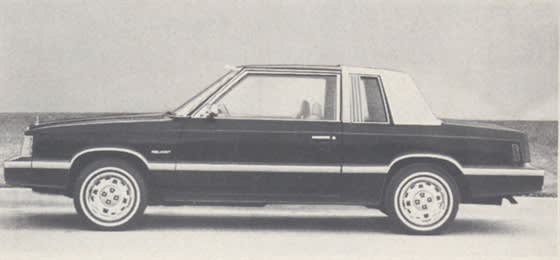
The two-door Plymouth Reliant.
The X-car was introduce by GM in '79 as an '80 and continues to be a sales leader; but far from resting on their laurels, engineers in each of the company's divisions still look for that extra mile-per-gallon. Twenty-three 1981 models, ranging from the compact Omega X-body to the luxury Tornado, represent Oldsmobile's most fuel-efficient fleet yet, with diesel power being offered on 19 of the 23. A more aerodynamic Monte Carlo tops Chevy's 1981 lineup and also features electronic powertrain management through GM's Computer Command Control, (CCC). Chevette, already an economy leader, gains an extra four miles per gallon, along with the CCC system and a host of options.
Technological improvements highlight the 1981 Buick offerings, plus new sheet metal for the Regal. Skylark, Buick's X-body, returns with few changes, as do the rest of the X-cars. A major design change for the Grand Prix and what could well be the last year for full-size cars in this division mark the 1981 model at Pontiac. It has been reported in Automotive News that there is no Pontiac version of the new standard or full-size GM car scheduled to debut in the fall of 1982, and that there are no tooling orders for the grille of a 1981 full-size Pontiac.
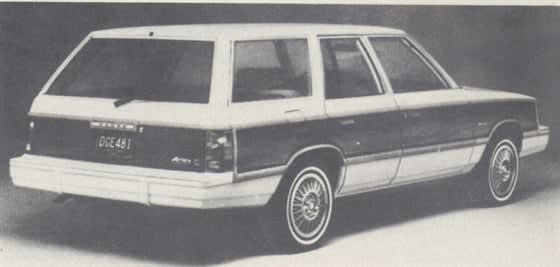
The station wagon version of the 1981 Dodge Aries.
American Motors features the Renault 18i for 1981, and a Spirit-sized version of the Eagle. The Renault will be offered in two body styles, with a 1.6 liter four-cylinder engine, and buyers will have a choice of three transmissions. Standard features are impressive, and include rack-and-pinion steering, adjustable steering column, premium instrument panel and styled wheel covers. The Eagle line of four-wheel drive vehicles has been expanded to a smaller version called the Eagle SX/4 and Eagle Kammback, based on a 97.2 inch wheelbase. A 2.5 liter four-cylinder engine comes as standard on the entire Eagle line, with a newly redesigned 4.2 liter six as an option.
According to a recent NAFA survey (see story in this issue) six out of every 10 new cars to be ordered by NAFA members in the coming model year will be compacts and sub-compacts. Where once the fleet buyer had to turn to the import car market for the product he and his customers wanted, there is now a robust American lineup of compacts and subcompacts to choose from. The quality is there, and the selection is there, to lay a strong foundation for renewed growth for domestic manufacturers.
More Operations

Fleet Has a Talent Pipeline Problem. What Comes Next? | AF News Recap
Where will fleet’s next generation of leaders come from? This week, we’re looking at the industry’s talent pipeline, what certification can add to a fleet career, how to build an award-worthy track record, and the return of Automotive Fleet’s Personal Use Survey.
Read More →
Smith System Launches Driver Risk Management Program
Fleets have more driver data than ever, but identifying risky behavior doesn't necessarily correct it. Smith System's new Driver Risk Management program combines monitoring, training, and follow-up coaching to help fleets connect risk signals with driver intervention.
Read More →
Automotive Fleet Opens 2026 Personal Use Survey for Commercial Fleet Managers
Less than two weeks left! Commercial and corporate fleet managers are invited to share how their organizations handle company vehicle personal-use policies, charges, and driver eligibility.
Read More →
From AI Prompts to AI-Generated Safety Songs | AF News Recap
Can better prompts make AI more useful for fleet managers? This week, we’re breaking down smarter fleet analysis, an AI-assisted experiment that turned safety training into music, and what happened to fuel prices in August.
Read More →
How to Write Better AI Prompts for Fleet Analysis
Include these six elements in your fleet prompts to generate more relevant analysis and accurate answers.
Read More →
Fleet Meets: Eric Kilgore
This edition of the Fleet Meets series features one of the industry's best leaders driving multi-market and national operations.
Read More →
Why Reactive Fleet Management Is Becoming Too Expensive to Sustain
Research highlights a growing need for proactive management strategies to address rising costs in fleet operations effectively.
Read More →
What Your Fleet KPIs Aren’t Telling You
Tracking fleet metrics is only useful when the data leads to better decisions. This guide helps fleet leaders assess cost, utilization, and downtime more accurately, identify performance gaps, and prioritize the actions that can improve operational results.
Read More →
Hidden in Plain Sight: Fleet Compliance Risks
Fleet compliance isn't just about having policies — it's about consistently enforcing them. This practical guide reveals six hidden compliance risks common in public sector and shared fleet operations and outlines proven strategies to improve visibility, accountability, and audit readiness
Read More →
Turning Fleet Payment Data into Executive Insights
Does data alone drive results in operations?
Read More →