




Q&A: Telematics Brings Auto Parts Fleet Safety, Savings
As with all well-run fleets, Fisher Auto Parts is involved in an ongoing search for ways to improve safety and reduce costs. And, the Staunton, Va.-headquartered fleet has a partner in that process: its fleet management company Donlen.

Fisher's Joe Vaughn (left) and Donlen's Nicholas Ehrhart

Fisher's Joe Vaughn (left) and Donlen's Nicholas Ehrhart
As with all well-run fleets, Fisher Auto Parts is involved in an ongoing search for ways to improve safety and reduce costs. And, the Staunton, Va.-headquartered fleet has a partner in that process: its fleet management company Donlen.
Smart managers look for solutions to be, at the very least, cost neutral. If the solution actually reduces costs, it's a win-win. The solution that Fisher and Donlen came up with — telematics — was precisely the sort of program that meets the test for the 1,700 vehicle fleet.
Made up mostly of compact pickups and sedans branded with the company logo, the vehicles are used primarily for local delivery, transporting parts to repair shops and dealerships.
Donlen provides Fisher with vehicle acquisition and disposal, maintenance and accident management, license and title administration, and now the Auto Parts Company is testing the DriverPoint telematics product.
Automotive Fleet spoke with Fisher's CFO, Joe Vaughn, and Nicholas Ehrhart, Donlen's telematics VP of business development about it.
AF: Tell us about Donlen's DriverPoint program.
VAUGHN: We're always looking for ways to make our fleet and our drivers safer — for themselves and for others. Our fleet vehicles are used locally, which translates to a lot of short trips and stop-and-go driving.
EHRHART: Donlen works collaboratively with its customers, and when Joe came to us to discuss solutions, we believed that DriverPoint would fit the need very well.
AF: Is DriverPoint a device or is it a complete program?
EHRHART: DriverPoint is more than just a device. It is a comprehensive program that combines telematics, online safety training, and driver scorecards, which increases driver safety, productivity, and ultimately reduces costs.
VAUGHN: The program goes far beyond just telematics, as well as other safety programs. The core of the program is, indeed, the device, which is a "plug-and-play" device that our drivers can install in minutes. But, it is the data the device generates and the way the program uses that data that makes it so unique.
AF: How large is the fleet test sample?
VAUGHN: We began the test in mid-2012 with 50 units. At the beginning of 2013, we expanded that sample to 488 vehicles and plan on rolling the program out to the entire fleet by the end of 2013.
AF: What data elements does DriverPoint provide?
EHRHART: Some of the key data elements the device provides are acceleration/deceleration events, speeding, "overspeed," and idling, which are tied to both safety and fuel economy. For example, speeding not only is dangerous, but it also burns excess fuel.
VAUGHN: Donlen provides Fisher with driver scorecards, using algorithms that give us a clear picture of the driver's driving habits, fuel efficiency, and overall safety performance.
AF: Who has access to these reports?
VAUGHN: We provide our store managers access to the application, so they can see how their own drivers perform; the routes they drive, and all of the key data. Also, our VP of risk management monitors the data, along with exception reports. If any action is necessary, it's initiated at the store level.
AF: Has any particular data element you've received stood out?
VAUGHN: Yes, idling time. We were shocked at how much idle time our drivers were racking up. We do encourage our drivers to develop relationships with the customer, but building that relationship takes time, and, if vehicles are left idling, fuel is wasted. Reducing and eliminating this waste is simply a matter of instructing drivers to turn the vehicle off if drivers envision spending more than a few minutes with the customer.
EHRHART: We estimate, conservatively, that Fisher vehicles burn about a half-gallon of fuel for every hour of idle time. In the first year of DriverPoint implementation, we saw more than 7,400 hours of idle time, costing $13,620 in excess fuel expense. The first step in reducing any fleet cost is to quantify the cost, and then identify where it can be reduced.
AF: Why the graduated roll-out of the program instead of implementing it throughout the fleet as many fleets do with other programs?
VAUGHN: Telematics is a relatively new technology. It's not that it's unproven, but it differs from a maintenance management program, for example, which has decades of success behind it. We wanted to understand thoroughly what the device did, what kind of data it produced, how that data was presented, and track carefully what the benefits would be.
EHRHART: We give Fisher and its management a great deal of credit for the roll-out. It has been done carefully and professionally, and the results have been excellent.
AF: You've mentioned idle time. What other results and benefits has the program produced?
VAUGHN: It has been a success across the board. In only the first three months of implementation, we saw an increase of 1.1 mpg per unit, a savings of $254 per vehicle. After the first year, the savings were 1.2 mpg. In a 1,700 unit fleet, projecting this savings out over a year, we're looking at reducing fuel costs by more than $435,000.
EHRHART: Driver scorecards for the lowest scoring drivers have been cut in half, and the number of highest scoring drivers has increased by 20 percent. The savings could be more as drivers learn more about how they can drive more efficiently, and the number of the highest scoring drivers continues to increase.
AF: What about the safety component?
VAUGHN: Using the standard metric for tracking accident frequency, accidents per million miles driven, we've seen a reduction from 7.43 down to 6.88, a reduction of 7.5 percent.
Using an average cost per accident of $1,436, which is only the cost of repairs and does not include other costs such as down time, workers' compensation, potential litigation, and other costs associated with accidents, we project a savings of about $28,720 per year across the entire fleet.
That's the hard dollar savings. What is more important is reducing the number of accidents where drivers, and other parties, may be injured.
EHRHART: Adding up the savings based upon data and action taken so far, Fisher is looking at a total of $463,822. The savings will pay for the modest fees associated with the program several times over.
AF: What are Fisher's plans for the program going forward?
VAUGHN: What we're seeing now is just the beginning. As drivers get used to knowing that the company is concerned about their safety and well-being, they'll be more conscious about how they drive. Fewer quick starts and stops, keeping speed within posted limits, less idling, and more efficient routes.
We will continuously monitor those scorecards and look to move more and more from the lower echelons to the higher levels of performance. All of this will improve our fuel cost performance, continue to reduce accidents, and savings will continue to increase, while we maintain the savings we've seen during the test.
AF: Explain the importance of proper implementation with a solution such as DriverPoint.
EHRHART: Implementation is a key to success to any fleet program. Establishing the process, naming participants, creating procedures, all of these things will impact the level of success. Not all companies understand this as well as Joe [Vaughn] and Fisher have, and they've helped make the test period smooth and successful.
VAUGHN: Don't forget that it is important to have a good consultative relationship with the supplier. Donlen recommended this program, told us how it worked, helped us with the implementation, and has remained close to us every step of the way.
More Telematics
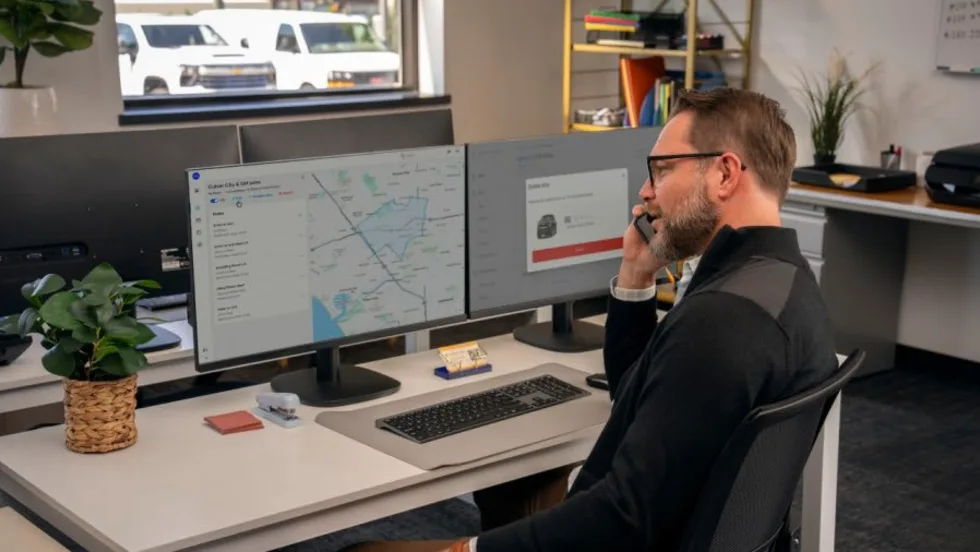
GM Launches OnStar Fleet Intelligence Platform With AI Assistant
The new platform brings vehicle data, order tracking, connected services and fleet analytics into one system, with an AI assistant that can answer fleet questions using natural-language prompts.
Read More →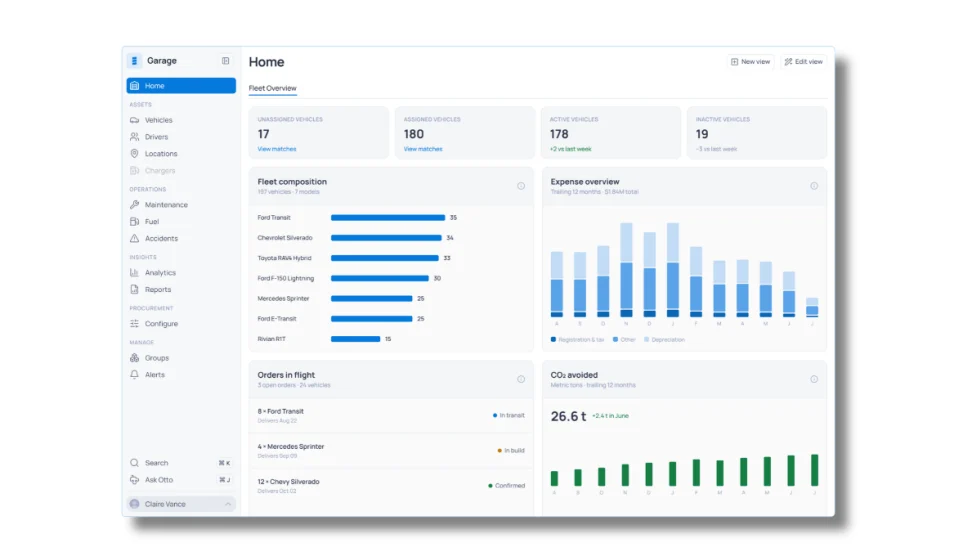
Inspiration Fleet Introduces Garage 2.0 Fleet Intelligence Platform
Fleet managers increasingly have access to data from vehicles, telematics, fuel, charging, and other systems, but those sources don't always communicate with one another. Inspiration Fleet's Garage 2.0 platform brings that information together while letting fleets keep working with different technology and service providers.
Read More →
Inside Inspiration Fleet’s New Platform for Connecting Fleet Data
Inspiration Fleet CTO Chris Getner explains how the new Garage 2.0 platform is designed to connect disparate fleet data and what that could mean for fleet managers in practice.
Read More →
Fleet Manager’s Ultimate Playbook: Navigating the New Standard in OEM Connectivity
Rising operating costs, driver safety concerns, and unplanned downtime are putting unprecedented pressure on modern fleets. Discover how fleet managers use embedded OEM connectivity and real-time vehicle data to cut TCO, prevent downtime, and protect drivers without aftermarket telematics hardware.
Read More →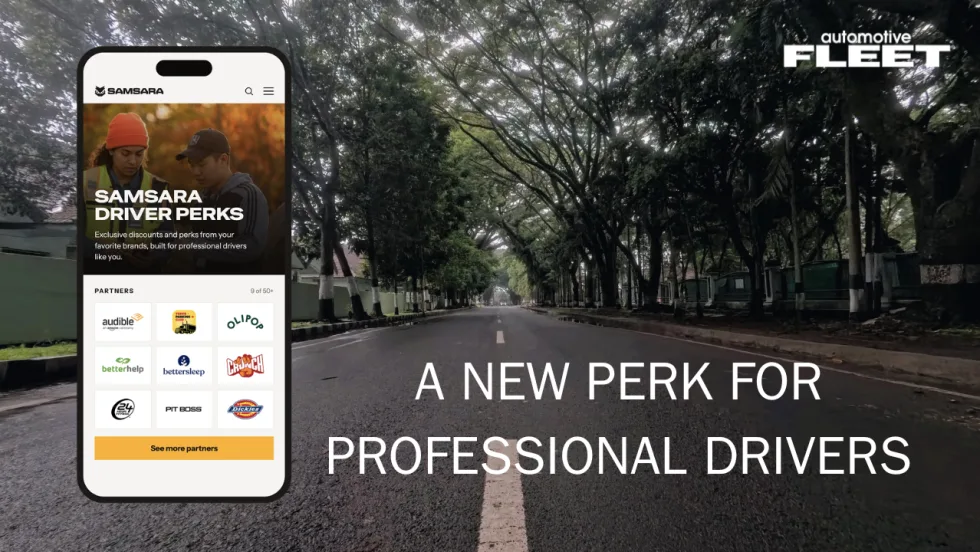
Samsara Driver Perks Adds New Benefit for Corporate Fleet Drivers
The rewards program gives eligible professional drivers access to discounts from more than 50 brands while giving fleets another way to support recruitment, retention, and the driver experience.
Read More →
Inside the Church of Jesus Christ of Latter-day Saints’ Two-Track Telematics Strategy
With 20,000 vehicles and two fundamentally different driver populations, the Church faced a fleet management problem that a single telematics program couldn't solve. How it responded offers a replicable framework for any fleet where one size doesn't fit every driver.
Read More →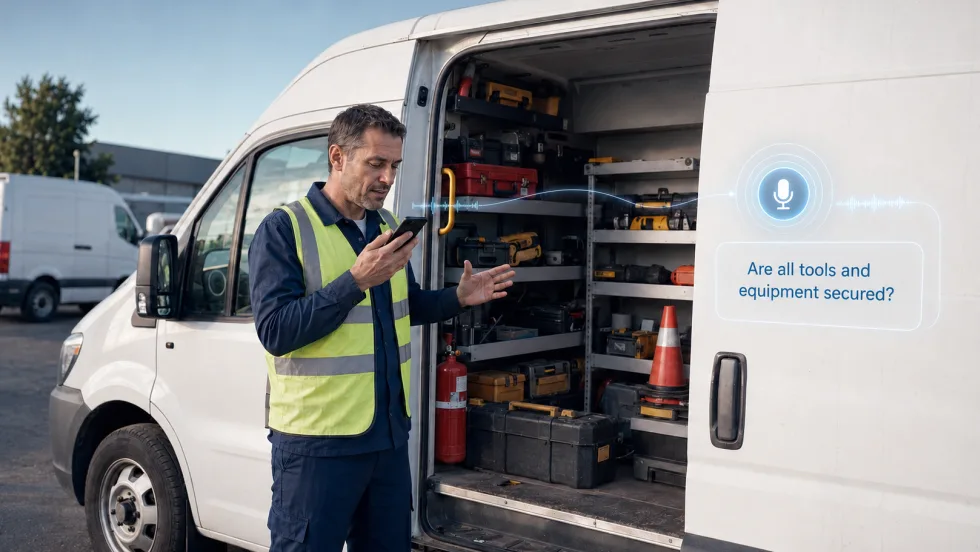
How Conversational AI Can Make Fleet Tasks Easier for Drivers
While most generative AI tools help fleet managers interpret data at their desks, Connex2X is applying voice interaction to tasks behind the wheel.
Read More →
Why Fleets Are Creating Dedicated Fleet Analyst Positions
Are fleet analyst positions the new norm? Listen here to find out.
Read More →
Teletrac Navman Begins Next Chapter as Standalone Private Company
What's new with Teletrac Navman and its new owner?
Read More →
Why Fleets Are Creating Dedicated Fleet Analyst Positions
Telematics, AI, EVs, and connected technologies are generating more fleet data than traditional teams can effectively manage. Reed Jackson explains why dedicated fleet analytics roles are emerging to turn that information into better operational decisions.
Read More →