




Propane Autogas and Permitting Needs
When switching to propane autogas, local propane providers and infrastructure suppliers help determine the best refueling setup for a fleet. But, prior to any infrastructure installation, fleet customers will need to navigate the permitting process for their jurisdiction.
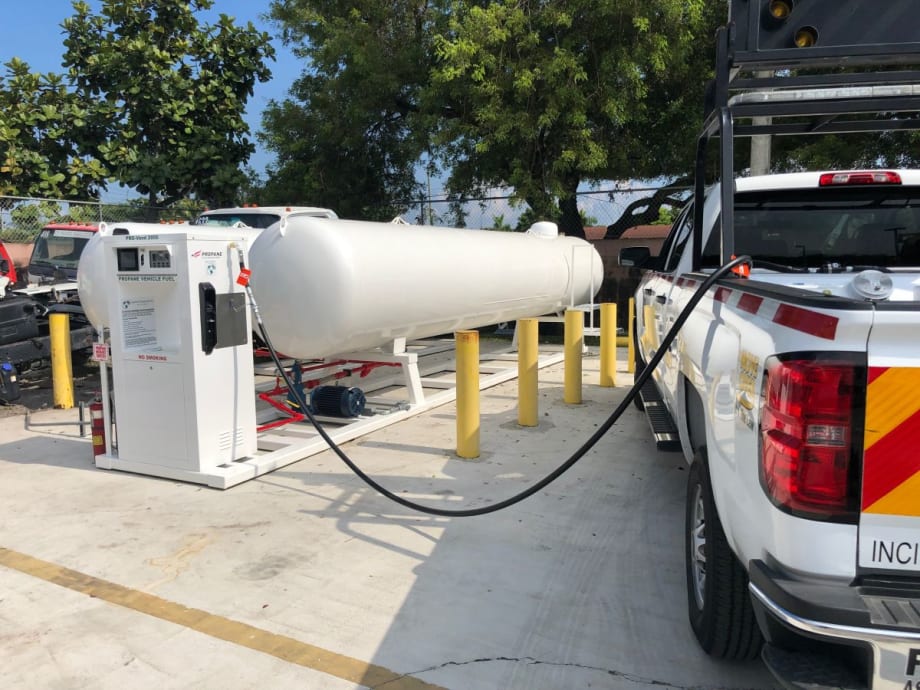
Reputable infrastructure suppliers provide knowledge and experience necessary to provide a safe and legally compliant turnkey, propane autogas system.
Photo: Superior Energy Systems
- Local propane providers and infrastructure suppliers assist in determining the optimal refueling setup for fleets transitioning to propane autogas.
- Fleet customers must navigate their jurisdiction's permitting process before installing refueling infrastructure.
- Successful transition to propane autogas relies on adherence to local regulatory requirements and collaboration with service providers.
*Summarized by AI
Fleets of any size can benefit from a centralized propane autogas refueling station. It’s convenient, safe to use, and can save time and money.
When switching to propane autogas, local propane providers and infrastructure suppliers help determine the best refueling setup for a fleet. They are dedicated to making the process turnkey and easy.
A permanent, on-site refueling station usually includes a concrete foundation, one or more large-capacity fuel tanks, a pump, one or more dispensers with meters, and crash protection.
Permitting Before Installation
Prior to infrastructure installation, fleet customers will need to navigate the permitting process for their jurisdiction. Permitting is controlled by the authority having jurisdiction (AHJ). Depending on location, several AHJ levels can exist.
For instance, one location may require approval from a fire marshal, state officials and city officials, but another location may only require approval from one individual. In general, larger metropolitan areas have additional levels of AHJ.
Every jurisdiction has different requirements for permitting processes, but the most common permits required include electrical and building.
Building permits relate to the entire system installation, which includes concrete, propane tank(s), piping, dispenser, and skid systems. Many times, building permits are granted by the city or county.
Generally, the equipment or fuel supplier that is installing the propane autogas refueling station secures the building permits by supplying drawings and other necessary information, or the customer may choose to do it.
At times, professional engineer stamped drawings, as well as adherence to additional requirements or ordinances, are required, which can increase the amount of time, effort and money needed to gain the permit. In addition, geographical locations can play a role; circumstances such as hurricane and seismic zones and adverse weather locations affect permitting requirements.
Additional Permit Details
The amount of time necessary to gain a building permit generally averages two weeks, but can take up to several months, depending on the permitting office’s workload. Final inspections are almost always required to complete and put the system into service.
Electrical permits are required when new electricity is being installed to power the station. Usually an electrical permit is easily gained by a licensed electrician, hired by the customer or infrastructure supplier, who is well-versed with local requirements. Following installation, an inspection is required for approval.
Some less-common permits include pressure piping, concrete and plumbing permits, which are sometimes necessary depending on how the AHJ classifies propane piping. At times, mechanical permits are also required to confirm that the entity installing the refueling station is a licensed mechanical contractor. In addition, structural permits can be required.
Propane Permit Costs
Permit cost can range from $500 to $10,000 depending on the size of the project, and are paid for by the customer that is installing the refueling station.
At times, the cost will be a flat fee, usually a few hundred dollars and other times it will be based off a percentage of the total job cost.
Larger jurisdictions are more likely to base permit costs off a percentage of the total job cost.
Reputable infrastructure suppliers provide knowledge and experience necessary to provide a safe and legally compliant turnkey, propane autogas system. The supplier is generally able to provide the engineering drawings necessary to pull various permits, which can help avoid pitfalls associated with permitting and AHJ challenges.
About the Author: Crystelle Markley is marketing director for Superior Energy Systems, based in Columbia Station, Ohio. She can be reached at crystelle@superiornrg.com.
Quick Answers
Propane autogas is an alternative fuel that is used by fleet vehicles to reduce emissions and potentially lower fuel costs.
*Summarized by AI
Originally posted on Work Truck Online
More Global Fleet
GeoFencing Adds to Your Truck Security Arsenal
Geofencing is a familiar fleet tool today, but its early adoption marked a major shift in vehicle tracking, route monitoring, and the debate over employee privacy.
Read More →
Holman Takes Full Ownership of ARIZA in Mexico
Holman is bringing its Mexican fleet management operation fully under its own brand after more than 30 years as a joint venture. The change gives multinational fleet customers a single Holman operation across the U.S., Canada, and Mexico.
Read More →
5 Tire Maintenance Tips to Help Prevent Work Truck Downtime
Regular tire checks can do more than extend tread life. These five maintenance practices can help work truck fleets catch problems early, reduce costs, and prevent downtime.
Read More →

Proven Ways to Reduce Work Truck Downtime
The age-old problem of downtime will always be a reality, but with new strategies at hand, fleets have more ways to keep trucks on the road longer.
Read More →


Cameras, Safety and Insurance: From Reactive Claims to Real-Time Prevention (Part 2 of 2)
Part Two: Commercial auto remains one of the most challenging and costly lines of coverage for fleet operators and insurers alike. Continue learning more about how to effectively address these issues from Onur Aksan, Enterprise Business Development Executive, Geotab
Read More →
Cameras, Safety and Insurance: From Reactive Claims to Real-time Prevention
Commercial auto remains one of the most challenging and costly lines of coverage for fleet operators and insurers alike. Learn more about how to effectively address these issues from Onur Aksan, Enterprise Business Development Executive, Geotab.
Read More →
Fleet Costs Are Rising: Here’s How Leaders Are Responding
Fleet leaders are under pressure to reduce costs, adapt to economic uncertainty, and make smarter decisions. See how peers across North America are responding with real data, proven strategies, and forward-looking insights. Download the 2026 Market Pulse Report to benchmark your strategy and uncover where you can gain an edge.
Read More →
Enterprise Fleet Management Surpasses 900,000 Vehicles in U.S. & Canada
Enterprise Mobility connects with mobility solutions around the globe
Read More →