




Profile of a Fleet Director: Wendy's Helene Kamon
Helene Kamon is the fleet director for Wendy's International, based in Dublin, OH. Operating for 15 years, Wendy's International, Inc. currently has 3,100 stores, of which 1,000 are company-owned, the rest are franchised. Current projections are for 5,000 stores by the end of the decade.
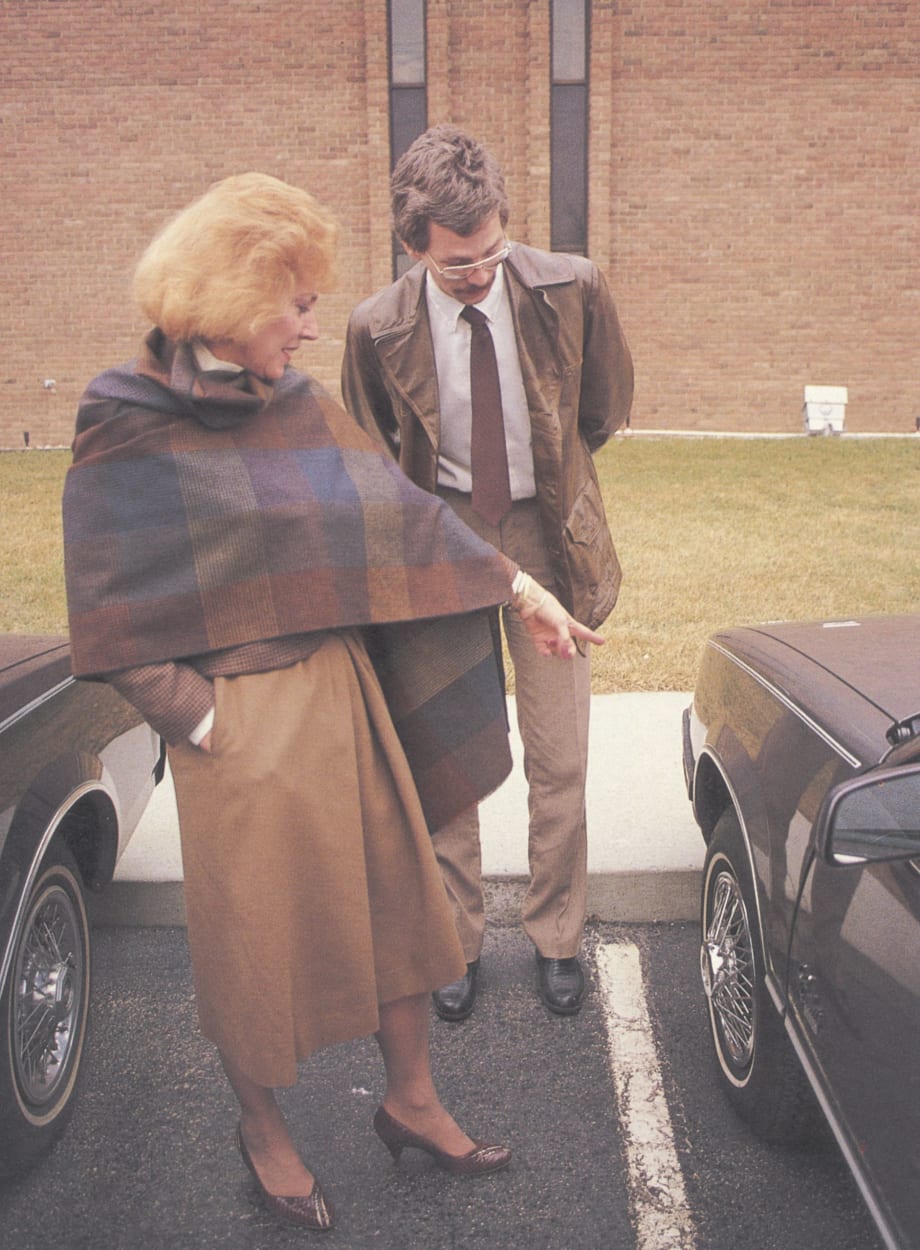
Helene Kamon is the fleet director for Wendy's International, based in Dublin, OH. Operating for 15 years, Wendy's International, Inc. currently has 3,100 stores, of which 1,000 are company-owned, the rest are franchised. Current projections are for 5,000 stores by the end of the decade. Demographically, the company is stronger in the Midwest, South and Southwest, and is just now moving into the nine western states. Additionally, the company is developing a single-unit franchise system, whereby an individual may put a single unit in what might have been a prohibitively small location.
Kamon came to Wendy's in 1980, moving quickly into the fleet manager position in December of '80.
AF: Now you have approximately 1,165 vehicles, and your annual growth rate has been approximately 18 percent. That means that by the end of the decade you should have in the neighborhood of 2,100 to 2,200 vehicles.
How has your selector list been keyed to company growth?
KAMON: When I started at Wendy's we were purchasing X-bodies for the workhorse of our fleet. About 18 months ago we began to realize the market sensitivity to that car, so we switched our selector list and started using a GM A-body and the Chevrolet Camaro. They've been very well received. We had to talk management into the Camaro, but they're very delighted with the results.
AF: Although a domestic, the F-bodies are not regularly seen in the fleet industry; it's not really considered a fleet car. What was your reasoning for going to the Camaro?
KAMON: It was a time in our whole economy when, even in the fast food business, we weren't able to give the kind of raises and benefits that we wanted to to our employees because we were trying to hold the line, keep a freeze on salaries. We wanted to do something to motivate our people and to keep them motivated to see us through those tough times. One thing that I thought we could do was to give them a car they would feel and perceive as a real benefit. Not just a company car for transportation but something that they could have some pride in. I tried to find something that would give them those feelings, and I struck on the Camaro and the A-body, a sport car and a nice, youthful family car. They have been well accepted. We know that there are going to be a lot of employee sales because the employees are putting a lot of options on them. And they're paying for the options 100 percent out of their own pockets.
AF: What other effects do you think you're going to see from that driver participation?
KAMON: I think that the driver has a stake in it when he puts his options on his car. He thinks that he's going to buy that car, or he perceives it as a creature comfort car. So he's going to take care of it in a way that it will reflect that to anybody who's in the car with him. He's not going to leave his lunch under the set; he's not going to skip maintenance and take the chance that the car will quit on him when he's out with the neighbors. The car reflects, to him, his position in the company, what the company thinks of him.
In turn, he wants his neighbors, friends, and family to see this. He has to maintain this symbol of success in order to appear successful, so I think he will.
AF: What is your management usage profile?
KAMON: In terms of usage profile, we have drivers in supervisory positions with a certain mileage requirement. And we basically have that person over four stores. Going up the ladder, we have area directors, regional directors, and regional vice presidents. Of course, we also have similar drivers in each of the segments of the company, engineering, real estate, research and development, marketing, and training.
AF: What has been your replacement policy in the past, what is it now, and why?
KAMON: The replacement policy was 55,000 miles, and about a year ago, when the odometer issue gained a lot of public attention, we adjusted the miles to bring our cars back between 45,000 and 48,000 miles to help ensure salability. We don't anticipate any changes in that policy for at least another year, until we see how the odometer law affects the market in general. We may change it, we may lengthen the time, if it's possible. It may never be possible again; we don't know.
AF: In terms of disposal, you say you have about 20 percent of your cars disposed of through driver sale now. Can we assume it's your favorite method?
KAMON: It's the hardest. It's much easier to negotiate with a disinterested party. The person who's buying this car is going to spend a lot of time with you convincing you that it's worthless. Then they're going to want you to fix the light bulb in the ash tray that went out. They want a fail-safe warranty for as long as they're with the company. When you take it to an auction, it's done. You sell it to a wholesaler, it's sold. With an employee, I don't know that the sale is ever complete. It's much more time consuming. But there's probably a little better return on your investment, dealing with an employee.
AF: So you don't feel that 100 percent driver sales would be the preferred way?
KAMON: I would be committed to a home.
AF: We were talking earlier about sales, with the disposal question being one of the real challenges you have to face. Why are sales so important?
KAMON: Most fleet people negotiate with their dealers on an annual basis. They decide what they're going to pay for the car. Then they do that for the rest of the model run. But every time you sell a car, it's not worth the same thing. So it's a new challenge, and no used car is like any other used car. You really have to be on your toes. I think it's important because when you have capital-budget responsibilities, what you take in can offset what you spend and helps to keep the quality of your vehicles up. If the amount of money you can get for your used cars begins to fall, and you have capital budget restrictions, you may end up with a not very nice car for your employee.
There's always a challenge, and it requires an individual effort. It's a test of fleet manager's ability. How well can you do this? And how many times can you do it this well? That's the challenge. You get your fingers burned a few times and make some mistakes. But as a fleet manager, you have to be very interested in the used-car aspect of the operation. You have to attend auctions; I don't think for one minute that you can look in a guide and expect it to represent real horse flesh. You need to be aware of what the market place is telling you. You can't sit behind your desk and look at a book and expect that book to give you an answer. It's theory; it's not fact. And you have to get out in it. I don't know how else you can do it.
AF: You're talking basically about going head-to-head with other businesspeople. What has been your perception of your being a woman in what was, until the last decade or so, a man's industry?
KAMON: It was very difficult 10 years ago. You really had to earn respect, and it took a long time. t think it's gotten easier. I think that men recognize that women do have a place in this field. But I think any woman in this business has to work a little harder at it to be taken seriously. You have to have your facts in order; you don't want to speak out of turn. You want to know what you're doing. And if you do, you'll ultimately win the respect of your peers, male or female.
I don't think there's any field where you are a junior where you can expect people with years of experience to take you very seriously if you're constantly making fallacious statements. So it's not that different than anything else.
More Operations

How Fleets Can Recruit and Train Veterans for Technician Roles
Here's how the technician shortage has affected uptime for fleets, and what to do about it.
Read More →
Avis Budget Group Deploys Neology Toll Management Technology Across Major Brands
Neology’s neoFleet platform will manage toll transactions and toll-authority operations for vehicles across Avis, Budget, Payless, Budget Truck and Zipcar.
Read More →
Fleet Personal-Use Charges Edge Higher in 2026
Nearly eight in 10 surveyed fleets allow personal use of company vehicles, while just over half of respondents report charging employees for the privilege.
Read More →
The Future of Fleet + What’s Changing Right Now | AF News Recap
Could developments overseas offer a preview of what’s coming for U.S. fleets? This week, we’re looking at the future of AI, autonomy, and electrification, plus Ford Pro’s new certified pre-owned program, smarter vehicle offboarding, and a new way for fleets to manage toll expenses.
Read More →
How to Handle Vehicle Offboarding
What do fleet managers need to do when a driver leaves?
Read More →
Fleet Manager’s Ultimate Playbook: Navigating the New Standard in OEM Connectivity
Rising operating costs, driver safety concerns, and unplanned downtime are putting unprecedented pressure on modern fleets. Discover how fleet managers use embedded OEM connectivity and real-time vehicle data to cut TCO, prevent downtime, and protect drivers without aftermarket telematics hardware.
Read More →
U.S. Bank Adds Verra Mobility Toll Management to Voyager Fleet Platform
The integration allows U.S. Bank Voyager fleet customers to manage toll payments and violations alongside fuel, EV charging and maintenance expenses.
Read More →
ADAS Prevents Crashes. But Repairs Cost More | AF News Recap
ADAS-equipped vehicles may crash less often, but they can cost more when they do. This week, we’re breaking down what that tradeoff means for fleets, plus Subaru’s first Forester Wilderness Hybrid, Nissan’s new e-POWER Rogue, and why Calstart has become Catalyst Mobility.
Read More →
Moventum Fleet Management Names Mark Iorillo Head of Sales
Iorillo brings nearly 20 years of fleet management and sales experience to the role, including previous positions at Element Fleet Management, CEI, Donlen and Ryder.
Read More →
Fleet Has a Talent Pipeline Problem. What Comes Next? | AF News Recap
Where will fleet’s next generation of leaders come from? This week, we’re looking at the industry’s talent pipeline, what certification can add to a fleet career, how to build an award-worthy track record, and the return of Automotive Fleet’s Personal Use Survey.
Read More →