




Powerfleet & MiX Telematics: What Does it Mean for Fleets?
The tie-up takes MiX from its traditional telematics space into IoT to be able to monitor machines and devices beyond the embedded or installed telematics modem in a vehicle.


Jonathan Bates of Powerfleet: "This industry is undergoing a huge transformation towards consolidation of technology and associated services. It’s not enough to provide a device or set of devices, because that aspect alone doesn’t meet the demands of the industry anymore."
Photo: Powerfleet
On April 2, Powerfleet Inc. and MiX Telematics Limited closed their business combination, which was originally announced in October 2023. According to a joint statement by both companies, the combined businesses form “one of the world's largest mobile asset Artificial Intelligence of Things (AIoT) and Software-as-a-Service (SaaS) providers.”
The combined customer base consists of over 1.8 million subscribers and 7,500 enterprise customers, according to Powerfleet. The total annual revenue of the combined companies on day one is $284 million.
"This transformative combination positions Powerfleet as a leading global AIoT SaaS company, setting the stage for accelerated growth in recurring revenues, increased profitability, and expanded avenues for creating shareholder value," said Steve Towe, who will continue serving as CEO of the combined Powerfleet company, in the statement.
A new board of directors of Powerfleet has been appointed. The new board consists of Michael Brodsky, chairman, Steve Towe, CEO, and Ian Jacobs, the previous MiX chairman, along with new board member Mike McConnell.
Automotive Fleet reached out to Powerfleet to understand how the combined companies will serve fleet customers. Jonathan Bates, chief product officer for Powerfleet, responded.
AF: What will MiX and Powerfleet bring to the global transportation space as a combined organization?
JB: The combination creates a scaled, global entity focused on unifying business operations by simplifying how customers manage, analyze, and utilize data to drive improved business performance.
Powerfleet’s Unity ecosystem is now boosted through a device-agnostic data ingestion engine and third-party integration capabilities. We unify business operations, providing a single source of truth for its people, assets, and business processes. This strategy has been given considerable additional scale through the business combination with MiX.
AF: What do you see as the main challenges facing the transportation industry?
JB: The industry is struggling with data indigestion. In other words, there’s too much disconnected data with too little actionable insights. Companies know they need information and insights across their mobile assets, people, and business processes, but in the past, no single partner has been able to consolidate all these disparate data sources, asset types, and platforms into one place.
This fragmentation has meant that the industry has been left with an abundance of untapped potential and significant frustration, because organizations continue to use a myriad of suppliers and platforms, and ultimately aren’t able to make sense of the unharmonized data they are pumping through their businesses.
AF: How is technology helping overcome these challenges?
JB: The industry is telling us that unifying its mission-critical operations is the most important transformation that it needs to undergo. There are a multitude of telemetry and device-focused companies continuing to fog up the industry with disparate data.
What is resonating is Unity’s device- and data-agnostic strategy, offering the ability to ingest and harmonize different data and device sources, then making that available in AI-led modular enterprise SaaS applications, as well as powering their business systems with mission-critical data through rapid integration.
For example, to truly unify a company’s operations, a safety leader needs their safety data to be integrated into the existing business system, as does an HR leader, a CTO, and a CIO. When you put these technological advancements together, you have an end-to-end data highway, all in a single pane of glass, and unified industry operations.
AF: What is your outlook on the future of the transportation space?
JB: The next few years are going to see an increasing prevalence of AI and automation across the industry, with big trends in the simplification and optimization of automated insights and predictability across transportation. I also believe that the roles of human beings are going to evolve, with data literacy and the right balance between humans and automation becoming hot topics.
It is clear that the expectations of the transportation space as to what AI and data science should be doing for the industry are going to be much higher in the future than it is today, because their potential to improve business performance is so great. In three years, successful fleet managers and transport operators must not only have completed their digital transformations, but they will have had some bumps and bruises along the way due to the disparity in their original chosen data providers. Thus, many will be going through a corrective exercise in their businesses to align their operations front-to-back.
End-to-end visibility, predictable operations, and fully integrated business processes are going to be the gold standard that this space will need, in order to meet the sustainability, compliance and safety challenges that the future will bring.
AF: Does the tie-up take MiX from its traditional telematics space into IoT to be able to monitor machines and devices beyond the embedded or installed telematics modem in a vehicle?
JB: This combination absolutely takes MiX from its traditional space and catapults it into the AIoT SaaS realm. As I explained, this industry is undergoing a huge transformation towards consolidation of technology and associated services. It’s not enough to provide a device or set of devices, because that aspect alone doesn’t meet the demands of the industry anymore.
However, MiX has brought a gamut of solutions that are now becoming part of Powerfleet’s Unity ecosystem. MiX has an advanced suite of AI video SaaS applications across a wide range of vehicle types that are now part of Unity, as well as the upcoming bring-your-own-device ELD SaaS application, among others.
With this tie-up, all the solutions that MiX had developed and evolved over 30-plus years are now available to the industry as part of Unity’s AIoT ecosystem.
More Telematics
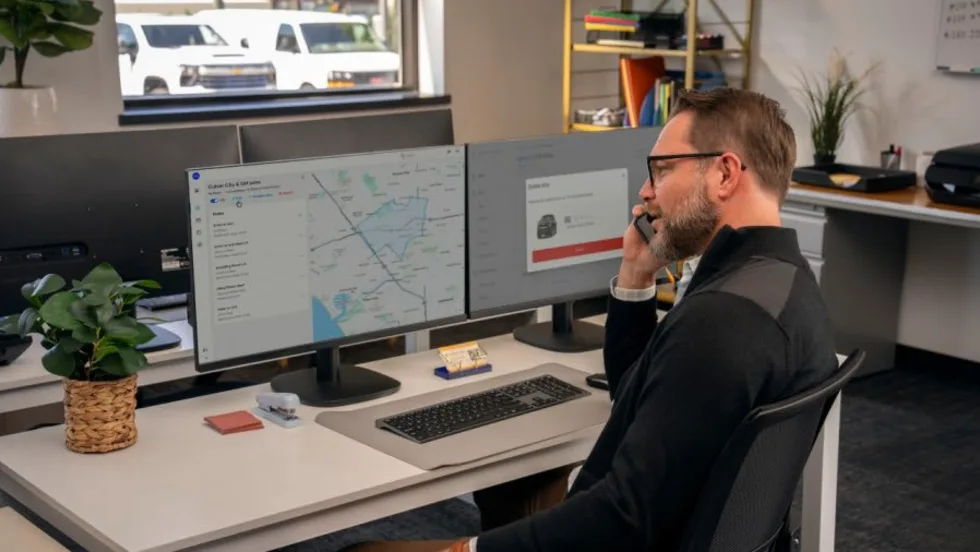
GM Launches OnStar Fleet Intelligence Platform With AI Assistant
The new platform brings vehicle data, order tracking, connected services and fleet analytics into one system, with an AI assistant that can answer fleet questions using natural-language prompts.
Read More →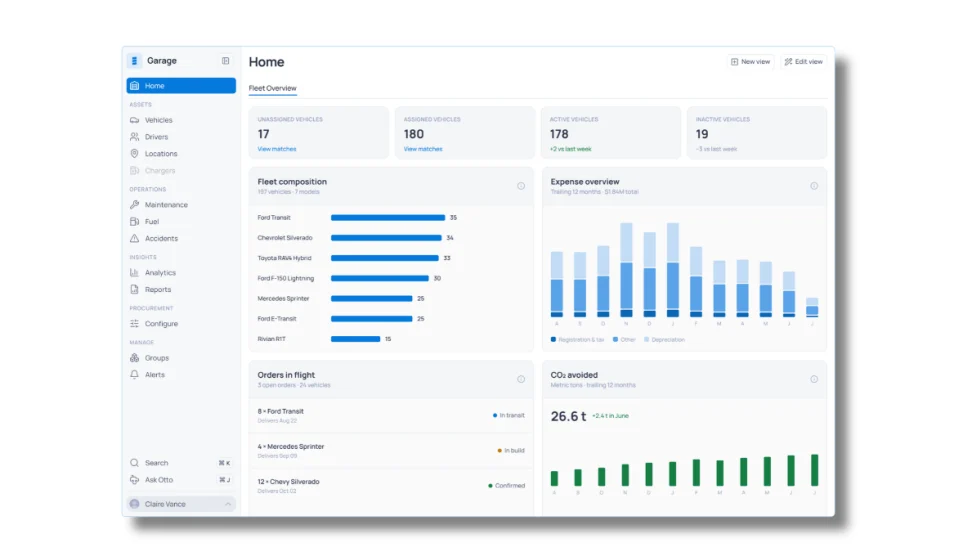
Inspiration Fleet Introduces Garage 2.0 Fleet Intelligence Platform
Fleet managers increasingly have access to data from vehicles, telematics, fuel, charging, and other systems, but those sources don't always communicate with one another. Inspiration Fleet's Garage 2.0 platform brings that information together while letting fleets keep working with different technology and service providers.
Read More →
Inside Inspiration Fleet’s New Platform for Connecting Fleet Data
Inspiration Fleet CTO Chris Getner explains how the new Garage 2.0 platform is designed to connect disparate fleet data and what that could mean for fleet managers in practice.
Read More →
Fleet Manager’s Ultimate Playbook: Navigating the New Standard in OEM Connectivity
Rising operating costs, driver safety concerns, and unplanned downtime are putting unprecedented pressure on modern fleets. Discover how fleet managers use embedded OEM connectivity and real-time vehicle data to cut TCO, prevent downtime, and protect drivers without aftermarket telematics hardware.
Read More →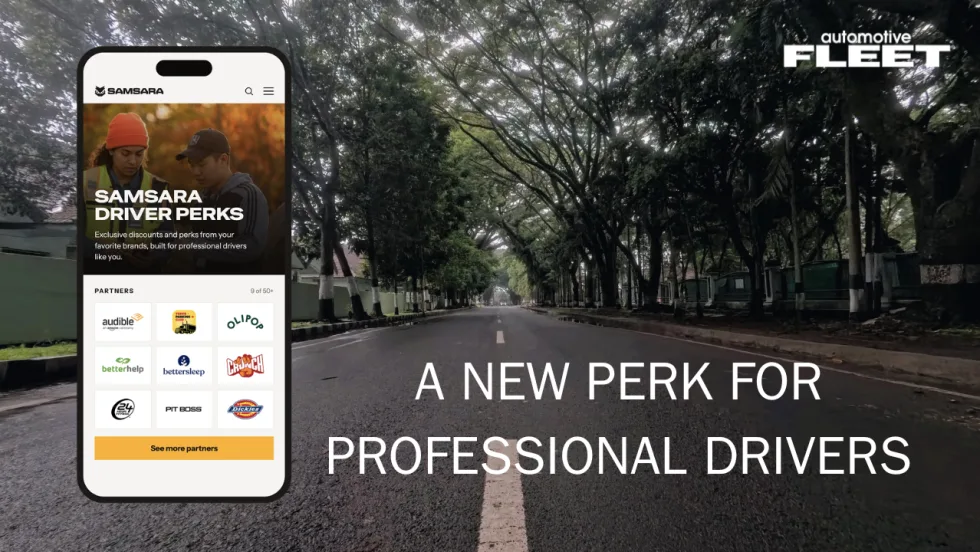
Samsara Driver Perks Adds New Benefit for Corporate Fleet Drivers
The rewards program gives eligible professional drivers access to discounts from more than 50 brands while giving fleets another way to support recruitment, retention, and the driver experience.
Read More →
Inside the Church of Jesus Christ of Latter-day Saints’ Two-Track Telematics Strategy
With 20,000 vehicles and two fundamentally different driver populations, the Church faced a fleet management problem that a single telematics program couldn't solve. How it responded offers a replicable framework for any fleet where one size doesn't fit every driver.
Read More →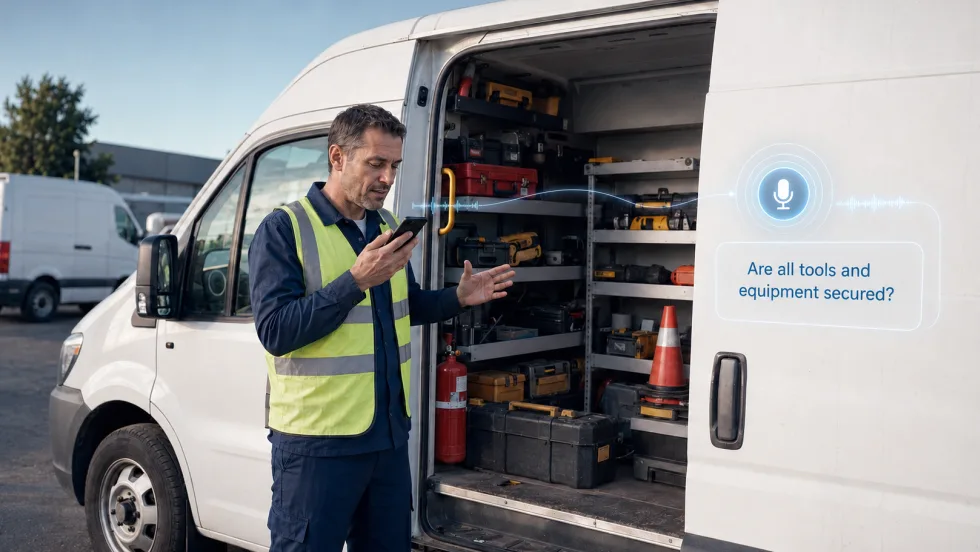
How Conversational AI Can Make Fleet Tasks Easier for Drivers
While most generative AI tools help fleet managers interpret data at their desks, Connex2X is applying voice interaction to tasks behind the wheel.
Read More →
Why Fleets Are Creating Dedicated Fleet Analyst Positions
Are fleet analyst positions the new norm? Listen here to find out.
Read More →
Teletrac Navman Begins Next Chapter as Standalone Private Company
What's new with Teletrac Navman and its new owner?
Read More →
Why Fleets Are Creating Dedicated Fleet Analyst Positions
Telematics, AI, EVs, and connected technologies are generating more fleet data than traditional teams can effectively manage. Reed Jackson explains why dedicated fleet analytics roles are emerging to turn that information into better operational decisions.
Read More →