




Passenger Car Optimized: All-New Toyota Venza
Toyota’s all-new 2009 Venza combines the flexibility of an SUV with the style and comfort of a passenger car and moves the segment in a new direction.

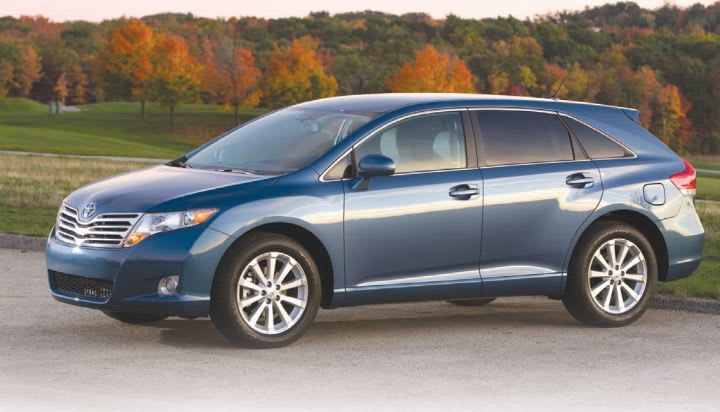
2009 Toyota Venza
Representing a new direction in passenger cars for Toyota, the all-new 2009 Venza combines fuel economy, innovative design, utility, and value.
The 2009 Venza is a five-passenger vehicle that couples the styling and comfort of a passenger car with the flexibility of an SUV.
“Venza establishes an exciting new direction in passenger car design that will combine the finest attributes of Toyota’s diverse vehicle lineup,” said Bob Carter, Toyota Division group vice president and general manager. “It caters to buyers who are looking for the value and reliability of a Camry, the comfort and upscale refinement of an Avalon, and the utility and flexibility of a Highlander.”
Based on FT-SX Concept
The all-new Venza is based on the FT-SX concept vehicle that debuted at the 2005 Detroit Auto Show.
Starting with the interior, the center console creates a 60/60 design that gives both driver and passengers easy access to the console. Venza’s added utility, located in the rear cargo area, is realized with fold-down 60/40 rear seats, one-touch fold-down seat levels, and a tonneau cover.
The 2009 Venza is offered with two engines: a new, fuel-efficent 2.7L, four-cylinder engine with 182 hp and 182 ft.-lb. of torque, and the 3.5L V-6 that produces 268 hp and 246 ft.-lb. of torque.
The V-6 and four-cylinder models are available in front- and all-wheel drive configurations. Both engines are mated to a six-speed, sequential shift, electronically controlled automatic transmission with intelligence (ECT-i). On all models, Venza employs uphill/downhill shift logic control that selects the proper gear for driving conditions and helps provide moderate engine braking during downhill driving.
Star Safety System Standard
The 2009 Venza is the first Toyota passenger car to offer the Star Safety System as standard equipment for all models. The system includes enhanced vehicle stability control and traction control systems with a cut-off switch, anti-lock brake system with electronic brake force distribution, and brake assist.
Hill-start assist control, standard on all models, temporarily provides pressure to brakes while the vehicle is stopped on an incline. This feature helps ensure easy starting with no roll-back.
Additional available options, specs, and details can be found at www.toyota.com/venza.
More Operations

Avis Budget Group Deploys Neology Toll Management Technology Across Major Brands
Neology’s neoFleet platform will manage toll transactions and toll-authority operations for vehicles across Avis, Budget, Payless, Budget Truck and Zipcar.
Read More →
Fleet Personal-Use Charges Edge Higher in 2026
Nearly eight in 10 surveyed fleets allow personal use of company vehicles, while just over half of respondents report charging employees for the privilege.
Read More →
The Future of Fleet + What’s Changing Right Now | AF News Recap
Could developments overseas offer a preview of what’s coming for U.S. fleets? This week, we’re looking at the future of AI, autonomy, and electrification, plus Ford Pro’s new certified pre-owned program, smarter vehicle offboarding, and a new way for fleets to manage toll expenses.
Read More →
How to Handle Vehicle Offboarding
What do fleet managers need to do when a driver leaves?
Read More →
Fleet Manager’s Ultimate Playbook: Navigating the New Standard in OEM Connectivity
Rising operating costs, driver safety concerns, and unplanned downtime are putting unprecedented pressure on modern fleets. Discover how fleet managers use embedded OEM connectivity and real-time vehicle data to cut TCO, prevent downtime, and protect drivers without aftermarket telematics hardware.
Read More →
U.S. Bank Adds Verra Mobility Toll Management to Voyager Fleet Platform
The integration allows U.S. Bank Voyager fleet customers to manage toll payments and violations alongside fuel, EV charging and maintenance expenses.
Read More →
ADAS Prevents Crashes. But Repairs Cost More | AF News Recap
ADAS-equipped vehicles may crash less often, but they can cost more when they do. This week, we’re breaking down what that tradeoff means for fleets, plus Subaru’s first Forester Wilderness Hybrid, Nissan’s new e-POWER Rogue, and why Calstart has become Catalyst Mobility.
Read More →
Moventum Fleet Management Names Mark Iorillo Head of Sales
Iorillo brings nearly 20 years of fleet management and sales experience to the role, including previous positions at Element Fleet Management, CEI, Donlen and Ryder.
Read More →
Fleet Has a Talent Pipeline Problem. What Comes Next? | AF News Recap
Where will fleet’s next generation of leaders come from? This week, we’re looking at the industry’s talent pipeline, what certification can add to a fleet career, how to build an award-worthy track record, and the return of Automotive Fleet’s Personal Use Survey.
Read More →
Smith System Launches Driver Risk Management Program
Fleets have more driver data than ever, but identifying risky behavior doesn't necessarily correct it. Smith System's new Driver Risk Management program combines monitoring, training, and follow-up coaching to help fleets connect risk signals with driver intervention.
Read More →