




Pandemic Pivot: Distillery Ups Routing Efficiency to Deliver Spirits and Sanitizer
When this boutique spirits distillery began production and distribution of sanitizer, the company needed to reorganize its routing from a few deliveries a week to over a hundred a day.

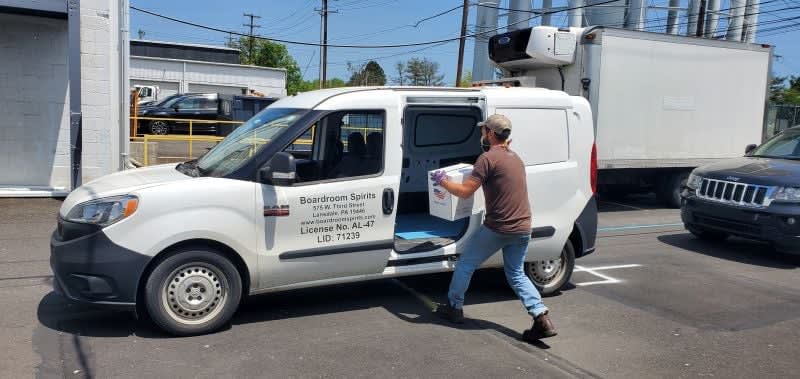
For Boardroom Spirits, A typical day could generate over 100 deliveries, delegated to four drivers.
Photo courtesy of Boardroom Spirits.
Chris Roessler of Boardroom Spirits, a boutique distillery serving the Philadelphia area, never expected a change in business title due to the coronavirus pandemic, but that’s what happened. “I'm the marketing coordinator, but in terms of my COVID-19 pivot, I’m now the online sales coordinator,” he says.
The title change was the result of a business reorganization: What started as a predominantly wholesale business during the pandemic moved to online retail sales, first with curbside pickup and then home deliveries. In that timeframe, the company also became a sanitizer producer and distributor. It all happened in a few weeks.
Boardroom Spirits started some four years ago by a husband, wife, and brother team that learned to make vodka in Eastern Europe. The company expanded into fruit-and vegetable-based whiskies and brandies while gaining exposure with the backing of minority owner and celebrity chef Robert Irvine.
The company’s main sales channels were through state-owned liquor stores, individual sales at its two tasting rooms, and events such as an annual Christmas Village. Deliveries consisted of a bi-monthly run in two Promaster vans from the distillery in Lansdale, Pa. to the state’s warehouse, as well as to 10-15 area restaurants.
The pandemic turned the model upside down. Stay-at-home orders forced the closure of the tasting rooms where the majority of the company’s staff works, with the balance in production. “The first huddle up we had as a business was, ‘How are we going to get all these people back to work?’” says Roessler.
The closure of Pennsylvania liquor stores worked in the company’s favor, as the only places for individuals to purchase alcohol at that point were breweries, distilleries, or wineries.
The company decided to create and market a curbside pickup option — a no-touch drive-thru system that went into operation in March. “But then we realized that people were just scared to go outside,” Roessler says.
The company quickly rebuilt its website to accommodate what would become a flood of retail orders. Roessler stayed up for 19 hours to prepare the new site for launch. The concept took off and the distillery returned to full-time production.
This necessitated graduating from off-the-shelf routing software to an automated route optimization system. “One day we had about 75 deliveries and I just could not figure out how I was supposed to route all of them through what was functionally a souped-up Google Maps,” says Roessler.
After some research, he chose OptimoRoute, a web-based route planning and optimization system for deliveries and mobile workforces. Roessler imports addresses and orders into the system, which calculates the most efficient routes for each driver.
OptimoRoute uses algorithms to match delivery orders to drivers. This automated matching process cuts down the planning time while minimizing unnecessary driving.
“I push a couple buttons and it tells me where I need to send everything,” he says.
The routes are sent to the apps on drivers’ smartphones. Drivers document each stop, and if a new one is added, routes are automatically adjusted on the fly. Roessler can communicate with them through the app. The system uses GPS in the smartphones to track drivers in 15-second increments.
The system generates reports and analytics to show driver performance over time and allow for bigger picture route strategizing.
“On a busy day, our original process took me a little over two hours (to complete the day’s routing) and OptimoRoute brought that down to 25 minutes,” Roessler says.
Next Big Pivot
During this time, the company made its next big pivot: When Pennsylvania relaxed industrial regulations regarding production and distribution of sanitizer, Boardroom Spirits immediately applied for a license.
The supply chain was an issue at first, particularly regarding plastic gallon jugs, four-ounce spray bottles, and ethanol. But being in the spirits business gave it an advantage in making ethanol, which it produced from expired wine and beer from vendor partners.
The move to produce sanitizer wasn’t to increase profits. For each consumer delivery, the company gives away a free four-ounce bottle of sanitizer. Larger liter-sized bottles or jugs are sold at cost.
“When people come here to get a bottle, they get something to take their minds off (the pandemic),” he says, “And we also offer something to help keep them safe too.”
A typical day could generate over 100 deliveries, delegated to four drivers. The deliveries reach a radius of about 30 miles from the company’s distillery. “We’ve been able to distribute as much sanitizer and product is because of the routing software,” Roessler says. “I now understand how routing works.”
Post pandemic, Roessler thinks this new delivery model has potential.
“The need for people to stay at home is what drove us towards this,” he says, “but absolutely, this is a long-term effort for us.”
Originally posted on Work Truck Online
More Global Fleet
GeoFencing Adds to Your Truck Security Arsenal
Geofencing is a familiar fleet tool today, but its early adoption marked a major shift in vehicle tracking, route monitoring, and the debate over employee privacy.
Read More →
Holman Takes Full Ownership of ARIZA in Mexico
Holman is bringing its Mexican fleet management operation fully under its own brand after more than 30 years as a joint venture. The change gives multinational fleet customers a single Holman operation across the U.S., Canada, and Mexico.
Read More →
5 Tire Maintenance Tips to Help Prevent Work Truck Downtime
Regular tire checks can do more than extend tread life. These five maintenance practices can help work truck fleets catch problems early, reduce costs, and prevent downtime.
Read More →

Proven Ways to Reduce Work Truck Downtime
The age-old problem of downtime will always be a reality, but with new strategies at hand, fleets have more ways to keep trucks on the road longer.
Read More →


Cameras, Safety and Insurance: From Reactive Claims to Real-Time Prevention (Part 2 of 2)
Part Two: Commercial auto remains one of the most challenging and costly lines of coverage for fleet operators and insurers alike. Continue learning more about how to effectively address these issues from Onur Aksan, Enterprise Business Development Executive, Geotab
Read More →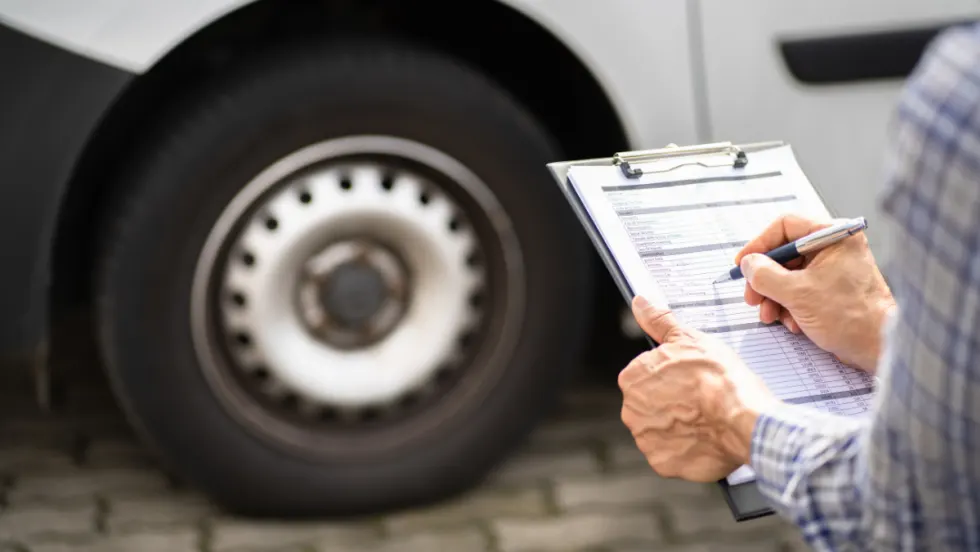
Cameras, Safety and Insurance: From Reactive Claims to Real-time Prevention
Commercial auto remains one of the most challenging and costly lines of coverage for fleet operators and insurers alike. Learn more about how to effectively address these issues from Onur Aksan, Enterprise Business Development Executive, Geotab.
Read More →
Fleet Costs Are Rising: Here’s How Leaders Are Responding
Fleet leaders are under pressure to reduce costs, adapt to economic uncertainty, and make smarter decisions. See how peers across North America are responding with real data, proven strategies, and forward-looking insights. Download the 2026 Market Pulse Report to benchmark your strategy and uncover where you can gain an edge.
Read More →
Enterprise Fleet Management Surpasses 900,000 Vehicles in U.S. & Canada
Enterprise Mobility connects with mobility solutions around the globe
Read More →