




Outside Expert Makes 'U-Turn' To In-House Fleet Boss Role
Move to McDonald's offers chance to implement, not just advise.
As a former account exec with Peterson, Howell & Heather, the big Baltimore-based leasing and business services company, Donald R. Kolb figures he has met and mastered just about every kind of management problem that can befall the typical fleet administrator. For nine years, Don Kolb was called into some of the country's biggest fleet operators' offices to advise the resident fleet managers on what seemed to be wrong and what should be done to put things right.
During his PH&H days, Kolb was the "outside expert," the man with the vision to see the big picture and the dispassionate ability to suggest cuts where they were called for, additions where they would do the most good and changes in fleet policy that could be measured in dollars and cents. At the end of a typical day of advising clients on their fleet problems, Kolb could store details of a particular case in the trunkspace of his mind and go home, knowing the resident fleet boss would bear the responsibility for implementing (or disregarding) the suggestions of the "outside expert."
After nine years of helping fleet managers solve their problems, Don Kolb made a startling U-turn in his career last summer. He is now the in-house boss of an 800-unit car fleet driven by the itinerant colleagues of "Ronald" McDonald who prowl the nation's highways envisioning golden arches and fast-food franchises where others see only vacant lots or country crossroads.
Kolb was originally called to the Oak Brook, Illinois, headquarters of McDonald's Corporation to help the "Big Mac" of the fast-food business find a fleet administrator. Although he was able to draw on the accumulated reserves of PH&H fleet expertise and the McDonald's people were offering enough hamburger to keep any fleet chief well-fed, the recruiting effort never got off the back burner.
After conducting a lengthy but futile fleet boss search, the McDonald's people and Kolb finally came up with the right recipe when the hamburger magnates made an offer to recruit the recruiter and Kolb accepted.
INDUSTRY CREDIBILITY GAP
Although some of his former colleagues view the move from "outside expert" to in-house fleet boss as a downward step, Kolb heartily disagrees.
"A credibility gap exists in the leasing and fleet management industry," Kolb says, "that often results in client firms not knowing what outside advice to follow and what to ignore."
"My move to McDonald's represents an opportunity to implement fleet management innovations, not simply suggest changes that may be forgotten as soon as I leave a client's office," Kolb believes.
Of the 800-odd fleet drivers Kolb is now responsible for, only 20 are true "professional" drivers. The cars are in daily use by McDonald's field consultants, area supervisors, real estate people, public relations persons and other management men and women concerned with the growth of the ever-growing fast-food chain.
One Kolb innovation has been to tap the road and vehicle expertise of the firm's 20 "professional" drivers and distribute this knowledge throughout the fleet. Scattered around the country, the 20 pros were originally drivers of buses used in McDonald's public relations and marketing campaigns. Kolb upgraded these drivers to "transportation specialists" and gave them a wide range of added responsibilities aimed at keeping the nationwide fleet rolling.
McDonald's transportation specialists now maintain ongoing dialogues with those fleet drivers in their areas, "stressing defensive driving techniques, automotive maintenance requirements and other aspects of safety and good car care. Backed by the headquarters staff, the transportation specialists are supplied with copies of individual fleet drivers' expense reports. From these documents, the transportation specialists can tell, for instance, whether or not a particular car's oil has been changed when such preventive maintenance was called for.
Kolb reports that the great bulk of McDonald's fleet drivers "appreciate" the input they receive from the transportation specialists and, in many cases, have begun to seek out the pros in their midst for advice on safe driving, maintenance and routes to travel through unfamiliar terrain.
As part of his fleet plans for 1977, Kolb intends to expand the transportation specialist program and tie it to a "high impact" safety effort. Kolb's years with PH&H left him with the impression that few organized fleet safety programs are of lasting value to the drivers.
Working with McDonald's insurance department staffers, Kolb hopes to implement a "safety van" concept that would bring the importance of safe driving and automotive maintenance to the company's drivers in the field. He envisions a van that would be equipped with a driving simulator setup so that drivers could be electronically tested on their reactions to a variety of programmed road-hazard situations. Once a driver's bad habits are identified by the simulator, "re-education" would become relatively easy, Kolb believes.
Kolb's planned safety van would also be equipped to screen films on safety and car care with the hope that the drivers would have fewer accidents and the cars would be worth more at trade-in time. With 800 drivers in the fleet, use of the safety van would be on a day-to-day, year-round basis, Kolb anticipates.
With the exception of about 80 cars that are company-owned, the McDonald's fleet is leased from - who else? - PH&H. Kolb points out that McDonald's came to PH&H before he came to McDonald's, and the relationship has been mutually satisfying ever since. The fast-food chain's current fleet replacement policy is three years or 60,000 miles, with some 30-percent of the drivers buying the cars themselves when they are taken out of company service.
DRIVERS CHOOSE OPTIONS
"QSC&V" is a term frequently heard in the spacious and architecturally stunning McDonald's headquarters building. The acronym stands for Quality, Service, Cleanliness & Value - a company slogan Kolb believes aptly describes the fleet. The bulk of the fleet is made up of the Chevrolet Malibu Classic, the Ford LTD II, the Mercury Marquis, the Buick LeSabre and the hot-selling Oldsmobile Cutlass Supreme.
Kolb invites his drivers to choose from a wide variety of options so they will be comfortable with their cars, will have strong motivation to keep them in good repair, and the fully-equipped vehicles will draw top dollar at resale.
As fleet manager for McDonald's, Kolb reports to Whitey Andres, the firm's manager of transportation. Andres, concerned with all the company's modes of transportation, oversees the use of the firm's 20 public relations buses and a variety of corporate aircraft, as well as Kolb's fleet. Andres, in turn, reports to McDonald's financial vice president.
Although many of the McDonald's fleet decisions are arrived at with the judicious use of computer data, Kolb has plans to develop even tighter control over the fleet by expanding the information output of the electronic brain. Kolb says the "financially oriented" fleet manager has the best grasp of a company's fleet policies and the computer is the ideal tool to help tighten that grasp.
Based on his PH&H experience, Kolb is able to compare the "financial" fleet chief to the fleet manager who is "traffic" oriented. "The two have different objectives," he says, "and communication tends to break down when the traffic-minded manager attempts to deal with his firm's financial people."
Expanding on that theme, Kolb believes the typical fleet manager "does not have all the answers, but does usually have a relustance to accept and act on information from leasing company account execs." The other side of the credibility gap, Kolb says, is the existence of a "big hole" in the kind of information the major leasing companies provide their clients.
Although the typical account exec will make more fleet decisions than the typical fleet manager, it is the in-house manager who must bear the responsibility for the success or failure of a company's fleet policies. With that in mind, Kolb declares it makes no matter where fleet policies originate; it is the job of the resident fleet boss to sell those policies to the drivers who appear beneath him on a company's organization chart and the financial people who are above him on the same chart.
"The typical fleet manager is very much in the middle where every opportunity for achievement is balanced by the possibility of making expensive mistakes," Kolb concludes. As one who has worked both sides of the fleet management street, he should know.
More Operations
How to Manage Conflict for Your Fleet Operations
Conflict management is becoming a core leadership skill. Here are five strategies fleet leaders should know.
Read More →
Turning Connected Vehicle Data Into Decisions That Matter
Fleet leaders have more data than ever, but turning that data into clear, actionable decisions remains a challenge. This white paper shows how leading organizations are using connected vehicle data to improve safety, reduce costs, and optimize fleet performance. Learn how to turn insight into action across your fleet.
Read More →
Cameras, Safety and Insurance: From Reactive Claims to Real-time Prevention
Commercial auto remains one of the most challenging and costly lines of coverage for fleet operators and insurers alike. Learn more about how to effectively address these issues from Onur Aksan, Enterprise Business Development Executive, Geotab.
Read More →

Are You Tracking Your Fleet's True Total Cost of Ownership?
Bobit Business Media surveyed 190 fleet professionals and found that while most fleets are tracking costs, fragmented systems and data gaps are keeping true TCO visibility out of reach. With rising pressure to control spend in an increasingly volatile environment, the gap between what fleets think they know and what the data actually shows is wider than you might expect. See how your peers are managing costs today and where the industry still has room to improve.
Read More →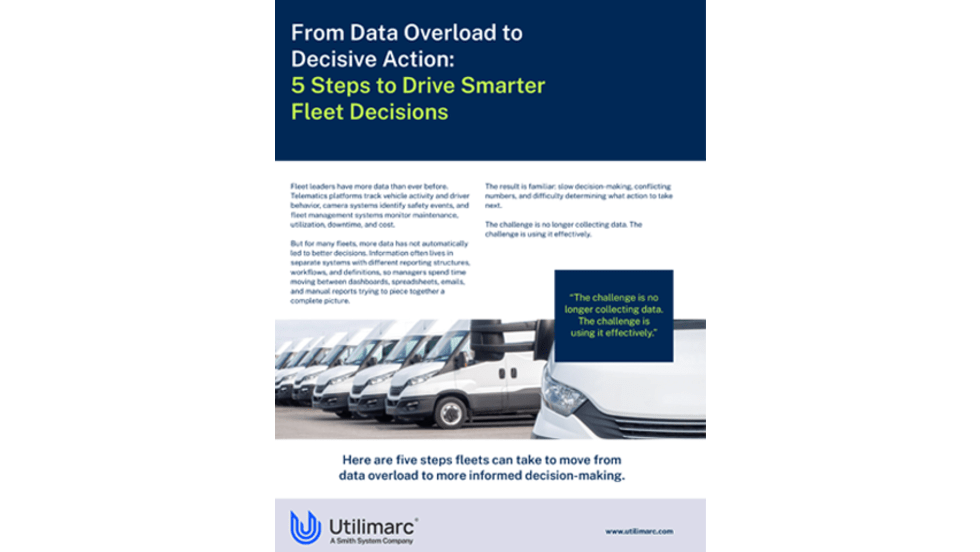
Turn Fleet Data Into Smarter Decisions
Fleet leaders have access to more operational data than ever, but disconnected systems and unclear metrics often slow decision-making instead of improving it. This whitepaper outlines five practical steps fleets can take to transform fragmented data into actionable insights that improve planning, safety, utilization, and long-term performance.
Read More →
Hybrids: Electrification Without the Challenges
For fleet managers, fuel is one of the biggest line items in the budget — and it's one hybrids can shrink without changing how your people work. Download the eBook to see the numbers, understand the technology, and get a step-by-step guide to making the switch.
Read More →
How NOV Uses Telematics to Improve Fleet Safety Across 160 Locations
James Victory of NOV discusses how the company manages fleet safety, maintenance, and telematics across more than 150 locations supporting oilfield operations throughout the U.S.
Read More →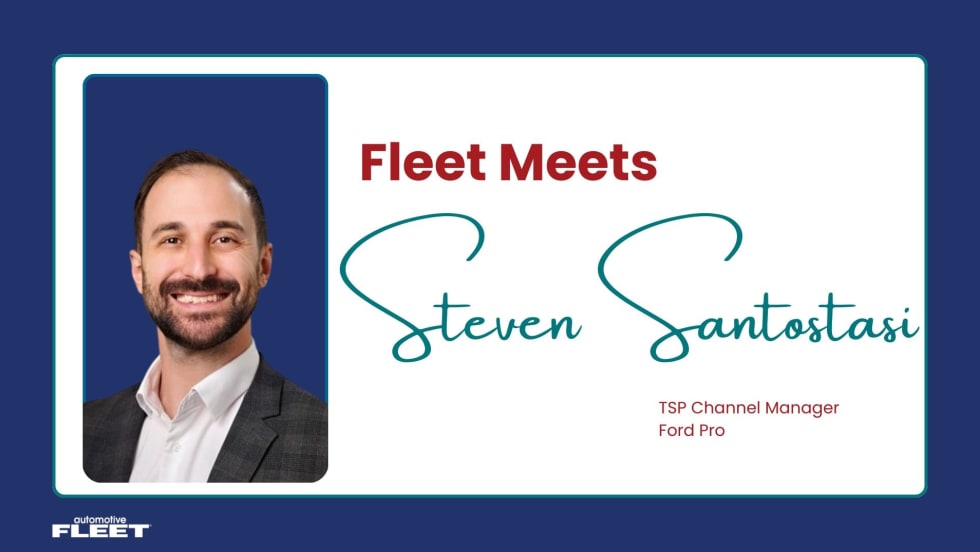
Fleet Meets: Steven Santostasi
This edition of the Fleet Meets series features Steven Santostasi, the current TSP channel manager for Ford Pro.
Read More →
Why Fleet Managers Are Replacing Departmental Vehicles with Shared Motor Pools
Departmentally assigned vehicles often create hidden costs through underutilization, poor visibility, and increased administrative burden. This white paper explores how shared motor pool strategies help fleets reduce costs, improve accountability, and optimize vehicle utilization.
Read More →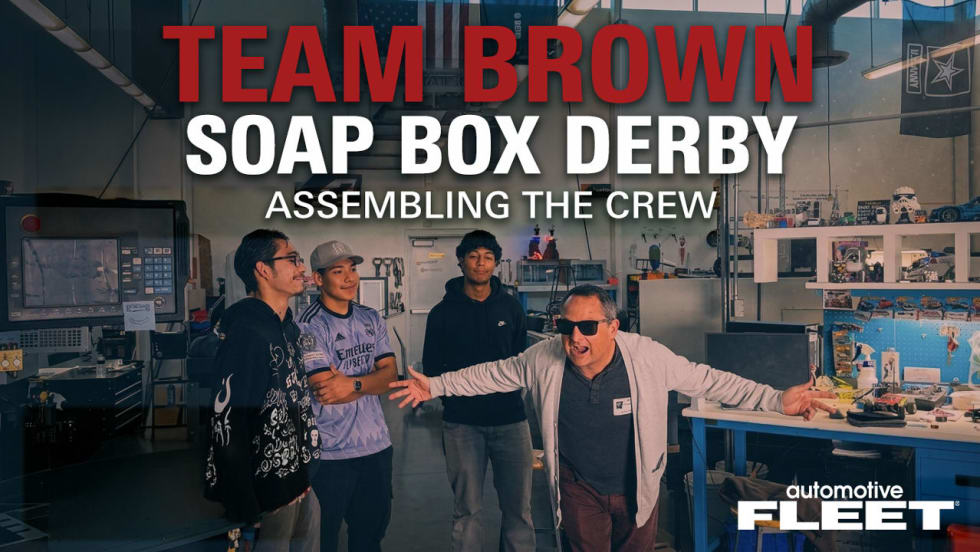
Soap Box Derby Challenge: Assembling the Crew
Meet Gabriel, Matthew, and Angel — the team helping bring this soap box derby build to life.
Read More →