




One Day in the Life of a Fleet Asset Manager
A day in a fleet asset manager’s busy life is enough to make your head spin. Staying organized and upbeat, enjoying what you do, and treating each day like a brand-new one are some keys to successfully running a fleet operation.

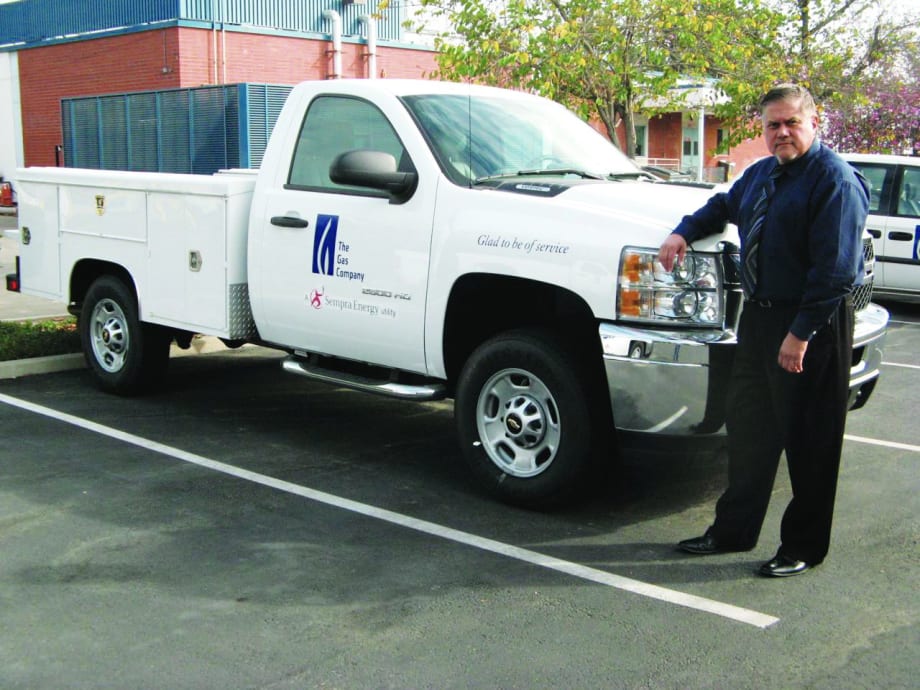
Tony Orta, fleet asset manager for SoCalGas Company, manages a fleet of 5,536 vehicles, comprised mostly of light- and medium-duty vehicles.
Tony Orta, fleet asset manager for SoCalGas Company, manages a fleet of 5,536 vehicles, comprised mostly of light- and medium-duty vehicles.
Typically, no work day is a duplicate of another, especially in fleet. Each day changes and has unique challenges, and fleet managers definitely stay busy. Automotive Fleet reached out to a fleet asset manager and charted his “typical” day.
Tony Orta, fleet asset manager for Southern California Gas (SoCalGas), who has more than 30 years of fleet experience, manages a department that oversees vehicle replacement, acquisition planning and execution, utilization and redeployment, remarketing, and maintenance operations quality assurance for environmental compliance and quality of work. He is also involved in influencing fleet policies and procedures, and actively supports SoCalGas’ national involvement in promoting the use of compressed natural gas (CNG) as a transportation fuel.
The 5,356-unit fleet mostly consists of light- and medium-duty vehicles (around 3,900 units), as well as automobiles, heavy-duty trucks, and equipment. The fleet operates 1,187 alternative-fuel vehicles, with 22 percent of the over-the-road fleet operating on natural gas (around 965 units).
Following is an overview of a typical day.
[PAGEBREAK]

Pre-Flight Check (Home Office) Morning review of day’s schedule
● Check e-mails for any overnight or early morning communiques requiring
immediate or early action or response. With colleagues on the East Coast, there are typically several e-mails waiting for Orta each morning, in addition to any carryover from the previous day.
People
● Arrive at office and meet with employees and department staff.
● Quick chat with employees in break room, get first cup of coffee, and power-up office computer.
Priorities
● Review previous day’s close of business (COB) list of priorities.
● Review e-mails for any new communiques and his own “quick hit” action items as well as items from staff members.
Key Project & Metrics Review
● Get key project updates from direct reports and review status reports.
● Review annual acquisition plan update with direct reports.
● Review key budget and operational metrics.
Supplier Management
● Quick review of automotive industry magazines and mark articles of interest for later reading. The magazines include Automotive Fleet, Green Fleet, Business Fleet, Government Fleet, Fleet Solutions, Automotive News, and AutoWeek.
● Quick review of online automotive industry information.
● Review and schedule meetings with key or developmental suppliers.
● Assess supplier portfolio balance with direct reports and supply management consultant to determine ongoing development strategy.
Meeting Preparation
● Gather data and develop documents or presentations as needed.
● Determine who on staff should represent department with internal clients or outside business contacts. There are currently 11 employees in Orta’s department, four of which are direct reports. Additionally, he interacts with various other personnel within the organization to influence and support the shaping of fleet strategies.
Ad-Hoc Activities
● Fleet costs and acquisition updates data requests.
● Fleet-related company initiative updates.
● Participate in meetings (as requested or needed) in internal/external fleet-related presentations/participation, including safety, fleet acquisitions, and alternative-fuel vehicles.
● Conference panelist and moderator.
● Participate as member of professional organizations.
● Assist with any “brush fires” requiring immediate response.
● Work with senior management.
Close of business
● Update “Pending Priorities” and “Action Required” lists for following day reference.
Advice from the Field
Everyone has an overwhelming day from time to time; one where nothing seems to go right, all you hear are complaints and problems, and there seems no end in sight.
“Fleet managers must continuously remind themselves that, in a service organization, demands are generally of an urgent nature from the internal clients’ perspective,” according to Tony Orta, fleet asset manager for SoCalGas Company. “It is important that clients are treated with respect, regardless of the demands, so that a level of mutual trust can be established. It is equally important that a fleet manager demonstrate an understanding and appreciation of their clients’ business. This understanding is valuable and allows a fleet manager to set the proper expectations with the client.”
Orta noted that he lives by three “Cs” in maintenance repair:
Complaint, Cause, and Correction. “However, the three ‘Cs’ needed to be an effective fleet manager are Communicate, Communicate, Communicate,” he said.
When Orta feels overwhelmed, he said he keeps a daily journal of short notes and events to use as a reference for prioritizing and reprioritizing throughout the day.
“What is also helpful is to integrate at least 30 minutes, at the conclusion of each day, into your schedule to create a ‘to-do list’ for use at the start of the following day,” he suggested. “This allows you to go home with a clear mind and less stress knowing that tomorrow is another day and promotes the work-life balance that we all want to have.”
More Operations

Avis Budget Group Deploys Neology Toll Management Technology Across Major Brands
Neology’s neoFleet platform will manage toll transactions and toll-authority operations for vehicles across Avis, Budget, Payless, Budget Truck and Zipcar.
Read More →
Fleet Personal-Use Charges Edge Higher in 2026
Nearly eight in 10 surveyed fleets allow personal use of company vehicles, while just over half of respondents report charging employees for the privilege.
Read More →
The Future of Fleet + What’s Changing Right Now | AF News Recap
Could developments overseas offer a preview of what’s coming for U.S. fleets? This week, we’re looking at the future of AI, autonomy, and electrification, plus Ford Pro’s new certified pre-owned program, smarter vehicle offboarding, and a new way for fleets to manage toll expenses.
Read More →
How to Handle Vehicle Offboarding
What do fleet managers need to do when a driver leaves?
Read More →
Fleet Manager’s Ultimate Playbook: Navigating the New Standard in OEM Connectivity
Rising operating costs, driver safety concerns, and unplanned downtime are putting unprecedented pressure on modern fleets. Discover how fleet managers use embedded OEM connectivity and real-time vehicle data to cut TCO, prevent downtime, and protect drivers without aftermarket telematics hardware.
Read More →
U.S. Bank Adds Verra Mobility Toll Management to Voyager Fleet Platform
The integration allows U.S. Bank Voyager fleet customers to manage toll payments and violations alongside fuel, EV charging and maintenance expenses.
Read More →
ADAS Prevents Crashes. But Repairs Cost More | AF News Recap
ADAS-equipped vehicles may crash less often, but they can cost more when they do. This week, we’re breaking down what that tradeoff means for fleets, plus Subaru’s first Forester Wilderness Hybrid, Nissan’s new e-POWER Rogue, and why Calstart has become Catalyst Mobility.
Read More →
Moventum Fleet Management Names Mark Iorillo Head of Sales
Iorillo brings nearly 20 years of fleet management and sales experience to the role, including previous positions at Element Fleet Management, CEI, Donlen and Ryder.
Read More →
Fleet Has a Talent Pipeline Problem. What Comes Next? | AF News Recap
Where will fleet’s next generation of leaders come from? This week, we’re looking at the industry’s talent pipeline, what certification can add to a fleet career, how to build an award-worthy track record, and the return of Automotive Fleet’s Personal Use Survey.
Read More →
Smith System Launches Driver Risk Management Program
Fleets have more driver data than ever, but identifying risky behavior doesn't necessarily correct it. Smith System's new Driver Risk Management program combines monitoring, training, and follow-up coaching to help fleets connect risk signals with driver intervention.
Read More →