




NGVs: The Right Choice, Right Now
Economic and technological advantages spur fleets’ renewed interest in vehicles that run on natural gas. Public-access CNG fueling locations also facilitate NGV market acceptance.
A U.S. Department of Energy (DOE) study reports that natural gas vehicles (NGVs) are getting a fresh look from public and private fleet managers searching for alternative-fuel vehicle options. The report tabulates vehicular natural gas fuel use and reviews the technological, environmental, economic, and government policy drivers behind NGV market development over the past 40 years. According to the study, NGVs displaced 200 million gasoline-gallon equivalents (GGE) of U.S. fuel consumption in 2005 and are well on the way to displacing 300 million GGE by year-end 2008.
Doug Horne, president of the Clean Vehicle Education Foundation (CVEF), the nonprofit organization that prepared the DOE report, says more than 5 million NGVs are in use worldwide, with about 100,000 in the U.S. NGVs’ biggest inroads in the country are in the transit sector, where nearly 10,000 buses powered by compressed natural gas (CNG) and liquefied natural gas (LNG) account for 12 percent of the market — and growing; one in five new transit buses now on order is specified for CNG or LNG.
Other favorable NGV applications include school buses, a variety of light-, medium- and heavy-duty vehicles in government fleets and airports, where shuttles, taxis, and assorted sedans and trucks are put to work everyday.
Burgeoning NGV markets include the refuse-recycling sector and commercial
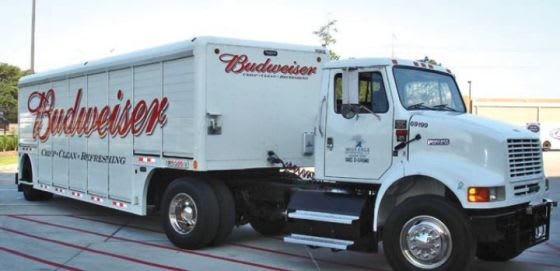
businesses with repetitive delivery routes such as overnight services, bakeries, snack food and beverage companies, and linen services.
“The pace of fleet acceptance of NGVs has really picked up quite a bit in the
last several years,” said Horne. He attributes the surge in interest to several factors: improvements to NGV and fueling technology, rising petroleum fuel prices, and the growing gap between cost of ownership of NGVs and equivalent gasoline- and diesel-powered vehicles.
Technology Advances Propel NGVs to Forefront
Lack of familiarity with gaseous fuel vehicle technology remains the biggest
hurdle to more widespread use of NGVs. According to Horne, the earliest vehicles and fueling systems had mixed success. “Today’s natural gas vehicles are generations beyond the pioneering technologies introduced in the late 1960s and improved throughout the ’70s, ’80s, and ’90s,” he said. “The industry learned from customers along the way to constantly make the technology better. Now, NGVs’ power, performance, and emissions are on par with or better than gas and diesel vehicles.”
Horne points to the transit, refuse, and school markets as proof that the technology has come of age. “Natural gas refuse trucks and buses have to meet ‘roll-out’ every morning or else,” he said. “Customers tell us they’ve seen tremendous progress in NGV technology in just the last five years. They express greater concern about the reliability and performance of the complicated new diesel technologies.” Natural gas is mostly methane, an extremely clean and energy-dense fuel with very few emissions. This attribute is important as tough emissions guidelines kick in on medium- and heavy-duty trucks and buses.
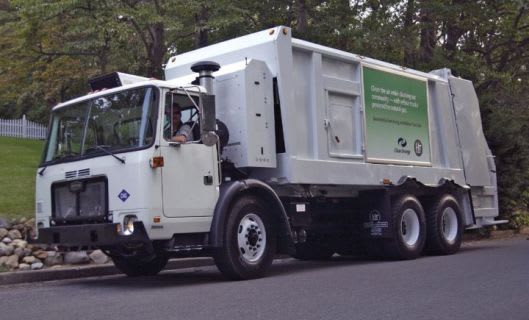
NGVs also produce far fewer greenhouse gases than either diesel or gasoline vehicles. Several heavy-duty natural gas engines are certified well below EPA’s 2007 emissions requirements. The Cummins Westport Inc. (CWI) 8.9L ISL-G, certified to EPA’s 2010 emission requirements, emits one-sixth the NOx of its closest “clean diesel” competitor, said Horne.
CWI’s ISL-G is available in a range of power configurations from 250-320 hp and 660-1000 lb.-ft. torque. It’s offered in low-cab-forward refuse chasses from Peterbilt, Autocar, Condor and Crane Carrier, school buses from Thomas Built and Blue Bird, and transit buses from several of the top suppliers. Sterling plans to introduce it in its “L” series truck in mid-2008. CWI’s 5.9L B-Gas Plus engine is available in a wide variety of vocational work trucks, sweepers, shuttles, and trolleys.
On the light-duty side, American Honda’s natural gas-powered Civic GX, first introduced in 1997, is recognized as the world’s cleanest internal combustion engine vehicle, emitting fewer emissions than even the most popular hybrids. The 2008 Civic GX features a 1.8L 113 hp four-cylinder 16-valve i-VTEC engine and 5-speed automatic transmission, delivering more performance than expected, while providing EPA-rated 36/24 mpg highway/city fuel economy.
Additional EPA- and CARB-certified engines are available for GM, Ford, Isuzu, Workhorse, and International vehicle platforms from small volume manufacturers (SVMs) via engine retrofit or replacement programs. Horne notes that, unlike the unregulated “kits” that permeated the market in the past, these SVMs are required to submit engines and vehicles to the same strict emissions certification process as the OEMs. Engine and fuel system retrofits or replacements are performed by the manufacturer or their qualified installer at time of vehicle purchase or afterward. A complete list of full system retrofits or replacements is available at the Clean Vehicle Education Foundation’s Web site www.cleanvehicle.org.
Economics Justify Move to NGVs
“NGVs have a compelling economic advantage,” said Richard Kolodziej, president of NGVAmerica, a Washington, D.C.-based nonprofit that advocates greater use of NGVs. While previous NGV market growth was mainly driven by local governments, the increased worldwide oil demand pushing fuel prices has prompted private fleets to seriously consider NGV options.
Federal tax incentives for vehicles, fueling equipment, and natural gas fuel use, including measures that allow tax exempt entities to capture their value, have further improved NGVs’ economic advantage, said Kolodziej. These include income tax credits from $2,500 to $32,000 for dedicated NGVs, up to $30,000 for fueling equipment, and a motor fuel excise tax credit of 50 cents/GGE for fuel sellers (or users who own and dispense their own NGV fuel). Additional information about these tax credits is available at www.ngvamerica.org.
“Comparable performance, fewer emissions, lower lifecycle cost — While NGVs aren’t a silver bullet for everyone,” said Kolodziej, “for a lot of fleets, they’re the right choice, right now.”
More Green Fleet

Merchants Fleet Reports 290M EV Miles as Fleets Navigate Changing Electrification Market
From millions in operating savings to hundreds of millions of EV miles, Merchants Fleet’s latest report reveals what’s working and what’s changing in fleet electrification.
Read More →
The EV Breakdown Nobody's Talking About: Why Most Electric Vehicle Roadside Calls Aren't Mechanical Failures
Here's why EV breakdowns are widely misunderstood.
Read More →
ChargePoint Now Available in Energy Pass
ChargePoint and additional planned charging network integrations were added to GM's Energy Pass.
Read More →

First Look: Slate Auto's Electric Fleet Pickup
Could an affordable, modular EV pickup make electrification more practical for fleets?
Read More →
Slate Debuts Colorful, Unique EV Models
A recent media and client event, studded with electric vehicles dressed up on platforms, planted a new position for the manufacturer in the wider EV market. Fleets will find cost-saving advantages.
Read More →
Slate Electric SUV, Pickup Switchable Model Aims For Light-Duty Fleets
Everything about this EV is counterintuitive and understated, making it stand out from the crowd.
Read More →
Inspiration Mobility Acquires Key Electrada Assets
Inspiration Mobility Group has acquired select assets of Electrada, adding the fleet electrification provider's team, technology, and charging infrastructure development capabilities to its energy management business.
Read More →
Turning Connected Vehicle Data Into Decisions That Matter
Fleet leaders have more data than ever, but turning that data into clear, actionable decisions remains a challenge. This white paper shows how leading organizations are using connected vehicle data to improve safety, reduce costs, and optimize fleet performance. Learn how to turn insight into action across your fleet.
Read More →
Are You Tracking Your Fleet's True Total Cost of Ownership?
Bobit Business Media surveyed 190 fleet professionals and found that while most fleets are tracking costs, fragmented systems and data gaps are keeping true TCO visibility out of reach. With rising pressure to control spend in an increasingly volatile environment, the gap between what fleets think they know and what the data actually shows is wider than you might expect. See how your peers are managing costs today and where the industry still has room to improve.
Read More →