





Related Photos: 2017 E-Class Safety Tech
Mercedes-Benz Shows Fleet Managers E-Class Safety Tech
Mercedes-Benz hosted Southern California fleet managers at its new Vehicle Preparation Center for a demonstration of its redesigned 2017 E-Class.
September 12, 2016
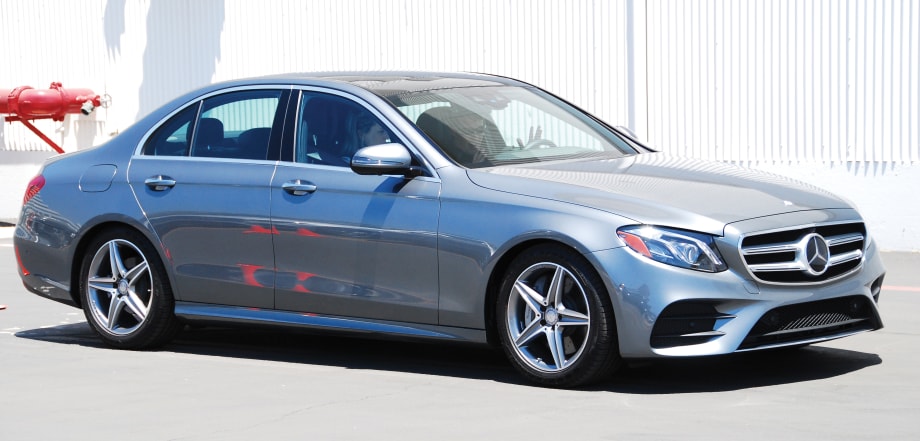
Photo by Chris Wolski.
3 min to read
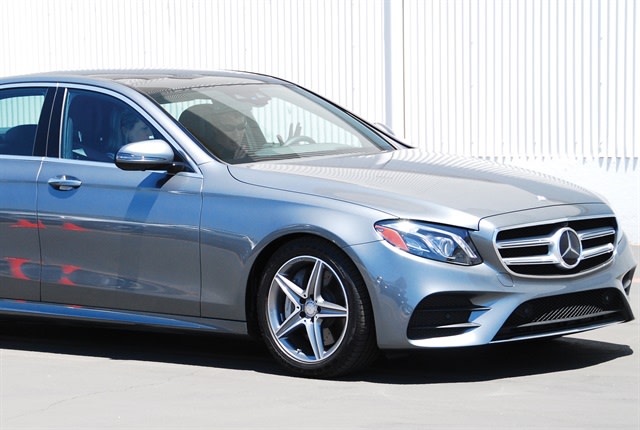
Photo by Chris Wolski.
Mercedes-Benz introduced its next-generation 2017 E-Class mid-size luxury sedan to Southern California fleet managers at its Vehicle Preparation Center — a cavernous former aircraft assembly hanger that processes in-bound vehicles before they reach local dealers.
The luxury automaker has begun distributing 2017 E-Class sedans to dealers from a wholesale operation that occupies 1.1 million square feet of space in Long Beach, Calif., at Douglas Park, a commercial campus once home to the Douglas Aircraft Co.
Douglas used the hanger to build warplanes starting in 1941, and Boeing later built 717 passenger jets in the space. Mercedes-Benz now stages hundreds of vehicles that undergo quality checks and minor modifications or repairs before being wholesaled to dealers.
Vehicles arrive at the wholesale center from the Port of Long Beach after arriving from Germany. Nearly 5,000 Mercedes-Benz vehicles move through the center per month, which equates to about 300 per day.
Arriving vehicles are staged at the center’s expansive parking lot and assigned one of four priority levels. A Priority One vehicle has been ordered by an end-point customer, and will be processed the most quickly. A Priority Two vehicle will be added to dealer stock. A Priority Three vehicle is considered stock. A Priority Four vehicle has the lowest priority.
The center will add rear spoilers, illuminated stars, chrome door handles, and other trim pieces as the final touches. Any door dings or dents will be fixed. The center also has a paint shop, so workers can perform paint matching if needed.
The center also includes Mercedes-Benz USA’s Western Region Office that supports 84 dealerships in 12 states and the Mercedes-Benz Academy that provides training to dealers and employees.
Fleet managers arrived July 13 for a tour of the center. Following the tour, Mercedes-Benz provided a safety demonstration of its 2017 E-Class mid-size sedan, which adds safety technology as it enters its fifth generation.
For 2017, the E-Class sheds about 150 pounds and adds an array of driver-assist features such as radar-guided cruise control, pedestrian detection, and automatic emergency braking. The new Drive Pilot suite includes steering pilot, speed limit pilot, active lane change assist, and active emergency stop assist.
Fleet managers participated in several demonstrations of the car’s capabilities with driving trainers. In one test, the vehicle headed toward a fixed barrier at 18 mph. The Active Emergency Stop Assist feature brought the vehicle to a halt before striking the barrier. In another demo, the vehicle’s Parking Pilot parking assist feature showed how the vehicle can back into a parallel or perpendicular stall while the diver takes his or her hands off the wheel.
Fleet managers were given an opportunity to test drive the entire Mercedes-Benz lineup for 2017, including the GLS-Class, GLE-Class, GLA-Class, S-Class, E-Class, C-Class, CLA-Class, smart car, and Metris van.
Mercedes-Benz also gave fleet managers a presentation about its move into the realm of plug-in hybrids. The automaker already sells a PHEV S-Class, the 2016 S550e, and a a four-wheel drive SUV, the 2016 GLE 550e 4MATIC. The automaker is also working on a PHEV C-Class for later in 2016 known as the C 350e, as well as a PHEV GLC in 2017, the GLC 350e 4MATIC.
The July 13 event was folded into the July NAFA Pacific Southwest chapter meeting, where NAFA CEO Phil Russo spoke about possible changes to the organization’s leadership path.
Subscribe to Our Newsletter
More Safety
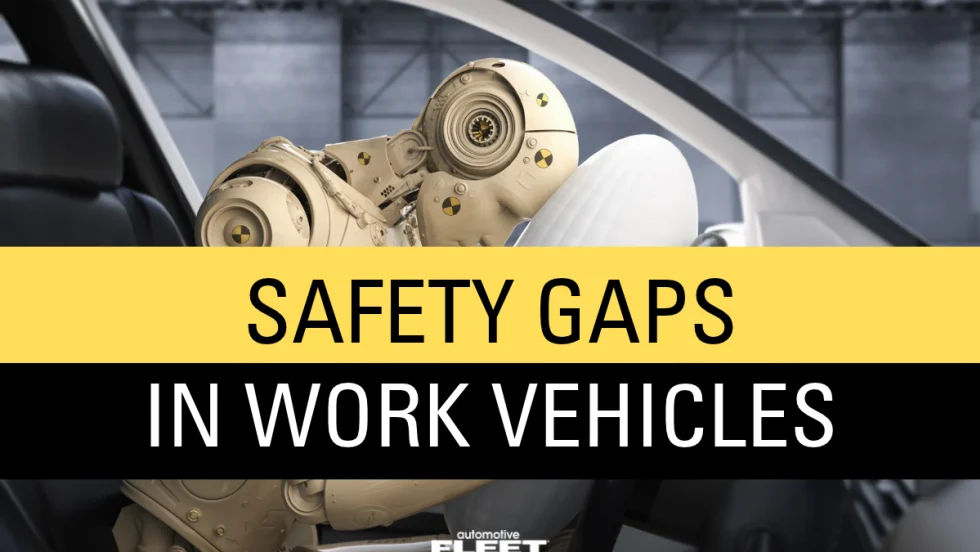
IIHS Crash Avoidance Tests Reveal Safety Gaps in Cargo Vans and Work Trucks
New crash-avoidance ratings from the Insurance Institute for Highway Safety reveal inconsistent performance among commercial vehicles, with several popular cargo vans and heavy-duty pickups struggling to avoid collisions with other vehicles and pedestrians.
Read More →
What’s Next for Fleet? Safety, AI & Industry Recognition | AF News Recap
Could your company's culture be encouraging distracted driving? This week, we're exploring how workplace expectations affect driver safety, what AI, EVs, and autonomous vehicles could mean for the future of fleet management, and how fleet professionals can strengthen their award nominations.
Read More →
Does Your Fleet's Culture Encourage Distracted Driving?
What happens when the people responsible for enforcing safety rules are the ones setting the wrong example? The answer may reveal why some of the biggest risks to fleet drivers have little to do with what's written in the employee handbook.
Read More →
Sponsored•October 1, 2026
Fleet Manager’s Ultimate Playbook: Navigating the New Standard in OEM Connectivity
Rising operating costs, driver safety concerns, and unplanned downtime are putting unprecedented pressure on modern fleets. Discover how fleet managers use embedded OEM connectivity and real-time vehicle data to cut TCO, prevent downtime, and protect drivers without aftermarket telematics hardware.
Read More →
From Driver Well-Being to EV Charging | AF News Recap
Mental health belongs in the fleet safety conversation. This week, we’re looking at five ways fleets can support employee well-being before a crisis, plus Holman’s expansion in Mexico, new one-day Fleet Forward passes, and why EV charging demand is outpacing infrastructure growth.
Read More →
Nexar-Nauto Merger Aims to Give Fleets Better Safety Intelligence Through Larger Driving Dataset
Stefan Heck tells Automotive Fleet that combining more than 10 billion miles of driving history with Nexar's AI models will give fleets deeper insights into driver risk and roadway conditions than either company could provide independently.
Read More →
Don't Wait for a Crisis: 5 Ways to Build Mental Health Into Your Fleet Safety Program
For Suicide Prevention Month, fleet and safety leaders have an opportunity to put mental health where it belongs: at the center of workplace safety.
Read More →
How Camera Data Can Strengthen a Fleet’s Insurance Renewal
Insights from a commercial insurance carrier and a broker show how fleets can turn video telematic data, driver coaching, and improved claims results into a stronger case at insurance renewal.
Read More →
The Safest Fleets Aren’t the Ones with the Most Technology
You’ve made the telematics investment. Here’s how to capture the other half of its value and build the safest fleet on the road.
Read More →
Sponsored•August 7, 2026
Hidden in Plain Sight: Fleet Compliance Risks
Fleet compliance isn't just about having policies — it's about consistently enforcing them. This practical guide reveals six hidden compliance risks common in public sector and shared fleet operations and outlines proven strategies to improve visibility, accountability, and audit readiness
Read More →