




Making the Business Case for Alternative-Energy Vehicles
Fleet managers face a dilemma in justifying the higher acquisition cost for electric-powered vehicles. A new TCO tool from Dow Kokam can help spotlight alternative-energy's bottom-line benefits.

Inbar
It is a vexing quandary for any fleet manager considering alternative-energy powered vehicles. How does one make a solid business case to support the higher acquisition cost of these advanced-technology vehicles, particularly with a fixed fleet capital budget?
Electric-powered vehicles can answer the long-term certainty of rising and continually volatile fuel prices as well as meet growing corporate sustainability concerns. Yet, today’s fleet manager must contend with the dilemma, “Does embracing these new technologies mean purchasing fewer replacement vehicles each cycle?”
The staff at Midland, Mich.-headquartered Dow Kokam have been working on resolving the conundrum. The company, which develop
s and manufactures technologically advanced battery solutions to power the next generation of plug-in hybrid (PHEVs) and battery-electric vehicles (BEVs), has created a flexible, easy-to-use tool to help calculate total cost of ownership (TCO) for these vehicles, according to Mira Inbar, senior marketing manager for commercial business.
Established in 2009, Dow Kokam is owned by the Dow Chemical Company, TK Advanced Battery LLC, and the French firm Groupe Industriel Marcel Dassault. Dow Kokam partners with OEMs to integrate its lightweight lithium-ion battery systems into light-, medium-, and heavy-duty vehicles and trucks, and also works with commercial, municipal, and utility fleets to determine the economic feasibility of operating the alt-powered vehicles.
Considering Hard & Soft Costs
An accurate TCO calculation accounts for a fleet vehicle’s hard and soft costs, as well as the specific details of its work cycle, according to Inbar. Hard costs include acquisition price, replacement value, fuel, depreciation, and maintenance. Soft costs cover factors more difficult to quantify, such as productivity, down time, safety, and efficiency.
“There is no one-size-fits-all technology for every fleet that offers payback,” Inbar said. “The technology must fit the vehicle’s work cycle, and the most effective TCO model accommodates all work cycle details.” These details include such factors as:
● Vehicle function.
● Hours of operation.
● Route terrain and environment.
● Cargo load.
● Type of route: how often the vehicle
stops and starts.
● Idling time.
● Number of daily returns to the
warehouse, service center, depot, etc.
Identifying Payback Point
A “robust, adaptable-ready” tool that calculates lifecycle costs upfront and across vehicle types and functions, the Dow Kokam TCO model identifies the break-even point between conventional and advanced vehicle-power technologies, according to Inbar.
“All fleets want to manage their costs effectively. They want to be able to define the vehicle payback on lifecycle costs,” she added. The lack of accurate data on advanced-power technologies has hampered good business decision making regarding their implementation in fleets.
Working with an outside benchmarking data company, Dow Kokam developed its TCO model over six months, collecting and analyzing data across 18 vehicle types in all fuel-power categories — gasoline, diesel, PHEVs, and BEVs.
In addition, input from 10 of the top U.S. fleets was sought to ensure the TCO model covered all industry and utilization perspectives. Finally, Dow Kokam also established a Fleet Advisory Council to “weigh in on the model development,” Inbar said.
She also noted that the model is continually refined as more data becomes available from increased numbers of electric-powered vehicles on the road.
The Dow Kokam TCO model categorizes 10 fleet types (including commercial, delivery, beverage, and refuse) and lists 18 vehicle types, from four-door sedans and light-duty vehicles to medium-duty delivery vans and refuse trucks.
“We work with individual fleets to go through their particular vehicle composition. Using our model for every type of fleet vehicle and work cycle, we find the TCO to answer the question, ‘At what point do the operating cost and the acquisition cost break even? ’ ” Inbar explained.
Again, she emphasized, no technology will provide payback unless it matches the duty cycle as closely as possible. [PAGEBREAK]
Creating the Business Case
In identifying break-even points, the Dow Kokam TCO model helps spotlight the hard- and soft-cost considerations that can influence the business case for electric-powered vehicles across multiple industries.
Under hard -ost savings, in addition to reduced fuel costs — or no fuel costs with an all-electric vehicle — a battery-powered vehicle requires less maintenance. Electric-powered vehicles require no engine repair or oil changes. Reducing friction on vehicle brakes, the battery-power system’s regenerative braking technology increases brake life two-fold, Inbar pointed out. Depending on fleet size, maintenance cost savings could amount to thousands or millions of dollars annually. In addition, she noted, many fleets are considering retaining their battery-powered or battery-electric vehicles longer, thus improving payback (from five to seven years, for example) from prior experiences.
As important as the hard cost reductions are the soft-cost savings offered by battery-powered technology. Productivity increases as vehicles stay on the road with fewer maintenance visits. Depending on the vehicle and technology, payload capability may improve as well. The instantly available power means faster starting and stopping times.
An electric vehicle’s quiet operation also has had unexpected advantages. “We worked with fleets that have found they can work at night, due to the addition of battery-powered vehicles with their quiet noise levels. And, there’s the benefit of no-noise levels for customers, employees, and the nearby environment,” Inbar said.
However, she cautioned, one critical element in an accurate TCO for electric vehicles is rightsizing the battery to the duty cycle. “Batteries are sized and sold according to kilowatt hours. It’s important to optimize the energy provided by the battery to the vehicle work cycle,” she said.
Bringing Costs Down
As electric vehicles become more widely used, the economies of scale will help reduce their purchase prices. However, Inbar said, collaboration across the value chain also can help facilitate lower costs.
Advanced-technology battery manufacturers such as Dow Kokam “know battery costs need to go down, and we’re working on that. But, other elements such as engineering factors at OEMs, design integration issues, and materials can all be worked out” to bring prices down, she added.
In the meantime, tools like Dow Kokam’s TCO model can help fleet managers make the long-term business case to incorporate alternative-fuel vehicles in their fleets.
More Green Fleet

Merchants Fleet Reports 290M EV Miles as Fleets Navigate Changing Electrification Market
From millions in operating savings to hundreds of millions of EV miles, Merchants Fleet’s latest report reveals what’s working and what’s changing in fleet electrification.
Read More →
The EV Breakdown Nobody's Talking About: Why Most Electric Vehicle Roadside Calls Aren't Mechanical Failures
Here's why EV breakdowns are widely misunderstood.
Read More →
ChargePoint Now Available in Energy Pass
ChargePoint and additional planned charging network integrations were added to GM's Energy Pass.
Read More →

First Look: Slate Auto's Electric Fleet Pickup
Could an affordable, modular EV pickup make electrification more practical for fleets?
Read More →
Slate Debuts Colorful, Unique EV Models
A recent media and client event, studded with electric vehicles dressed up on platforms, planted a new position for the manufacturer in the wider EV market. Fleets will find cost-saving advantages.
Read More →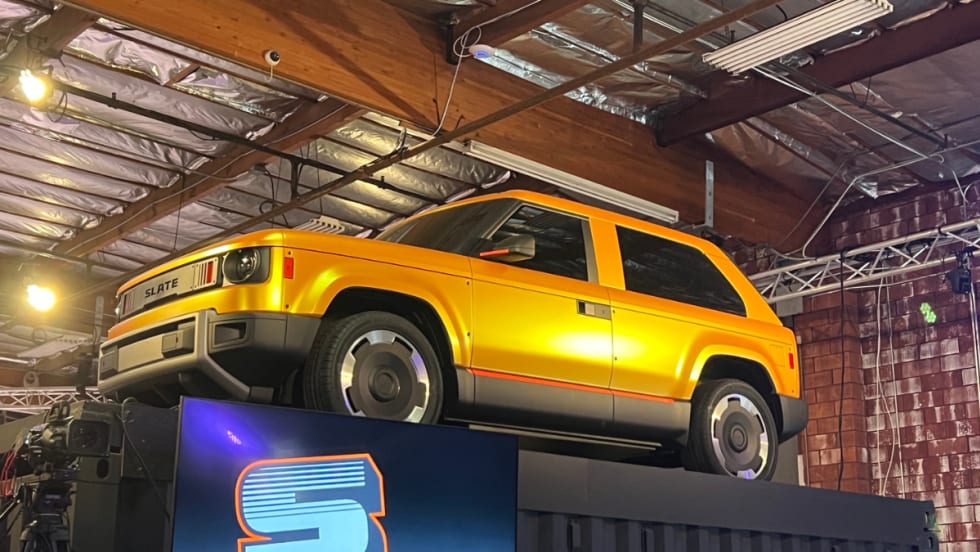
Slate Electric SUV, Pickup Switchable Model Aims For Light-Duty Fleets
Everything about this EV is counterintuitive and understated, making it stand out from the crowd.
Read More →
Inspiration Mobility Acquires Key Electrada Assets
Inspiration Mobility Group has acquired select assets of Electrada, adding the fleet electrification provider's team, technology, and charging infrastructure development capabilities to its energy management business.
Read More →
Turning Connected Vehicle Data Into Decisions That Matter
Fleet leaders have more data than ever, but turning that data into clear, actionable decisions remains a challenge. This white paper shows how leading organizations are using connected vehicle data to improve safety, reduce costs, and optimize fleet performance. Learn how to turn insight into action across your fleet.
Read More →
Are You Tracking Your Fleet's True Total Cost of Ownership?
Bobit Business Media surveyed 190 fleet professionals and found that while most fleets are tracking costs, fragmented systems and data gaps are keeping true TCO visibility out of reach. With rising pressure to control spend in an increasingly volatile environment, the gap between what fleets think they know and what the data actually shows is wider than you might expect. See how your peers are managing costs today and where the industry still has room to improve.
Read More →