





Part One: Major Fleet Milestones: 1938 - 1959
Major Fleet Milestones: 2000 - 2009
The sixth edition of the Top Fleet milestones covers events that occurred between 2000 to 2009.
March 16, 2021
4 min to read
As Automotive Fleet celebrates its 60th anniversary, we look back on the major milestones that have influenced fleet management. The sixth edition of the Top Fleet milestones covers events that occurred between 2000 to 2009.
Below is a sampling of more than 60 key milestones that helped shape the fleet industry in its more than 80 years of existence.
2000
Telematics/GPS Fleet Applications: The explosion in commercial GPS applications began in 2000, when President Bill Clinton made a more precise GPS signal available for civilian use. Prior to this, the U.S. government set up a “selective availability” block to prevent military use of GPS by potential adversaries. Clinton’s order increased the accuracy of commercial satellite navigation receivers from 100 yards to 10 yards.
Among the early adopters of telematics were fleets such as ServiceMaster, GEICO, Ryder, KinderCare, Walmart, UPS, and long-haul trucking fleets. These fleets use telematics devices to continuously measure fuel consumption and fleet utilization, plus monitor vehicles and performance. Currently, more than 3.6 million GPS/wireless devices are in service, managing fleet vehicles, mobile workers, trailers, heavy equipment, and other assets.
2000
Online Vehicle Remarketing: As Web-based services grew, startup companies began offering online remarketing opportunities for remarketers. GM, with its SmartAuction product launched in 2000, and Honda and Toyota, partnering with third-party online remarketers, helped pioneer online resale of vehicles. Today, the majority of fleet management companies have developed in-house online vehicle marketing programs or have partnered with third-party vendors.
2001
Introduction of Hybrids in Fleet: As corporate fleet sustainability programs gained traction in large corporations, some fleet managers gravitated to hybrid models as a way to reduce a company’s carbon footprint and decrease fuel consumption in urban fleet applications.
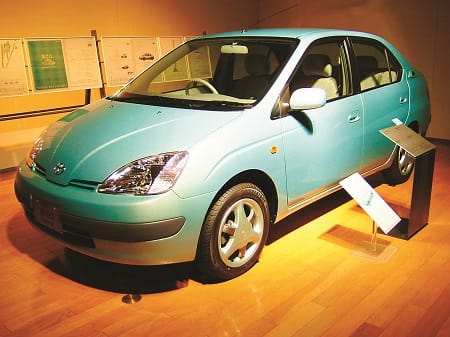
1997 Toyota Prius
Companies, especially pharmaceuticals and those with strong sustainability programs such as Johnson & Johnson, Novartis, PepsiCo/FritoLay, etc., began buying hybrids in large volumes. The Hybrid Truck User Forum (HTUF) is actively working to develop hybrid trucks for use in fleet applications.
In 2001, the AF Fact Book first listed hybrid vehicle registration data in 2001, showing only 184 registered hybrid fleet cars. As of the 2010 AF Fact Book, more than 29,000 hybrid fleet cars were registered. Although still representing a small percentage of total commercial fleet registrations, hybrids represent a long-term trend that will see their volume increase.
2007
Mobile Fleet Devices: The emergence of hand-held or mobile devices as fleet management tools greatly impacted fleet management. In a very short period of time, mobile applications have become an important tool in a fleet manager’s toolbox to manage their fleet.

In a very short period of time, mobile applications have become an important tool in a fleet manager’s toolbox to manage their fleet.
Applications for mobile devices increased the productivity of fleet managers. Mobile applications maximized a fleet manager’s efficiency by not keeping them tethered to a desk. Mobile applications allow fleet managers to access FMC databases to authorize service repairs, approve orders, or receive exceptions and alerts, etc., even when they are away from their office.
2007
Migration to Four-Cylinder Engines by Commercial Fleets: The shift to vehicles with four-cylinder engines became noticeable in 2007 as gas prices climbed to $4 per gallon. Switching to four-cylinder engines allowed a fleet comprised primarily of automobiles to maintain the same size vehicle necessary to meet its fleet application without downsizing to a smaller model.
Although the main driving factor is reduced fuel spend, some fleets stated they switched to smaller engines to reduce vehicle emissions to meet corporate green fleet initiatives. Other benefits cited include the decrease in cap cost and high demand in the wholesale resale market. In addition, powertrain technology has evolved to where today’s four-cylinder engines provide better performance than the six-cylinder engines of yesterday.
2009
Chapter 11 Bankruptcies of Chrysler & GM: In April 2009, Chrysler filed for Chapter 11 reorganization and announced a plan to partner with Fiat. GM followed by filing for Chapter 11 reorganization in June 2009, marking the largest bankruptcy filing of any U.S. industrial company. GM discontinued the Saturn, Pontiac, and Hummer brands and sold Saab.
Fleets were unable to take delivery of ordered vehicles from these OEMs during this period since assembly plants were closed, which prompted some fleets to look at non-traditional manufacturers.
The biggest impact to fleet has been the shift by OEMs to building vehicles to demand versus building to capacity. This has also led to decreased dealer inventory, making it difficult for fleets to acquire out-of-stock units.
Subscribe to Our Newsletter
More Operations

Fleet Has a Talent Pipeline Problem. What Comes Next? | AF News Recap
Where will fleet’s next generation of leaders come from? This week, we’re looking at the industry’s talent pipeline, what certification can add to a fleet career, how to build an award-worthy track record, and the return of Automotive Fleet’s Personal Use Survey.
Read More →
Smith System Launches Driver Risk Management Program
Fleets have more driver data than ever, but identifying risky behavior doesn't necessarily correct it. Smith System's new Driver Risk Management program combines monitoring, training, and follow-up coaching to help fleets connect risk signals with driver intervention.
Read More →
Automotive Fleet Opens 2026 Personal Use Survey for Commercial Fleet Managers
Less than two weeks left! Commercial and corporate fleet managers are invited to share how their organizations handle company vehicle personal-use policies, charges, and driver eligibility.
Read More →
From AI Prompts to AI-Generated Safety Songs | AF News Recap
Can better prompts make AI more useful for fleet managers? This week, we’re breaking down smarter fleet analysis, an AI-assisted experiment that turned safety training into music, and what happened to fuel prices in August.
Read More →
How to Write Better AI Prompts for Fleet Analysis
Include these six elements in your fleet prompts to generate more relevant analysis and accurate answers.
Read More →
Fleet Meets: Eric Kilgore
This edition of the Fleet Meets series features one of the industry's best leaders driving multi-market and national operations.
Read More →
Why Reactive Fleet Management Is Becoming Too Expensive to Sustain
Research highlights a growing need for proactive management strategies to address rising costs in fleet operations effectively.
Read More →
Sponsored•August 12, 2026
What Your Fleet KPIs Aren’t Telling You
Tracking fleet metrics is only useful when the data leads to better decisions. This guide helps fleet leaders assess cost, utilization, and downtime more accurately, identify performance gaps, and prioritize the actions that can improve operational results.
Read More →
Sponsored•August 7, 2026
Hidden in Plain Sight: Fleet Compliance Risks
Fleet compliance isn't just about having policies — it's about consistently enforcing them. This practical guide reveals six hidden compliance risks common in public sector and shared fleet operations and outlines proven strategies to improve visibility, accountability, and audit readiness
Read More →
Turning Fleet Payment Data into Executive Insights
Does data alone drive results in operations?
Read More →