





Related: Major Fleet Milestones: 1938 - 1959
Major Fleet Milestones: 1960 - 1969
As Automotive Fleet celebrates its 60th anniversary, we look back on the major milestones that have influenced fleet management.
March 9, 2021
3 min to read
As Automotive Fleet celebrates its 60th anniversary, we look back on the major milestones that have influenced fleet management. This second edition of the Top Fleet milestones covers events that occurred between 1960 to 1969.
Below is a sampling of more than 60 key milestones that helped shape the fleet industry in its more than 80 years of existence.
1960s
Electric windows were originally only available on luxury models, and it was usually an optional extra on most cars. Eventually, using a crank to roll down car windows became an antiquated feature.
1961
Buick’s Entry into Fleet Market — The First Non-Chevrolet, Ford, Plymouth Brand: In the early days of fleet, the market was dominated by three brands: Chevrolet, Ford, and Plymouth. The 1961 Buick Skylark was the first non-Chevrolet, Ford, or Plymouth vehicle to enter the fleet market. Following Buick Division’s entry into the fleet market, other divisions followed suit, which helped diversify fleet selectors.
In the 1990s, OEMs began consolidating their fleet operations. GM consolidated its separate divisional fleet departments into a consolidated organization known as GM Fleet & Commercial Operations. In addition, Ford Motor Company consolidated its fleet operations into the Ford North American Fleet, Lease & Remarketing Operations (NAFLRO).
1961
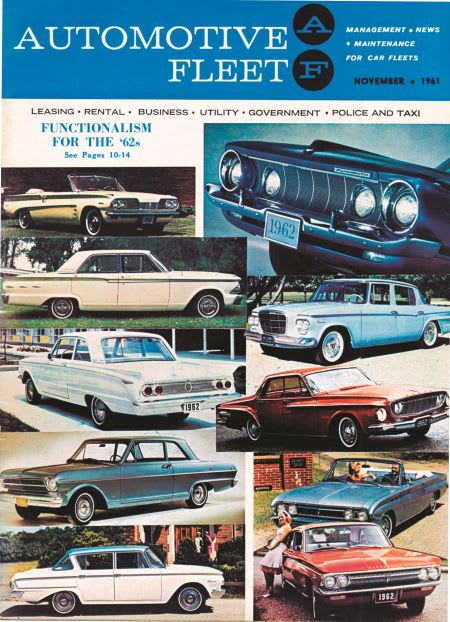
Automotive Fleet Magazine Created: Many events have affected the commercial fleet industry, one of which was Automotive Fleet’s founding. In 1961, Ed Bobit founded the magazine in Glenview, Ill., establishing Bobit Publishing (now Bobit Business Media). Thanks to a timely insert from Ford in the premiere issue, Bobit had sufficient funds to produce the second issue, and the rest is history.
AF published its first Fact Book in 1967. The company moved to California in 1977. Since AF’s inception, a suite of fleet-related sister magazines have emerged: Fleet Financials, Government Fleet, Work Truck, Business Fleet, Auto Rental News, Business Driver, and Vehicle Remarketing.
1961
Ford’s Iconic E-Series Van Debuts: The first generation of the Ford Econoline (later named the E-Series) was introduced for the 1961 model year as a cargo van, pickup truck, and a passenger van, and served as the replacement for the Ford F-series panel van.
The Econoline was later renamed the E-Series in 1999.
From 1980 to 2014, the model line was the best-selling full-size van in the United States with a nearly 80% share of its market segment. With a 60-year production run, the E-Series is second only to the Ford F-Series in longevity of models produced by Ford.
1969
Founding of AFLA: The Automotive Fleet & Leasing Association (AFLA) was established in 1969 in Toronto, with President M.C. “Bud” Morrison at the helm. The founding members were Ed Bobit of Automotive Fleet magazine, Don Fenton of Tom Edwards Chevrolet, Bob McGarvey of Emerald Chevrolet, Jack Rosenbaum of Park Circle Chevrolet, Mark Rosenstock of Dale Oldsmobile, Earl Stewart of Ruckle Pontiac, and Woody Woodard of Al Piemonte Ford.
At the time of AFLA’s founding, the industry had no networking forum for fleet buyers and sellers to exchange information or education. Also, at this time, NAFA did not allow its affiliate members to attend its educational seminars at its annual conference.
1969
Intermittent windshield wipers were introduced at the end of the 60s. Until this point, windscreen wipers had only had one speed. However, Ford changed this to adjust the speed.
Subscribe to Our Newsletter
More Operations

How Fleets Can Recruit and Train Veterans for Technician Roles
Here's how the technician shortage has affected uptime for fleets, and what to do about it.
Read More →
Avis Budget Group Deploys Neology Toll Management Technology Across Major Brands
Neology’s neoFleet platform will manage toll transactions and toll-authority operations for vehicles across Avis, Budget, Payless, Budget Truck and Zipcar.
Read More →
Fleet Personal-Use Charges Edge Higher in 2026
Nearly eight in 10 surveyed fleets allow personal use of company vehicles, while just over half of respondents report charging employees for the privilege.
Read More →
The Future of Fleet + What’s Changing Right Now | AF News Recap
Could developments overseas offer a preview of what’s coming for U.S. fleets? This week, we’re looking at the future of AI, autonomy, and electrification, plus Ford Pro’s new certified pre-owned program, smarter vehicle offboarding, and a new way for fleets to manage toll expenses.
Read More →
How to Handle Vehicle Offboarding
What do fleet managers need to do when a driver leaves?
Read More →
Sponsored•October 1, 2026
Fleet Manager’s Ultimate Playbook: Navigating the New Standard in OEM Connectivity
Rising operating costs, driver safety concerns, and unplanned downtime are putting unprecedented pressure on modern fleets. Discover how fleet managers use embedded OEM connectivity and real-time vehicle data to cut TCO, prevent downtime, and protect drivers without aftermarket telematics hardware.
Read More →
U.S. Bank Adds Verra Mobility Toll Management to Voyager Fleet Platform
The integration allows U.S. Bank Voyager fleet customers to manage toll payments and violations alongside fuel, EV charging and maintenance expenses.
Read More →
ADAS Prevents Crashes. But Repairs Cost More | AF News Recap
ADAS-equipped vehicles may crash less often, but they can cost more when they do. This week, we’re breaking down what that tradeoff means for fleets, plus Subaru’s first Forester Wilderness Hybrid, Nissan’s new e-POWER Rogue, and why Calstart has become Catalyst Mobility.
Read More →
Moventum Fleet Management Names Mark Iorillo Head of Sales
Iorillo brings nearly 20 years of fleet management and sales experience to the role, including previous positions at Element Fleet Management, CEI, Donlen and Ryder.
Read More →
Fleet Has a Talent Pipeline Problem. What Comes Next? | AF News Recap
Where will fleet’s next generation of leaders come from? This week, we’re looking at the industry’s talent pipeline, what certification can add to a fleet career, how to build an award-worthy track record, and the return of Automotive Fleet’s Personal Use Survey.
Read More →