



Part Two: Major Fleet Milestones: 1960 - 1969
Part One: Major Fleet Milestones: 1938 - 1959
 MENU
MENU SEARCH
The third edition of the Top Fleet milestones covers events that occurred between 1970 to 1979.
As Automotive Fleet celebrates its 60th anniversary, we look back on the major milestones that have influenced fleet management. The third edition of the Top Fleet milestones covers events that occurred between 1970 to 1979.
Below is a sampling of more than 60 key milestones that helped shape the fleet industry in its more than 80 years of existence.
Increased Use of Bailment Pools: There has been an increased utilization of bailment pools to minimize order-to-delivery times. There is a trend for increased utilization of ship-thru upfitting to provide turnkey-ready vehicles at the time of vehicle delivery.
Introduction of ABS Technology: ABS technology, otherwise refered to as the anti-lock braking system, is introduced. This technology stops the wheels locking up during sharp braking, preventing skidding ,and was originally used on trains and Concorde aircraft. Chrysler introduced a computerized, three-channel, four-sensor all-wheel ABS for its 1971 Imperial.
Entry of Import-Badged Vehicles in Fleet: By the 1970s-1980s, import automakers were expanding their marketing efforts toward commercial sales. One by one, overseas-headquartered auto companies began establishing fleet departments: Nissan 1972, Toyota 1975, Volkswagen 1976, Isuzu 1982, Mitsubishi 1983, Subaru 1987, and Mazda 1988. Import-badged companies made successful inroads into pharmaceutical fleets with sedans and smaller vocational fleets with their compact pickup models and low cab-forward medium duties.
Also, as fuel prices rose, fleets began looking for ways to downsize vehicles, which led to increased consideration of import-badged vehicles. These considerations further increased, followed by the Chapter 11 announcements from GM and Chrysler, which prompted fleets to look at non-traditional fleet OEMs. During this time frame, fleet management companies reported seeing an increase in fleet orders for import-badged vehicles.
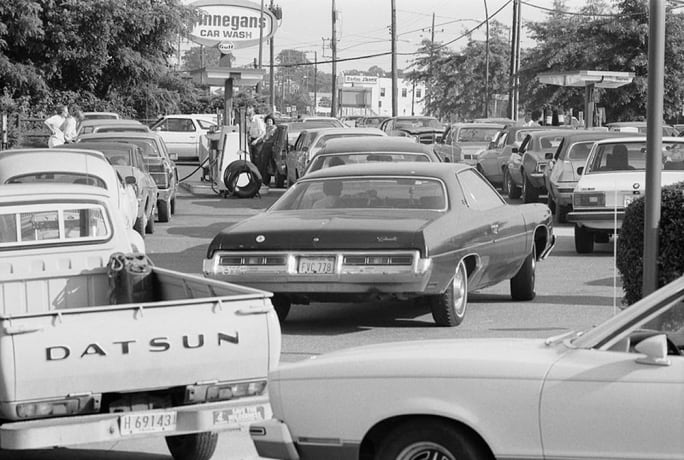
The oil crisis led to long lines for gas.
The Oil Embargo of 1973-1974: The Organization of Petroleum Exporting Countries (OPEC) proclaimed an oil embargo against the U.S. and other nations in October 1973 in response to military support of Israel during the Yom Kippur War.
This led to fuel shortages, rationing, and price hikes. In terms of fleet, the fuel crisis led to a collapse in V-8 resale values, the start of downsizing of fleet vehicles, the emergence of fuel management programs, and the OEM shift to FWD vehicles.
Expanded Financing Options for Commercial Fleets: In the early years, financing was straightforward and sourced from the manufacturers at Prime or Prime plus one. In the 1970s, financial choices emerged such as fixed- versus floating-rate financing and commercial paper.
Digital dashboard displays: The first digital dashboard display appeared in an Aston Martin Lagonda, and included trip computers, speed, and temperature readings and fuel economy measures.
Introduction of Catalytic converters: Beginning for the 1975 model year, cars produced for the U.S. market were required to have catalytic converters. Catalytic converters were first developed earlier in 1973 to clean up polluting exhaust fumes by reducing toxic emissions created by engines. The catalytic converters broke down toxic car exhaust into water, nitrogen, and carbon dioxide.
Downsizing Fleet Vehicles: Escalating gasoline prices and ever-increasing acquisition costs, along with changing driver preferences, prompted many corporate fleets to begin downsizing vehicles to reduce acquisition and fuel spend. Fleets also cite corporate sustainability initiatives as another reason for downsizing fleet vehicles.
Also, CAFE mandates forced OEMs to downsize their model lineup. Today’s intermediate-sized fleet sedan would have been classified a compact model in the 1960s-1970s.
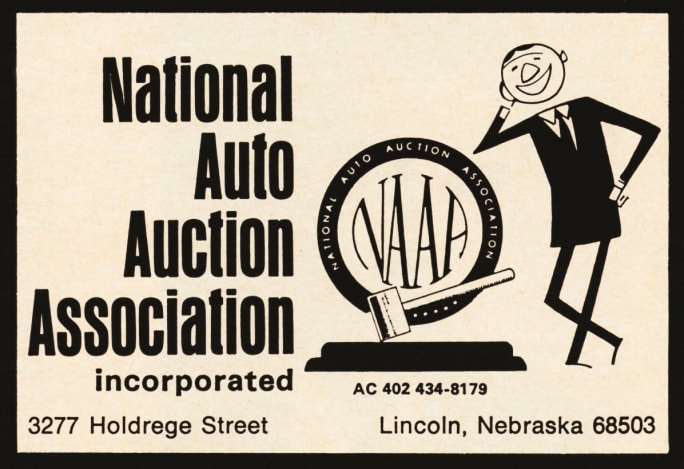
National Auto Auction Protective Association reorganizes and changes its name to the National Auto Auction Association (NAAA).
Evolving Fleet Remarketing Preferences: Use of brick-and-mortar auctions by commercial fleets expanded to become the primary remarketing channel for used commercial fleet vehicles. Auctions provided fleets a competitive bidding environment, increased return on each unit, and substantive used-vehicle condition reports.
In addition, the advent of auction computerization provided quicker and more accurate processing of used units, decreasing days-to-sale. The proliferation of auction locations throughout the U.S. kept down transportation costs and allowed fleets to maximize resale values by relocating vehicles to take advantage of higher regional market demand for specific models.
U.S. Government Bailout of Chrysler: Chrysler receives $1.5 billion in loans from the government after hovering on the verge of collapse due to sharply declining revenue.

Here's how the technician shortage has affected uptime for fleets, and what to do about it.
Read More →
Neology’s neoFleet platform will manage toll transactions and toll-authority operations for vehicles across Avis, Budget, Payless, Budget Truck and Zipcar.
Read More →
Nearly eight in 10 surveyed fleets allow personal use of company vehicles, while just over half of respondents report charging employees for the privilege.
Read More →
Could developments overseas offer a preview of what’s coming for U.S. fleets? This week, we’re looking at the future of AI, autonomy, and electrification, plus Ford Pro’s new certified pre-owned program, smarter vehicle offboarding, and a new way for fleets to manage toll expenses.
Read More →
What do fleet managers need to do when a driver leaves?
Read More →
Rising operating costs, driver safety concerns, and unplanned downtime are putting unprecedented pressure on modern fleets. Discover how fleet managers use embedded OEM connectivity and real-time vehicle data to cut TCO, prevent downtime, and protect drivers without aftermarket telematics hardware.
Read More →
The integration allows U.S. Bank Voyager fleet customers to manage toll payments and violations alongside fuel, EV charging and maintenance expenses.
Read More →
ADAS-equipped vehicles may crash less often, but they can cost more when they do. This week, we’re breaking down what that tradeoff means for fleets, plus Subaru’s first Forester Wilderness Hybrid, Nissan’s new e-POWER Rogue, and why Calstart has become Catalyst Mobility.
Read More →
Iorillo brings nearly 20 years of fleet management and sales experience to the role, including previous positions at Element Fleet Management, CEI, Donlen and Ryder.
Read More →
Where will fleet’s next generation of leaders come from? This week, we’re looking at the industry’s talent pipeline, what certification can add to a fleet career, how to build an award-worthy track record, and the return of Automotive Fleet’s Personal Use Survey.
Read More →