





Truck Fleet Maintenance Guide: 3 Strategies for Success
Maintaining Dispersed Truck Fleets
More communication, adherence to maintenance schedules, and utilizing technology to its fullest are just a few ways you can better maintain fleets that do not all return to the same home base.
February 7, 2022
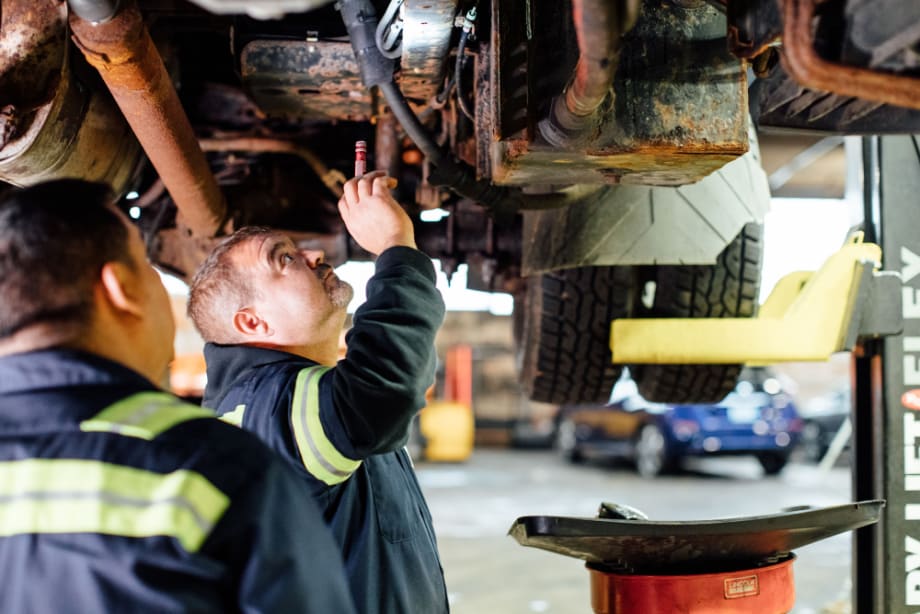
Communication, technology, and following schedules are the top recommendations for fleets looking to imrpove their maintenance across a dispersed fleet.
Photo: Fleetio
5 min to read
Not every fleet can house its vehicles under one roof. Some fleets might have a few offices within one region and numerous sites across several states. Keeping these vehicles maintained efficiently with exact quality expectations can be challenging.
Some challenges are similar to fleets in one location, while other geography-related issues pop up. Find out what the top challenges are and how to solve them.
Top Maintenance Challenges
The main challenge dispersed fleets face is related to communication.
“Communication is going to be an issue with dispersed fleets. If several branches or regions are operating in different time zones, it can be hard to get support,” said Ashlee Biggs, head of product marketing at Fleetio.
In addition, some branches or regions can also have differing policies when it comes to how preventive maintenance is authorized and executed, which can lead to branches or regions being siloed.
“If a fleet is working with paper and pencil, or even spreadsheets, maintenance information is going to be dispersed or difficult to sift through, and that’s a challenge when you’re trying to get a holistic picture of your fleet’s health. For that reason, having a centralized platform is one of the ways teams can get ahead of communication gaps,” Biggs added.
There are several other challenges fleets with multiple, dispersed locations face.
“Fleet manager oversite of a large and inconsistent vendor network is one issue. Also, ensuring drivers report issues in a timely and consistent manner to avoid major failures, standardized maintenance and repair processes can be tough. And, consistent quality of repairs and asset assignment tracking and scheduling is another challenge,” said Angelo Cinquegrana, AVP field operations for Amerit Fleet Solutions.
Consistency is another area that is tough to ensure, and often at the end of the day, the actual impact is felt most by your drivers.
“It becomes much harder to consistently service an entire fleet when there are geographically dispersed fleet managers and different service providers in those geographies. If the ‘fleet maintenance’ function is centralized within a company, managing the many different vendors for scheduling, support, and consistent quality of service becomes a full-time job. Typically, a driver is assigned to each vehicle and responsible for taking it to a service provider on that employee’s own time (or if they can sneak it in while the vehicle is not actively in commission),” said Mitchell Matsuo, director of fleet operations at Wrench.
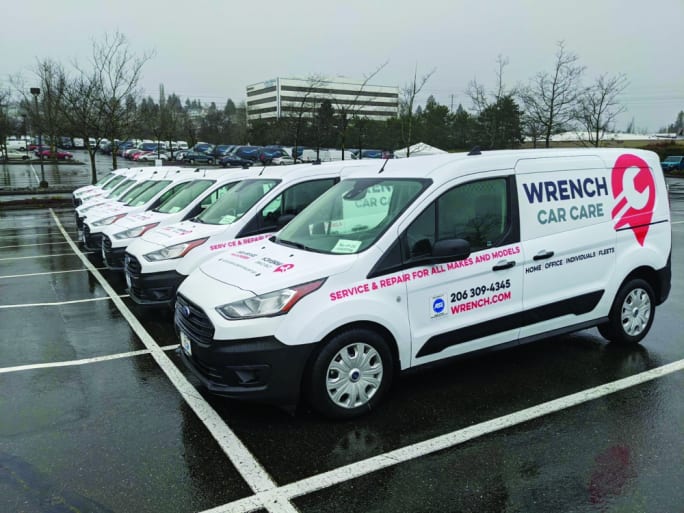
Consistency is key to maintenance, and operating in multiple locations can make this a challenge. Delaying repairs can increase costs and force a vehicle to be taken out of commission until it can get fixed.
Photo: Wrench
Impact When Trucks Don’t Return to Home Base
Not every fleet vehicle is returned to the home office or truck yard at the end of the day. Some fleets don’t return each truck home every day simply due to large regional coverage areas. Others need emergency technicians to get to a job 24/7.
“When vehicles are not all returning to the same base location, fleet managers face challenges with consistency. These challenges include driver write-ups as well as the completion of the repairs required, centralized collection of DOT forms, and shuttling vehicles to and from repair facilities,” said Cinquegrana of Amerit Fleet Solutions.
Fleets, where drivers take their vehicles home, tend to have greater challenges related to maintaining compliance because, typically, routine maintenance becomes the responsibility of the fleet vehicle driver.
“Fleet vehicle drivers typically spend their day on revenue-generating activities, so taking care of vehicle maintenance becomes a second priority to everything else. The driver also doesn’t typically like to spend their time off-the-clock taking care of the company vehicle’s maintenance, so this often prolongs the vehicle’s maintenance,” said Matsuo of Wrench.
Matsuo noted Wrench frequently sees this resulting in more costly repairs because the components meant to be replaced are now forcing the vehicle to be taken out of commission until it can get fixed.
“This unplanned downtime has severe consequences for the businesses that depend on their fleet vehicles to work with their customers,” Matsuo added.
One of the less talked about challenges facing fleet managers is simple appointment scheduling.
“We see many fleet managers try to help their drivers schedule maintenance since the drivers are so busy, but this creates a full-time job to help the driver find a service provider and an appointment time that works for the business and the driver. Simply communicating with large numbers of dispersed drivers and/or locations itself is a big challenge,” Matsuo noted.
Tips to Improve Maintenance in Dispersed Fleets
Communication, technology, and following schedules are the top recommendations for fleets looking to improve their truck maintenance in dispersed fleets.
“The biggest way to introduce standardization and consistency in dispersed fleets is real-time fleet maintenance software. The ability to gather data across all locations and see which locations are staying on top of preventive maintenance or seeing if there is a location with higher vehicle costs than others is powerful for accountability. It can also provide context for locations that may operate in regions with different policies,” said Biggs of Fleetio.
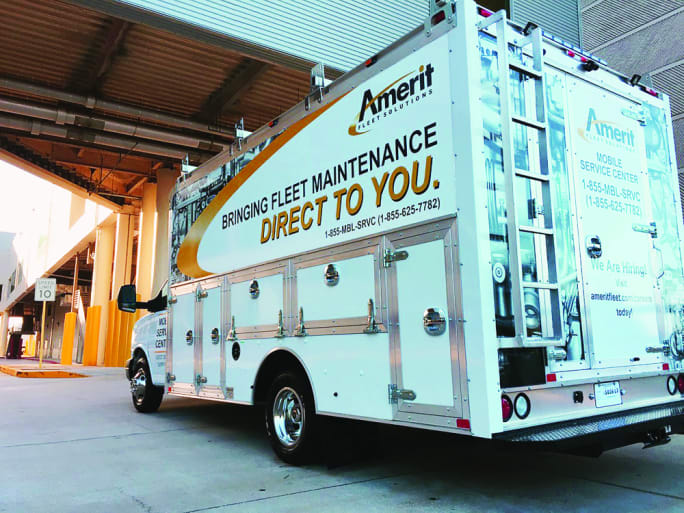
Fleet managers that oversee maintenance across multiple locations can struggle with ensuring network and vendor consistency.
Photo: Amerit Fleet Solutions
Telematics solutions are also beneficial when it comes to maintenance management.
“Telematics solutions can provide fleet managers with more data than they know what to do with. The data from telematics providers will help fleet managers better understand how their vehicles are being used to address any potential behavioral challenges from drivers. Telematics also enables fleet managers to stay on top of maintenance intervals for the multitude of vehicles they are managing,” said Mitchell Matsuo, director of fleet operations at Wrench.
And ensure your fleet stays on top of minor problems.
“We see small maintenance services are most often neglected with fleet vehicles, such as oil changes, uneven brake/tire wear, etc. The quicker these items are addressed, the less severe the problem becomes. We frequently hear from customers that the problem didn’t pose any significant issues to the drivers until the vehicle was required to be taken out of commission for unplanned maintenance and repair. This usually ends up being more costly from not only a maintenance and repair perspective, but the downtime creates additional challenges with their customers and drivers,” said Matsuo of Wrench.
At the end of the day, Freddy Muñoz, strategic account manager for Thermo King, recommended fleets “follow a maintenance schedule, adhere to a pre-trip inspection, use telematics to monitor your units remotely, and be proactive with maintenance.”
Originally posted on Work Truck Online
Subscribe to Our Newsletter
More Operations

How Fleets Can Recruit and Train Veterans for Technician Roles
Here's how the technician shortage has affected uptime for fleets, and what to do about it.
Read More →
Avis Budget Group Deploys Neology Toll Management Technology Across Major Brands
Neology’s neoFleet platform will manage toll transactions and toll-authority operations for vehicles across Avis, Budget, Payless, Budget Truck and Zipcar.
Read More →
Fleet Personal-Use Charges Edge Higher in 2026
Nearly eight in 10 surveyed fleets allow personal use of company vehicles, while just over half of respondents report charging employees for the privilege.
Read More →
The Future of Fleet + What’s Changing Right Now | AF News Recap
Could developments overseas offer a preview of what’s coming for U.S. fleets? This week, we’re looking at the future of AI, autonomy, and electrification, plus Ford Pro’s new certified pre-owned program, smarter vehicle offboarding, and a new way for fleets to manage toll expenses.
Read More →
How to Handle Vehicle Offboarding
What do fleet managers need to do when a driver leaves?
Read More →
Sponsored•October 1, 2026
Fleet Manager’s Ultimate Playbook: Navigating the New Standard in OEM Connectivity
Rising operating costs, driver safety concerns, and unplanned downtime are putting unprecedented pressure on modern fleets. Discover how fleet managers use embedded OEM connectivity and real-time vehicle data to cut TCO, prevent downtime, and protect drivers without aftermarket telematics hardware.
Read More →
U.S. Bank Adds Verra Mobility Toll Management to Voyager Fleet Platform
The integration allows U.S. Bank Voyager fleet customers to manage toll payments and violations alongside fuel, EV charging and maintenance expenses.
Read More →
ADAS Prevents Crashes. But Repairs Cost More | AF News Recap
ADAS-equipped vehicles may crash less often, but they can cost more when they do. This week, we’re breaking down what that tradeoff means for fleets, plus Subaru’s first Forester Wilderness Hybrid, Nissan’s new e-POWER Rogue, and why Calstart has become Catalyst Mobility.
Read More →
Moventum Fleet Management Names Mark Iorillo Head of Sales
Iorillo brings nearly 20 years of fleet management and sales experience to the role, including previous positions at Element Fleet Management, CEI, Donlen and Ryder.
Read More →
Fleet Has a Talent Pipeline Problem. What Comes Next? | AF News Recap
Where will fleet’s next generation of leaders come from? This week, we’re looking at the industry’s talent pipeline, what certification can add to a fleet career, how to build an award-worthy track record, and the return of Automotive Fleet’s Personal Use Survey.
Read More →