Data Box
Venezuela Capital: Caracas
Population: 31,335,113
GDP: US$131.9 billion
Total Vehicles (incl. private fleet): 4,557,000
 MENU
MENU SEARCH
Venezuela and Ecuador are heavily dependent on petroleum exports, as is also Colombia, but to a lesser extent. The steep drop in crude oil prices and other commodities is severely impacting these countries.
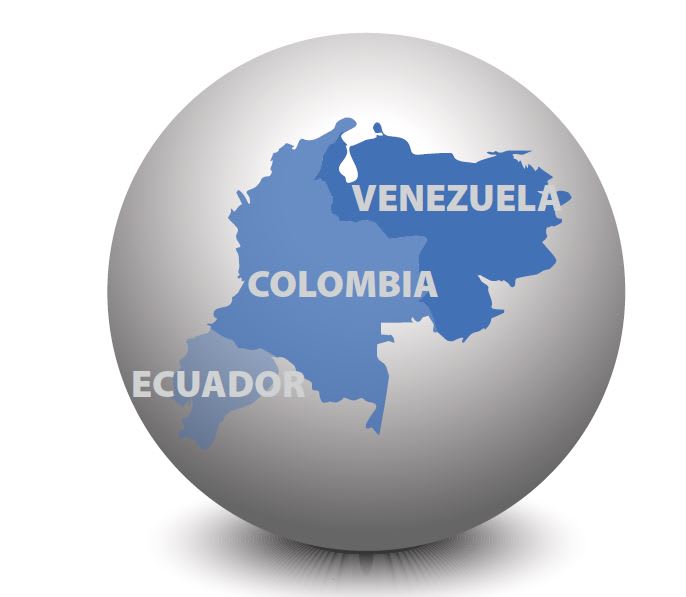
Graphic courtesy of istockphoto.com
Graphic courtesy of istockphoto.com
The economy of Venezuela is in a downward spiral. According to the International Monetary Fund (IMF), inflation in Venezuela is at more than 700%, and GDP declined by 8% in 2015.
The economy of Venezuela is heavily dependent on its massive petroleum industry. It is the fifth largest member of OPEC by oil production.
Consequently, the steep decline in crude oil prices has had a severe impact on the Venezuelan economy. For instance, revenue from petroleum exports account for more than 50% of the country’s GDP. With a forecast that oil prices will remain depressed into calendar-year 2017, the short-term outlook for the Venezuelan economy is not positive.
When oil prices were high, the Venezuelan government engaged in massive social spending programs and subsidized a reduced cost for many commodities for its citizens; however, when prices took a nosedive, so did the Venezuelan economy.
Venezuela’s economic problems were further aggravated by government price controls. When crude oil prices were high, the influx of huge quantities of petrodollars into the Venezuelan economy started to fuel inflationary pressures. The government sought to control inflation by putting price controls on the cost of basic goods. At the fixed prices, local Venezuelan manufacturers could no longer make a profit, so many businesses shut down.
That didn’t affect the government much as long as the oil windfall flowed in, because it could afford to bring in whatever consumer goods Venezuelans needed from abroad. But now, with Venezuelan oil at around US$43 a barrel and debts coming due, the government has drastically cut imports, leading to shortages and social unrest.
Not only has government price control had a dramatic impact on the day-to-day economy, it has also had a devastating effect on the auto industry in Venezuela and total automotive sales in the country.
Vehicle production by the domestic Venezuelan auto industry, once the third largest in South America, has almost come to a standstill as auto manufacturers struggle to produce a few vehicles a day. Local vehicle manufacturers include Ford, Fiat Chrysler Automobiles, General Motors, Toyota, and MMC (which represents Mitsubishi and Hyundai).
“Calendar-years 2014 and 2015 were the lowest sales years in the Venezuelan automotive industry,” said Marcelo Tezoto, manager, pricing and competition analysis for GM Brazil.
Due to government monetary controls, local vehicle production has grinded to a crawl because of a lack of U.S. dollars in the economy to pay parts suppliers. The auto manufacturers need to convert the local currency — bolivars — into dollars to pay international suppliers for parts and the only source of dollars in the country is the Venezuelan government. Compounding the problem is that the government will only sell a limited amount of U.S. dollars, plus they are sold at below the market exchange rate.
In addition, the government controls importation of vehicles into the domestic market. Since 2009, the number of import licenses have been reduced for American and European companies, while agreements have been signed with auto manufacturers from countries that are political allies of Venezuela, such as Ecuador, Russia, and China. For example, Chery, a Chinese manufacturer, was approved to import 13,000 new cars into the country during 2014.
However this is starting to change.
“In 2015, the Venezuelan government approved a decree on which person or legal entity can import vehicles,” said Tezoto. “Due to the Venezuelan government approval of a decree by which any person or legal entity can import vehicles for their own use, at the end of 2015, GM developed a special sales process through International Fleet Sales (IFS).”
The Venezuelan fleet market is comprised of local companies and multinational corporations, of which about 500 are U.S. companies with business operations in Venezuela. The strongest vocational segments for commercial fleet sales in Venezuela are oil companies, healthcare, and agriculture.
However, the fleet market for multinational companies is starting to contract as companies begin to exit the market.
In July 2016, Kimberly-Clark announced that it would close its Venezuela operations, because of the difficult business conditions and difficulty in getting paid for the products it sells. Also in July, Coca-Cola stopped soft drink production because there is no sugar. International airlines, such as Aeromexico, have halted flights to and from Caracas because currency controls make it nearly impossible to ship profits back home.
Because of the scarcity of product, no fleet or retail incentives are necessary to sell vehicles in the Venezuelan market. Instead there are waiting lists for those wanting to buy new vehicles.
Currently, there is an extreme shortage of new vehicles available for sale in Venezuela. When available, the types of vehicles acquired by companies are geared toward trucks and SUVs.
“The acquisition trends in Venezuela are mainly SUVs, pickup trucks, such as the Silverado and Colorado, and commercial vehicles,” said Tezoto.
As recently as October 2015, Venezuela had the cheapest gasoline in the world. The per-liter price of gasoline in Venezuela was the equivalent of 2 U.S. cents. For comparison, the average price of gasoline per liter in the world for this period was US$1.05. To put it in another perspective, most Venezuelans are able to fill up an empty gasoline tank for less than US$1.
But this is changing as the government has run out of money to continue to subsidize low gasoline prices. The government was spending US$15 billion a year to subsidize low gasoline prices.
Now, a liter of gasoline costs 6 bolivars or about 60 U.S. cents — a 6,000% price increase. Despite this aggressive hike in fuel prices, the cost of gasoline in Venezuela continues to be among the cheapest in the world.
However, the government refused to raise the price of diesel fuel because it would increase commercial transportation costs that could lead to higher food and bus fares. The per-liter price of diesel in Venezuela continues to be 1 U.S. cent. The average per liter price of diesel in the world for this period was 92 U.S. cents.
The increase in gasoline prices may impact the type of vehicles companies purchase.
“When fuel prices in Venezuela are extremely low, they were not a factor in the types of vehicles fleet customers purchase,” said Tezoto.
Restrictions on new-vehicle imports, coupled with the fall in local vehicle production, have distorted the Venezuelan automotive market to where used-vehicle prices appreciate rather than depreciate in value.
“The depreciation rate for vehicles in Venezuela is almost zero, unlike other markets in the world. Due to the low supply of vehicles in the country, resale is very high and, usually, a used vehicle is sold at a higher price than a new one,” said Tezoto.
The currency exchange policies have also made vehicle parts and components scarce and difficult to find in Venezuela. This scarcity of automotive replacement parts has increased market demand, which, in turn, has created a black market supplied by thieves who steal parts and batteries from parked cars.
“The availability of spare parts is a problem in the Venezuela market,” said Tezoto.
“At General Motors de Venezuela, given the difficulty of production, we are working on a scheme to import fleet vehicles. The estimated GM fleet sales in 2016 is approximately 600 units,” said Tezoto.
Ecuador is highly dependent on the revenue it receives from its crude oil exports. During 2015, oil prices decreased approximately 60% in only 6 months, which meant that all consumption industries in Ecuador decreased at the same scale.
“The automotive industry decreased around 50% in the same time period,” said Tezoto. There have been several changes in Ecuador’s Tributary Laws, which is a tax on company income.
“Importation quota for single unit pack (SUP) vehicles and complete knockdown kits (CKD) has increased in terms of units and dollars,” said Tezoto.
Despite the April 2016 earthquake, there are new economic measures for facing the crisis. “For example, Ecuador introduced a 2% value-added tax (VAT) increase effective since June 2016,” said Tezoto.
Between 2006 and 2014, GDP growth averaged 4.6%, thanks to robust oil prices and important external financing flows. This stimulus allowed for increased social spending, particularly in the energy and transportation sectors.
Ecuador’s oil-exporting economy took a turn for worse in Q1 2016 when its GDP contracted a record 3% annually. The forecast is that the Ecuadorian economy will continue to contract in 2016 to 17, and is predicted to have a contraction of -1.7% in GDP vs 2015. However, this same forecast predicts growth will resume during the 2018-20 timeframe, but notes growth will remain below the levels of the past decade.
The largest fleet markets in Ecuador are those operated in the oil, agriculture, commerce, and telecommunication sectors.
In the Ecuadorian market, fleet sales are comprised of 46% passenger cars, 32% pickups, 14% SUVs, 7% trucks, and 2% vans. The overall incentive available for fleet customers is a price discount that varies by vehicle model and reaching a maximum value of 3%.
“Chevrolet Ecuador also handles strategic alliances with Suzuki (SUVs) and Isuzu (pickups and heavy-duty trucks) in order to have a strong portfolio in all segments,” said Tezoto.
The strongest business sectors acquiring commercial fleets are agriculture, construction, car rental, pharmaceuticals, government, oil, transport, and consumer product trading companies.
In general, fleet sales have experienced a reduction in volume in all sectors because of tighter credit availability; however, the greatest reduction has been with the government and oil companies.
The retail price of fuel at the pump is relatively low due to extensive government subsidies. Based on these estimates, the price of gasoline per liter is 44 U.S. cents.
“Fuel prices in Ecuador have remained stable; however, the decline in oil prices has decreased government revenues prompting a budgetary cutback in public expenditures. There is a tendency to prefer diesel pickups, because this fuel is cheaper than gasoline,” said Tezoto.
The depreciation of vehicles in Ecuador varies between 7% and 10% annually, depending on the type of vehicle. Like the broader market, the sale of used vehicles has experienced a reduction in sales volume.
In Ecuador, parts availability is not an issue. “There is an adequate supply of spare parts for fleet owners and customers in general,” said Tezoto.
Ecuador is an oil-exporting country, which has been hard hit by the decline in crude oil prices. Since oil represents 40% of the country’s export revenues, the dramatic decline in oil prices caused the economy to enter a recession in the first and second quarters of 2015. The reduced export revenues have also forced the government to cut spending and impose new taxes and tariffs to offset these revenue shortfalls.
“During 2015, there has been a significant increase in the prices of vehicles because of new regulations and taxes on new vehicles imposed by the government,” said Tezoto.
“Based on forecasted industry volume in Ecuador, the fleet business is expected to be 35% of overall Chevrolet sales in 2016,” said Tezoto. Chevrolet is the No. 1 brand sold in Ecuador.
The economy of Colombia started calendar-year 2016 by growing at the slowest pace in almost seven years in Q1. The low-commodity-price environment has depressed the country’s important mining and energy sector and led consumer confidence to fall to historic lows.
However, despite the mixed macroeconomic trends, life for middle class Colombians has improved.
“The percentage of middle class grew from 13% to 20% between 2006 and 2014,” said Tezoto. “However, GDP has been revised lower, primarily due to lower oil prices, which has a high correlation with economic activity. There is lower consumer confidence due to the volatile environment and an increase in interest rates.”
This expansion of the Colombian middle class bodes well for future automotive sales.
“For every 1,000 citizens in Colombia, there are 100 cars. Currently, 13.5% of Colombian households have a car and 23.3% have a motorcycle,” said Tezoto.
In addition, the average age of automobiles on the road in Colombia is decreasing. “Between 2009 and 2012, vehicle age decreased from 15.3 years to 14.9 years,” added Tezoto.
As a consequence, there is strong growth potential in Colombia due to the low car penetration per household.
GM has been the market leader in Colombia for the past 33 consecutive years. GM will be launching new products in Colombia, which include a new model in the Pickup D segment. In fleet, there has been a decrease in the pickup segment due to the decrease in the mining sector activity.
Another factor influencing vehicle sales is the correlation between vehicle prices and the Colombian exchange rate with the U.S. dollar. In other recent developments, the economic environment may be subject to change due to the uncertaintiy of Colombia’s government forming a peace treaty with guerrillas. This is expected have a positive impact on the automotive industry.
Editor's note: This article first appeared online in the Q3 Global Fleet Market Conditions supplement published in October of 2016.

Geofencing is a familiar fleet tool today, but its early adoption marked a major shift in vehicle tracking, route monitoring, and the debate over employee privacy.
Read More →
Holman is bringing its Mexican fleet management operation fully under its own brand after more than 30 years as a joint venture. The change gives multinational fleet customers a single Holman operation across the U.S., Canada, and Mexico.
Read More →
Regular tire checks can do more than extend tread life. These five maintenance practices can help work truck fleets catch problems early, reduce costs, and prevent downtime.
Read More →
The age-old problem of downtime will always be a reality, but with new strategies at hand, fleets have more ways to keep trucks on the road longer.
Read More →


Part Two: Commercial auto remains one of the most challenging and costly lines of coverage for fleet operators and insurers alike. Continue learning more about how to effectively address these issues from Onur Aksan, Enterprise Business Development Executive, Geotab
Read More →
Commercial auto remains one of the most challenging and costly lines of coverage for fleet operators and insurers alike. Learn more about how to effectively address these issues from Onur Aksan, Enterprise Business Development Executive, Geotab.
Read More →
Fleet leaders are under pressure to reduce costs, adapt to economic uncertainty, and make smarter decisions. See how peers across North America are responding with real data, proven strategies, and forward-looking insights. Download the 2026 Market Pulse Report to benchmark your strategy and uncover where you can gain an edge.
Read More →
Enterprise Mobility connects with mobility solutions around the globe
Read More →