



Watch: Labor Shortages Impacting Fleet Operations and Suppliers
Related: People Are Quitting Transportation & Construction — Here’s Why
 MENU
MENU SEARCH
The ongoing shortage of workers, particularly skilled, trained employees, has had wide-ranging and often deep consequences for many fleets, private and public sector.
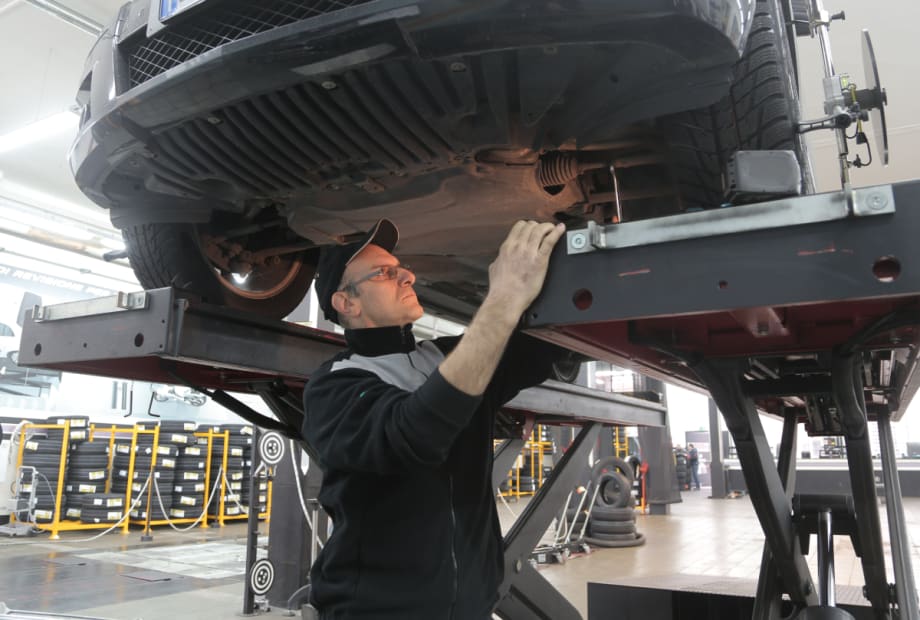
Hiring quality personnel for internal or external services is more difficult for several reasons. There are simply not enough people to handle the daily functions that a few years ago would have been a non-issue.
Photo: Andrea Piacquadio
Throughout the U.S, today’s labor shortages present urgent dilemmas to companies operating in the fleet market: higher costs, longer repair times, employee turnover, staff difficulties, lack of trained drivers, stressed work environments, competition in the shrinking work pool.
“Staffing shortages are greatly impacting every step in the fleet process. And it is slowing things down. It is resulting in higher costs and creating frustrated fleet drivers.” — Fleet manager
Labor shortages are occurring in many industries that support the fleet market, ranging from vehicle transport companies coping with an ongoing driver shortage to national account fleet service providers struggling to recruit and retain qualified technicians.
“With a low unemployment rate, ‘The Great Resignation’ has helped many people get new, higher paying positions. While this is great, it does create challenges to fill these vacancies – from fleet maintenance technicians to administrative roles in fleet departments, there is an overall shortage of help.” — Fleet manager
While a fleet manager doesn’t directly manage salespeople or service technicians who operate fleet vehicles, the higher driver turnover does increase fleet costs.
“The cost of employee turnover is oftentimes overlooked as a cost to fleet. These costs include the time spent removing the information of one driver and onboarding another driver to more costly expenses such as detailing vehicles, relocating vehicles, putting them in storage, or doing state changes if a vehicle is moved from one state to another.” — Fleet manager
Some fleet operations are impacted more than others by current labor shortages. One example are fleets operating in last-mile delivery operations and currently in the midst of their peak season – November to January.

A fleet segment impacted by the labor shortage are those in last-mile delivery operations, hit hard during their peak season – November to January
Photo: Tima Miroshnichenko
“It’s no secret that worker shortages have been affecting the fleet industry, but it promises to get worse. There is already high demand for home deliveries and on-site services, but this will dramatically increase in the coming years.” — Manager of last-mile delivery fleet
Pandemic-induced labor shortages in the fleet industry extend deep into many fleet service provider organizations. Fleet managers complain of longer vehicle turnaround due to staffing issues at maintenance and collision repair shops.
Hiring quality personnel for internal or external services is becoming more difficult for a number of reasons. There are simply not enough people to handle the daily functions that a few years ago would have been a non-issue.
Here's what one fleet management company said:
“Lead times for repairs for routine services used to take a day but now it could take 5 days or more. Body work can easily be scheduled out 2 to 3 weeks or more -- simply due to the lack of help.” — Fleet management company
In fairness, some of these delays are the consequence of parts shortages, but labor constraints are playing a greater factor that will only increase in the future
Here’s how one fleet manager summarized today’s situation.
“Labor shortages that arose during the pandemic have forced up prices at vehicle maintenance providers.” — Fleet manager
As vehicles become more complex and the industry transitions to EVs, the skillset of technicians will need to increase – dramatically.
“There is a huge shortage of techs who have the skills to work on hybrids and electrics. Tomorrow, with more and more hybrids and electrics in fleet service, it will be critical that we have more technicians trained to repair them.” — Fleet manager
The bottom line is labor shortages are affecting every segment of the fleet industry, especially centralized fleet operations with in-house maintenance facilities, such as those operated by municipalities, delivery companies and utilities.
“Labor shortages continue to impact my fleet. In CY-2023, I don’t see this getting any better. Maintenance techs are hopping between shops for small raises or sign-on bonuses, then switching as soon as a new opportunity arises. This is impacting service levels, costs and morale.”— Public sector fleet manager
In addition to technician shortages, there is also a massive shortage of drivers who operate trucks requiring a CDL – commercial driver’s license. Companies such as hauling/towing services and vehicle transport companies are experiencing trouble retaining and recruiting CDL drivers.
The impact can be calculated in dollars and cents for fleet operations. For instance, transport companies’ lack of drivers contributes to longer order-to-delivery times. Additionally delays occur in getting out-of-service vehicles to auction, increasing their days to sale, which forces fleets to pay for days or weeks of unnecessary vehicle depreciation.

Changing age demographics contributeto the worker shortage as greater numbers of Baby Boomers are exiting the workforce to retire
Photo: Andrea Piacquadio
Changing age demographics is also contributing to the worker shortage. Large numbers of Baby Boomers are exiting the workforce to retire.
As more and more Baby Boomers leave, fleets and other transportation companies are fighting over a smaller hiring pool of employees to drive trucks or work in maintenance bays or logistics terminals.
“This fleet industry consists mainly of older professionals. Frankly, I think that presents a challenge to fleet. We are at a critical juncture, and if we don’t find ways to interject fresh new faces and ideas, it will be a bigger problem going forward than it has been in the past.” — Fleet manager
Furthermore, while a much attention in recent years has been paid to recruiting and retaining millennials — workers born during the early 1980s and mid-1990s — companies must take a different approach to attract Gen Z, the most diverse generation in the U.S.
The COVID lockdowns of 2020 and 2021 and the emergence of the work-from-home business model have created perfect conditions for a job market conducive for employees to jump ship for better opportunities elsewhere.
On average, these employees realize a 10 to 15% pay increase, according to common findings. However, employees who remain at their companies are, in essence, working at 10-15% below their market potential.
The result is not only a shortage of qualified technicians at fleet facilities, but also a scarcity of technicians at dealerships, national account service providers, and body shop chains. To make matters worse, all these businesses must now compete with one another for the limited base of skilled employees.
What makes employee turnover so expensive is that the cost to replace an employee goes beyond their compensation and includes a variety of other factors, in particular training.
As key employees leave to take on other opportunities, more pressure is being felt by the support members of the organization to assume more responsibilities.
“Fleets will need to focus on retention of drivers and onboarding solid candidates who exalt loyalty and high work ethics.” — Sales fleet manager
What can be done to reduce job hopping? Is it simply finding the right employees?
The problem is a particular concern for public sector fleet managers.
“Technicians continue to be difficult to find and hire – our rank and file continues to be short around 25% as "private" sector employers may pay as much as 25-50% more in salary, despite limited retirement and very costly health insurance benefits.” — Public sector fleet manager
Fleets simply cannot fill boots quick enough to keep up with either COVID sick technicians or trained, certified and licensed technicians moving to better private sector jobs.
This dilemma adversely impacts overtime budgets and puts additional stress on the current work force, often pushing them to the point of exhaustion, especially during a snow event. Some centralized public sector fleets are currently experiencing a loss of about 25% of their current work force for these very reasons.
Fundamentally, tech shortage has increased pay for highly qualified technicians, especially those working in high cost-of-living markets. These higher salaries are passed on to customers – namely fleets – in the way of increased labor rates.
“People, believe it or not, there is a shortage of people who are willing to work. Remarketing your fleet is tougher when you cannot hire, transporters cannot hire, auctions cannot hire, body-shops cannot hire.” — Fleet manager

An important tool in retaining and recruiting employees an important step is publicly acknowledging top performers, including how they positively impact the team and the business.
Photo: Sora Shimazaki
The question remains for fleet managers to ponder in the struggle to retain talented people: Are we really losing a seasoned tech for a few dollars when the cost to hire, train and retain new talent 10 times that rate?
Finding employees with the necessary skillset – or even somebody with a lower skill set who could be trained – to take on the responsibilities needed to keep the business moving forward will continue to challenge all industries.
No matter which tactic chosen to retain employees –monetary incentives, additional paid time off, recognition awards, etc.– an important step is to publicly acknowledge top performers, including how they positively impact the team and the business.
This kind of attitude toward a job well done prompts employees to talk about the company they work for and why it’s a great place to work. That’s the best recruitment tool you can get.
Another potential recruitment tactic utilizes a fleet’s unlimited data plan, used for routing, telematics, and in-cab video technologies.
A company can open up that unlimited plan to drivers so they can connect laptops, tablets or any streaming device during breaks and downtime. They can stream music while they’re driving and Netflix at night.
Persistent labor shortages are contributing to an uptick in outsourcing fleet services to third-party vendors. For instance, companies that have lost key people and are having difficulty finding a suitable replacement, are increasingly looking to outsource these functions.
“One consequence of today’s labor shortages has been a renewed interest by companies in outsourcing fleet management services.” — Fleet service provider
Another consequence to difficulty in hiring in-house staff is that many in corporate management see outsourcing of jobs as one alternative.
But this has been an ongoing issue for the past 30 years. The industry is coping with the driver shortage, but it shows no signs of abating.
Even prior to the pandemic, there were pre-existing shortages of automotive service technicians, but the pandemic has only made the situation worse.
This has created higher turnover or shortages of qualified labor for repair shops, which are serving to extend vehicle downtime.
Although these labor constraints exist in today’s low unemployment market, the potential labor pool could increase very quickly in the future if the economy dips into a recession.
For instance, the logistics industry’s driver demographics are very similar to that of the construction industry. Some predict a prolonged economic downturn in the construction industry will cause a migration from construction to create a new influx of drivers applying to work in the logistics side.
No one wants a recession, but a recession could serve to make tomorrow’s labor shortage less constrictive, potentially expanding the labor pool for the fleet industry, especially among fleet drivers.

Here's how the technician shortage has affected uptime for fleets, and what to do about it.
Read More →
Neology’s neoFleet platform will manage toll transactions and toll-authority operations for vehicles across Avis, Budget, Payless, Budget Truck and Zipcar.
Read More →
Nearly eight in 10 surveyed fleets allow personal use of company vehicles, while just over half of respondents report charging employees for the privilege.
Read More →
Could developments overseas offer a preview of what’s coming for U.S. fleets? This week, we’re looking at the future of AI, autonomy, and electrification, plus Ford Pro’s new certified pre-owned program, smarter vehicle offboarding, and a new way for fleets to manage toll expenses.
Read More →
What do fleet managers need to do when a driver leaves?
Read More →
Rising operating costs, driver safety concerns, and unplanned downtime are putting unprecedented pressure on modern fleets. Discover how fleet managers use embedded OEM connectivity and real-time vehicle data to cut TCO, prevent downtime, and protect drivers without aftermarket telematics hardware.
Read More →
The integration allows U.S. Bank Voyager fleet customers to manage toll payments and violations alongside fuel, EV charging and maintenance expenses.
Read More →
ADAS-equipped vehicles may crash less often, but they can cost more when they do. This week, we’re breaking down what that tradeoff means for fleets, plus Subaru’s first Forester Wilderness Hybrid, Nissan’s new e-POWER Rogue, and why Calstart has become Catalyst Mobility.
Read More →
Iorillo brings nearly 20 years of fleet management and sales experience to the role, including previous positions at Element Fleet Management, CEI, Donlen and Ryder.
Read More →
Where will fleet’s next generation of leaders come from? This week, we’re looking at the industry’s talent pipeline, what certification can add to a fleet career, how to build an award-worthy track record, and the return of Automotive Fleet’s Personal Use Survey.
Read More →