




Kraft Switches Sales Fleet to 4-Cylinder Models
With gas prices showing no signs of dropping, Kraft switched most of its sales fleet from six-cylinder to four-cylinder sedans, resulting in fuel savings of about 6.5 percent and expected lifecycle cost savings around 9 percent.
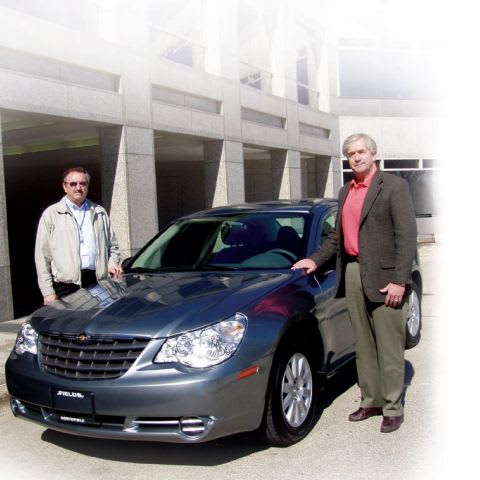
John Dmochowsky did what any prospective car buyer would do when he considered switching Kraft Foods sales fleet vehicles from six-cylinder to four-cylinder in 2007. He took a test drive.
Dmochowsky, sales fleet manager for Kraft Foods in Northfield, Ill., visited Chrysler’s Auburn Hills, Mich., headquarters and drove the new four-cylinder 2008 Chrysler Sebring intermediate-sized sedan to see how it compared to a six-cylinder model.
“I couldn’t tell much difference between the two,” Dmochowsky said.
Kraft Foods markets a broad portfolio of iconic brands, such as Kraft, Nabisco, Maxwell House, and Oscar Mayer. With some 5,200 vehicles in the Kraft fleet — about 4,000 are sedans driven by Kraft salespeople — high gas prices were dramatically affecting the fleet budget. The 2007 Chrysler Sebring presented an opportunity for Kraft to change vehicle manufacturers and switch its sales vehicle fleet to Chrysler for the 2007 model-year.
In addition to the four-cylinder Sebring, the new-vehicle selector list for Kraft sales representatives also includes the four-cylinder Dodge Caliber and four-cylinder Dodge Avenger. The Sebring has been the most popular among drivers so far.
Kraft had more than a few reasons to switch from six-cylinder to four-cylinder vehicles.
Gasoline prices. The high price of gasoline was just one reason Kraft switched about 90 percent of its sales sedans to four-cylinder vehicles. Six-cylinder minivans and SUVs still account for about 10 percent of Kraft’s fleet for drivers who need bigger vehicles.
Emissions. Kraft wanted to stay ahead of the curve regarding increasing emissions regulations taking place nationally.
Green initiatives. Using four-cylinder vehicles fits nicely with Kraft’s key sustainability focus areas: transportation and distribution.
“We have customers we sell to who are also strategically using the same approach we’re using,” Dmochowsky said.
“We’re looking at sustainability initiatives across Kraft, and this change in our fleets supports those efforts,” notes Dmochowsky. “It also complements similar initiatives many of our customers are taking.”
Lifecycle costs. A major reason was Kraft was looking to lower its fleet lifecycle costs. Dmochowsky and Kraft National Fleet Supervisor David Lighthall, CAFM / CFM, worked with Kraft’s fleet lessor, GE Capital Solutions Fleet Services, to conduct a lifecycle cost analysis.
“Our historical costs go through GE Capital Solutions Fleet Services, but keep in mind this was a new model, so we had to rely on [GE] for the residual value as far as seeing what that car is worth at the end of the lease term,” Dmochowsky said. Considering the rising fuel costs and environmental regulations, “it came out favorably to lean forward and make the switch.”
Dmochowsky projects the fleet will see a 9-percent decrease in lifecycle costs due to the change. Lighthall said the projections indicate a difference in maintenance costs, but it’s too early to tell the actual amount because the vehicles are still under warranty.
Dmochowsky’s test drive of the four-cylinder Sebring at Chrysler headquarters was the first step in making the switch. He also drove a six-cylinder vehicle. “Now keep in mind, the sedan is a tool of the trade for the sales reps,” he said. “This vehicle not only met the ‘tool of the trade’ standard for them to do their job, but also from a standpoint of driver satisfaction and the vehicle itself, I couldn’t tell much difference between the two.”
Many Kraft salespeople drive in rural territories, so Dmochowsky also test-drove the vehicle in both urban and rural settings to see how the vehicle’s acceleration and passing capabilities compared to six-cylinder vehicles. Dmochowsky previously worked in sales, so he knew what salespeople needed to do their jobs. “I found the comfort and driving experience on the rural roads, as well as the driving experience in the city, fulfilled my needs from the standpoint of what type of vehicle we need for the reps to do their jobs,” he said.
Making the actual switch itself was not difficult because it was integrated into the regular vehicle replacement process. Kraft replaces its vehicles in the spring and fall.
“The transition was typical, as what would be expected with any normal transition, except we came out with a new vehicle,” Dmochowsky said. “So we had to let our audience know that we were going to be introducing a four-cylinder vehicle.”
Lighthall explained, “It was really part of our normal annual selector change if you will, but it just happened in this case, there was a little more communication done, in fact, probably a lot more communication done, because of the kind of change it was.”
The Kraft fleet department usually notifies drivers of new vehicles by simply sending out a new selector list. However, after getting the okay from senior management to switch to four-cylinder vehicles, Dmochowsky and Lighthall gave drivers a more detailed presentation describing the new models. They prepared a one-page marketing sheet showing photos of the new vehicles and detailing standard options and other vehicle information.
According to Dmochowsky and Lighthall, drivers have generally responded favorably to the change. The two regularly attend sales meetings, where a few drivers have mentioned they wished the vehicles had more power. Some have asked about getting a van instead of the four-cylinder sedan. “We like the opportunity to get feedback from our drivers,” Dmochowsky said. “And they are very candid.”
Lighthall said he has heard mostly positive comments. “There was no issue on the size of the vehicle because it was the same size as the six-cylinder,” he said. “It was just a matter of the smaller engine. And I think some people were concerned about that. Since we introduced the vehicle over the last two model-years, we’ve only had a very small number of people complaining about the performance.”
More Operations

Avis Budget Group Deploys Neology Toll Management Technology Across Major Brands
Neology’s neoFleet platform will manage toll transactions and toll-authority operations for vehicles across Avis, Budget, Payless, Budget Truck and Zipcar.
Read More →
Fleet Personal-Use Charges Edge Higher in 2026
Nearly eight in 10 surveyed fleets allow personal use of company vehicles, while just over half of respondents report charging employees for the privilege.
Read More →
The Future of Fleet + What’s Changing Right Now | AF News Recap
Could developments overseas offer a preview of what’s coming for U.S. fleets? This week, we’re looking at the future of AI, autonomy, and electrification, plus Ford Pro’s new certified pre-owned program, smarter vehicle offboarding, and a new way for fleets to manage toll expenses.
Read More →
How to Handle Vehicle Offboarding
What do fleet managers need to do when a driver leaves?
Read More →
Fleet Manager’s Ultimate Playbook: Navigating the New Standard in OEM Connectivity
Rising operating costs, driver safety concerns, and unplanned downtime are putting unprecedented pressure on modern fleets. Discover how fleet managers use embedded OEM connectivity and real-time vehicle data to cut TCO, prevent downtime, and protect drivers without aftermarket telematics hardware.
Read More →
U.S. Bank Adds Verra Mobility Toll Management to Voyager Fleet Platform
The integration allows U.S. Bank Voyager fleet customers to manage toll payments and violations alongside fuel, EV charging and maintenance expenses.
Read More →
ADAS Prevents Crashes. But Repairs Cost More | AF News Recap
ADAS-equipped vehicles may crash less often, but they can cost more when they do. This week, we’re breaking down what that tradeoff means for fleets, plus Subaru’s first Forester Wilderness Hybrid, Nissan’s new e-POWER Rogue, and why Calstart has become Catalyst Mobility.
Read More →
Moventum Fleet Management Names Mark Iorillo Head of Sales
Iorillo brings nearly 20 years of fleet management and sales experience to the role, including previous positions at Element Fleet Management, CEI, Donlen and Ryder.
Read More →
Fleet Has a Talent Pipeline Problem. What Comes Next? | AF News Recap
Where will fleet’s next generation of leaders come from? This week, we’re looking at the industry’s talent pipeline, what certification can add to a fleet career, how to build an award-worthy track record, and the return of Automotive Fleet’s Personal Use Survey.
Read More →
Smith System Launches Driver Risk Management Program
Fleets have more driver data than ever, but identifying risky behavior doesn't necessarily correct it. Smith System's new Driver Risk Management program combines monitoring, training, and follow-up coaching to help fleets connect risk signals with driver intervention.
Read More →