




Kansas City Gets Motivated to Use Natural Gas
The City of Kansas City, Mo., once had a pilot program of just 12 CNG-powered fleet units. Today, through dedicated grant seeking, the CNG fleet now nears 300 units — roughly 8 percent of its total fleet.

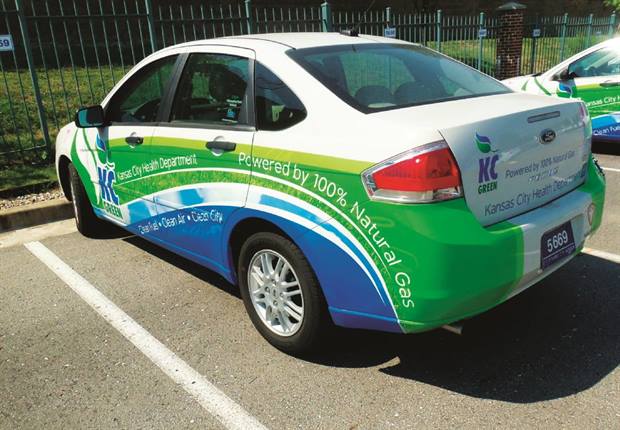
Today, the city of Kansas City, Mo., fleet's CNG units total about 8 percent of its roughly 3,000 vehicles, including 209 light-duty, 10 medium-duty, and 56 heavy-duty vehicles.
At a Glance
The City of Kansas City, Mo., has a more than 14-year history with CNG units:
1997: Began CNG pilot program with just 12 vehicles and a partnership with Missouri Gas and Energy to fuel up at its stations.
2001: A large Congestion Mitigation and Air Quality grant expanded the program to 40 CNG-powered vehicles and its own fueling station.
2006-2008: CMAQ grants followed at roughly $500,000 a piece, for a total of $3.4 million over seven years.
2010: Awarded an American Recovery and Reinvestment Act (ARRA) grant of $4.03 million.
The geography of Kansas City, Mo., presents a duality of demands on its fleet. As a metropolitan center, it requires the mobile resources needed to maintain a bustling city. But, the sheer size of its metro area also requires heavy travel, as some units see cross-town use.
These are just a few of the reasons Sam Swearngin, fleet administrator for the City, keeps a careful eye on the fuel budget, and looks to alternative fuels to improve efficiency and reduce vehicle emissions.
However, what really began the fleet’s compressed natural gas (CNG) program were environmental concerns, both at the federal and local levels.
Environmental Motivations
In 1990 and 1992 respectively, the Clean Air Act and the Energy Policy Acts originally mandated that government fleets would be required to use alternative fuels. As such, Kansas City began studying the costs and benefits of CNG, ethanol, methanol, and propane autogas. CNG emerged as the cheapest and cleanest choice.
Bolstering the City’s faith in CNG as a smart option was an American Medical Association presentation Swearngin and his colleagues attended, which depicted graphic views of the effects low level ozone has on children’s lungs. Knowing the switch to CNG could help Kansas City’s own problem with low levels of ozone in the summer, they decided to pursue CNG because of the benefits to the environment and, in turn, their public.
“Starting out, diesel prices dropped, so CNG wasn’t any more affordable of an option. Through the ’90s and early 2000s, we really did it for purely environmental reasons,” Swearngin said. “We wanted to do everything we could to improve the air quality for our City.”
Grants Grow the Program
The CNG pilot program began in 1997, with just 12 vehicles and a partnership with Missouri Gas Energy to fuel up at its stations. Then, in 2001, a large Congestion Mitigation and Air Quality (CMAQ) grant allowed the program to expand to 40 CNG-powered vehicles and its very own fueling station. CMAQ grants in 2006, 2007, and 2008 followed at roughly $500,000 a piece, for a total of $3.4 million over the course of seven years.
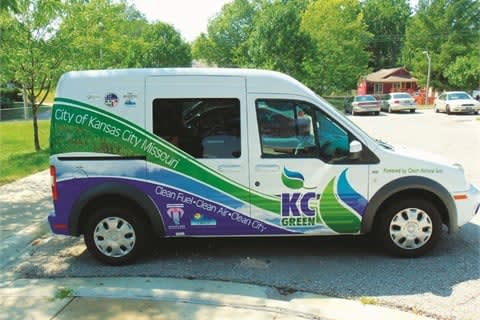
Thanks to a $4 million-plus grant from the American Recovery and Reinvestment Act (ARRA) in 2010, the City's CNG program was able to expand to its current total of approximately 275 CNG units. The grant was the largest single source of funding the fleet ever received.
While these grants kept the program up and running, and grew it to some 80 vehicles, the City had a hard time expanding it in a more profound way. First, CNG units have high up-front costs and second, Kansas City’s sprawling metro area requires fueling stations be located near where units are nested. Both individual units and new stations were needed to expand the program, but neither was a possibility until more grant funding could be garnered.
[PAGEBREAK]In 2010, an opportunity came when the fleet landed its largest single source of funding ever through a partnership with Kansas City Regional Clean Cities: an American Recovery and Reinvestment Act (ARRA) grant for $4.03 million — more than the sum total of all CMAQ grants since 2001. Since then, the program has expanded to some 275 CNG units, with four fast-fill stations and one slow-fill station. “We’re now able to buy more heavy-duty vehicles, which is a great investment, as they save the most money in fuel costs,” Swearngin said.
Today the fleet’s CNG units total about 8 percent of its roughly 3,000 vehicle fleet, including 209 light-duty, 10 medium-duty, and 56 heavy-duty vehicles.
Oil Shortage Ushers in Benefits
Where once the major benefit of using CNG was the lessened environmental impact, Swearngin said the global oil situation has made the price — and the reduced dependence on oil — the defining benefits of CNG today.
“The oil shortage has forced us to drill in more expensive places, so the price of diesel has gone up while production has remained flat. On top of that, we’re competing against other countries for oil,” Swearngin said. “Energy security has become a big topic, and now rivals the environmental benefits of the program. That’s what’s driving the program now — it’s way cheaper than diesel and is domestically produced. Of course, the environmental benefits remain important, too.”
Swearngin said, on average, in the month of August 2011, the City’s CNG gasoline gallon equivalent (GGE) was dramatically lower than both diesel and unleaded, with diesel at $3.74 per gallon, unleaded at $3.62 per gallon, and CNG at $1.55 GGE.
There are other benefits, too. The City’s CNG program is paving the way for private citizens to use the alternative fuel. And, the more natural gas units there are on the road, the more likely prices will drop overall. The program also garners goodwill among the public. “In our City, very few people think our alternative-fuel program is a bad thing,” Swearngin said. “It’s good PR that we use cleaner, domestically produced fuel.”
The Future of the Program
The next step for the City will be to outsource its alternative-fuel stations to a CNG provider. This will allow the City to grow its capacity faster, and some stations will even provide public pumps.
“Outsourcing our stations will let us focus our attention on writing grants to get more CNG units,” Swearngin commented. “I’m not saying that’s the answer for all fleets, but for us it’s the smart thing to do to keep growing the program.”
With plans already in the works to add a fueling station near its trash truck and snow plow fleets, the City will also be able to target those units for CNG replacements. Replacing gas guzzlers could mean big savings for the City — with average August prices alone, saving roughly $2 per gallon for a unit that uses about 500 gallons a month means $12,000 in savings per year for each and every unit, for a total annual savings of approximately $3.3 million.
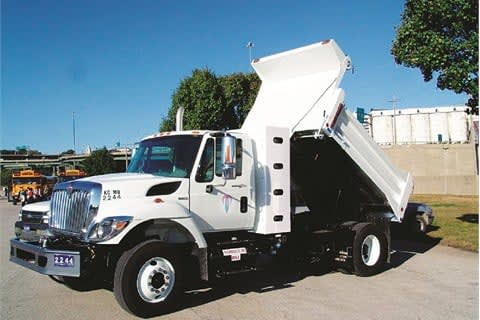
Fuel savings is among several benefits the City of Kansas City fleet realized as a result of using CNG. According to the City, recent prices of the alternative fuel were less than half the cost of both diesel and unleaded gasoline.
While growing its alternative-fuel program remains one of the fleet’s primary goals, one major change is how it will grow: Swearngin believes that in the future, expanding the CNG fleet could be done without the need for grants.
“Assuming the price differential between diesel and CNG stays the same, lifecycle cost analyses we’ve performed justify the costs of natural-gas fueled trucks,” he said. “Because we won’t have to come up with the capital for stations, it makes it easier to expand the program to virtually every heavy truck we have.”
So far, Kansas City has seen major environmental and financial benefits of CNG — benefits that directly affect the public. But, Swearngin still says there is more work to be done.
“I’m not saying natural gas is a magic bullet. We should do everything to conserve energy and take steps to change how cities are laid out so that they operate more efficiently,” he said. “CNG isn’t going to do it alone — it’s just one small piece in a large picture of energy. But it definitely helps.”
More Green Fleet
New Propane Autogas Program Offers Fleet Compensation
Qualified commercial fleets can receive $7,500 per eligible propane autogas vehicle and up to $10,000 for new refueling site prep. Learn how the program works and see whether your fleet qualifies.
Read More →
EV Charging Use Is Outpacing Infrastructure Growth
ChargePoint’s 2026 Charging Forward Report points to rising charger use, higher-powered charging, commercial vehicle electrification, and energy-management technology. Here’s what fleets should know.
Read More →
Merchants Fleet Reports 290M EV Miles as Fleets Navigate Changing Electrification Market
From millions in operating savings to hundreds of millions of EV miles, Merchants Fleet’s latest report reveals what’s working and what’s changing in fleet electrification.
Read More →

The EV Breakdown Nobody's Talking About: Why Most Electric Vehicle Roadside Calls Aren't Mechanical Failures
Here's why EV breakdowns are widely misunderstood.
Read More →
ChargePoint Now Available in Energy Pass
ChargePoint and additional planned charging network integrations were added to GM's Energy Pass.
Read More →

First Look: Slate Auto's Electric Fleet Pickup
Could an affordable, modular EV pickup make electrification more practical for fleets?
Read More →
Slate Debuts Colorful, Unique EV Models
A recent media and client event, studded with electric vehicles dressed up on platforms, planted a new position for the manufacturer in the wider EV market. Fleets will find cost-saving advantages.
Read More →
Slate Electric SUV, Pickup Switchable Model Aims For Light-Duty Fleets
Everything about this EV is counterintuitive and understated, making it stand out from the crowd.
Read More →
Inspiration Mobility Acquires Key Electrada Assets
Inspiration Mobility Group has acquired select assets of Electrada, adding the fleet electrification provider's team, technology, and charging infrastructure development capabilities to its energy management business.
Read More →